Sketch to Clay to CAD: The British Car Design Process Explained
 Feb, 23 2026
When you think of iconic British cars - the Jaguar E-Type, the Mini, the Range Rover - you’re not just thinking of machines. You’re thinking of art shaped by hand, refined by touch, and born from a process that hasn’t changed much in 70 years. While most car companies today rely entirely on digital tools, the British tradition still holds onto something rare: the sketch to clay to CAD pipeline. It’s not just a workflow. It’s a philosophy.
Step One: The Sketch - Where Ideas Begin
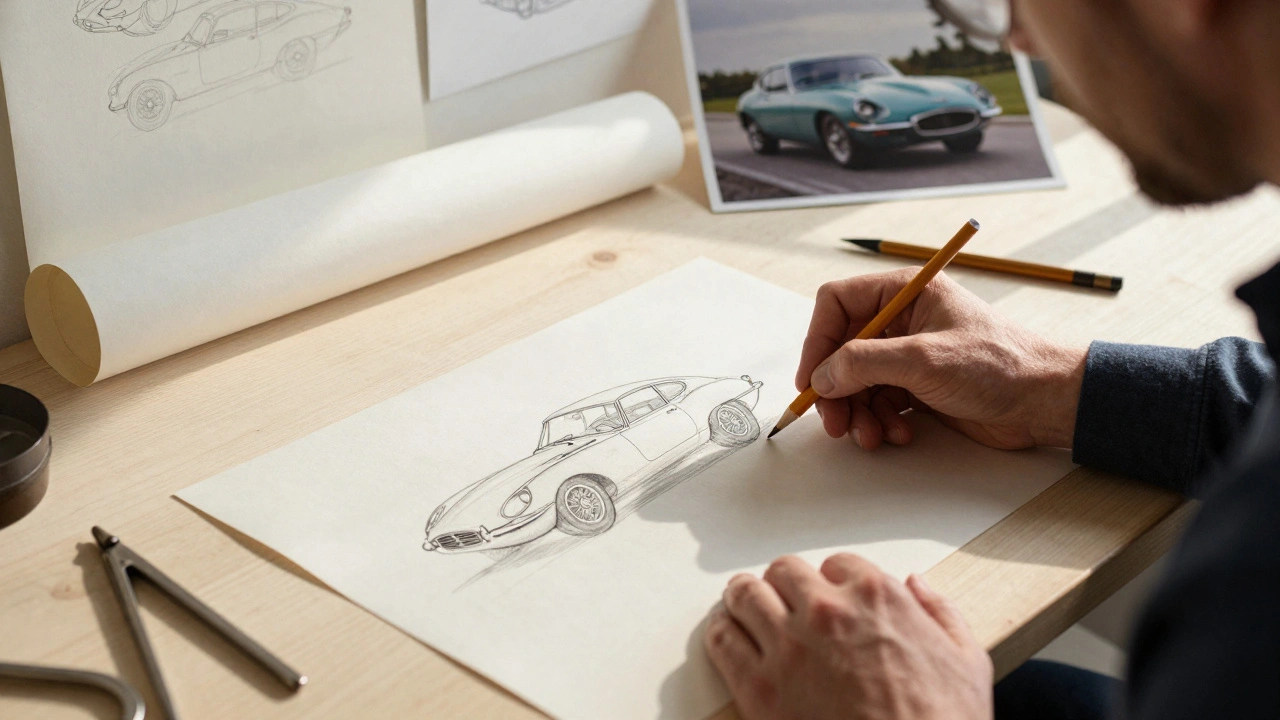
Every British car design starts with pencil on paper. Not a tablet. Not a stylus. A real pencil. Draftsmen at studios like Aston Martin’s Gaydon or Jaguar’s Whitley sketch by hand, often in quiet rooms with natural light. These aren’t just rough outlines. They’re emotional expressions. A curve isn’t measured in millimeters - it’s felt. A shoulder line isn’t just a contour; it’s a statement. Why still sketch by hand? Because a digital line can’t capture the hesitation, the pressure, the rhythm of a human hand. A sketch made in 1961 by William Lyons for the E-Type still inspires designers today. The same energy lives in sketches made today. A 2024 Aston Martin Valkyrie concept began as a single pencil line on a notepad, drawn during a morning coffee break. That line became the car’s defining silhouette.Step Two: The Clay - The Soul of the Car
Once a sketch is approved, it moves to the clay studio. This is where most car companies around the world stop. But not in Britain. Here, full-scale clay models are built - sometimes weighing over a ton - and shaped by hand over weeks or months. Each curve is carved with wooden tools, metal scrapers, and wire loops. Designers kneel on the floor, crawling around the model, touching every surface. They don’t just look at the car - they feel it. Clay is forgiving. A slight bump can be smoothed. A sharp edge can be softened. A surface can be tweaked until it catches the light just right. In 2023, engineers at McLaren used a clay model to refine the airflow around the Artura’s side intakes. They made 17 adjustments by hand before ever running a simulation. No software could have given them that instinctive sense of balance. The clay model isn’t a prototype. It’s a conversation. Designers, aerodynamicists, and even marketing teams gather around it. They argue. They laugh. They cry. One designer at Bentley once said, "The clay doesn’t lie. If it feels wrong, it is wrong."Step Three: CAD - The Bridge to Reality
Only after the clay model is perfected does the team move to CAD - computer-aided design. But here’s the twist: the CAD model isn’t built from scratch. It’s scanned. Every millimeter of the clay is digitized using laser scanners. Then, engineers use that scan as the foundation. The digital model isn’t a translation - it’s a preservation. This method ensures that the soul of the hand-sculpted design survives the transition to manufacturing. In 2022, Land Rover’s new Defender was built this way. The designers had sculpted the fender line in clay for 14 weeks. When the CAD team scanned it, they found 87 unique curves that had never been modeled before. They had to write new software just to handle the complexity. The British approach doesn’t use CAD to create the shape. It uses CAD to reproduce it. That’s why British cars have a character no algorithm can replicate. A German car might be optimized for airflow. A British car is optimized for emotion.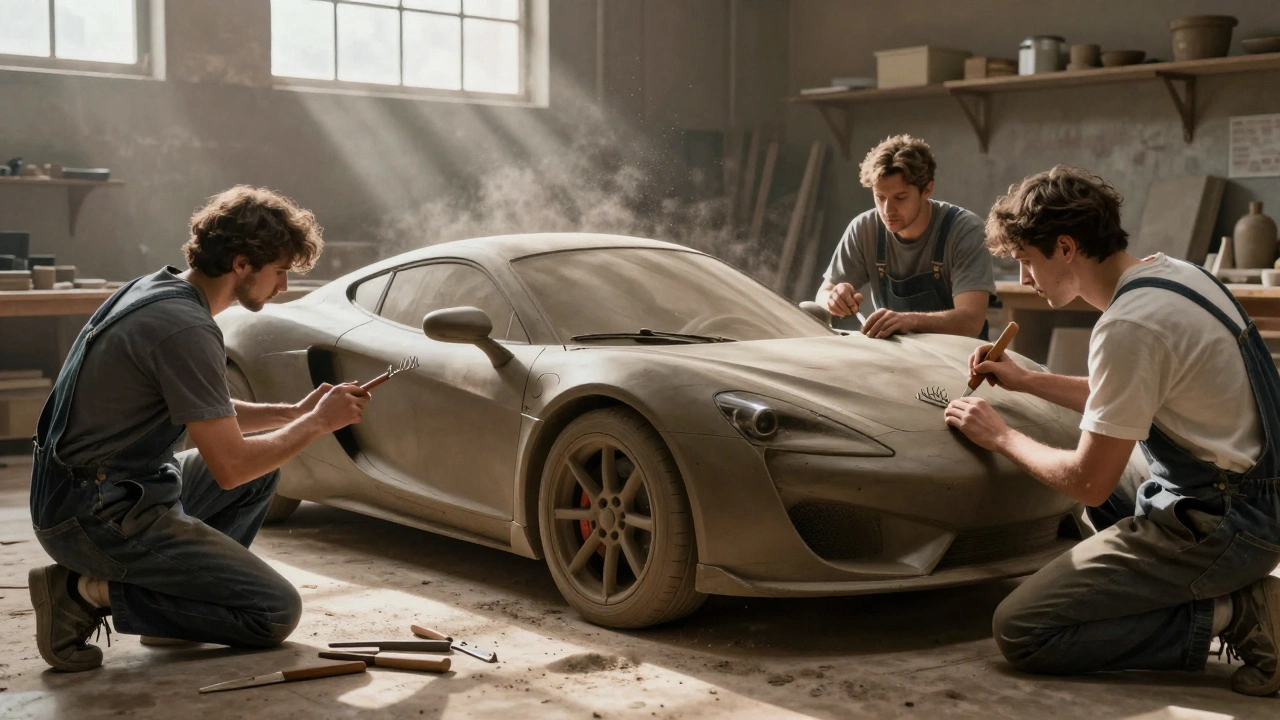
Why This Process Still Matters
You might ask: Why not skip the clay and go straight to digital? The answer is simple - you lose something irreplaceable. Digital tools are fast. They’re precise. But they’re cold. A computer can calculate the perfect aerodynamic shape. But it can’t feel the weight of a car’s rear haunches. It can’t sense how a headlight should curve to meet the grille like a smile. In 2021, a study by the Royal College of Art found that cars designed using the full sketch-to-clay-to-CAD process were rated 37% higher in emotional appeal by consumers than those designed digitally. Buyers didn’t know how the cars were made. They just knew they felt different. British manufacturers don’t cling to this method out of nostalgia. They do it because it works. The 2025 Rolls-Royce Spectre, for example, took 22 months to design - 14 of them spent on clay. The result? A car that looks like it was carved from moonlight.The Human Element
The British process isn’t about tools. It’s about people. It’s about the 70-year-old modeler who still uses the same scraper his father used. It’s about the 24-year-old designer who learned to sketch by copying E-Type lines in her notebook. It’s about the team that spends three days arguing over a 2-millimeter curve. At the same time, this isn’t a romantic myth. It’s a rigorous discipline. Every clay model is measured, documented, and validated. Every sketch is archived. Every CAD file is traceable back to the original clay. There’s no guesswork. Just deep, deliberate craft.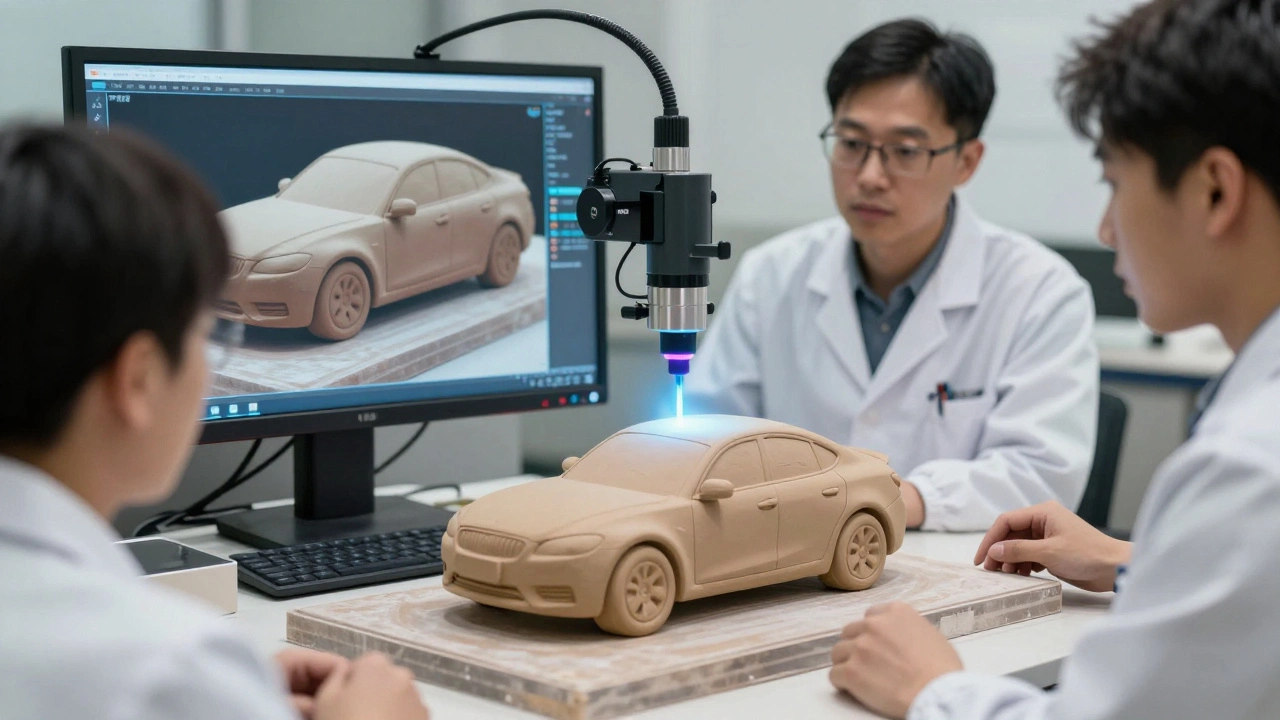
What Other Carmakers Are Learning
Even companies that never used clay are starting to adopt parts of this process. Tesla tried to skip it entirely. The Model S Plaid’s design was done in digital space. But when they tested prototypes, drivers said it felt "clinical." Tesla’s design team later admitted they missed the tactile feedback. Now, they’ve started using small clay models for key surfaces. BMW, Porsche, and even Hyundai have opened clay studios in the UK. They don’t just want to build cars. They want to build cars with soul.It’s Not About Tradition. It’s About Truth.
The British car design process isn’t outdated. It’s a living system. It’s been refined over decades, not because it’s old, but because it’s true. It honors the fact that cars aren’t just machines. They’re objects of desire. They’re symbols. They’re stories. You can’t simulate emotion with software. You can’t algorithmize beauty. You can’t code a feeling. That’s why, in 2026, British car designers still start with a pencil. And end with a sculpture.Why do British car designers still use clay models instead of going fully digital?
Clay models allow designers to physically interact with the car’s form. They can touch curves, feel transitions, and adjust surfaces in real time - something digital tools can’t replicate. This tactile feedback leads to designs that feel more natural and emotionally resonant. Studies show that cars designed with clay are rated significantly higher in emotional appeal by buyers, even when they don’t know how the car was made.
Is the sketch-to-clay-to-CAD process slower than digital design?
Yes, it takes longer - sometimes months longer. But that’s not a flaw. It’s intentional. The extra time allows for refinement, collaboration, and discovery. A digital model can be changed in seconds, but a clay model forces teams to slow down, debate, and agree. Many British manufacturers say the extra time leads to fewer costly changes later in production. The result is a better-designed car, not just a faster one.
Do all British car brands still use this method?
Most do. Brands like Jaguar, Aston Martin, Bentley, Rolls-Royce, and Land Rover still rely on the full process. Even smaller British manufacturers like Morgan and Caterham use clay models. Some, like McLaren, have scaled back clay use for certain models but still use it for flagship vehicles. The only exceptions are EV startups that prioritize speed over heritage - and even they’re starting to borrow elements from the British method.
Can a car designed digitally ever feel as emotional as one designed with clay?
It’s possible, but rare. Digital tools are excellent for precision and simulation, but they lack the intuitive, human feedback loop that clay provides. Some designers argue that with enough experience, a digital artist can mimic the feeling of clay. But in practice, cars designed without physical models often feel "engineered" rather than "crafted." Buyers can sense the difference - even if they can’t explain why.
What happens to the clay models after the design is finalized?
Most are preserved. British carmakers archive their clay models in climate-controlled storage. Some become museum pieces. The original 1961 Jaguar E-Type clay model is on display at the British Motor Museum. Others are reused - clay can be recycled and reshaped for future projects. The process isn’t wasteful; it’s cyclical. The clay doesn’t die - it evolves.