How British Government Policy Sparked Auto Growth After WWII
 Mar, 6 2026
After World War II, Britain didn’t just rebuild-it reimagined its future. While much of Europe lay in ruins, the British government made a bold bet: auto growth would be the engine of recovery. Not just for jobs, but for national pride, trade, and global influence. By 1950, Britain was producing more cars than any country in Europe, and exporting them faster than anyone thought possible. This wasn’t luck. It was policy.
From War Machines to Family Cars
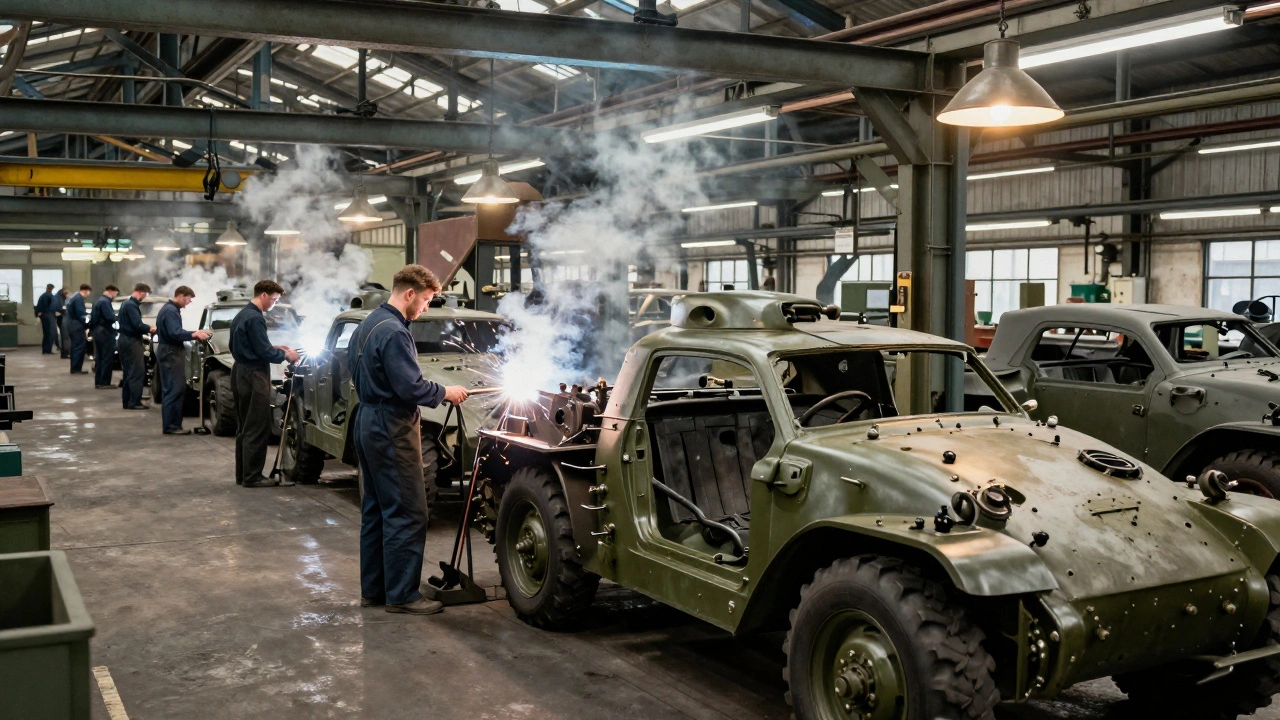
During the war, British factories churned out tanks, planes, and munitions. When the guns fell silent, the government faced a simple question: what do you do with 10,000 assembly lines built for war? The answer came fast. Convert them to make cars.
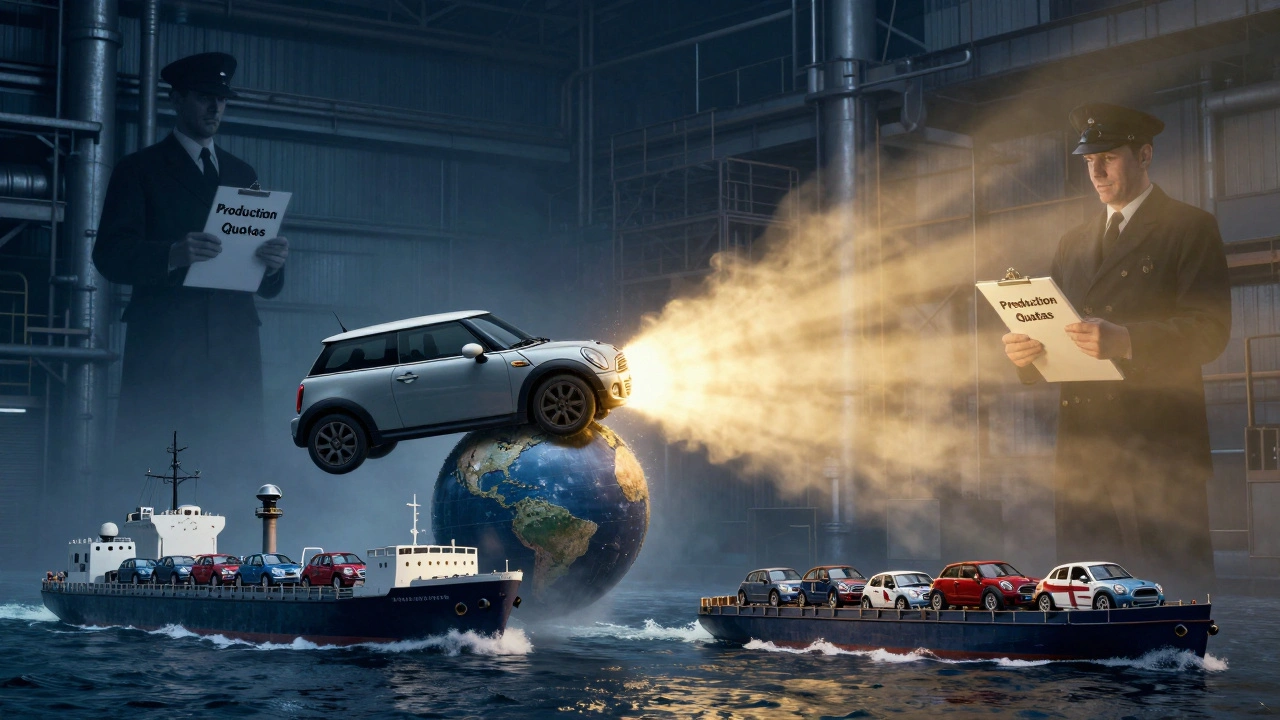
The Ministry of Supply didn’t just give orders-it gave incentives. Factories that shifted from military production to civilian vehicles got tax breaks, priority access to steel, and guaranteed government contracts. Companies like Morris, Austin, and Jaguar didn’t need to beg for capital. They were told: build. The government even set production quotas, not to limit output, but to ensure no factory sat idle.
By 1948, the UK was making over 500,000 cars a year. By 1955, it was over 1.2 million. That’s more cars per capita than Germany, France, or Italy. And it wasn’t just volume-it was variety. From the humble Mini to the elegant Jaguar XK120, British cars became symbols of quality and style.
The Export Push: Selling Britain to the World
Domestic demand was strong, but the real goal was export. Britain was deep in debt after the war. It needed hard currency-dollars, not pounds. And cars were perfect. They were high-value, durable, and in demand everywhere.
The government didn’t wait for market forces. It forced them. The Export Credits Guarantee Department (ECGD) stepped in to back loans for foreign buyers. If a dealership in Australia or Canada wanted to buy 100 Austins, the British government guaranteed the payment. No risk for the buyer. No cash flow problems for the factory.
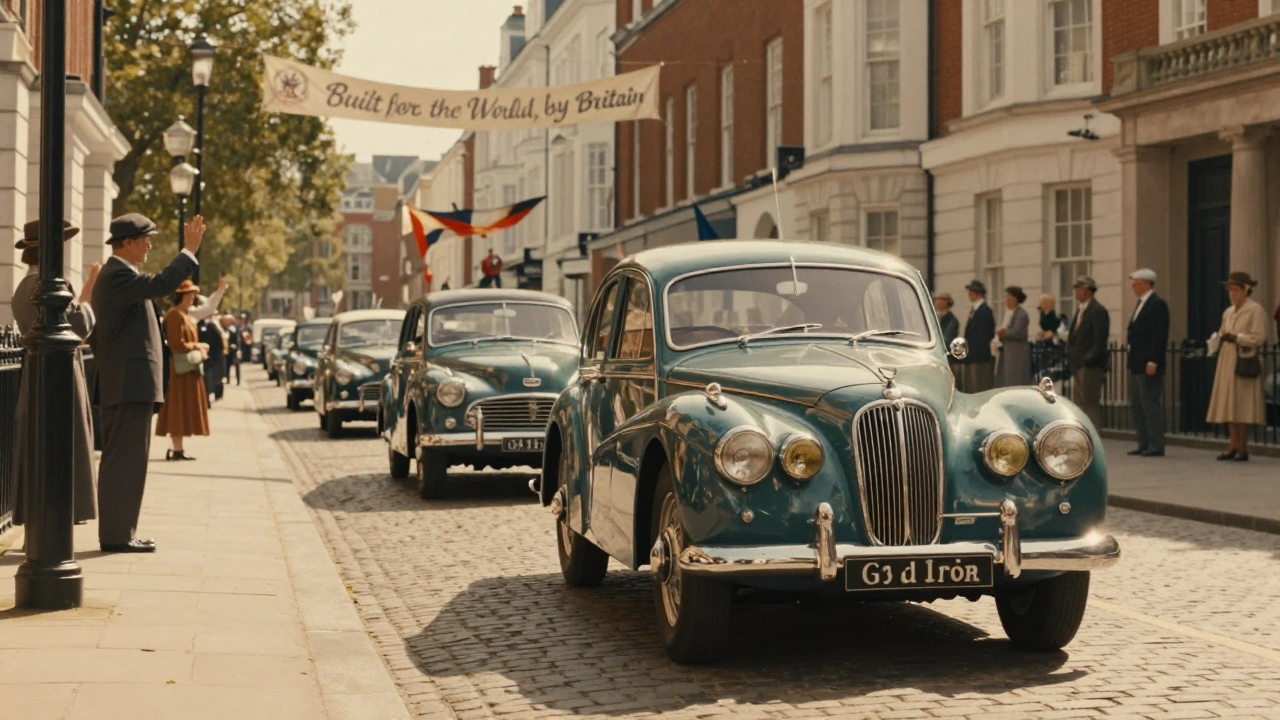
At the same time, trade missions were sent to every corner of the Commonwealth. In India, Nigeria, and Canada, British cars weren’t just sold-they were promoted as the logical choice. A 1951 brochure from the British Motor Corporation read: “Built for the world, by Britain.” And it worked. By 1957, over half of all British cars rolled off the line for export. The UK became the world’s largest car exporter.
Steel, Fuel, and the Hidden Costs
None of this happened without sacrifice. Steel was rationed until 1954. Every car needed a license, and owners paid a heavy purchase tax. Gasoline was expensive. Roads were narrow. Yet, the government kept pushing.
Why? Because every car exported brought in £300 in foreign earnings (roughly £8,000 today). Every car built kept a worker employed. Every factory running meant Britain wasn’t falling behind.
But there was a cost. The focus on volume meant some models were built quickly, with corners cut. Early postwar British cars had poor rust protection, flimsy interiors, and unreliable electrical systems. Buyers overseas noticed. By the early 1960s, German and Japanese cars-smaller, more reliable, and better built-started eating into British market share.
Why It Worked (and Why It Didn’t Last)
The postwar auto boom wasn’t just about cars. It was about control. The government didn’t just support the industry-it managed it. It set production targets, allocated materials, dictated export destinations, and even influenced design choices. It was state-guided capitalism at its most direct.
It worked because Britain had something no one else did: a global network of trade partners, a skilled workforce, and a reputation for engineering. The Mini, for example, wasn’t just a car. It was a solution to urban congestion, designed by a British engineer under government pressure to create a small, efficient vehicle. It sold over 5 million units.
But the system had no room for innovation. Companies didn’t compete-they followed orders. When global markets changed, and buyers wanted fuel efficiency, modern safety features, and sleek designs, British manufacturers were slow to adapt. The government didn’t pivot fast enough. By the late 1960s, the boom was over. Factories closed. Brands disappeared.
The Legacy: More Than Just Cars
The postwar British auto boom didn’t just create jobs. It created a national identity. For a decade, Britain was the world’s carmaker. It showed what a nation could do when policy, industry, and public will aligned.
Today, you can still see its traces. The UK’s automotive engineering talent still leads in motorsport, luxury vehicles, and electric powertrains. Companies like Aston Martin and McLaren owe their global standing to the foundation built in the 1950s.
And the lesson? Government can spark growth-but it can’t sustain it forever. The best policies don’t just support industry. They prepare it for the future.
What were the key government incentives for the British auto industry after WWII?
The British government offered tax breaks, guaranteed access to scarce materials like steel and rubber, direct government contracts for converted factories, and export financing through the Export Credits Guarantee Department. These incentives removed financial risk and ensured factories stayed running, turning wartime production lines into car factories overnight.
Why did Britain focus so heavily on exporting cars after the war?
Britain was deeply in debt after WWII and needed hard currency, especially U.S. dollars, to pay for imports and rebuild its economy. Cars were ideal exports: high-value, durable, and in demand globally. Exporting cars brought in far more foreign income than importing them cost, making it one of the most effective ways to balance the national ledger.
How did British car exports compare to other countries in the 1950s?
By 1957, Britain was the world’s largest exporter of cars, shipping over 600,000 vehicles annually-more than Germany, France, and Italy combined. It exported more than half of all cars it produced, with major markets in Australia, Canada, India, and across the British Commonwealth. No other nation matched its export volume or reach at the time.
What were the major weaknesses of postwar British cars?
Many British cars of the 1950s suffered from poor rust protection, cheap interiors, unreliable electrical systems, and inconsistent quality control. These flaws were a result of rushed production, material shortages, and a focus on volume over refinement. By the early 1960s, German and Japanese manufacturers began outperforming British brands in reliability and modern design.
Why did the British auto boom eventually decline?
The decline came from rigid government control and lack of innovation. Companies were told what to build, how much to produce, and where to sell. This system worked while demand was high and competition was low. But when global markets shifted toward fuel efficiency, safety, and advanced engineering, British firms couldn’t adapt quickly. The state didn’t adjust its policies fast enough, and by the 1970s, many iconic brands had vanished or been absorbed.