From Mini to Range Rover: British Design Principles in Modern Mobility
 Oct, 29 2026
You look at a Mini, and you see a tiny box on wheels. You look at a Range Rover, and you see a luxury tank. On the surface, they have nothing in common. One is a city slicker from the 1960s; the other is a status symbol from the 1970s. But if you peel back the paint and look at the engineering soul of both, you find the same DNA. It’s not just about horsepower or badge prestige. It’s about a specific way of thinking that defined British motoring for decades.
This isn’t nostalgia bait. The principles that made these cars work are actively shaping how we move today. We’re talking about efficiency born of scarcity, utility driven by necessity, and elegance that doesn’t shout. In an era where electric vehicles (EVs) are redefining what a car can be, understanding this lineage helps us understand why some designs feel "right" while others feel like tech demos on wheels.
The Philosophy of Doing More With Less
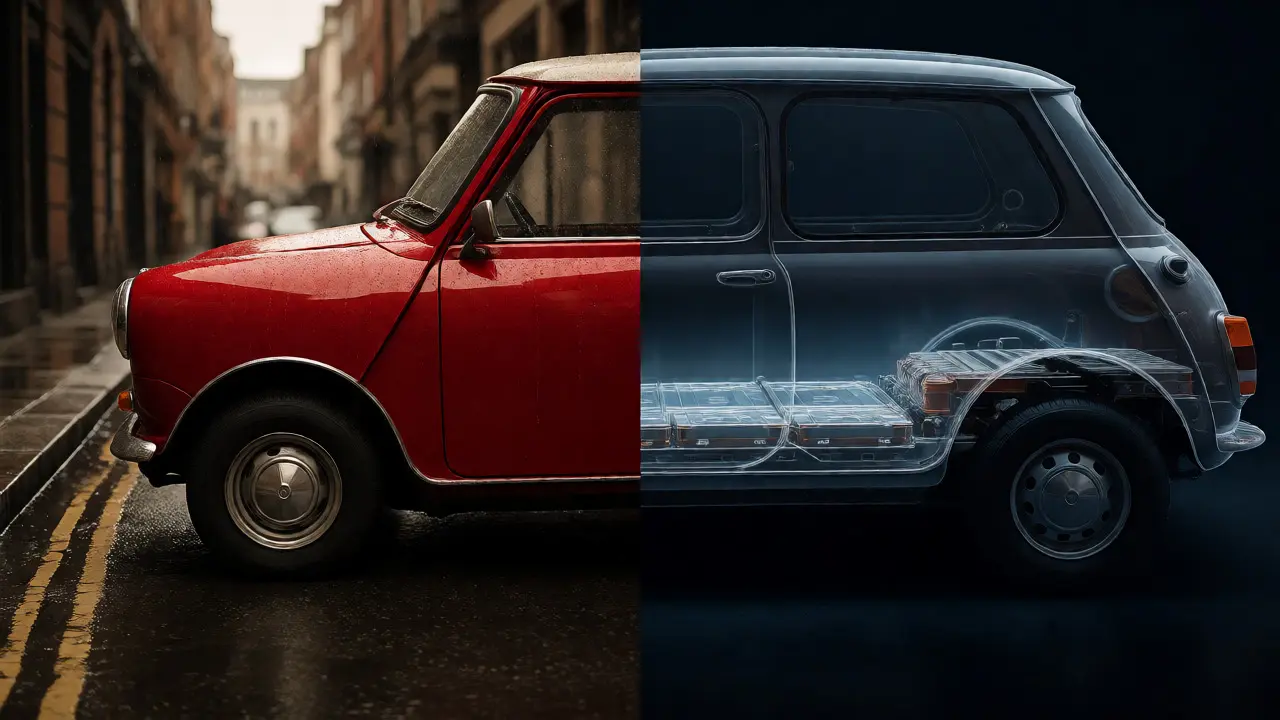
Let’s start with the Mini. When Alec Issigonis designed it in 1959, Britain was still recovering from post-war rationing. Fuel was expensive. Streets were narrow. Money was tight. He didn’t have the luxury of excess. So, he invented transverse engine placement-putting the engine sideways instead of front-to-back-to free up space. This wasn’t a stylistic choice; it was a survival tactic.
The Mini is a compact car that pioneered transverse engine layout to maximize interior volume within a small footprint. This principle of spatial efficiency is now the holy grail of EV design. Look at the BMW i3 or the Nissan Leaf. They prioritize cabin space over hood length because battery packs need room. The Mini proved fifty years ago that you don’t need a long nose to have a good car. You just need smart packaging.
- Scarcity breeds innovation: Limited resources force engineers to think laterally.
- Human-centric dimensions: Cars should fit the driver’s life, not the other way around.
- Modularity: Simple parts make maintenance easier and cheaper.
Rugged Elegance: The Range Rover Standard
If the Mini is about squeezing out utility, the Range Rover is about lifting utility to an art form. Launched in 1970, it wasn’t meant to be a luxury cruiser initially. It was a farm vehicle that could handle a muddy field and then drive into London without looking out of place. Charles Spencer King, its designer, wanted a car that respected the user’s intelligence. No flashing lights, no aggressive grilles. Just clean lines and absolute competence.
This concept, often called "quiet luxury," is trending hard in modern mobility. Think about the Tesla Model S or the Polestar 2. They avoid chrome and excessive curves. They rely on material quality and functional simplicity. The Range Rover taught the industry that ruggedness doesn’t have to look rough. You can go off-road and arrive at a gala dinner without changing clothes. That dual-purpose ethos is exactly what modern SUV buyers want, even if they never leave the pavement.
| Feature | Classic British Principle | Modern Application |
|---|---|---|
| Space Utilization | Transverse engines (Mini) | Flat floorboards for batteries (EVs) |
| Aesthetic | Understated elegance (Range Rover) | Minimalist interfaces (Tesla/Polestar) |
| Functionality | All-terrain capability | All-weather reliability & range |
| Material Use | Durable steel and aluminum | Recycled composites and vegan leather |

Why Simplicity Wins in the Tech Era
We live in a world of screens. Dashboards are becoming tablets. Controls are buried in menus. But British design has always leaned toward tactile feedback. You turn a knob. You push a lever. It feels mechanical, real, and predictable. There’s a reason why many drivers still prefer physical buttons for climate control. It’s safer when you’re driving at 60 mph.
The Jaguar Land Rover group, which owns both the Range Rover and Jaguar brands, has struggled with this transition. They’ve tried to blend digital tech with traditional craftsmanship. Sometimes it works, sometimes it frustrates users. But the core lesson remains: technology should serve the driver, not distract them. A well-designed interface disappears. You stop noticing it because it just does what you expect.
Consider the Land Rover Defender. Its latest iteration uses digital displays but keeps the structural integrity visible. You can see the load-bearing elements. It’s honest. In contrast, some modern EVs hide everything behind sleek plastic shells, making repairs difficult and emotional connection shallow. Honesty in materials is a British trait worth preserving.
The Global Impact of Local Identity
Here’s the twist: these cars weren’t designed for global markets initially. They were built for British roads, British weather, and British budgets. Yet, they conquered the world. Why? Because authenticity travels better than generic appeal.
When BMW bought the Mini brand in the 1990s, they didn’t erase its history. They amplified it. The new Minis were bigger, yes, but they kept the round headlights, the floating roofline, and the playful spirit. This respect for heritage allowed the brand to thrive globally. Compare this to some American or Japanese brands that chase trends so aggressively they lose their identity.
For modern mobility companies, this means finding your unique voice early. If you’re building an EV startup, don’t just copy Tesla. Find a problem that only you can solve elegantly. Maybe it’s repairability. Maybe it’s community-focused charging networks. Maybe it’s designing for elderly drivers who struggle with touchscreens. Specificity creates loyalty.

Practical Lessons for Today’s Buyers
So, what does this mean for you if you’re shopping for a car in 2026? It means look beyond the spec sheet. Ask yourself: Does this car respect my time? Does it respect my space? Is it built to last?
Checklist for evaluating modern vehicles through a British design lens:
- Evaluate visibility: Can you see out easily? Good sightlines are a hallmark of good design.
- Test the controls: Are they intuitive? Do you need a manual to adjust the heat?
- Assess durability: Will this car survive five years of daily use, or will it feel cheap after two?
- Consider repairability: Can independent mechanics fix it, or do you need a dealership?
These questions aren’t just about money. They’re about dignity. A car should empower you, not burden you. The best British designs understood this. They gave people freedom within constraints.
Looking Forward: The Next Chapter
The future of mobility isn’t just electric. It’s connected, shared, and sustainable. But the human element won’t disappear. We’ll still want cars that feel alive, that respond to our inputs, that reflect our personalities. The Mini and the Range Rover prove that character matters more than specs.
As we move toward autonomous driving, the risk is sterile, identical pods. Everyone looks the same inside a robotaxi. To combat this, manufacturers need to inject personality. Maybe that means reviving the playful interior of the Mini. Maybe it means the robust, reassuring presence of the Range Rover. Whatever form it takes, the goal is the same: create machines that people love, not just tolerate.
Don’t let the hype cycle fool you. Technology changes fast. Design principles change slow. Stick with the ones that have stood the test of time. Efficiency, elegance, and empathy. These aren’t old-fashioned ideas. They’re the foundation of good engineering, past, present, and future.
Why is the Mini considered a design icon?
The Mini revolutionized small car design by placing the engine transversely, which freed up 80% of the vehicle's footprint for passengers and luggage. This efficient use of space became a standard for compact cars worldwide.
How did the Range Rover influence luxury SUVs?
It established the concept of "luxury utility," proving that a vehicle could be capable off-road while offering high-end comfort and understated styling. This set the template for almost all premium SUVs that followed.
Are British design principles still relevant for EVs?
Yes. The focus on space efficiency, durable materials, and intuitive controls directly addresses current EV challenges like battery packaging, build quality concerns, and driver distraction from complex interfaces.
What defines "quiet luxury" in car design?
Quiet luxury avoids flashy logos and aggressive styling. It relies on high-quality materials, precise panel gaps, and functional elegance. The Range Rover is the classic example, influencing brands like Polestar and Genesis.
Why do some modern cars lack character?
Many modern cars prioritize aerodynamics and manufacturing cost-cutting over distinct design language. This leads to homogenized shapes. Reintroducing tactile controls and unique proportions can restore character.