Why the UK Auto Market Fragmented: Early 1900s Brand Competition and Capital Constraints
 Nov, 10 2026
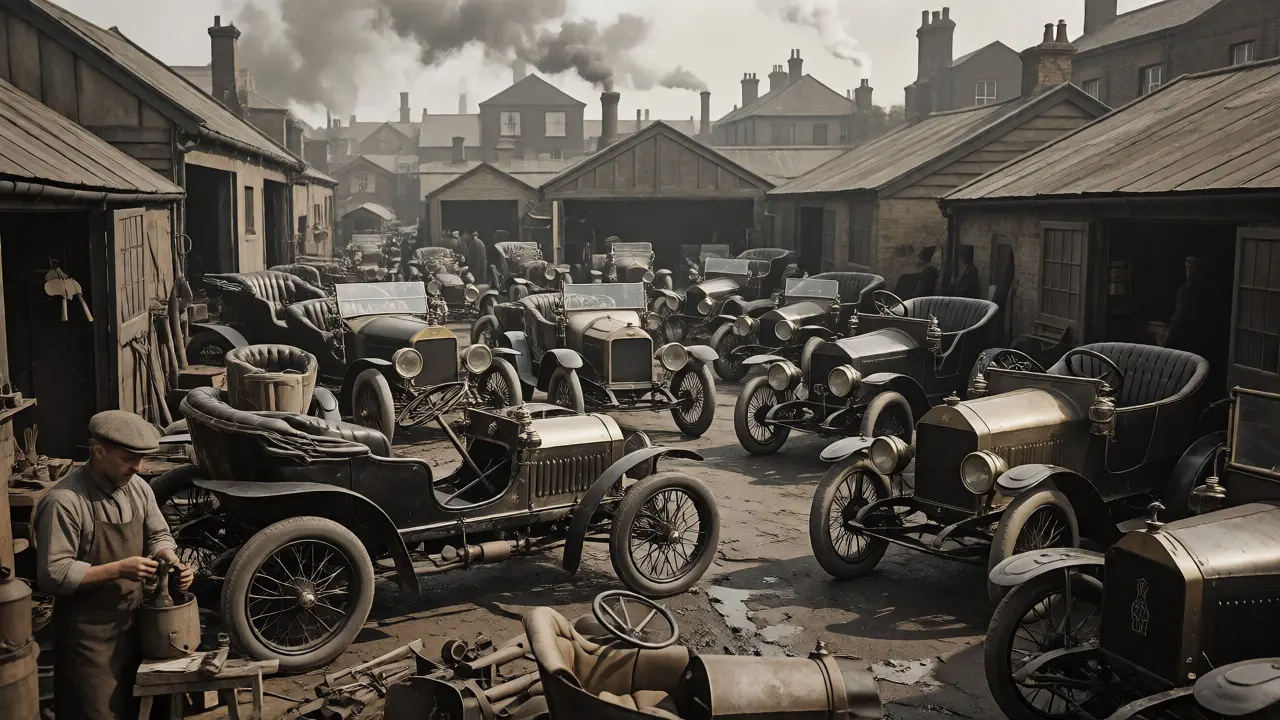
You might assume that the modern car industry, with its handful of giant conglomerates like Volkswagen Group or Stellantis, was always destined to be a game for big money. But if you look back at Britain in the early 1900s, you’d see something completely different: hundreds of tiny workshops popping up like mushrooms after rain, each trying to build their own version of the horseless carriage. It wasn’t just chaos; it was a specific economic phenomenon driven by capital constraints and intense local competition. Understanding why this fragmented landscape eventually collapsed into a few dominant players tells us a lot about how industries mature.
The Great Explosion of British Car Makers
Between 1900 and 1914, known as the Edwardian era, the number of registered motor vehicle manufacturers in the UK skyrocketed. We aren’t talking about a dozen companies. At the peak, there were over 250 distinct firms attempting to produce automobiles. Why so many? Because building a car didn’t require a billion-dollar factory. A skilled engineer with some capital could set up shop in a converted stable or a small industrial unit in Coventry, Birmingham, or London.
This period saw entities like Sunbeam Motor Car Company, a prominent British manufacturer based in Wolverhampton known for high-quality luxury vehicles competing directly with obscure startups that lasted only a single season. The barrier to entry was low because the technology was still new and standardized parts weren’t really a thing yet. If you had a good idea for an engine layout or a novel transmission, you could attract investors quickly. This created a hyper-competitive environment where differentiation was key, but survival was rare.
Capital Constraints Stifled Scale
Here is the brutal truth: most of these early manufacturers ran out of cash. Building cars is expensive, but selling them profitably is harder. In the early 1900s, the typical British car maker operated on razor-thin margins. They lacked the capital constraints relief that comes with mass production. Unlike Henry Ford in America, who was aggressively scaling up his Model T assembly lines, many British firms stuck to artisanal methods. They built cars one by one, or in very small batches.
This approach meant they couldn’t lower costs through economies of scale. Every nut, bolt, and chassis part had to be machined individually. When sales dipped-even slightly-cash flow dried up. Banks were hesitant to lend to unproven automotive ventures, viewing them as speculative risks rather than industrial staples. So, when a company hit a snag, it often went bankrupt not because the product was bad, but because they couldn’t finance the next month’s payroll. This constant threat of insolvency prevented any single player from dominating the market early on.
| Feature | Small Workshop Manufacturer | Emerging Large Manufacturer |
|---|---|---|
| Production Volume | 10-50 units per year | 500+ units per year |
| Labor Method | Skilled artisans (hand-fitted) | Semi-skilled workers (assembly line elements) |
| Capital Source | Private investors, personal savings | Public stock offerings, bank loans |
| Risk Profile | High failure rate due to cash flow | Lower immediate risk, higher long-term debt |
| Market Focus | Niche luxury or specific utility | Broad middle-class appeal |
The Role of Local Supply Chains
Another reason the market stayed fragmented was geography. The UK’s industrial base was highly localized. Coventry became the heart of cycle and later car manufacturing. Birmingham provided metalwork and machining. London offered design talent and access to wealthy buyers. These clusters allowed small manufacturers to survive by sourcing components locally without needing massive vertical integration.
For example, Daimler, a German-British joint venture operating in Coventry, which played a pivotal role in introducing advanced engineering techniques to the UK market benefited from existing infrastructure. However, smaller competitors could also tap into these same supply networks. A startup didn’t need to cast its own engine blocks; it could buy them from a specialist foundry in the Black Country. This modularity lowered the initial investment required, keeping the door open for new entrants even as established players tried to lock down the market.

Brand Competition Was Personal, Not Corporate
In today’s world, we think of brands as faceless corporations. In the early 1900s, the brand was the person. Many companies bore the name of their founder, such as Austin, founded by Herbert Austin, which grew from a small workshop into one of the UK's largest volume car producers. This made marketing intensely personal and competitive. Owners would race their cars in public events to prove superiority. Victory in a rally wasn’t just good PR; it was proof of engineering viability.
This fierce brand competition drove rapid innovation but also burnout. Engineers worked grueling hours to keep ahead of rivals. When a founder died, retired, or lost interest, the company often folded. There was little institutional knowledge retained beyond the individual genius. This personality-driven model made consolidation difficult because merging two ego-driven workshops rarely worked smoothly. It took decades for corporate governance to replace founder-led management.
How WWI Changed Everything
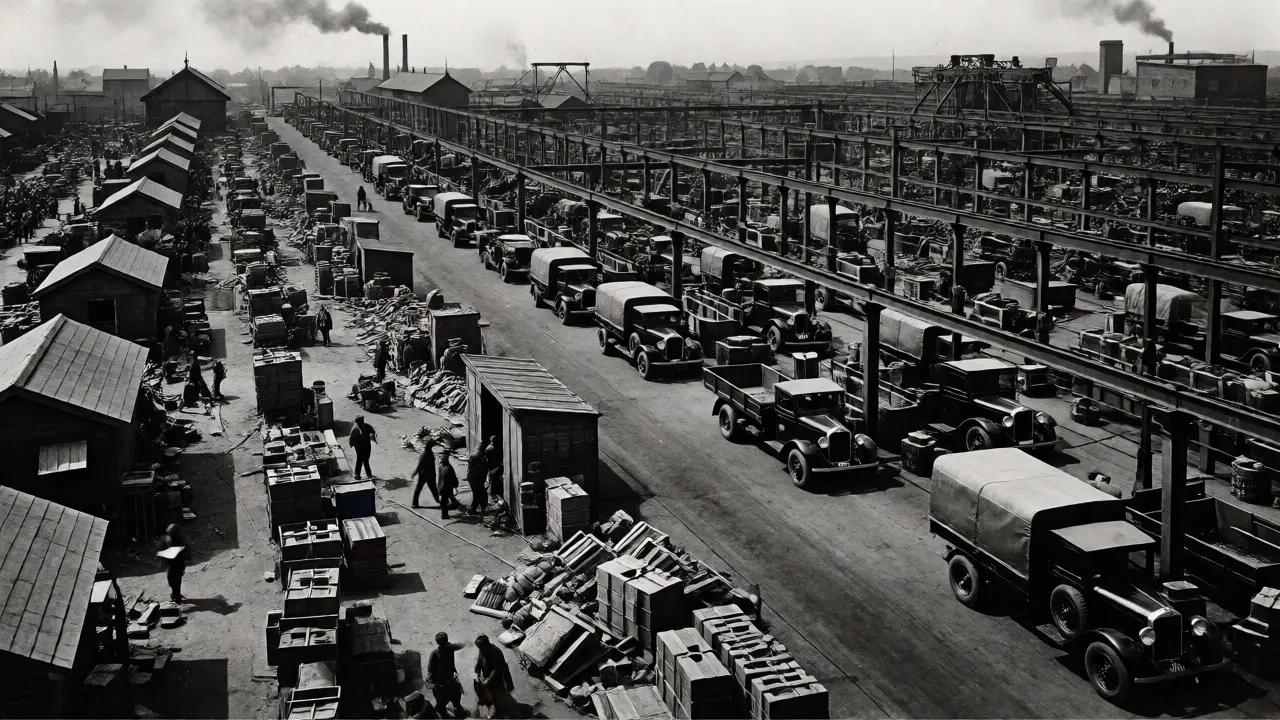
If you want to know when the fragmentation started to end, look at World War I. The war effort forced the government to take control of industrial capacity. Small, inefficient factories were either repurposed for munitions or shut down entirely. Larger firms with better organization and deeper pockets secured lucrative government contracts. Companies like Vauxhall, an early British car manufacturer acquired by General Motors in 1925, which leveraged wartime production experience to streamline post-war operations gained significant operational expertise during the conflict.
When peace returned in 1918, the playing field had shifted. The small workshop owners who survived the war faced a new reality: customers expected more reliability and lower prices. The artisanal model couldn’t compete with the semi-mass production techniques learned during wartime mobilization. This marked the beginning of the great consolidation. By the 1930s, the number of active manufacturers had dropped dramatically. The survivors were those who had navigated the capital constraints effectively or merged with stronger partners.
Lessons for Modern Startups
Does this history matter today? Absolutely. Look at the electric vehicle boom. We are seeing a similar pattern of fragmentation. Hundreds of EV startups are launching, many facing the same cash-flow crunches that killed Edwardian car makers. The lesson from the early 1900s is clear: technology alone doesn’t win. Operational efficiency and financial resilience do.
Modern entrepreneurs can learn from the failures of the past. Relying solely on niche appeal without a path to scale is dangerous. Just as small UK workshops struggled against emerging giants, today’s boutique EV makers must figure out how to secure long-term funding and supply chain stability before the market consolidates. The window for easy entry closes fast once the industry matures.
Frequently Asked Questions
Why were there so many car manufacturers in the UK in the early 1900s?
The barrier to entry was relatively low because cars were hand-built in small workshops using locally sourced components. Skilled engineers could start a business with modest capital, leading to a proliferation of small, specialized firms across industrial hubs like Coventry and Birmingham.
What role did capital constraints play in the decline of these early manufacturers?
Most early manufacturers operated on thin margins and lacked access to large-scale financing. Without the ability to invest in mass-production equipment, they couldn't reduce costs sufficiently to compete with larger firms, leading to frequent bankruptcy when sales fluctuated or economic conditions tightened.
Did World War I accelerate the consolidation of the UK auto industry?
Yes. The war effort favored larger, more organized factories capable of producing munitions and military vehicles efficiently. Many small workshops closed or were absorbed, and surviving companies adopted industrial practices learned during the war, setting the stage for post-war consolidation.
How did brand competition differ in the early 1900s compared to today?
Brands were often tied directly to the reputation and engineering skills of their founders. Marketing relied heavily on racing victories and personal endorsements rather than broad media campaigns. This made the market highly volatile, as the loss of a key founder often led to the company's collapse.
Which companies managed to survive the fragmentation period?
Companies like Austin, Morris, and Standard survived by adopting mass-production techniques and securing better financing. Others, like Vauxhall, were acquired by larger entities (such as General Motors) that provided the necessary capital and distribution networks to thrive in the maturing market.