Why the Jaguar D-Type’s Mulsanne Speed Changed Racing Forever
 Nov, 5 2026
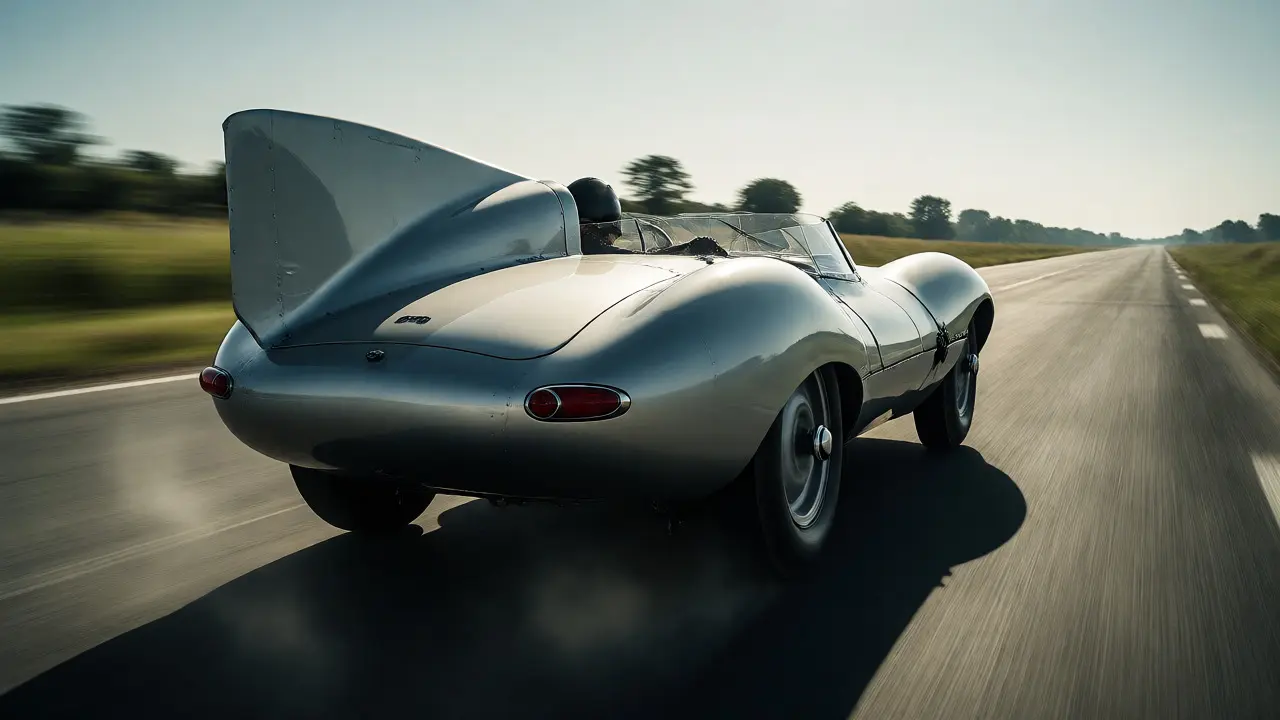
Imagine driving a car at nearly 180 miles per hour on a dirt road in France. No air conditioning, no power steering, and the wind is trying to rip your helmet off. That was the reality for Jaguar D-Type drivers in the early 1950s. This wasn't just about going fast; it was about surviving physics. The story of how this car dominated the Mulsanne Straight isn't just a tale of horsepower. It is a masterclass in engineering that changed how we think about race cars today.
You might wonder why one specific stretch of road mattered so much. The Circuit de la Sarthe, home of the 24 Hours of Le Mans, is unique. Unlike modern tracks with tight corners, the old layout featured long straights where top speed ruled. If you couldn't hit high speeds here, you lost the race. The D-Type didn't just meet this challenge; it redefined what was possible by prioritizing aerodynamics over brute force.
The Engineering Leap from C-Type to D-Type
To understand the D-Type's success, you have to look at its predecessor, the Jaguar C-Type. The C-Type was a beast. It won Le Mans in 1951 and 1953. But it had a problem: drag. At high speeds, the air pushed against the car like an invisible wall. Engineers knew they needed to cut through the air, not push it aside.
Enter Malcolm Sayer, the brilliant aerodynamicist who designed the D-Type. He used mathematical calculations and wind tunnel data-rare for the time-to shape the bodywork. The result? A monocoque chassis made of aluminum alloy. This wasn't just lighter; it was stiffer. Stiffness means better handling at high speeds. When you're doing 170 mph, a flexible frame feels like jelly. The D-Type felt solid.
Sayer's design featured a low nose and a tall vertical fin behind the driver. That fin wasn't just for looks. It acted as a stabilizer, keeping the rear end planted when crosswinds hit. Without it, the car would dance dangerously on the straights. This focus on stability allowed drivers to trust the car enough to push harder, which directly translated to faster lap times.
Mastering the Mulsanne Straight
The Mulsanne Straight was nearly six miles long in the 1950s. Today, it has chicanes to slow cars down. Back then, it was open road. Drivers could reach their maximum velocity before braking for the first corner. For the D-Type, this was the proving ground.
The car's 3.8-liter inline-six engine produced around 250 horsepower. That sounds modest compared to modern standards, but in 1955, it was huge. More importantly, the engine was mounted longitudinally. This layout helped balance weight distribution. Combined with the sleek body, the D-Type could hit speeds exceeding 175 mph (280 km/h).
Compare this to rivals like the Mercedes-Benz 300 SLR or the Ferrari 750 Monza. Those cars were fast, but often less stable at peak velocity. The D-Type's ability to maintain composure meant drivers could spend more time at full throttle. In a 24-hour race, those extra seconds add up to laps, and laps win trophies.
| Feature | Jaguar D-Type | Jaguar C-Type | Mercedes-Benz 300 SLR |
|---|---|---|---|
| Top Speed | ~175 mph (280 km/h) | ~160 mph (257 km/h) | ~185 mph (298 km/h) |
| Chassis Type | Aluminum Monocoque | Tubular Steel Spaceframe | Spaceframe with Alloy Panels |
| Aerodynamic Focus | High (Wind Tunnel Tested) | Moderate | Very High |
| Le Mans Wins | 3 (1955, 1956, 1957) | 2 (1951, 1953) | 1 (1955)* |
Aerodynamics Before It Was Cool
In the 1950s, most race cars looked like boxes with wheels. Aerodynamics was guesswork. Sayer treated the D-Type differently. He understood that air resistance increases with the square of speed. Double your speed, and drag quadruples. So, shaving off even a small amount of drag gave massive gains at top speed.
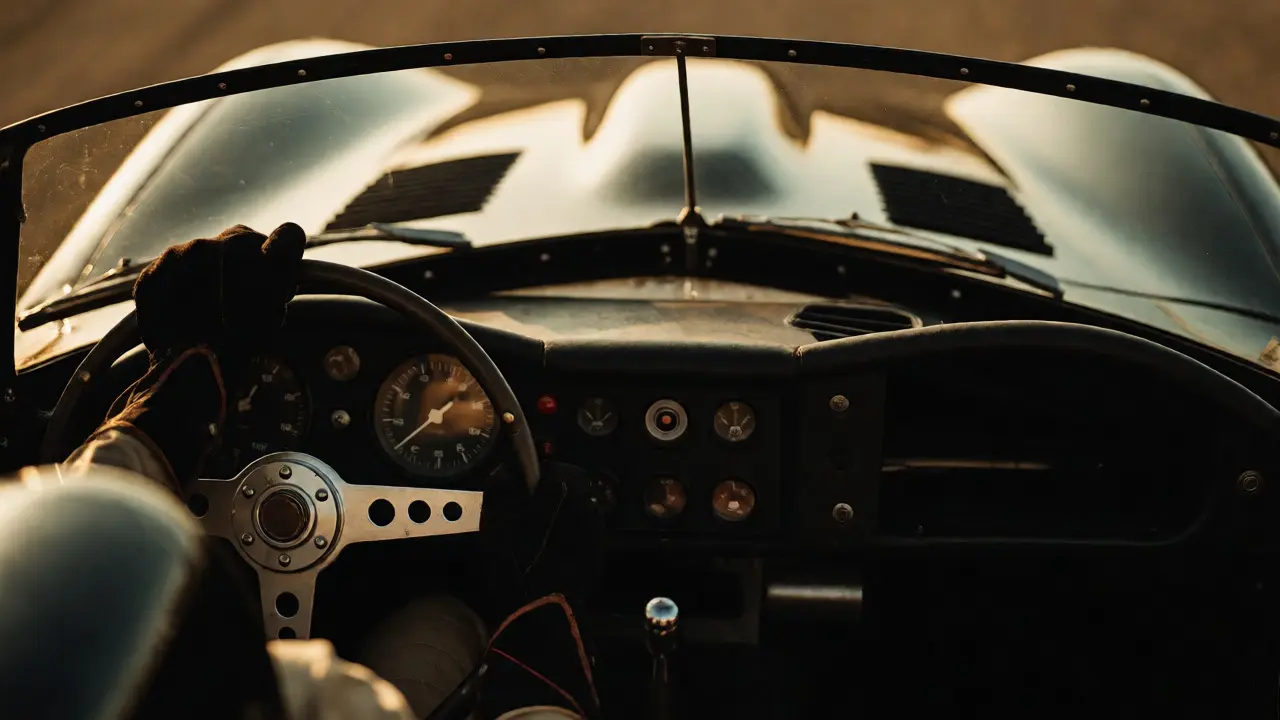
The D-Type's bodywork was smooth and rounded. There were no sharp edges to create turbulence. The cockpit opening was minimized to reduce noise and heat buildup. Even the exhaust pipes were tucked away to avoid disrupting airflow underneath the car. This holistic approach meant every part of the car worked together to slice through the air.
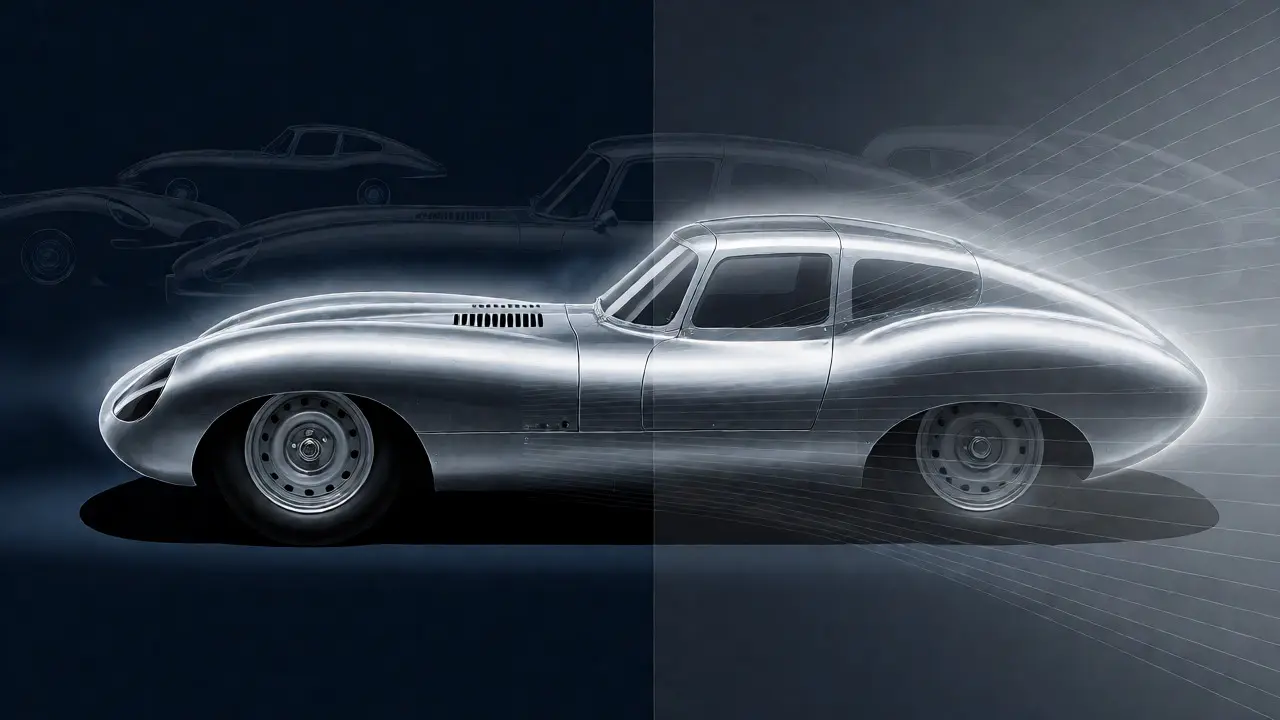
This philosophy influenced future designs. You can see echoes of the D-Type in later Jaguar models like the E-Type. But more importantly, it taught other manufacturers that shape matters as much as engine size. By the late 1950s, almost every serious sports prototype adopted similar principles. The D-Type didn't just win races; it set the template for what a race car should look like.
Reliability Over Raw Power
Winning Le Mans isn't just about being fastest. It's about finishing. The race lasts 24 hours. Components break. Engines blow. Tires fail. The D-Type excelled because it was reliable. Its independent front suspension and live rear axle were simple and robust. Simple parts are easier to fix during pit stops.
Remember, mechanics back then didn't have hydraulic lifts or digital diagnostics. They relied on wrenches and intuition. The D-Type's accessible engine bay allowed quick repairs. If a fuel pump failed, teams could swap it out in minutes. This practicality gave Jaguar a strategic edge. While flashy rivals broke down, Jaguars kept running.
Driver comfort played a role too. Sitting in a cramped, hot cockpit for hours is exhausting. The D-Type offered slightly better ergonomics than many competitors. Less fatigue meant sharper driving in the final hours. And in endurance racing, consistency beats brilliance every time.
The Legacy of Speed
The D-Type's dominance ended when rule changes limited engine sizes and safety concerns led to adding chicanes to the Mulsanne. But its impact remains. It proved that lightweight construction and aerodynamic efficiency could beat heavier, more powerful cars. This lesson still applies in Formula 1, IndyCar, and even electric vehicle design today.
Today, original D-Types sell for millions at auction. Collectors don't just buy them for nostalgia. They recognize the car's historical significance. It represents a turning point when science began guiding automotive design. Every curve tells a story of calculated risk and technical innovation.
If you ever get the chance to sit in one, take note of the view. The low hood limits forward visibility, forcing drivers to rely on feel and instinct. It reminds us that these machines weren't driven by computers. They were guided by human skill amplified by smart engineering. That combination created magic on the track.
What was the top speed of the Jaguar D-Type?
The Jaguar D-Type could reach speeds between 170 and 175 mph (approximately 274-280 km/h). This was achieved thanks to its streamlined bodywork and powerful 3.8-liter engine, making it one of the fastest production-based racers of the 1950s.
Why did the Jaguar D-Type dominate the Mulsanne Straight?
It dominated due to superior aerodynamics and stability. The low-drag body reduced air resistance, while the vertical tail fin provided crucial stability against crosswinds at high velocities. This allowed drivers to maintain higher average speeds safely compared to rival cars.
How many times did the Jaguar D-Type win Le Mans?
The D-Type won the 24 Hours of Le Mans three consecutive years: 1955, 1956, and 1957. This streak cemented its reputation as one of the most successful race cars in history.
Was the Jaguar D-Type street legal?
Yes, some versions were built to be road-legal. These "customer" models had softer suspensions, larger bumpers, and enclosed cockpits for weather protection. However, they retained the core performance characteristics of the race variants.
Who designed the Jaguar D-Type?
Malcolm Sayer designed the Jaguar D-Type. He was an aeronautical engineer turned automotive designer who applied scientific aerodynamic principles to car styling, setting him apart from traditional coachbuilders of his era.