Why Coventry Became Britain’s Automotive Capital: The Supplier and Skills Cluster Explained (1890s)
 May, 28 2026
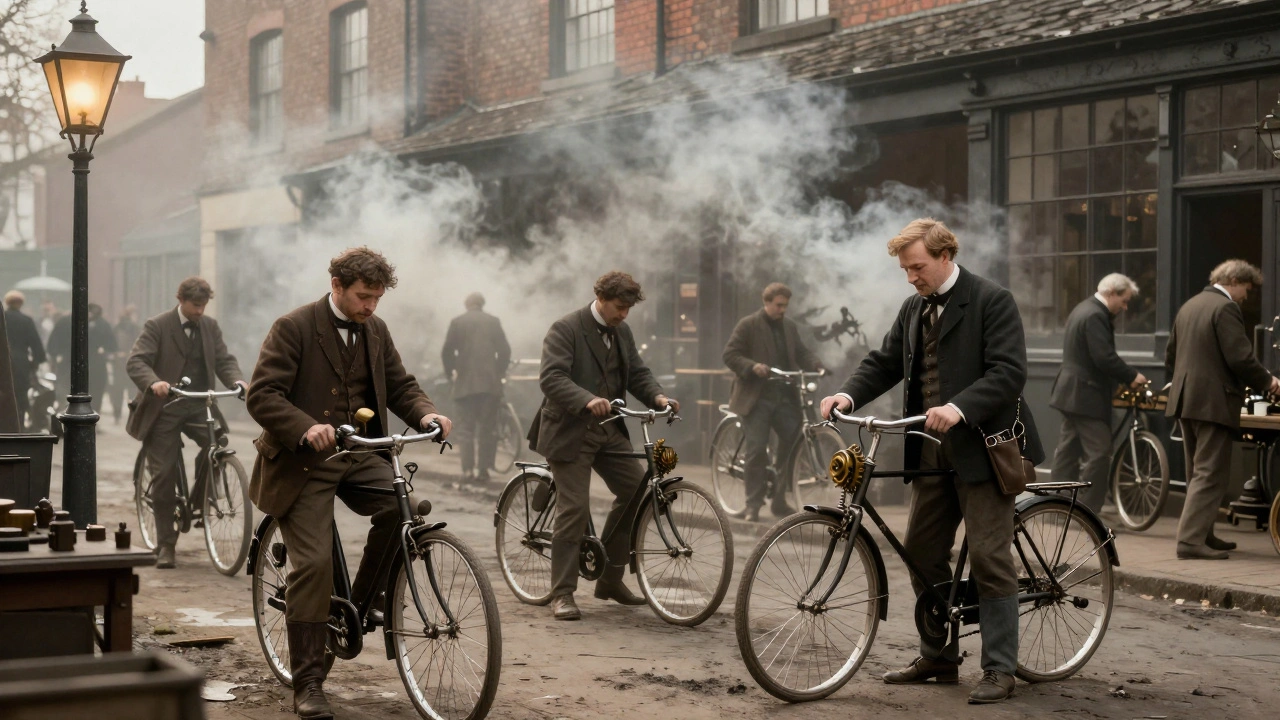
Picture the year 1895. You’re standing in the streets of Coventry, a city in the West Midlands of England. It smells like coal smoke, machine oil, and wet wool. But look closer at what’s happening in the workshops. This isn’t just any industrial town. This is where the modern British car was born. While Paris had Panhard and London had Daimler’s later ventures, Coventry had something else entirely: a dense web of skilled workers and specialized suppliers who could build anything with gears.
Most people think Henry Ford invented mass production, or that Detroit won because of money. That’s half true. But if you want to know why Britain didn’t have a Detroit, you have to look at Coventry in the 1890s. Why did this specific city become the heart of the UK’s auto industry? It wasn’t luck. It was a perfect storm of existing skills, local supply chains, and a culture of tinkering that turned bicycle mechanics into car engineers.
The Bicycle Boom: The Training Ground for Car Makers
To understand cars in Coventry, you first have to understand bicycles. In the late 19th century, the safety bicycle-think two equal-sized wheels and a chain drive-was the iPhone of its day. Everyone wanted one. And Coventry was already the center of the world’s precision engineering trade.
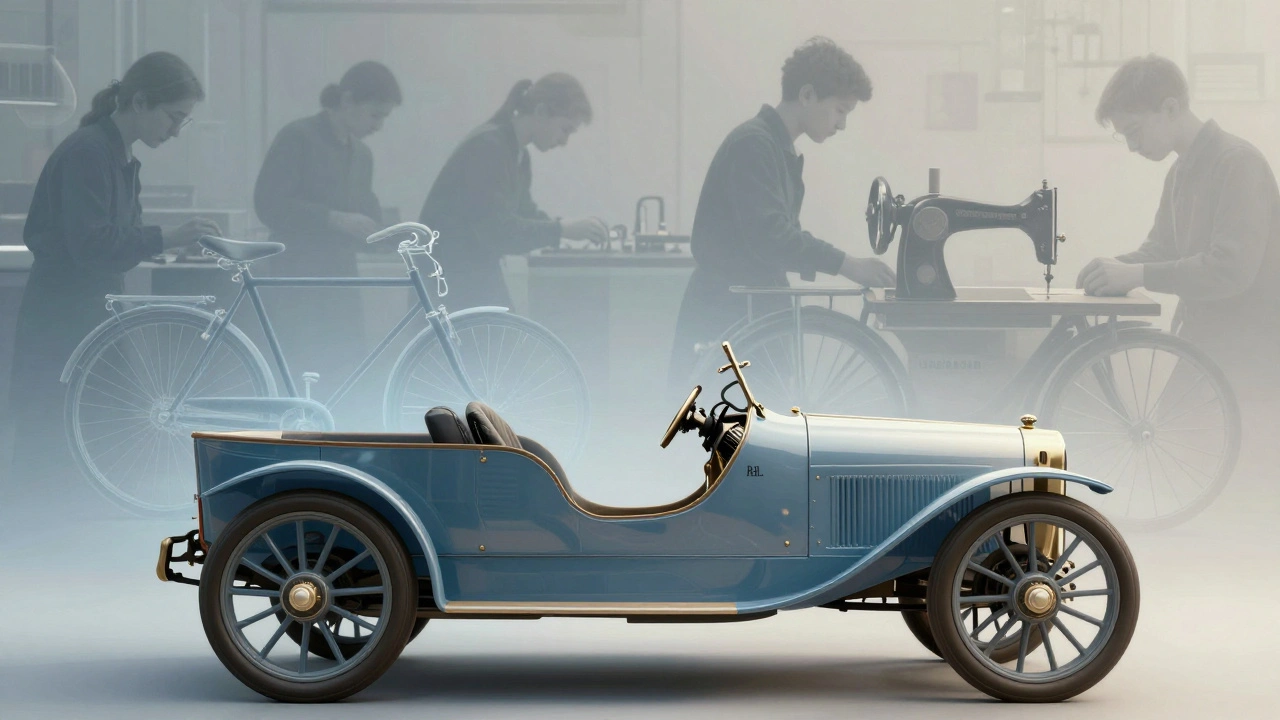
Cities like Birmingham made heavy iron goods. Sheffield made steel blades. But Coventry specialized in small, precise mechanisms. They made sewing machines, typewriters, and especially bicycles. By the 1890s, dozens of firms in Coventry were churning out bikes. This created a massive pool of laborers who knew how to cut threads, fit bearings, and weld metal frames. When the internal combustion engine arrived, these workers didn’t need retraining. They just needed bigger engines.
Jowett started as a bicycle manufacturer before pivoting to automobiles in the early 1900s. So did Riley founded by Thomas Riley, who used his bike-making expertise to create luxury cars. These weren’t random shifts. They were logical evolutions. If you can build a lightweight frame that handles vibration, you can build a car chassis. The skill transfer was immediate.
The Power of the Supplier Cluster
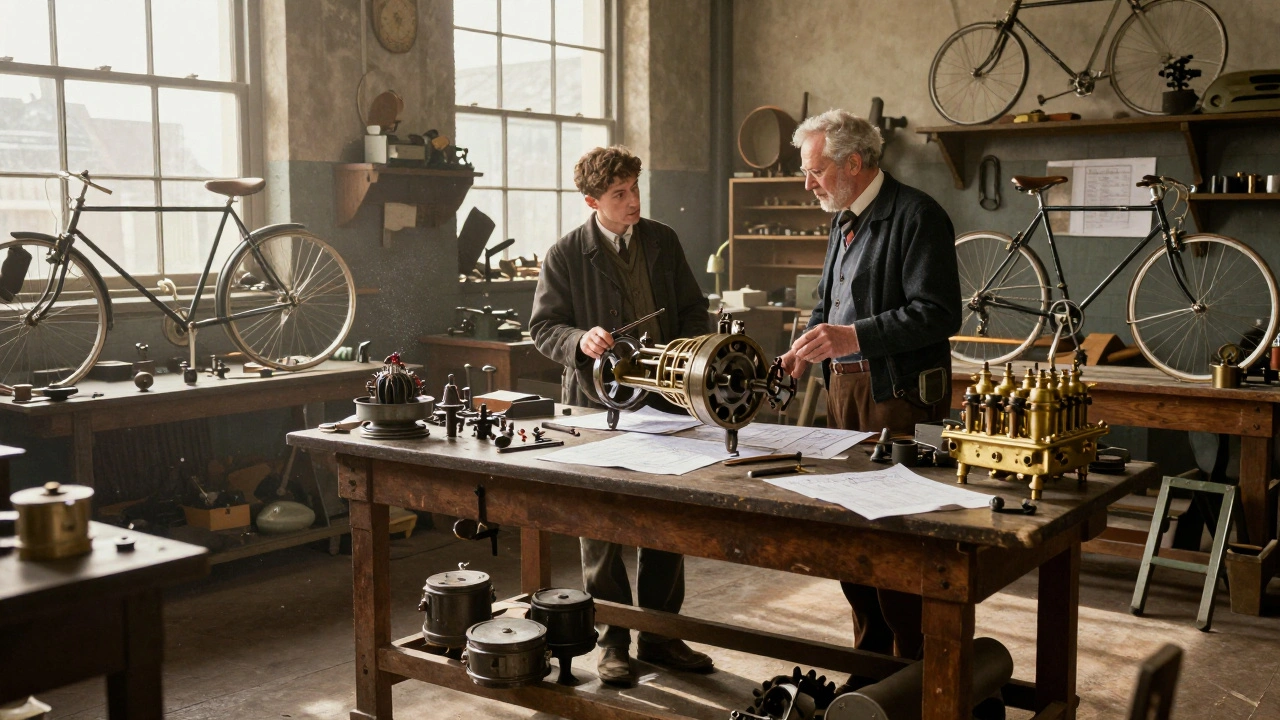
Here’s the secret sauce: proximity. In the 1890s, if a Coventry engineer needed a custom gear, he didn’t order it from a catalog. He walked down the street to a specialist machinist. If he needed a carburetor, there was a guy three blocks away who cast brass fittings for lamps and could adapt them for fuel mixing.
This is what economists call a "supplier cluster." It reduces friction. No shipping delays. No minimum order quantities. Just rapid iteration. A mechanic could prototype a part in the morning, get it machined by noon, and test it on a vehicle by evening. This speed allowed Coventry firms to experiment faster than isolated manufacturers elsewhere.
| Component | Role in Auto Industry | Example Local Firm |
|---|---|---|
| Precision Machining | Gears, pistons, crankshafts | Humber Cycle Company |
| Frame Fabrication | Chassis and body structures | J.A. Prestwich (later part of Standard) |
| Electrical Systems | Magneto ignition, lighting | Local lamp makers adapting tech |
| Tire Manufacturing | Pneumatic tires (rubber sourcing) | Dunlop (nearby Belfast, but supplied locally) |
This network meant that starting an auto company in Coventry required less capital. You didn’t need to own every factory. You just needed the design knowledge and the connections. This lowered the barrier to entry, leading to an explosion of small brands. At one point, Coventry had over 30 different car manufacturers operating simultaneously. Most failed, but the survivors became giants.
From Sewing Machines to Spark Plugs
It’s easy to forget that the technology for cars didn’t appear out of thin air. Many auto components were adaptations of existing technologies. The magneto ignition system, crucial for starting engines, evolved from dynamo designs used in electric lighting and telegraphy. Coventry had a strong electrical industry alongside its mechanical one.
Consider the spark plug. Early engines needed reliable ignition. Local engineers modified components originally designed for industrial generators. This cross-pollination of industries is key. Coventry wasn’t just a "car" city; it was a "precision mechanism" city. Cars were just the next application.
Ariel Motors another Coventry firm that leveraged local supplier networks to produce high-performance vehicles. Ariel started in 1901, right after the bicycle boom peaked. Their ability to source parts quickly allowed them to innovate engine designs that rivaled French competitors. This agility was unique to the cluster environment.
The Human Factor: Apprenticeships and Knowledge Spillover
Technology doesn’t move itself. People do. In Victorian Coventry, the apprenticeship system was robust. Young men learned trades from master craftsmen. When those masters retired or died, their knowledge didn’t vanish. It spread to their apprentices, who then opened their own shops or joined new ventures.
This created a "knowledge spillover." If one shop figured out a better way to harden steel for gears, that technique would soon be known across the district. Workers moved between companies frequently. There was no non-compete culture like today. This fluidity accelerated innovation. Ideas bounced around pubs and workshops, refining themselves through collective scrutiny.
Compare this to the US model emerging at the same time. American firms often hired away entire teams or bought patents. Coventry relied on organic growth. It was slower but deeper. The result was a workforce with incredibly high tacit knowledge-skills that can’t be written down, only learned by doing.
Why Not Manchester or Leeds?
You might ask, why not other industrial cities? Manchester was huge for textiles. Leeds for heavy engineering. But they lacked the specific mix of light precision engineering and consumer-facing product design. Textile mills needed large, slow-moving machinery. Cars needed small, fast-moving, precise parts.
Coventry’s economy was already oriented toward consumer durables-bikes, typewriters, clocks. These products required aesthetics, reliability, and compactness. Cars shared these traits. The cultural mindset of Coventry manufacturers was aligned with the needs of the automobile market. They understood quality control and brand reputation in a way that heavy industrialists did not.
The Legacy of the 1890s Foundation
The decisions made in the 1890s shaped the next century. The cluster effect attracted more investment. Roads improved to handle the new vehicles. Government regulations, like the Red Flag Act repeal in 1896, gave legal breathing room. But without the underlying industrial base, those laws wouldn’t have mattered. You can’t regulate an industry that doesn’t exist.
By 1914, Coventry was producing thousands of cars annually. It had become synonymous with British motoring. Even when global competition intensified in the mid-20th century, the foundation laid in those early decades kept the city relevant. Brands like Land Rover and Jaguar later emerged from this ecosystem, inheriting the DNA of precision and supplier collaboration.
Understanding Coventry’s rise isn’t just about nostalgia. It’s a lesson in industrial strategy. Success didn’t come from a single breakthrough invention. It came from building a resilient network of skills, suppliers, and shared knowledge. That’s the real story of Britain’s automotive capital.
Why did Coventry become the center of the British car industry instead of other cities?
Coventry had a pre-existing strength in precision engineering, particularly in bicycles and sewing machines. This created a skilled workforce and a dense network of suppliers who could quickly adapt to manufacturing automotive parts. Other cities focused on heavier industries like textiles or steel, which didn't align as closely with the needs of early car production.
What role did the bicycle industry play in Coventry's automotive success?
The bicycle industry provided the essential training ground for workers. Skills in frame fabrication, gear cutting, and bearing fitting were directly transferable to car manufacturing. Many early car companies, such as Jowett and Riley, started as bicycle makers before transitioning to automobiles.
What is a 'supplier cluster' and why was it important for Coventry?
A supplier cluster is a geographic concentration of interconnected businesses and suppliers. In Coventry, this meant engineers could source custom parts locally and rapidly iterate on designs. This reduced costs and time-to-market, allowing small firms to compete effectively against larger international players.
Which major car brands originated in Coventry during this period?
Several iconic brands began in Coventry, including Riley, Jowett, Ariel, Humber, and later Land Rover and Jaguar. These companies leveraged the local ecosystem of skilled labor and specialized suppliers to establish themselves in the global market.
How did the apprenticeship system contribute to Coventry's industrial dominance?
The apprenticeship system ensured that technical knowledge was passed down and spread across the community. As workers moved between firms, innovations in machining and design diffused quickly, creating a highly skilled and adaptable workforce that could meet the demands of emerging automotive technologies.