Unibody vs Torsion Bars: Engineering the British Family Car
 Apr, 26 2026
Quick Takeaways
- Unibody design integrates the chassis and body into one single piece for better rigidity.
- Torsion bars replace traditional coil springs with twisting metal rods to save space.
- British engineers used these innovations to fit five adults into smaller external footprints.
- These changes improved fuel efficiency and handling but made body repairs more complex.
The Shift to the Single Shell
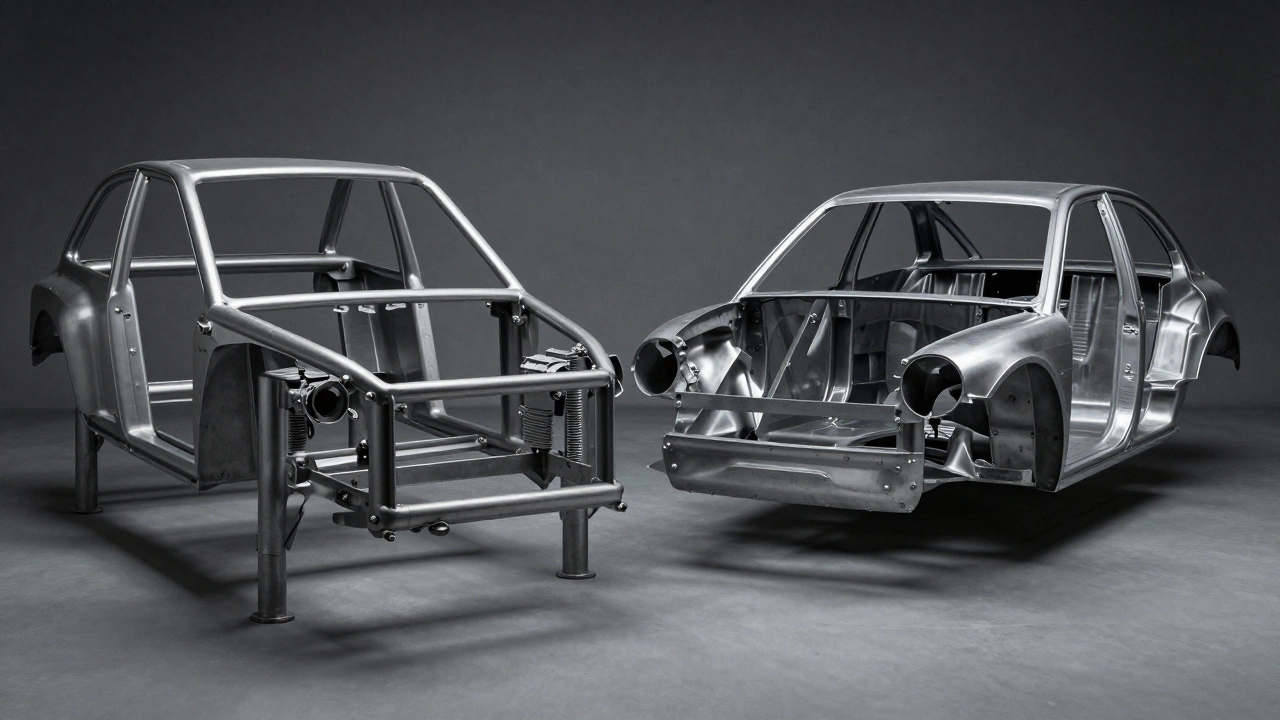
For a long time, cars used "body-on-frame" construction. It was simple: you built a strong steel frame (the chassis) and dropped the body on top. The problem? It was heavy and wasteful. In the mid-20th century, British manufacturers began embracing the unibody is a structural design where the chassis and the body are integrated into a single, load-bearing shell. This approach, often called monocoque, allowed engineers to treat the entire car as one giant stress-bearing unit.
Think of it like an eggshell. An egg is incredibly strong for its weight because the outer skin handles the pressure. By moving to a unibody, British family cars like those from Austin is a pioneering British car manufacturer known for the Austin Seven and early mass-market family cars could be lower to the ground and lighter. This meant they could use smaller engines while still maintaining a decent cruising speed on the newly expanding motorway networks. The trade-off was that you couldn't just swap a body onto a new frame; if the shell twisted in an accident, the whole car was often a write-off.
Twisting Metal: The Magic of Torsion Bars
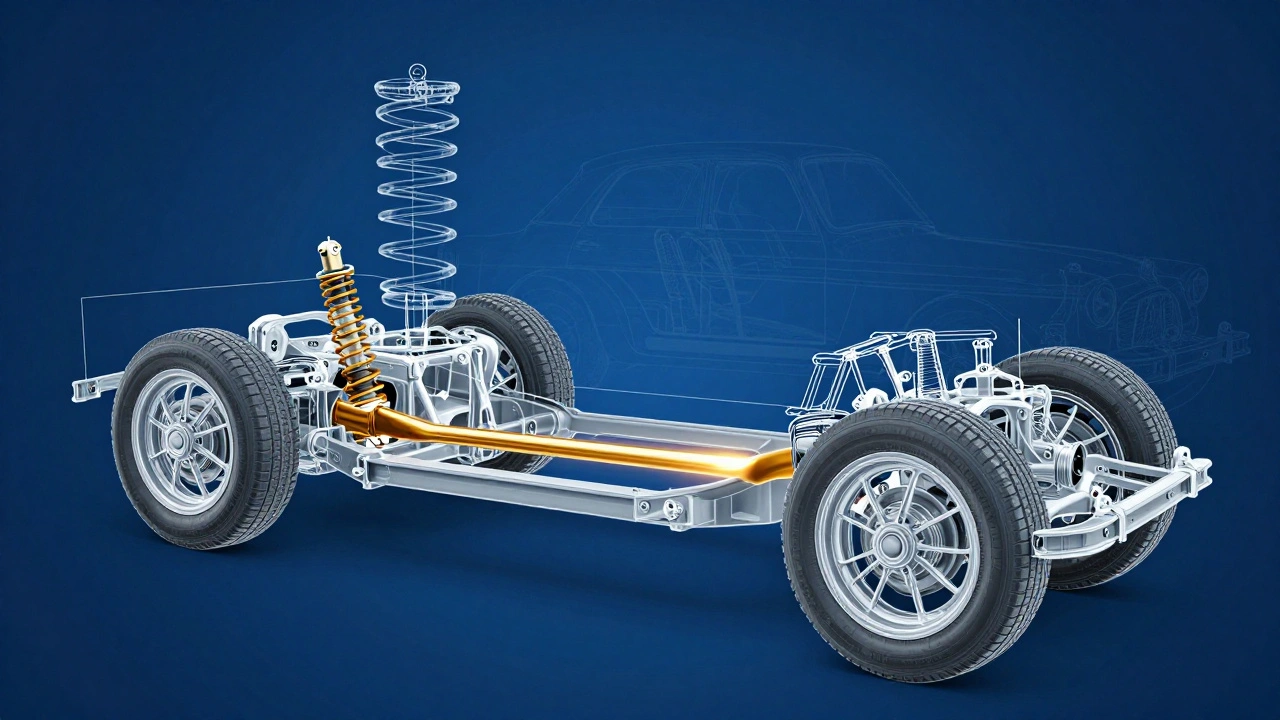
While the shell was evolving, the way cars handled bumps was also changing. Most cars used coil springs-those big spirals you see on modern wheels. But coil springs take up a lot of vertical space. British engineers, always fighting for every single inch of interior room, turned to torsion bars is a suspension system that uses a flexible metal rod that twists under load to provide springing action.
Instead of a spring that compresses up and down, a torsion bar works by twisting. Imagine holding a rubber band and twisting the ends in opposite directions; that stored energy is exactly what keeps the car from bottoming out. Because these bars could be tucked away horizontally along the frame or under the floor, they freed up massive amounts of room for passengers and luggage. This was a game-changer for the "family car" segment, where fitting a pram or a week's worth of groceries in the boot was a primary selling point.
| Feature | Body-on-Frame / Coil Springs | Unibody / Torsion Bars |
|---|---|---|
| Weight | Heavy (Double structure) | Light (Integrated structure) |
| Interior Space | Limited by frame rails | Maximized floor area |
| Ride Height | Generally Higher | Lower and more aerodynamic |
| Durability | Easy to repair frame | Complex structural repairs |
Solving the Family Space Crisis
The real goal of unibody chassis adoption wasn't just a technical flex; it was about the "package." In the UK, where roads are narrow and parking is a nightmare, you couldn't just build cars that were wider and wider. Engineers had to find "invisible space." By combining the unibody shell with torsion bar suspension, they managed to lower the floor pan.
In a traditional car, the chassis rails sat high, forcing the passengers to sit on top of them. With a unibody, the floor could be dropped. When you pair that with torsion bars-which don't require the huge "spring towers" that push into the cabin-you suddenly have more legroom in the back seat without making the car an inch longer. This is how British cars managed to feel spacious inside while remaining compact enough to navigate a rainy street in Birmingham.
Impact on Handling and Ride Quality
How did this actually feel on the road? A unibody car is generally stiffer. When you take a corner, there is less "flex" between the front and back of the car, which makes the steering feel more precise. However, early unibodies had a problem: road noise. Because the body and frame were one, vibrations from the road traveled directly into the cabin. This led to the development of better rubber mounting and sound-deadening materials.
The torsion bars added another layer of complexity. They provided a very smooth, linear ride, but they were sensitive to weight. If you loaded the car with five adults and a roof rack full of suitcases, the bars could "sag." This is why many British cars of the era featured adjustable ride height or specific heavy-duty bars for "export" versions intended for rougher roads in former colonies. It was a delicate balance between luxury comfort and rugged utility.
The Engineering Legacy and Pitfalls
It wasn't all smooth sailing. The move to unibody construction required massive investment in new tooling. Pressing a giant piece of steel into a complex curve requires an incredibly expensive die. Small manufacturers who couldn't afford this were pushed out, leading to the consolidation of the British motor industry into giants like British Leyland is a massive, state-owned automotive conglomerate formed in 1968 by merging several British brands.
There was also the issue of corrosion. In the damp British climate, these integrated shells were prone to rust. On a body-on-frame car, a bit of rust on the body was a cosmetic issue. In a unibody car, rust in the sills or floor pans was a structural failure. This forced the industry to innovate with galvanized steel and better undercoating, technologies that eventually benefited every car on the road today.

From Innovation to Industry Standard
Looking back, the transition from separate frames to unibodies and the use of torsion bars was a necessary evolution. It shifted the focus from "how do we make it strong?" to "how do we make it efficient?" While most modern cars have moved back to coil springs or air suspension for the sake of extreme comfort, the unibody remains the gold standard for almost every passenger vehicle on the planet.
The British family car of the mid-century served as a laboratory for these ideas. By pushing the limits of how to package a human being inside a metal box, engineers proved that you didn't need a massive footprint to get a premium experience. They traded the simplicity of the ladder frame for the sophistication of the integrated shell, and in doing so, they paved the way for the modern commuter car.
What is the main difference between unibody and body-on-frame?
In a body-on-frame setup, the chassis is a separate steel ladder that supports the engine and drivetrain, and the body is bolted on top. A unibody (or monocoque) integrates these into one single structure, where the outer skin and internal supports together carry the load, making the car lighter and stiffer.
Why use torsion bars instead of coil springs?
Torsion bars are essentially long metal rods that twist to absorb shock. Their primary advantage is space; they can be placed horizontally along the chassis, whereas coil springs require significant vertical space. This allowed British engineers to lower the floor and increase interior legroom.
Did unibody construction make cars safer?
Yes, in many ways. Because the entire shell is structural, engineers could design "crumple zones" more effectively. In a body-on-frame car, the rigid frame often pushed through the cabin during a crash, whereas a unibody can be designed to fold and absorb energy before it reaches the passengers.
Are torsion bars still used in cars today?
They are much rarer in family cars now, having been replaced by more tunable coil-over or air suspension systems. However, you still find them in some heavy-duty trucks and specialized off-road vehicles because of their durability and strength.
Why was rust such a problem for early unibody cars?
Because the body is the frame, any significant corrosion in the structural pillars or floorboards compromises the integrity of the entire vehicle. In older cars, the frame was a thick piece of iron that could rust superficially without failing, but in a unibody, the thin steel sheets are more vulnerable to the elements.
Next Steps for Automotive Enthusiasts
If you're looking to restore a classic British car, start by checking the sills and wheel arches for structural rust; in a unibody, these are the most critical points. For those interested in the physics of suspension, comparing the ride height of a torsion-bar vehicle versus a coil-spring vehicle will give you a practical sense of how "packaging" works. If you enjoy this era of engineering, exploring the history of independent rear suspension (IRS) is the logical next step, as it solved many of the handling issues that these early unibody designs struggled with.