UK Car Factories: How Interwar Production Methods Shifted from Handcraft to Volume
 Nov, 11 2026
You might picture the 1920s and 30s in Britain as a time of slow, bespoke craftsmanship, where every car was lovingly built by hand. But that image misses the industrial revolution happening right under our noses. Between the wars, UK factories didn't just tweak their methods; they fundamentally rewired how cars were made. This wasn't about copying America blindly. It was a gritty, practical adaptation of mass production to fit British labor laws, market sizes, and engineering traditions. If you think volume manufacturing started with Henry Ford alone, you're missing half the story. The British approach was distinct, often slower to adopt full automation, but incredibly effective at scaling output without bankrupting the manufacturers.
The Starting Line: Why Handcraft Was Still King
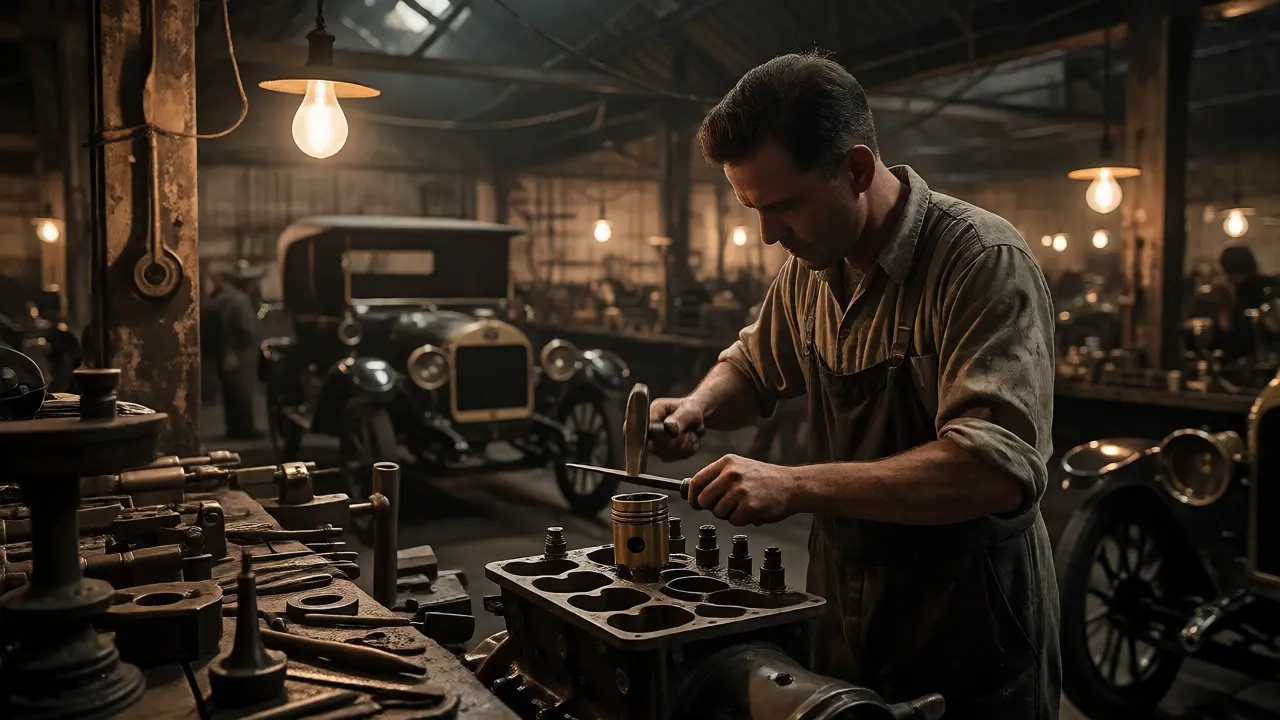
In 1919, most British cars were essentially horseless carriages with engines bolted on. Production was artisanal. A single mechanic or small team would build a chassis from start to finish. This method had one major flaw: it couldn't scale. If demand spiked, you couldn't just hire more people and expect them to work faster because each worker needed years of training to handle every part of the job. Quality varied wildly between units, and prices remained high, keeping cars a luxury for the wealthy.
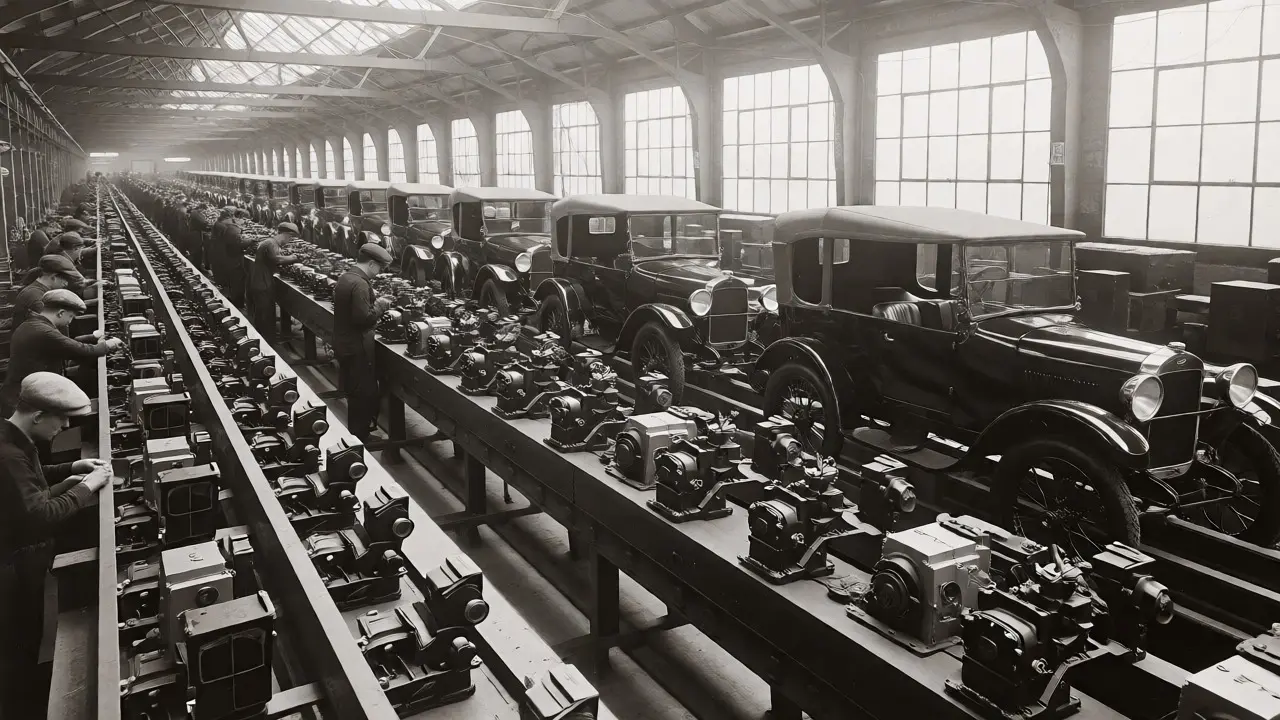
Then came the pressure. Post-war economic instability meant buyers wanted cheaper, reliable transport. Manufacturers like Austin and Morris realized they had to change or die. They looked across the Atlantic at Ford Motor Company, which had perfected the moving assembly line at its Highland Park plant. The concept was simple: break the car down into tiny, repetitive tasks so an unskilled worker could do one thing perfectly, over and over. But British factory owners faced a different reality. Their workforce was unionized, skilled, and resistant to being treated like cogs in a machine. Adopting the American model required negotiation, not just installation.
The Hybrid Approach: Moving Assembly Lines Meet British Craftsmanship
Rather than ripping out all the craft traditions, British factories adopted a hybrid system. They introduced the moving assembly line, but they kept the final assembly and finishing stages semi-manual. This compromise allowed them to boost speed while maintaining the quality standards British buyers expected. Take Morris Motors, founded by William Morris (later Lord Nuffield). His Cowley plant near Oxford became the blueprint for this shift. Morris didn't try to make every part himself. He focused on assembling purchased components.
This strategy is known as vertical integration versus outsourcing. Morris chose outsourcing. He bought engines from Hotchkiss, gearboxes from other specialists, and bodies from coachbuilders. By focusing only on final assembly, he reduced the complexity of his factory floor. Workers didn't need to know how to cast an engine block; they just needed to install it correctly. This lowered training costs and sped up hiring. By 1926, Morris was producing over 10,000 cars a year, a massive jump from pre-war numbers. The key wasn't just speed; it was standardization.
Standardization: The Hidden Engine of Growth
You can't have volume without interchangeable parts. Before the interwar period, if a piston broke in one Morris Minor, you might need to file it down to fit another cylinder. That's hand-fitting. Mass production demands that any piston fits any cylinder straight out of the box. Achieving this required tighter tolerances in machining. British factories invested heavily in precision grinding machines and gauges during the 1920s.
This shift created a new kind of worker: the quality inspector. Instead of relying on the builder's skill, inspectors checked parts against strict specifications. If a batch of gears was off by a fraction of a millimeter, the whole lot got rejected. This felt wasteful initially, but it saved money later by preventing warranty claims and recalls. It also forced suppliers to improve their own processes. Suddenly, a small tool-and-die shop in Birmingham had to meet national standards to sell to Austin or Rover. The entire supply chain upgraded together.
Labor Relations: The Human Cost of Efficiency
Let's be honest: workers hated the early assembly lines. Repetitive strain injuries skyrocketed. Boredom led to errors. In the US, companies often fought unions aggressively. In the UK, the trade unions were stronger politically. They negotiated shorter hours and better safety rules alongside productivity gains. The National Union of Vehicle Builders played a crucial role here. They ensured that efficiency didn't mean exploitation.
Factories responded by improving lighting, ventilation, and break times. Some introduced rotation schemes so workers wouldn't do the same motion for eight hours straight. These changes cost money upfront but reduced turnover. Keeping experienced staff meant fewer mistakes. It turns out that treating workers like humans actually helped production rates. The British model proved that social stability and industrial efficiency weren't enemies-they were partners.
Design Constraints: Engineering for Manufacturability
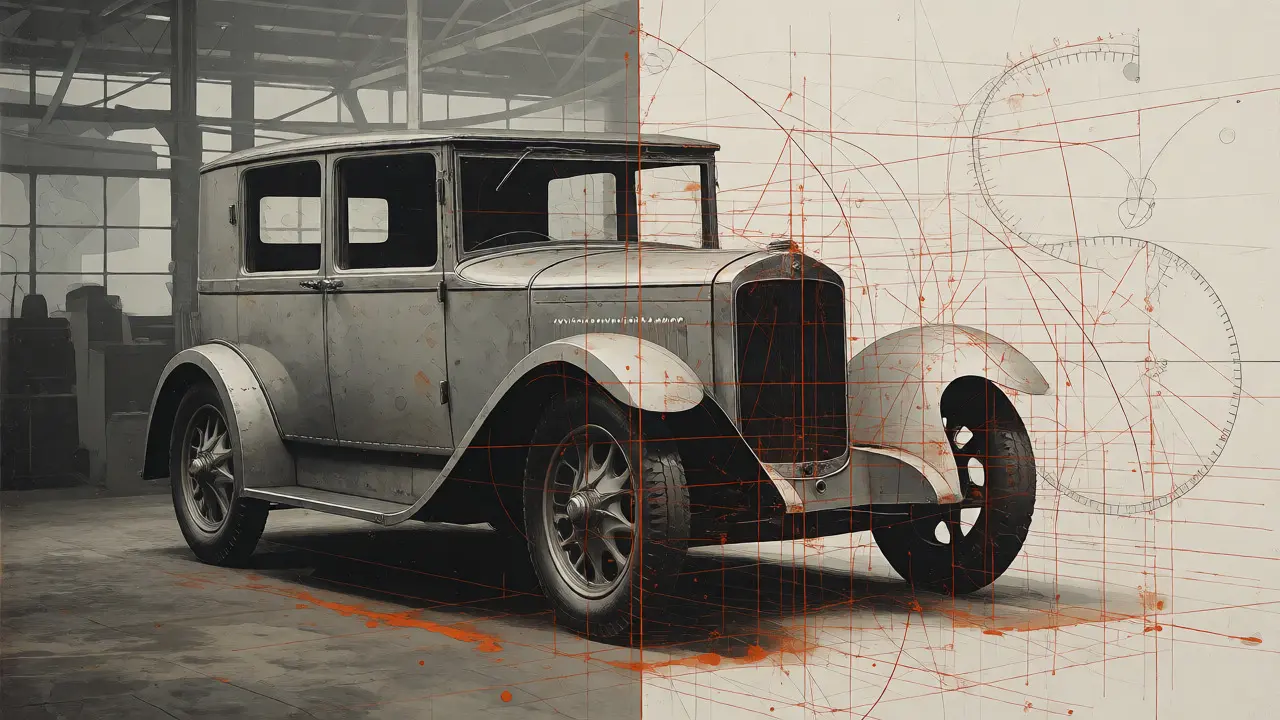
Engineers learned to design for the factory, not just for the road. Complex curves and exotic materials slowed down assembly. Simple, flat panels and standardized bolts sped it up. You'll notice many interwar British cars look boxier than their pre-war counterparts. That wasn't just style; it was manufacturability. Flat glass was easier to cut and install. Straight chassis rails were easier to weld or rivet.
Austin Seven is a prime example. Designed by Herbert Austin, it used minimal parts and simple construction. It could be assembled quickly by relatively inexperienced workers. Despite its simplicity, it sold hundreds of thousands of units. Designers began working closely with production managers from day one. They asked: "Can we make this easily?" before asking "Does this look good?" This collaboration reduced costly redesigns after production started.
| Feature | Pre-1918 (Handcraft) | Interwar Era (Volume Production) |
|---|---|---|
| Assembly Method | Static bay, one team per car | Moving line, specialized stations |
| Part Fitting | Filing and adjusting by hand | Interchangeable, precision-machined |
| Workforce Skill | Highly trained generalists | Specialized operators + skilled finishers |
| Production Speed | Slow (weeks per car) | Fast (hours per car) |
| Supply Chain | In-house component making | Outsourced sub-assemblies |
The Role of Government and War Preparation
We can't ignore the looming shadow of World War II. As tensions rose in the late 1930s, the British government pushed manufacturers to prepare for emergency production. Standardizing parts wasn't just about profit anymore; it was about national defense. The Ministry of Supply encouraged uniformity across brands so that parts could be swapped between military vehicles. This pressure accelerated the adoption of volume techniques even among smaller, traditional firms.
Factories like Rootes Group expanded rapidly during this period. They built large, modern plants designed for flexibility. If war broke out, they could switch from civilian sedans to trucks or tank components quickly. This dual-use capability justified the heavy investment in machinery. When war did come in 1939, these factories converted almost overnight, proving that the interwar innovations were robust enough for total war.
Legacy: What Remains Today
The interwar period laid the groundwork for the modern British auto industry. Companies like Jaguar, Bentley, and Rolls-Royce survived by balancing prestige with production efficiency. They didn't go fully mass-market, but they adopted enough volume techniques to stay viable. The skills developed in those decades-precision engineering, supply chain management, labor negotiation-became core competencies.
Today, when you buy a car, you're benefiting from decisions made in dusty British factories ninety years ago. The idea that a car should be affordable, reliable, and available isn't new. It was forged in the tension between tradition and innovation. Next time you see a classic MG or Austin, remember: it wasn't just built by hand. It was the product of a careful, contentious, and brilliant transition into the age of volume.
Did UK car factories copy American methods exactly?
No, they adapted them. While they used moving assembly lines, they retained more manual finishing stages due to strong unions and higher consumer expectations for craftsmanship. They also relied more on outsourced components rather than making everything in-house like Ford.
Which company led the shift to volume production in the UK?
Morris Motors, under William Morris, was the primary leader. His Cowley plant implemented efficient assembly techniques and aggressive marketing strategies that set the standard for the industry in the 1920s and 30s.
How did unions react to mass production?
Unions resisted the de-skilling of labor but negotiated compromises. They secured better wages, safer conditions, and job security in exchange for accepting the assembly line. This resulted in a more stable workforce compared to some US plants.
Why did British cars become boxier in the interwar era?
Simpler shapes were easier and cheaper to manufacture. Flat panels and straight lines required less complex stamping and welding, speeding up assembly. This was a deliberate design choice to support volume production goals.
What role did government play in this transition?
In the late 1930s, the government pushed for standardization and capacity expansion to prepare for potential war. This incentivized factories to adopt flexible volume production methods that could quickly switch to military needs.