The Future of British Motorsport: EV Series, Endurance Hybrids & Sustainability
 Aug, 29 2026
Imagine watching a race where the roar of a V8 is replaced by the high-pitched whine of electric motors, yet the strategic depth and physical toll remain just as brutal. That isn't a distant sci-fi scenario; it's the current reality reshaping British motorsport, the collective ecosystem of racing teams, circuits, and manufacturers based in the United Kingdom. For decades, Britain has been the global hub for Formula 1 engineering, but the shift toward electrification and sustainability is forcing a massive pivot. The question isn't whether this change is happening-it already is-but how traditional endurance hybrids and new electric series will coexist without losing the soul of competition.
The Shift from Combustion to Electrification
You might think that moving to electric vehicles (EVs) makes racing boring. After all, no gear shifts, no exhaust notes, and instant torque could theoretically make every car look the same. But look closer at what’s happening in the UK. Companies like JLR (Jaguar Land Rover) have pulled out of Formula E to focus on their own hybrid road cars, while others are doubling down on track performance. This isn't just about saving the planet; it's about R&D. Every kilowatt-hour saved on the track translates directly to efficiency gains in your daily commuter car.
The transition is uneven. While single-seater categories like Formula E have fully embraced electric power, endurance racing remains a mixed bag. Why? Because batteries are heavy. In a 24-hour race, carrying 500kg of battery pack changes the physics of cornering and braking entirely. Engineers aren't just swapping engines; they're redesigning chassis structures to handle the different weight distribution. It’s a complex engineering puzzle that keeps British design firms busy.
Endurance Racing and the Hybrid Compromise
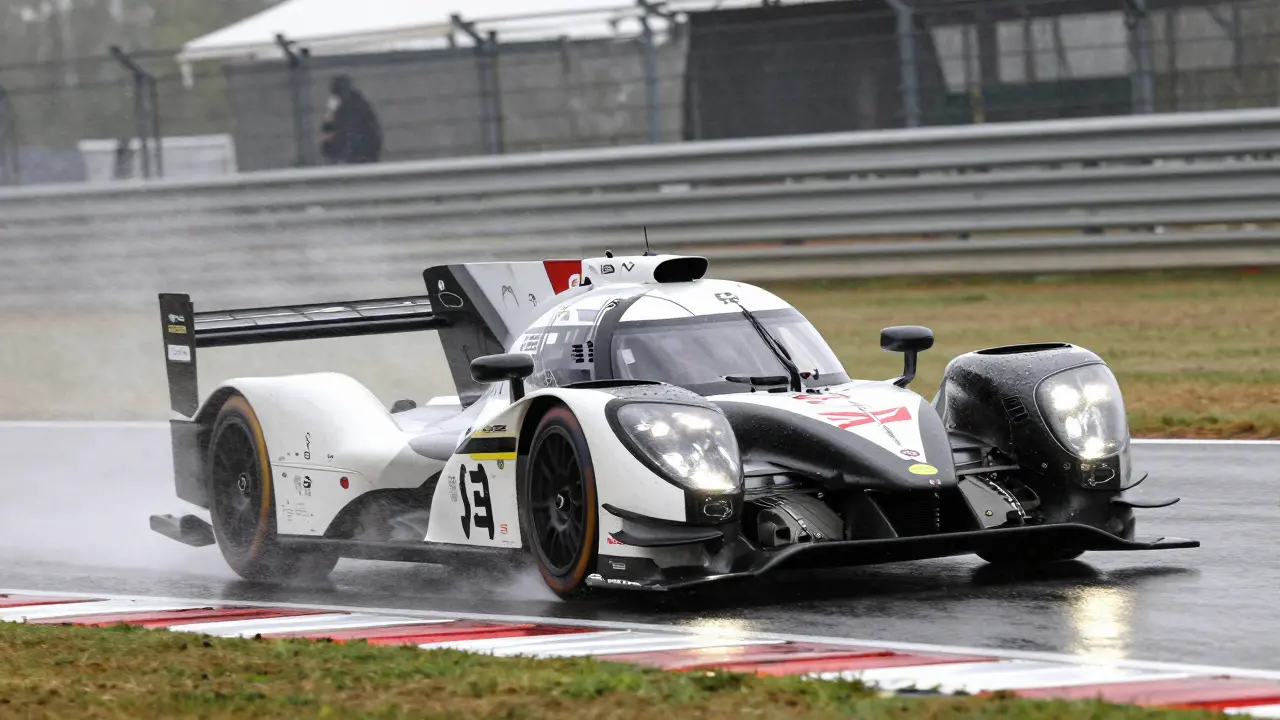
If you follow events like the Silverstone Classic or the British GT Championship, you’ll notice a trend: hybrids are dominating the middle ground. They offer a bridge between the old world of internal combustion and the new electric era. Take the LMP2 class in endurance racing. These prototypes use a standardized Gibson engine paired with a hybrid system. It’s not full electric, but it recovers energy under braking-a principle straight from F1.
| Feature | Traditional ICE | Hybrid (e.g., LMP2) | Full Electric (e.g., Formula E) |
|---|---|---|---|
| Energy Source | Fossil Fuel | Fuel + Battery Recovery | Battery Only |
| Weight Impact | High fuel load variance | Moderate battery weight | Constant heavy battery |
| Sustainability Score | Low | Medium | High (if grid is green) |
| Tech Transfer | Engine tuning | Energy management systems | Motor efficiency, cooling |
This table highlights why hybrids persist. They allow teams to test energy recovery strategies that are crucial for consumer EVs. If you can manage heat and power delivery over 24 hours in a hybrid prototype, you’re solving problems that Tesla or BYD face in real-world driving. It’s practical innovation, not just marketing fluff.
Sustainability Beyond the Tailpipe
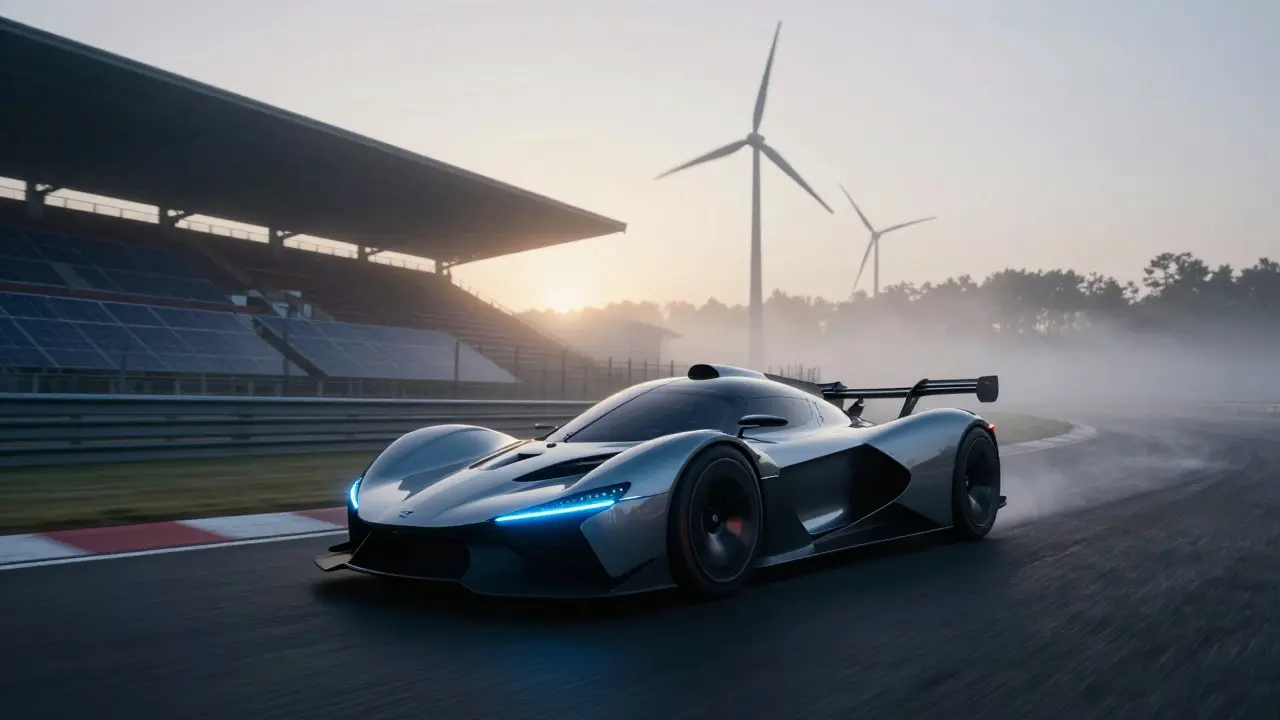
We often fixate on what comes out of the exhaust pipe, but true sustainability in motorsport is about the whole lifecycle. Think about the carbon footprint of shipping 30 tons of equipment across Europe for a single weekend. Or the plastic waste generated by grandstands. British organizers are tackling this head-on. Circuits like Silverstone are investing in solar farms and water recycling systems. They’re aiming for "Net Zero" operations, which means offsetting emissions through verified projects.
But here’s the catch: fans want action, not lectures. You can’t sacrifice spectacle for sustainability. So, how do you balance it? Enter synthetic fuels. Often called e-fuels, these are created using captured CO2 and green hydrogen. They burn cleaner than fossil fuels and can be used in existing engines. Porsche and other manufacturers are testing them extensively. For British motorsport, e-fuels offer a way to keep the visceral experience of combustion alive while reducing net carbon impact. It’s a controversial solution-some purists argue it’s just delaying the inevitable-but it keeps heritage classes viable.
The Economic Reality of Green Racing
Let’s talk money. Building an electric race car is expensive, but maintaining one can be cheaper long-term. Fewer moving parts mean less wear and tear. However, the upfront cost of battery development is staggering. For smaller British teams, this creates a barrier to entry. You need deep pockets or strong manufacturer backing to compete in top-tier electric series.
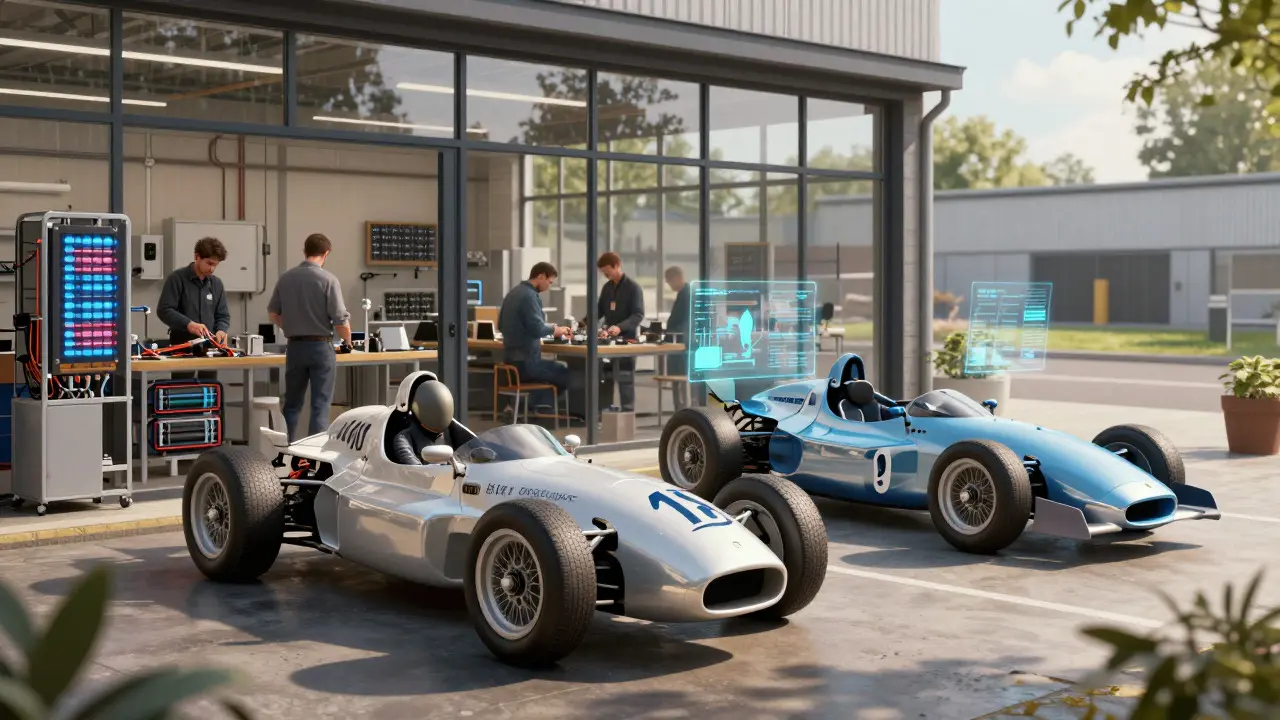
This economic pressure is reshaping team structures. Many historic British teams are partnering with tech startups rather than building everything in-house. Collaboration is key. A small team in Oxfordshire might specialize in battery thermal management, while another in Northampton handles aerodynamics. This decentralized model allows for faster innovation cycles. It also spreads the financial risk. If one component fails, you don’t lose the whole project.
Moreover, sponsorship models are changing. Brands are no longer just slapping logos on cars; they’re integrating their tech into the vehicle. A tire company doesn’t just provide tires; they provide data analytics services. A software firm provides simulation tools. This shift turns motorsport into a live laboratory for B2B partnerships. It’s less about brand visibility and more about proof-of-concept demonstrations.
What Does This Mean for Fans?
So, should you stop watching? Absolutely not. The future of British motorsport is actually more engaging if you know what to look for. Instead of just checking who crossed the line first, pay attention to energy management. Who saved enough battery for a final sprint? Who managed their brake temperatures better? These micro-decisions determine winners now.
Also, consider the accessibility angle. Electric races are quieter, allowing tracks to operate in urban areas previously deemed too noisy for motorsport. Imagine street circuits in London or Manchester hosting regular EV series. This brings racing back to the people, breaking down the elitist barriers that have plagued the sport for years. It’s not just about speed anymore; it’s about integration into modern life.
Challenges Ahead
It’s not all smooth sailing. Battery degradation is a real issue. How do you ensure a battery pack lasts two seasons without significant performance loss? Recycling spent batteries is another hurdle. Where do those lithium-ion cells go when they’re no longer fit for racing? Currently, many end up in stationary storage applications, but the infrastructure for large-scale recycling is still catching up.
There’s also the fan engagement challenge. Can a silent race hold attention? Early data suggests yes, especially among younger demographics who grew up with gaming simulations. But traditionalists resist. Bridging this gap requires storytelling. Broadcasters need to explain the technical drama-the heat spikes, the regen limits-in ways that resonate emotionally.
Looking Forward: 2026 and Beyond
By 2026, we’ll likely see a bifurcation. High-end series will push boundaries with solid-state batteries and advanced AI-driven strategy. Meanwhile, grassroots racing will stick to hybrids and e-fuels due to cost constraints. This diversity is healthy. It ensures that motorsport remains inclusive, catering to both tech enthusiasts and petrolheads.
British motorsport is uniquely positioned to lead this transition. With its dense cluster of engineering talent and historic infrastructure, the UK can serve as the global testbed for sustainable racing technologies. What works here will likely set the standard worldwide. The future isn’t just electric; it’s smarter, cleaner, and surprisingly familiar.
Are electric race cars slower than petrol ones?
Not necessarily. While top speeds might be similar, acceleration is often superior due to instant torque. However, lap times depend heavily on circuit layout and energy management strategies rather than just raw power.
How does sustainability affect ticket prices?
Currently, minimal impact. Organizers aim to absorb sustainability costs through sponsorships and operational efficiencies rather than passing them directly to fans. Some venues offer discounts for using public transport to encourage greener attendance.
Will hybrid cars replace electric ones in endurance racing?
Unlikely to replace them entirely. Hybrids offer a necessary compromise for long-distance events where battery weight and charging time are critical limitations. Full electric may dominate shorter sprints, while hybrids remain vital for endurance formats.
What are synthetic fuels and are they really green?
Synthetic fuels are made from captured CO2 and renewable hydrogen. They are considered carbon-neutral because the CO2 released during combustion was recently removed from the atmosphere. Their "greenness" depends entirely on the energy source used to produce them.
Can I watch British EV races locally?
Yes. Major circuits like Silverstone, Donington Park, and Brands Hatch host various electric and hybrid series throughout the year. Check local event calendars for specific dates and ticket availability.