The Coventry Birmingham Oxford Triangle: Inside Post-War UK Auto Manufacturing Hubs
 Sep, 30 2026
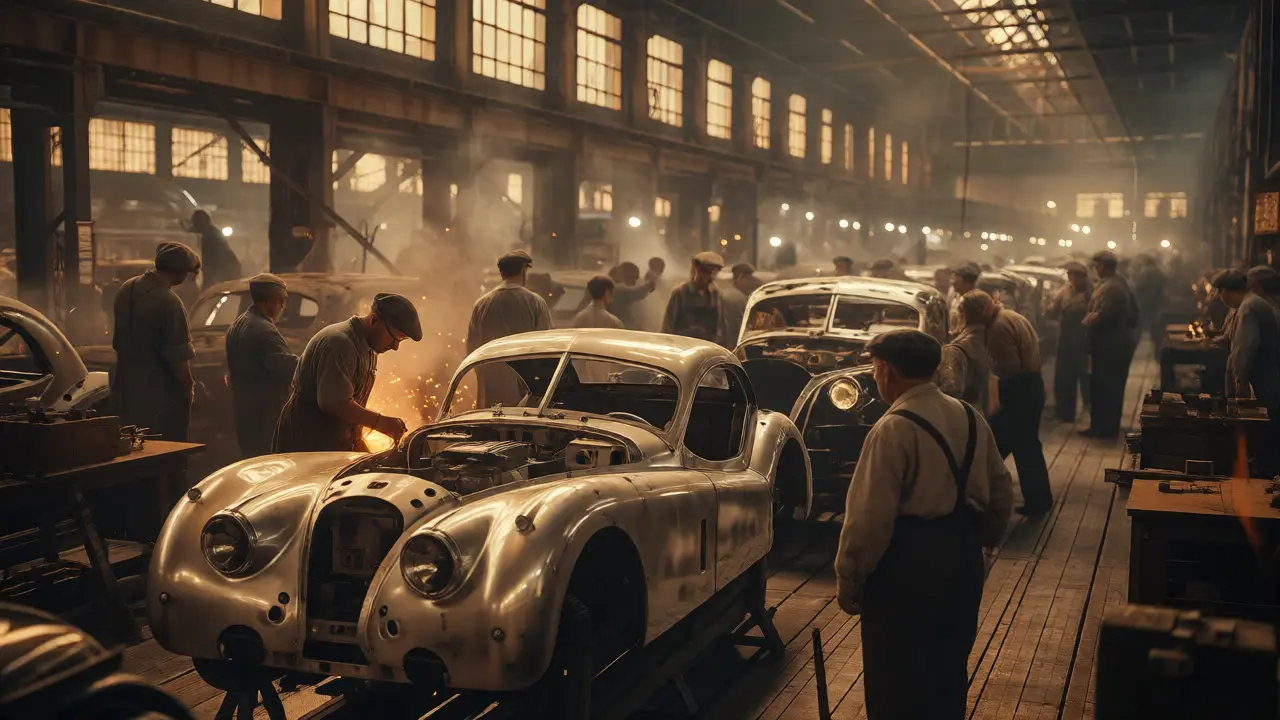
Imagine standing in a factory floor in 1950s England. The air smells of oil and hot metal. Thousands of workers are assembling cars that the world is desperate to buy. This wasn't just production; it was national identity. The Coventry Birmingham Oxford triangle became the beating heart of this industrial engine. If you look at a map of the United Kingdom's automotive history, this region isn't just a cluster of cities-it’s a story of boom, bust, and reinvention.
You might wonder why these three specific towns mattered so much. It wasn't random. It was about supply chains, skilled labor, and geography. In the years following World War II, Britain needed to rebuild its economy fast. Cars were the ticket. But how did a few factories in the Midlands turn into global giants? And what happened when they started to crack?
Why These Three Cities Became the Hub
Geography played a massive role here. Coventry had already been the center of the British motorcycle and cycle industry before the war. When peace returned, those same engineering skills translated perfectly to car engines and gearboxes. The city had a deep pool of machinists who knew precision work inside out.
Birmingham, specifically the Longbridge area, brought something different: volume and infrastructure. It sat right on the main railway lines and canal networks. Moving parts in and finished cars out was cheap and fast. Plus, Birmingham had a culture of small workshops that could feed larger assembly plants with specialized components.
Then there was Oxford. You probably know it for the university, but in the mid-20th century, it was home to Morris Motors. Later, this became part of BMC (British Motor Corporation). Oxford offered a mix of traditional craftsmanship and new mass-production techniques. The proximity between these three hubs-often less than an hour apart by train-created a tight ecosystem. If one plant needed a specific casting or a rush order of seats, the supplier was next door, not across the ocean.
The Golden Age of Production
Between 1945 and 1970, this triangle dominated the British export market. The government even rationed domestic sales because foreign buyers paid better. This created a strange dynamic: Britons waited months for a simple Austin while Americans bought them instantly.
Let's look at the key players during this peak period:
| City | Primary Manufacturer | Key Models | Specialty |
|---|---|---|---|
| Coventry | Jaguar & Standard-Triumph | XK120, TR3 | Luxury sports cars, high-performance engines |
| Birmingham | Austin (Longbridge) | Austin A40, Mini | Mass-market family cars, compact design |
| Oxford | Morris / BMC | Morris Minor, MG Midget | Utilitarian vehicles, budget-friendly engineering |
The Mini is the best example of this era's ingenuity. Designed by Alec Issigonis, it was built at Longbridge. It used a transverse engine layout to save space, a concept that changed car design globally. At the same time, Jaguar in Coventry was winning Le Mans races, proving that British engineering could compete with Ferrari and Porsche.
This wasn't just about making cars. It was about jobs. At its peak, the UK auto industry employed nearly 800,000 people directly. In Coventry alone, nearly half the workforce was tied to vehicle production. If you lived there, your dad, uncle, or neighbor likely worked in a plant. The social fabric of these towns was woven from steel and rubber.

The Cracks Start to Show
So, if things were going so well, why did it fall apart? The problem wasn't a lack of demand. People still wanted British cars. The issues were internal and external.
First, management-labor relations deteriorated. In the 1960s and 70s, strikes became common. Workers fought for better conditions, which was fair, but the frequency of stoppages disrupted production schedules. Japanese manufacturers like Toyota and Nissan, meanwhile, adopted lean manufacturing techniques. They produced more reliable cars with fewer defects. British cars often suffered from rust and electrical gremlins. A buyer in Germany or France might choose a Volkswagen Beetle over a British model simply because it didn't break down as often.
Second, the government pushed for consolidation. In 1968, several major companies merged to form British Leyland. The idea was to create a giant that could compete with Ford and GM. Instead, it created a bureaucratic monster. Rival brands like Rover, Triumph, and Austin kept their distinct identities but shared poor management structures. Innovation stalled. While Europe moved toward front-wheel drive and better safety standards, British Leyland struggled to launch new models on time.

The Collapse and Rebirth
By the late 1970s, the situation was critical. British Leyland was losing millions every week. The government bailed it out repeatedly, leading to the infamous "£1-a-day" worker meme, though that oversimplifies the complex economic reality. Many plants closed. The Oxford works saw reduced output. Some Coventry facilities shut down entirely.
But the story doesn't end with closure. It ends with transformation. The assets weren't thrown away; they were sold off and restructured. BMW acquired the Rover Group in the 1990s, injecting German efficiency into British design. Later, Tata Motors bought Jaguar Land Rover. Today, the legacy of the triangle lives on in modern forms.
- Coventry: Now a hub for electric vehicle (EV) research and battery technology. Companies like Aston Martin have expanded nearby.
- Birmingham: Remains a logistics and engineering center. The old Longbridge site has been partially redeveloped, but automotive engineering firms thrive in the surrounding Black Country.
- Oxford: Home to MINI manufacturing under BMW ownership. The original spirit of compact, efficient design continues there.
This shift shows resilience. The physical plants changed, but the expertise remained. The engineers trained in the post-war era passed their knowledge down. The supply chain network, once fragmented, became more integrated with global partners.
Lessons from the Industrial Past
What can we learn from this history? First, scale isn't everything. Consolidation without cultural integration failed. Second, quality control matters more than brand heritage. Customers forgive old designs if they are reliable, but they don't forgive constant breakdowns.
Also, geography still counts. Even today, clustering helps. Look at Silicon Valley for tech, or Shenzhen for electronics. The Coventry-Birmingham-Oxford triangle proved that proximity accelerates innovation. Suppliers talk to each other. Problems get solved faster. When that cluster broke up due to closures, the region lost momentum for a decade.
If you visit these cities now, you'll see plaques and museums dedicated to this era. The Heritage Motor Centre in Gaydon (near Coventry) preserves hundreds of these historic vehicles. Walking through it feels like stepping back into the 1960s. You see the raw beauty of mechanical engineering before computers took over.
The post-war boom wasn't just about economics. It was about confidence. Britain believed it could build the world's best cars. That belief drove investment, training, and risk-taking. Even when the industry stumbled, that foundation allowed it to recover. The current push for electric vehicles in the UK mirrors that earlier optimism. New batteries replace old pistons, but the location remains strategic.
Understanding this history helps us appreciate today's automotive landscape. Every time you see a Jaguar EV or a new Mini, remember the hands that built the first ones. Remember the strikes, the mergers, and the triumphs. The triangle didn't disappear; it evolved. And in doing so, it taught the world how industrial clusters rise, fall, and rise again.
Why was Coventry known as the Detroit of Britain?
Coventry earned this nickname because it concentrated a high density of automotive manufacturers, similar to Detroit, USA. Before WWII, it was already a center for bicycles and motorcycles, providing a skilled workforce that easily transitioned to car production. Companies like Jaguar, Rootes Group, and Standard-Triumph had major plants there, making it the epicenter of British luxury and performance car manufacturing.
What caused the decline of the UK auto industry in the 1970s?
Several factors contributed to the decline. Poor labor-management relations led to frequent strikes, disrupting production. Management struggles within British Leyland hindered innovation and quality control. Additionally, competition from Japanese and German manufacturers introduced higher reliability and efficiency standards that British firms initially failed to meet. Government intervention and forced mergers also created bureaucratic inefficiencies.
Did the Oxford car plant close completely?
No, the Oxford plant did not close completely. It transitioned through various ownership changes, including being part of BMC, British Leyland, and eventually BMW. Today, it continues to produce MINI vehicles. The plant underwent significant modernization to adapt to new manufacturing standards and product lines, maintaining its role as a key automotive facility in the region.
How did the formation of British Leyland affect the triangle?
The formation of British Leyland in 1968 aimed to consolidate resources but often resulted in internal rivalry and inefficiency. Plants in the triangle faced uncertainty regarding future investment. Some models were discontinued, and production volumes fluctuated wildly. The merger failed to streamline operations effectively, leading to prolonged financial difficulties that impacted employment and stability across Coventry, Birmingham, and Oxford.
Is the UK still a major car manufacturer today?
Yes, the UK remains a significant player in global automotive manufacturing, particularly in premium and electric vehicles. Brands like Jaguar Land Rover, Bentley, and Aston Martin continue to operate. The industry has shifted towards high-value production and EV technology, leveraging the historical engineering expertise rooted in regions like the Coventry-Birmingham-Oxford area. Foreign-owned companies now dominate, but the local workforce and supply chains remain vital.