The Art of Scarcity: How British Ultra Luxury Brands Control Production
 Apr, 21 2026
The Psychology of the Unreachable
Why would a company intentionally limit its revenue? Because at the ultra-luxury level, the product isn't just a vehicle or a watch; it is a social signal. When a brand like Rolls-Royce or Aston Martin restricts a model to a few hundred units, they shift the conversation from 'what does it do' to 'who is allowed to have it.' This creates a phenomenon known as the Veblen Effect, where demand for a luxury item increases as the price rises. If a car were available to anyone with a bank account, it would lose its power as a marker of status. By keeping supply artificially low, brands ensure that the owner isn't just paying for leather and engine displacement, but for the exclusivity of being part of a tiny, curated club. This is why you see 'waiting lists' that last years; it's not always about the supply chain, but about the psychological tension of the wait.Engineering the 'Waitlist' Model
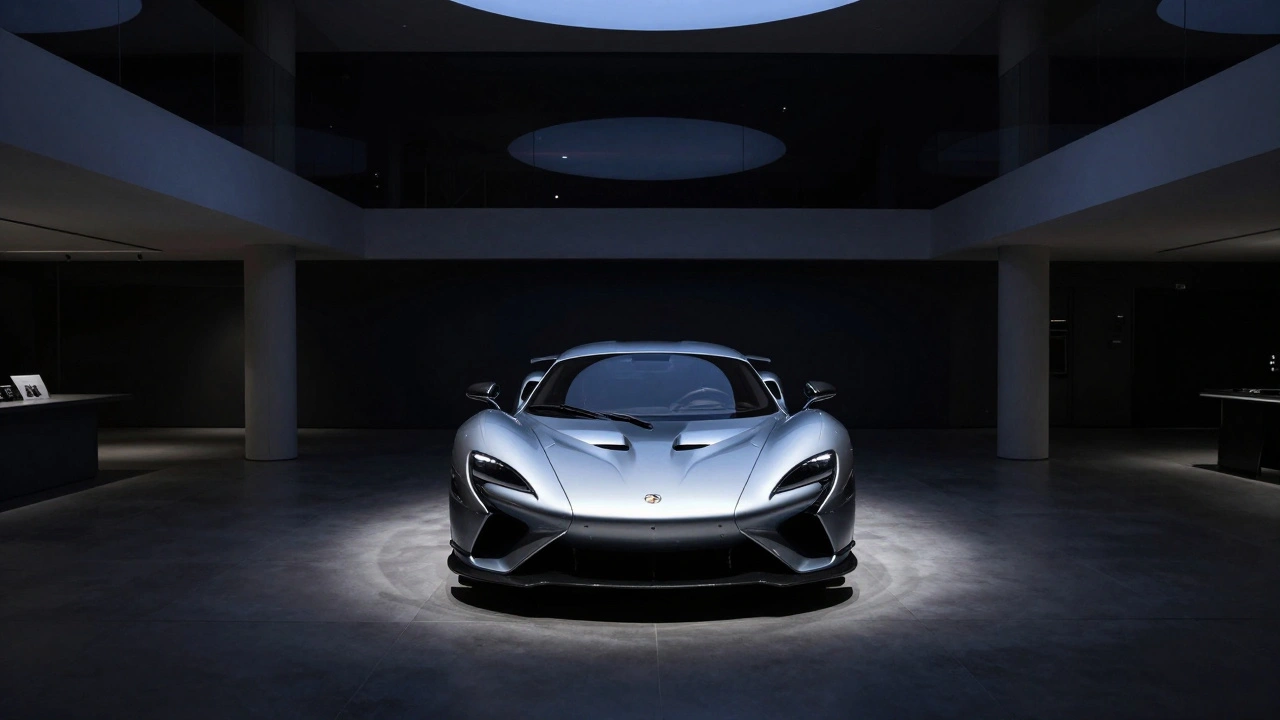
Creating a limited run requires more than just stopping the assembly line. It involves a rigorous vetting process. For the most exclusive British models, the manufacturer often decides who the buyer is before the car is even built. This ensures that the vehicle ends up in the hands of 'brand ambassadors'-people whose ownership adds more value to the brand than the cash they pay. Consider the production of a hyper-limited run. A brand might announce a series of only 50 units. They don't open a website for orders. Instead, they reach out to a curated list of existing clients. This turns the purchase into an invitation. When the rest of the world finds out that the 50 slots are gone, the perceived value of those 50 cars skyrockets. The buyers now hold an asset that is almost guaranteed to rise in value on the secondary market, turning a luxury purchase into a strategic investment.| Strategy Element | Premium Luxury | Ultra Luxury (Limited) |
|---|---|---|
| Primary Goal | Market Share & Volume | Brand Equity & Desire |
| Customer Access | Open to all qualified buyers | Invitation only / Vetted |
| Price Elasticity | Sensitive to market trends | Price increases demand |
| Inventory | Stocked at dealerships | Built to order / Bespoke |
Bespoke Customization as a Scarcity Tool
True scarcity isn't just about the number of units; it's about the uniqueness of each unit. This is where Bespoke Manufacturing comes in. By offering a level of customization where no two cars are identical, British brands create 'scarcity within scarcity.' When a client spends an extra £200,000 on a specific wood veneer from a fallen tree on their own estate or a paint color developed exclusively for them, that car becomes a 1-of-1. This removes the product from the realm of mass production entirely. The Bespoke process ensures that the brand never has to compete on price because the product is literally incomparable to anything else on the road. It transforms the manufacturer from a car company into a high-end atelier.The Risk of Over-Saturation
There is a dangerous line between 'exclusive' and 'greedy.' If a brand releases too many 'limited editions,' the market catches on. When everything is a limited edition, nothing is. This is a trap many legacy brands fall into when they try to chase short-term quarterly growth. If a brand produces 500 units of a 'rare' model and then another 500 of a 'special edition' of that same model, they dilute the scarcity value. Collectors start to lose faith in the asset's ability to hold value. The most successful British luxury houses maintain a strict discipline, often destroying prototypes or refusing to expand production lines even when the demand is overwhelming. They understand that the brand's long-term health depends on the frustration of the people who can't buy their products.Secondary Market Dynamics
One of the most fascinating parts of this strategy is that the manufacturer doesn't actually control the price after the first sale. In the ultra-luxury world, the secondary market is the ultimate validator. When a limited-run car sells for three times its original MSRP at a Sotheby's or RM Sotheby's auction, it provides a massive marketing win for the brand. This price surge proves to the world that the limited production strategy worked. It justifies the brand's high entry price and makes the next limited run even more desirable. It creates a cycle: the brand limits supply $ ightarrow$ demand spikes $ ightarrow$ secondary prices soar $ ightarrow$ the brand's prestige increases $ ightarrow$ the brand can limit supply even further for the next model.Maintaining Authority in a Modern Landscape
As we move into 2026, the definition of luxury is shifting. The new generation of wealth is less interested in traditional gold-plated opulence and more interested in 'quiet luxury' and sustainability. However, the rule of scarcity remains unchanged. Even with the shift toward Electric Vehicles (EVs), British brands are applying the same scarcity logic. They aren't just selling a battery and a motor; they are selling a limited production electric masterpiece. By limiting the number of high-performance EV slots, they prevent the 'tech-commodity' trap where electric cars are seen as interchangeable gadgets. They keep the soul of the brand alive by ensuring that the transition to new technology doesn't mean a transition to mass-market availability.Does limited production actually increase the quality of the product?
Not necessarily in terms of materials, but it significantly increases the quality of the *craftsmanship*. Because the volume is low, each unit receives hundreds of hours of undivided attention from master artisans. This level of detail is physically impossible to achieve in mass production, making the limited nature of the car a guarantee of its build quality.
Why don't luxury brands just increase prices instead of limiting volume?
Price and volume work together. If you only increase the price but keep the volume high, you have a high-priced commodity. If you limit the volume, you create a 'club' atmosphere. The scarcity creates a social competition among buyers that price alone cannot achieve. The goal is to make the product an unattainable trophy, not just an expensive purchase.
What happens if a limited edition fails to sell out?
For ultra-luxury brands, this is a nightmare scenario because it signals a drop in prestige. To prevent this, brands use 'vetted' lists. They only offer the car to people they know will buy it. If a model isn't moving, they may quietly reduce the official production number or offer it as a 'commission' to a loyal client to keep the public image of a sell-out intact.
Is this strategy only applicable to cars?
No, it's used across the entire British luxury spectrum. From Hermès bags (though French, they use the same logic) to Patek Philippe watches and high-end Savile Row tailoring. The core principle is always the same: restrict access to increase the perceived value of the entity.
How do brands decide the 'magic number' for a limited run?
It's a balance between production capacity and market hunger. If the number is too high, it's not scarce. If it's too low, the brand misses out on too much potential revenue. Typically, they look at the number of 'Tier 1' collectors globally and set the production slightly below that number to ensure a permanent deficit of supply.