The 1968 Merger That Changed UK Cars: How British Motor Holdings and Leyland Combined
 Sep, 19 2026
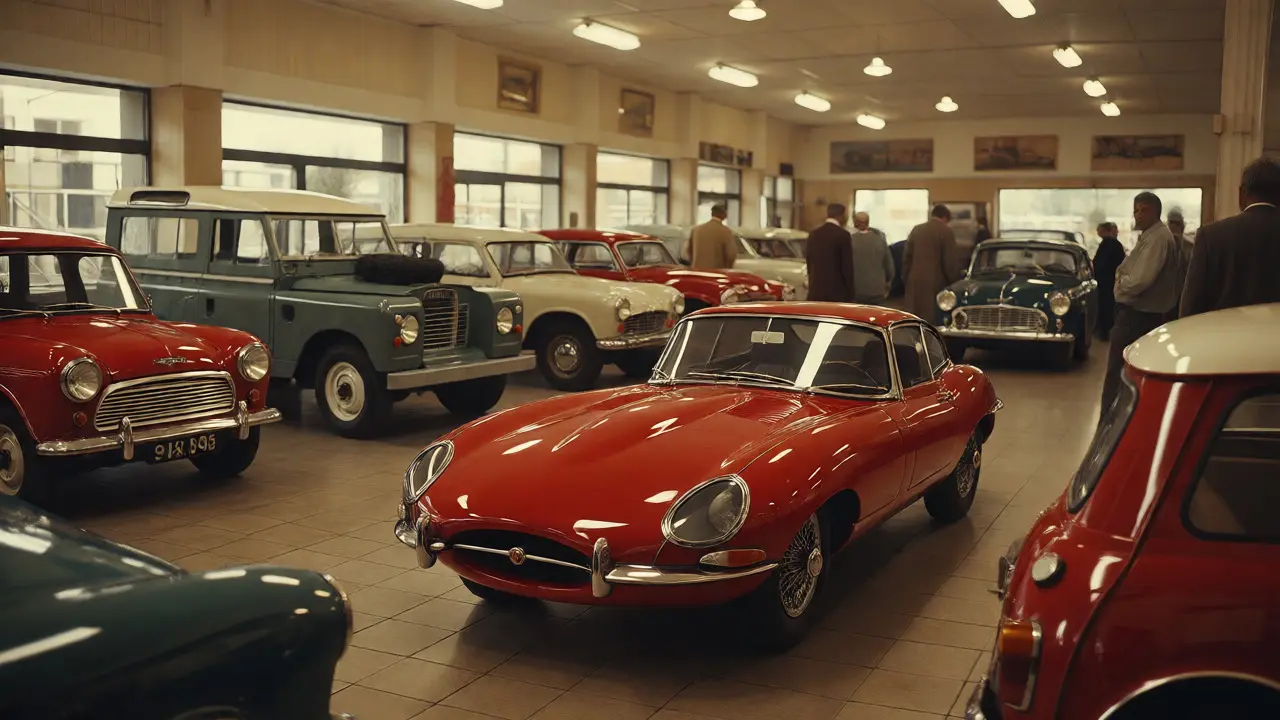
Imagine walking into a dealership in 1967. You see badges for Jaguar, Rover, Triumph, Austin, Morris, and MG. By 1968, many of those names were swallowed by one giant entity: British Leyland. This wasn't just a business deal; it was a forced marriage that reshaped the entire automotive landscape of Britain. The creation of this conglomerate is often cited as the beginning of the end for independent British car manufacturing. But why did it happen? And how did the combination of British Motor Holdings and Leyland Motors create such a tangled web?
The story starts with desperation. In the late 1960s, the UK car industry was fragmented and inefficient. Dozens of small manufacturers competed fiercely, duplicating engineering efforts and struggling to achieve economies of scale. The government wanted consolidation. They wanted fewer, stronger players who could compete globally against Ford and General Motors. Enter Lord Stokes, the ambitious chairman of Leyland Motors, who saw an opportunity to build an empire.
Why the Industry Needed Consolidation
Before we look at the merger itself, you need to understand the chaos it tried to fix. The British motor industry was a patchwork quilt of family-owned firms. Companies like Jaguar focused on luxury sports cars, while Austin made affordable family sedans. Each had its own factory, its own supply chain, and its own unique parts. There was almost no shared technology. If Jaguar needed a specific bolt, they couldn't just grab one from an Austin warehouse. It had to be made specifically for them.
This lack of standardization killed profitability. A company like Triumph, known for its stylish but unreliable sports cars, spent huge sums developing engines that were slightly different from the ones used by their sister brand, Standard. Meanwhile, larger international competitors were building millions of identical units, driving down costs through sheer volume. The UK government, led by Harold Wilson’s Labour administration, pushed hard for mergers. They believed that combining resources would save jobs and keep the industry alive. It sounded good on paper. In reality, it created a bureaucratic monster.
The Players: BMH and Leyland Motors
To understand the 1968 merger, you have to know who was sitting at the table. On one side was British Motor Holdings (BMH). This was already a large group formed in 1966 by merging two major rivals: BMC (British Motor Corporation) and Jaguar. BMH owned iconic brands like Mini, Land Rover, Rover, and MG. Despite having these famous names, BMH was bleeding money. Their management styles clashed violently. The old BMC culture was about making cheap, practical cars. The Jaguar culture was about prestige and performance. Merging them was like trying to mix oil and water.
On the other side was Leyland Motors. Originally a truck manufacturer, Leyland had expanded into passenger cars by buying Standard-Triumph in 1961. Under the leadership of Donald Stokes, Leyland became aggressive and efficient. Stokes was a brilliant engineer and a shrewd businessman. He looked at BMH’s massive debt and weak product lineup and saw prey. He didn’t want to merge as equals; he wanted to take control. The resulting union was not a partnership of friends. It was a hostile takeover dressed up as a merger.
| Entity | Major Car Brands | Commercial Vehicles | Financial Health (Pre-Merger) |
|---|---|---|---|
| British Motor Holdings | Mini, Austin, Morris, Rover, Jaguar, MG, Triumph* | Leyland Trucks (via prior ties), BMC Vans | Poor (High Debt, Low Efficiency) |
| Leyland Motors | Triumph, Standard | Leyland Trucks, Buses | Strong (Profitable, Efficient) |
The Mechanics of the 1968 Deal
The merger officially took effect in January 1968. The new company was named British Leyland Motor Corporation. It became the fourth-largest car manufacturer in the world. Imagine that-fourth biggest. For a moment, it seemed like a triumph of British engineering and ambition. But size doesn't equal strength if the internal structure is rotten.
Lord Stokes became the chairman. He immediately started reorganizing. He split the company into divisions based on vehicle type rather than brand heritage. All mass-market cars went under Austin-Morris. Luxury cars went under Jaguar-Rover. Commercial vehicles stayed with Leyland. This sounds logical, right? Wrong. It ignored the distinct identities of the brands. Customers bought a Mini because it was a Mini, not because it was an "Austin-Morris" product. By treating them as interchangeable inventory, the new management diluted the brand value.
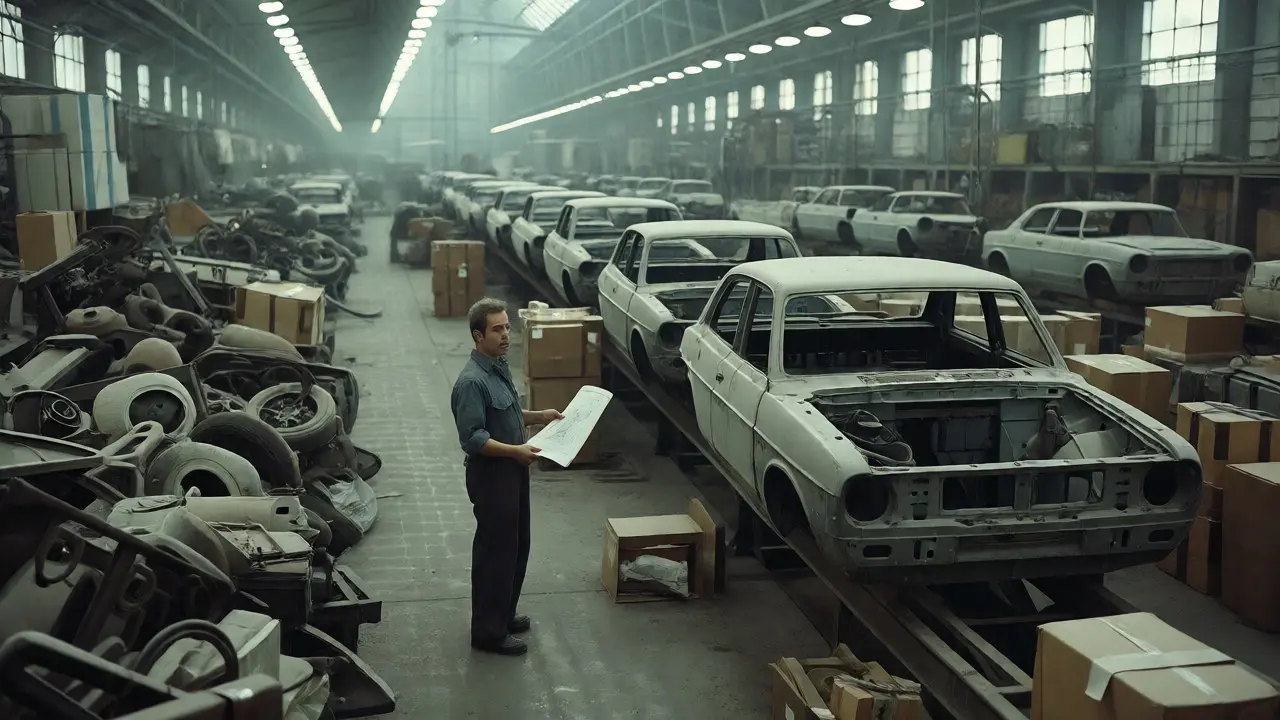
Furthermore, the merger created massive redundancy. Two head offices meant two sets of accountants, two HR departments, and two marketing teams all doing the same job. Instead of cutting costs quickly, the bureaucracy bloated. Decisions that should have taken days now took months because they had to pass through multiple layers of management who disagreed on strategy.

Cultural Clash: Engineering vs. Accounting
One of the most damaging aspects of the merger was the clash between engineering culture and financial control. At Leyland, engineers held power. Innovation was encouraged, even if it was expensive. At BMH, particularly after Jaguar was absorbed, accounting rules dominated. Every penny had to be accounted for before a new model could be approved.
When the two groups merged, the accountants won. Engineers found themselves fighting for budget approvals instead of designing cars. Projects were delayed or cancelled because they weren't "financially viable" according to short-term metrics. This stifled innovation. While German and Japanese competitors were introducing advanced fuel injection systems and better safety features, British Leyland was still debating whether to update the interior trim on the Austin Allegro.
You can see the result in the products. The Austin Allegro, launched in 1973, is often mocked for its strange steering wheel design and poor reliability. It wasn't designed by enthusiasts; it was designed by committee members trying to cut costs. Similarly, the Morris Marina was rushed to market to replace aging models, resulting in a car that felt cheap and broke down frequently. These weren't engineering failures alone; they were management failures caused by the chaotic merger.
The Impact on Specific Models
Let's look at how this affected real cars people drove. The Mini is the best example. Before the merger, the Mini was a cult classic, beloved for its simplicity and handling. After British Leyland took over, they tried to modernize it. They added plastic bumpers, changed the dashboard, and raised prices. The soul of the car was slowly sucked out. Production numbers dropped as quality issues rose.
Then there was Jaguar. Lord Stokes famously said he would make Jaguar profitable within three years. To do this, he slashed R&D budgets. The beautiful E-Type coupe continued production, but improvements slowed. When the XJ sedan arrived in 1968, it was a masterpiece of design, but early versions suffered from electrical gremlins. Why? Because the supply chain was fragmented across the new mega-corporation. Parts from different factories didn't fit together perfectly. Quality control became impossible when every supplier reported to a different division.
Even the Land Rover suffered. Known for ruggedness, Land Rovers began to feel less reliable as cost-cutting measures replaced robust components with cheaper alternatives. The brand identity, once clear and strong, became muddy. Was a Land Rover a workhorse or a leisure vehicle? British Leyland couldn't decide, so they tried to be both, satisfying neither.
Government Intervention and the End of Independence
By the mid-1970s, British Leyland was drowning in debt. The 1973 oil crisis hit hard, reducing demand for larger cars. The company asked the government for help. The state stepped in, effectively nationalizing parts of the operation. This marked the end of private sector dominance in UK car manufacturing.
The merger had failed to deliver efficiency. Instead of creating a global powerhouse, it created a dependent giant that required constant bailouts. The dream of a unified British car industry turned into a cautionary tale about the dangers of forced consolidation without cultural integration. The brands survived, but their independence died. Eventually, individual assets were sold off piece by piece. Jaguar went to Ford. Rover went to BMW. Then MG. Then back again. The cycle of ownership changes continued until the original spirit was almost unrecognizable.
Today, when you buy a new Jaguar or Land Rover, you're buying a product from Tata Motors. The direct lineage to that 1968 merger is broken. But the history remains important. It teaches us that owning more brands doesn't mean managing them well. It shows that corporate structure matters as much as engineering talent.
Lessons Learned from the Failure
What can we learn from this disaster? First, culture eats strategy for breakfast. You can't just throw two companies together and expect synergy. If their values don't align, the merger will fail. Second, diversification has limits. Trying to manage everything from minivans to luxury coupes requires specialized knowledge. One CEO cannot master all segments. Third, government intervention often prolongs the inevitable rather than solving the root problem.
The 1968 merger wasn't just a footnote in business textbooks. It shaped the cars your grandparents drove. It explains why certain British brands disappeared and others survived in different forms. Understanding this helps you appreciate the complexity of the auto industry. It wasn't just about making good cars; it was about building sustainable businesses. And in 1968, Britain forgot how to do that.
Why did British Motor Holdings merge with Leyland Motors?
The merger was driven by government pressure to consolidate the fragmented UK car industry. Officials believed that combining resources would improve economies of scale, reduce duplication, and allow British manufacturers to compete globally against American and European giants. Additionally, Leyland Motors, led by Lord Stokes, sought to expand its portfolio by acquiring the prestigious but financially troubled brands owned by British Motor Holdings.
Did the merger create the largest car company in the world?
No, it created the fourth-largest car manufacturer in the world at the time. While significant, it was smaller than GM, Ford, and Toyota. However, it was the largest in Europe and represented a massive concentration of British industrial capacity.
What happened to the Mini after the merger?
After the formation of British Leyland, the Mini underwent several controversial updates aimed at modernizing it and cutting costs. Changes included plastic bumpers, revised interiors, and increased pricing. Many enthusiasts felt these changes degraded the car's original charm and reliability, leading to a decline in its reputation during the 1970s.
Who led the new company after the 1968 merger?
Donald Stokes, the chairman of Leyland Motors, became the chairman of the newly formed British Leyland Motor Corporation. His leadership style was decisive and often authoritarian, which helped drive initial consolidation but also contributed to internal friction and high turnover among executives from the former British Motor Holdings.
Was the 1968 merger considered a success?
Historically, it is widely regarded as a failure. While it achieved the goal of consolidation, it failed to deliver financial stability or operational efficiency. The company struggled with debt, quality control issues, and labor disputes throughout the 1970s, eventually requiring substantial government subsidies and leading to further breakups and sales of its constituent brands.