Sustainability in British Luxury Cars: Materials, Processes & Lifecycle
 Nov, 16 2026
You might think a hand-stitched leather interior and a roaring V12 engine are the antithesis of eco-friendly. But walk into a modern British factory floor, and you’ll see something different. The quest for sustainability isn’t just a marketing sticker on the window; it’s rewriting how British luxury brands source wood, treat metal, and even what happens to the car when you’re done with it.
For decades, "luxury" meant excess. More chrome, more leather, more fuel. Today, brands like Bentley, Aston Martin, and McLaren are proving that opulence can coexist with responsibility. It’s not about stripping away the charm-it’s about changing where those charming materials come from and how they’re made.
The Raw Material Revolution
Let’s start with the stuff you touch. Traditional leather tanning uses chromium salts, which create toxic sludge. British manufacturers are pivoting hard toward vegetable-tanned leathers or alternatives entirely. Take Jaguar Land Rover (JLR), which has committed to using non-animal-derived textiles in many of its newer models. They aren’t just swapping plastic for vinyl; they’re developing fabrics from recycled fishing nets and wool blends that feel premium but leave a lighter footprint.
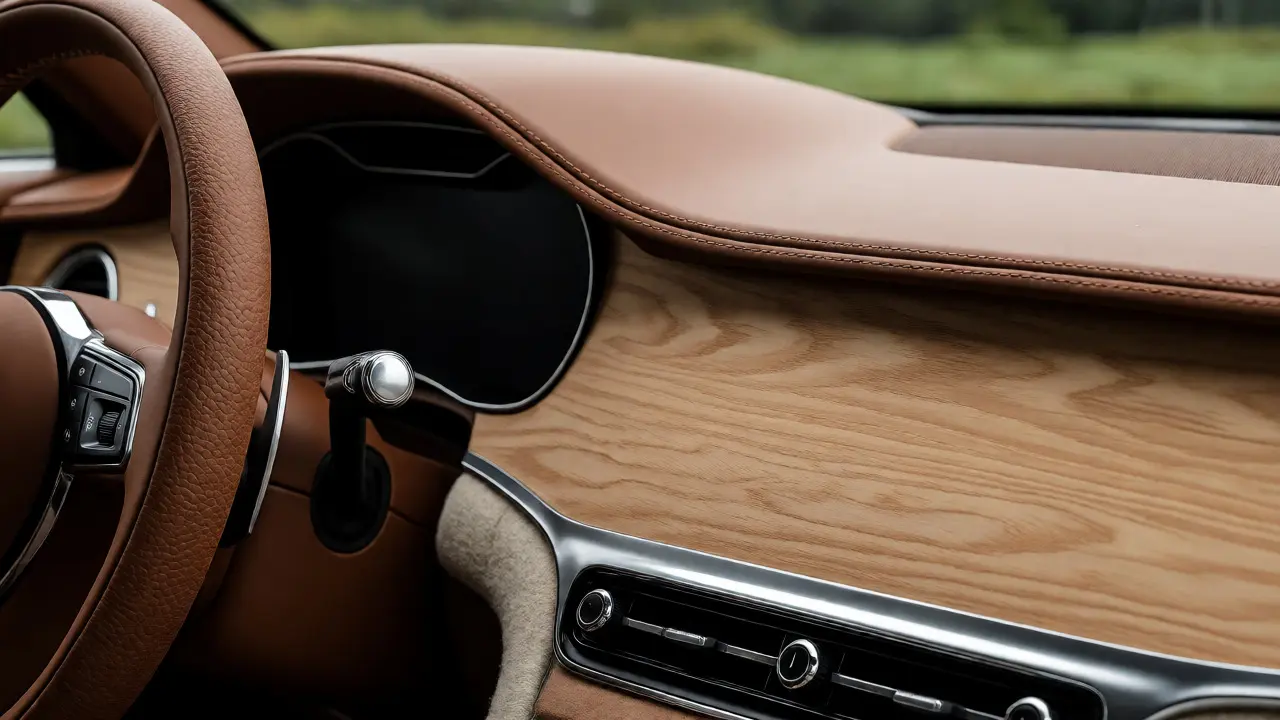
Then there’s wood. In a world of deforestation anxiety, claiming your dashboard is made of real walnut requires proof. Brands now trace timber back to specific managed forests in Scotland or Canada. If it doesn’t have a chain-of-custody certificate, it doesn’t get into the cabin. This transparency changes the supply chain dynamic. Suppliers can’t just ship crates of mystery lumber anymore; they need data trails.
Manufacturing Without the Mess
Making a car dirty used to be inevitable. Paint shops were notorious for volatile organic compounds (VOCs). Now, look at the Bentley facility in Crewe. They’ve implemented water-based paint systems that reduce VOC emissions by over 90% compared to solvent-based predecessors. It’s not just about compliance; it’s about worker health and local air quality.
Energy use is another big lever. Many British plants run on renewable energy contracts. JLR’s Solihull plant, for instance, generates significant power on-site through solar arrays and biomass boilers. They aim to achieve net-zero carbon across their entire value chain by 2039. That’s aggressive, especially considering they still build internal combustion engines alongside hybrids and EVs.
But here’s the catch: building an electric vehicle (EV) battery is carbon-intensive. Mining lithium and cobalt hurts. So, some brands are looking at solid-state batteries or sodium-ion tech to reduce reliance on scarce minerals. Others are focusing on efficiency-making the car itself lighter so it needs less battery capacity to go the same distance.
Lifecycle Thinking: From Cradle to Grave (and Back)
A truly sustainable car isn’t just green when it leaves the factory. It’s green throughout its life-and after it dies. This is where circular economy principles enter the chat. Instead of scrapping a damaged bumper, companies are designing parts that can be easily repaired or remanufactured.
Consider the concept of "design for disassembly." If you glue two materials together permanently, recycling becomes a nightmare. British engineers are increasingly using mechanical fasteners or compatible polymers so that at end-of-life, the car can be taken apart efficiently. Aluminum frames, common in high-end sports cars, are infinitely recyclable without losing strength. Steel, while heavier, is also highly recyclable.
What about the old cars? Restomodding-the practice of updating classic cars with modern drivetrains-is booming. Keeping a 1970s Rolls-Royce Silver Shadow on the road is arguably more sustainable than crushing it and building a new SUV. It preserves embodied energy. Companies like Bentley Mulliner offer official restomod services, turning heritage assets into low-emission performers by swapping engines for electric motors.
Comparing Approaches: Who’s Doing What?
Not every brand tackles this the same way. Some focus on materials, others on production, and a few on longevity. Here’s a quick look at how major players stack up.
| Brand | Key Material Innovation | Production Goal | Lifecycle Strategy |
|---|---|---|---|
| Aston Martin | Recycled carbon fiber composites | Net-zero operations by 2026 | Longevity via modular design |
| McLaren | Lightweight aluminum architecture | Certified carbon-neutral manufacturing | High resale value extends utility |
| Jaguar Land Rover | Non-leather interiors (eucalyptus, wool) | Net-zero by 2039 | Battery recycling partnerships |
| Bentley | Sustainable wood sourcing | Factory zero-waste-to-landfill | Official restomods (Mulliner) |
The Cost of Conscience
Does going green make these cars more expensive? Sometimes. Sourcing certified sustainable materials costs more than bulk commodity goods. Developing new alloys or testing alternative fabrics takes R&D budget. However, manufacturers argue that efficiency gains offset some costs. Lighter cars use less energy to build and drive. Fewer defects from improved processes save money on warranty claims.
Moreover, buyers are voting with their wallets. A survey by Deloitte showed that younger affluent consumers prioritize ethical sourcing. If a brand can’t prove its leather isn’t linked to rainforest destruction, it loses appeal. Sustainability has become a feature, like horsepower or handling.
Pitfalls to Watch For
Greenwashing remains a risk. Just because a company says it’s "eco-friendly" doesn’t mean the whole lifecycle is clean. Check for third-party certifications. Look for specifics: "reduced CO2 by X%" is better than "greener." Also, beware of solutions that shift the burden. Electric cars eliminate tailpipe emissions, but if the electricity comes from coal, the benefit shrinks. In the UK, grid decarbonization helps, but global sales markets vary.
Another issue is complexity. New materials often require specialized repair tools and training. If you crash a carbon-fiber-heavy supercar, fixing it might take longer and cost more than repairing steel. This affects total cost of ownership, which matters to collectors.
Looking Ahead: What’s Next?
The next frontier is bio-materials. Imagine dashboards grown from mycelium (mushroom roots) or seats woven from agricultural waste. British startups are already experimenting with these. Additionally, digital passports for cars could track every component’s origin and carbon history, making resale and recycling easier.
Ultimately, sustainability in British luxury cars isn’t about sacrifice. It’s about smarter engineering. It’s about respecting the resources that make these vehicles special. When you buy a piece of British motoring history today, you’re buying into a future where luxury doesn’t cost the earth.
Are all British luxury cars now electric?
No, most still offer internal combustion or hybrid options. However, brands like Bentley plan to be fully electric by 2030, while others like Aston Martin are transitioning gradually to preserve driving characteristics enthusiasts love.
Is leather really being phased out?
Not entirely, but its dominance is shrinking. Many brands now offer standard or optional alternatives like wool, eucalyptus fibers, or recycled synthetics. High-end leather is increasingly sourced from farms with strict animal welfare and land management standards.
How does recycling work for composite materials?
Traditional carbon fiber was hard to recycle. New techniques allow for pyrolysis or solvolysis to recover fibers for lower-grade applications. Some manufacturers are designing parts specifically for easier separation and reprocessing at end-of-life.
Do sustainable practices affect performance?
Often positively. Lightweight sustainable materials improve acceleration and braking. Aerodynamic improvements driven by efficiency goals also enhance stability. The main trade-off might be initial cost or specialized maintenance requirements.
What is 'Design for Disassembly'?
It’s an engineering principle where parts are designed to be easily taken apart. This facilitates repairs, upgrades, and recycling. It avoids permanent adhesives that mix materials irreversibly, supporting a circular economy.