Rolls Royce and Bentley Origins: How Two British Luxury Marques Took Shape Before 1914
 Sep, 25 2026
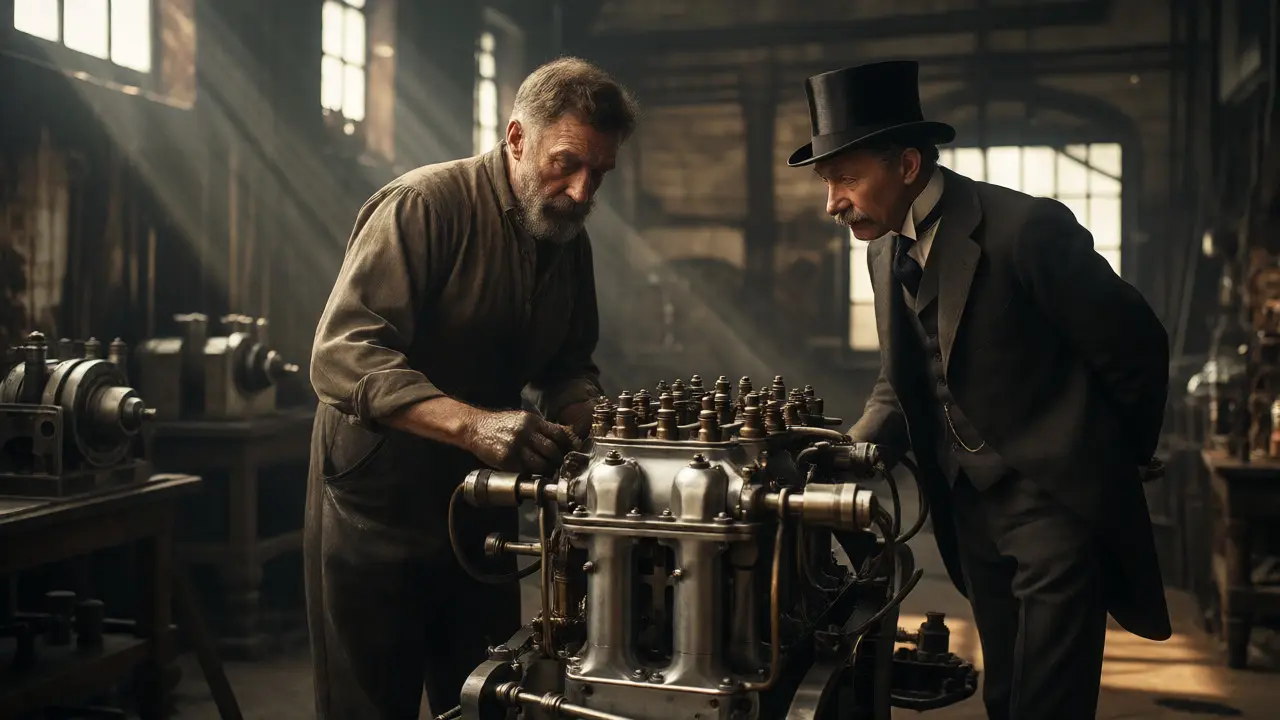
Imagine standing in a muddy field in Derbyshire in 1904. You are watching two men argue over whether an internal combustion engine is a toy or the future of transport. One is Henry Royce, a perfectionist electrician who hates noise and vibration. The other is Charles Rolls, a Cambridge-educated aristocrat who wants speed and status. This meeting didn't just create a car; it created a myth. But while Rolls-Royce was building its reputation on silent refinement, another story was brewing just miles away in Cricklewood. It involved a man named Walter Owen Bentley, who looked at the same industry and decided that "luxury" shouldn't mean "slow." To understand how these two brands diverged before World War I shut down production lines across Europe, you have to look past the badges and into the minds of the engineers who built them.
The Meeting That Changed Everything
Before 1904, the idea of a "British luxury car" was almost nonexistent. If you wanted prestige, you bought French. Panhard et Levassor, Daimler (the German one), and Renault dominated the high-end market. Britain was known for sturdy, utilitarian vehicles, not glamour. Enter Henry Royce. He wasn't trying to be a celebrity. He was a practical engineer who repaired dynamos and cranes in Manchester. In 1904, he built his first car, the Royce 10, because he thought existing cars were poorly made. They leaked oil, broke down, and rattled your teeth out.
Henry Royce was obsessed with tolerances. If a part didn't fit perfectly, he filed it down until it did. His philosophy was simple: make it so well that no one notices it works. He sold three cars in 1904. That’s it. Three. Then came Charles Stewart Rolls. Rolls was everything Royce wasn’t-charismatic, wealthy, and deeply connected to the London elite. Rolls owned a dealership in London called CS Rolls & Co., selling imported French cars. He was frustrated. The cars broke down, and he couldn't fix them himself. When he heard about Royce's three reliable cars, he drove north to meet him.
Their partnership was formalized on May 4, 1904, at the Midland Hotel in Manchester. The deal was straightforward: Royce would build the cars, and Rolls would sell them. They agreed that every car would carry both their names. This wasn't just branding; it was a promise. If something went wrong, you knew exactly who to blame. By 1906, they had moved production to Derby, where the famous Silver Ghost would eventually roll off the line. But while Rolls-Royce was perfecting silence, another revolution was starting in London.
W.O. Bentley and the Aluminum Engine
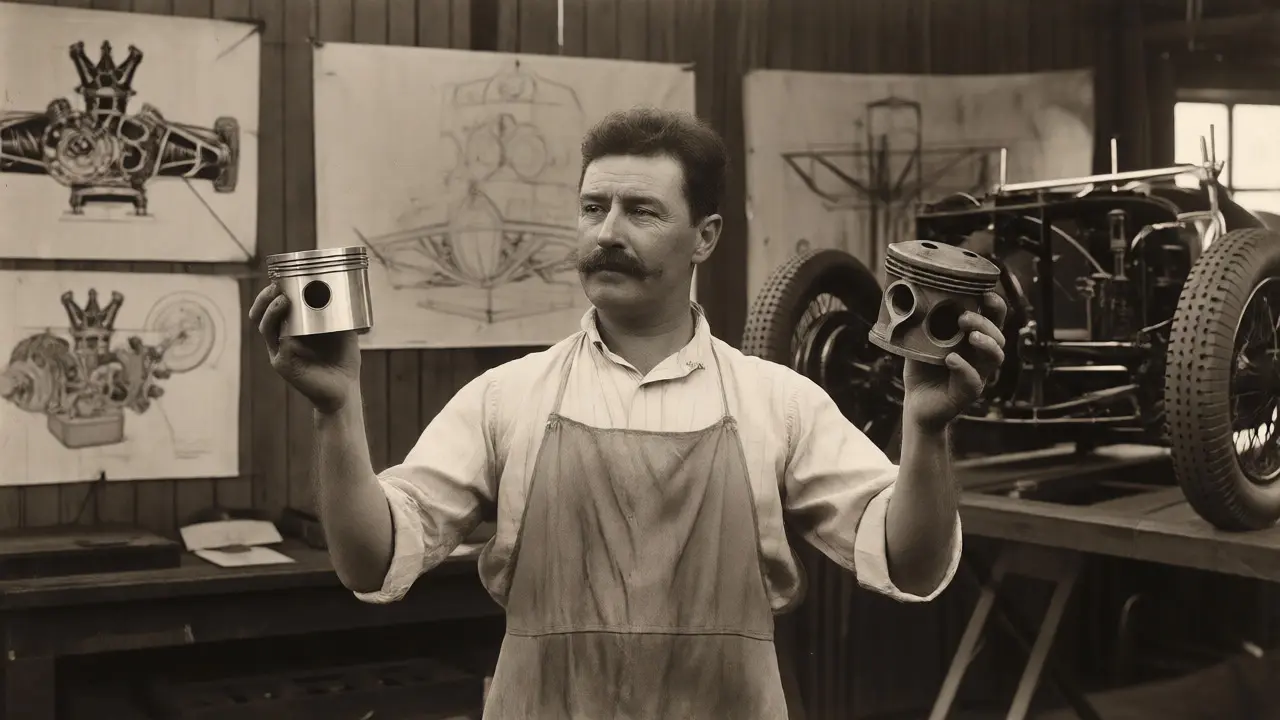
If Rolls-Royce was about elegance, Bentley Motors started as a rebellion against mediocrity. Walter Owen Bentley, known universally as W.O., didn't start out wanting to build cars. He was a railway engineer by training. In 1912, he bought a French DFV sports car and immediately took it apart. Why? Because he hated the cast-iron pistons. They were heavy and slow to warm up.
Bentley noticed that aluminum alloy pistons were being used in aircraft engines and some racing cars. They were lighter and dissipated heat better. He saw an opportunity. He began experimenting with aluminum blocks for car engines. This was radical. Most manufacturers stuck to iron because it was cheap and forgiving. Aluminum required precision casting and careful machining. Bentley believed that weight reduction was the key to performance. His mantra became "There is no replacement for displacement," but he added a crucial twist: you need power-to-weight ratio to use that displacement effectively.
In 1913, Bentley founded his company with his brother Horace. They initially sold imported French cars, similar to what Rolls did early on. But unlike Rolls, who partnered with an engineer, Bentley *was* the engineer. He designed his first car, the 3 Litre, during World War I. The war delayed its launch, but when it arrived in 1919, it shook the automotive world. It was fast, durable, and could outrun most sports cars while carrying four adults. It proved that a large, powerful engine could also be efficient if engineered correctly.
Diverging Philosophies: Silence vs. Speed
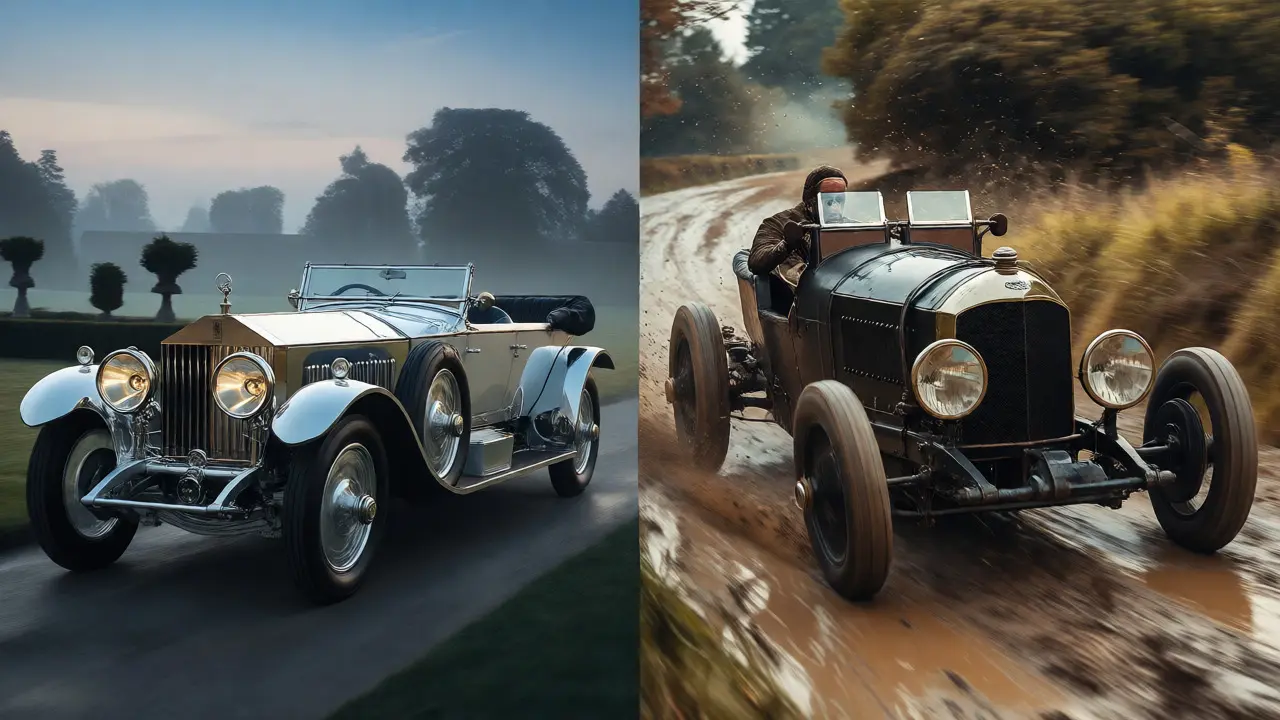
By 1914, the paths of these two marques had split sharply. This divergence wasn't accidental; it stemmed from the core personalities of their founders and the specific problems they chose to solve.
| Feature | Rolls-Royce (Pre-1914 Focus) | Bentley (Pre-1914 Conceptualization) |
|---|---|---|
| Primary Goal | Silence, smoothness, and reliability | Performance, durability, and lightness |
| Engine Material | Cast iron blocks (heavy, stable) | Aluminum alloy experiments (light, heat-dissipating) |
| Target Audience | Aristocrats seeking comfort and status | Drivers seeking excitement and capability |
| Key Innovation | Multi-cylinder alignment for zero vibration | High-compression ratios for efficiency |
| Manufacturing Style | Hand-finished, obsessive quality control | Engineering-led, focus on mechanical robustness |
Rolls-Royce focused on the "Silent Six" concept long before it was marketed. Henry Royce spent years refining the six-cylinder engine layout to eliminate harmonic vibrations. He used counterweights and precise crankshaft balancing. The result was a car where you could balance a coin on the dashboard without it falling over. This appealed to buyers who wanted a carriage-like experience, just faster and cleaner. They didn't want to feel the road; they wanted to glide over it.
Bentley, conversely, viewed the car as a machine to be mastered. His pre-war concepts emphasized that a car should handle rough roads and high speeds equally well. While Rolls-Royce hid the mechanics under polished wood and leather, Bentley celebrated them. He wanted drivers to know what was happening under the hood. This distinction mattered. One brand sold peace; the other sold power.
The Impact of the Edwardian Era
You cannot separate these brands from the Edwardian era (1901-1910). This period was defined by extreme wealth inequality and rapid technological optimism. For the upper classes, the automobile replaced the horse as the ultimate status symbol. But there was a problem: early cars were unreliable. Breaking down in front of your neighbors was a social disaster.
Rolls-Royce solved this anxiety. Their marketing relied heavily on testimonials from royalty and industrialists. They didn't just sell cars; they sold insurance against embarrassment. The "Silver Ghost," introduced in 1907, became legendary for covering thousands of miles without major repairs. This reliability justified the astronomical price tag. In 1910, a Rolls-Royce cost more than a house in many parts of England.
Bentley emerged slightly later, tapping into a different facet of Edwardian culture: the sporting life. The British elite loved hunting, polo, and motoring tours. Bentley positioned itself as the car for those who actually *drove* themselves, rather than being chauffeured. It was a subtle but powerful shift. It suggested that luxury wasn't just about sitting still in comfort; it was about the thrill of movement. This appeal grew stronger as the decade progressed toward 1914, setting the stage for Bentley's post-war dominance in racing.
World War I: The Great Reset
When war broke out in August 1914, both companies stopped making passenger cars. But their contributions differed, shaping their post-war identities. Rolls-Royce shifted entirely to aviation. Henry Royce worked tirelessly on the Eagle and Falcon aero engines, which powered Allied bombers and fighters. This work refined their engineering standards even further. The precision required for aircraft engines bled back into their car designs after 1918.
Bentley, meanwhile, applied his aluminum expertise to aircraft components. He developed piston rings and engine parts that improved performance and reduced weight. This experience validated his theories about lightweight materials. When the war ended, Bentley returned to car manufacturing with a clear vision: build a car that could win races and serve as a daily driver. Rolls-Royce returned with a commitment to absolute perfection and silence.
By 1919, the landscape had changed. The old aristocracy was fading, and new money was rising. Both brands adapted, but their roots remained distinct. Rolls-Royce continued to refine the art of understated luxury. Bentley doubled down on performance, entering Le Mans in the 1920s and winning five times. But the foundation for this rivalry was laid before 1914, in the workshops of Derby and Cricklewood, where two different visions of what a car could be collided.
Why These Origins Still Matter
Today, we often lump Rolls-Royce and Bentley together as "ultra-luxury." But understanding their pre-1914 origins explains why they feel different today. Rolls-Royce remains focused on isolation from the outside world-a sanctuary on wheels. Bentley retains a sportier edge, acknowledging the connection between driver and machine.
This isn't just nostalgia. It affects how you buy and drive these cars. If you value serene detachment, you lean toward the Rolls-Royce lineage. If you enjoy engaging with the road, the Bentley DNA speaks to you. Knowing that one was born from a desire to eliminate noise and the other from a desire to reduce weight helps you choose which badge resonates with your personality.
Moreover, these stories highlight the importance of specialization. Neither company tried to do everything. Rolls-Royce didn't chase lap times; Bentley didn't obsess over soundproofing foam. They picked their lane and dug deep. In a modern automotive market cluttered with compromise vehicles, that clarity of purpose is rare and valuable.
Did Rolls-Royce and Bentley compete directly before 1914?
Not really. Before 1914, Bentley Motors Ltd. was primarily an importer of French cars and an experimental workshop. The famous Bentley 3 Litre, their first true competitor to Rolls-Royce, wasn't launched until 1919. During the pre-war years, Rolls-Royce competed mainly against European brands like Mercedes and Daimler, while Bentley was still developing its engineering concepts.
What was the main difference in their engineering approaches?
Rolls-Royce prioritized smoothness and silence, using heavy cast-iron engines and meticulous assembly to eliminate vibration. Bentley focused on performance and efficiency, pioneering the use of aluminum alloys to reduce weight and improve heat dissipation. One aimed to hide the mechanics; the other aimed to optimize them.
How did World War I influence their post-war designs?
WWI forced both companies into aviation. Rolls-Royce's work on aero engines reinforced their commitment to precision and reliability, leading to even smoother post-war cars. Bentley's work with lightweight aluminum components validated his engineering philosophy, resulting in the high-performance 3 Litre model that defined the brand in the 1920s.
Who was more influential in the early days, Charles Rolls or Henry Royce?
Both were essential but in different ways. Henry Royce provided the engineering genius and product quality that made the brand credible. Charles Rolls provided the sales network, capital, and social connections needed to reach the wealthy elite. Without Rolls, Royce might have remained a small-scale manufacturer; without Royce, Rolls would have lacked a competitive product.
Why is the "Edwardian era" significant for these brands?
The Edwardian era created the demand for reliable luxury transportation among the ultra-wealthy. As horses became obsolete, the rich needed a status symbol that offered privacy and prestige. Rolls-Royce filled this niche perfectly by offering a car that didn't break down, allowing the aristocracy to travel comfortably without the unpredictability of early automobiles.