Richard Stephens: The Man Behind the First All-British Car (1897)
 Sep, 18 2026
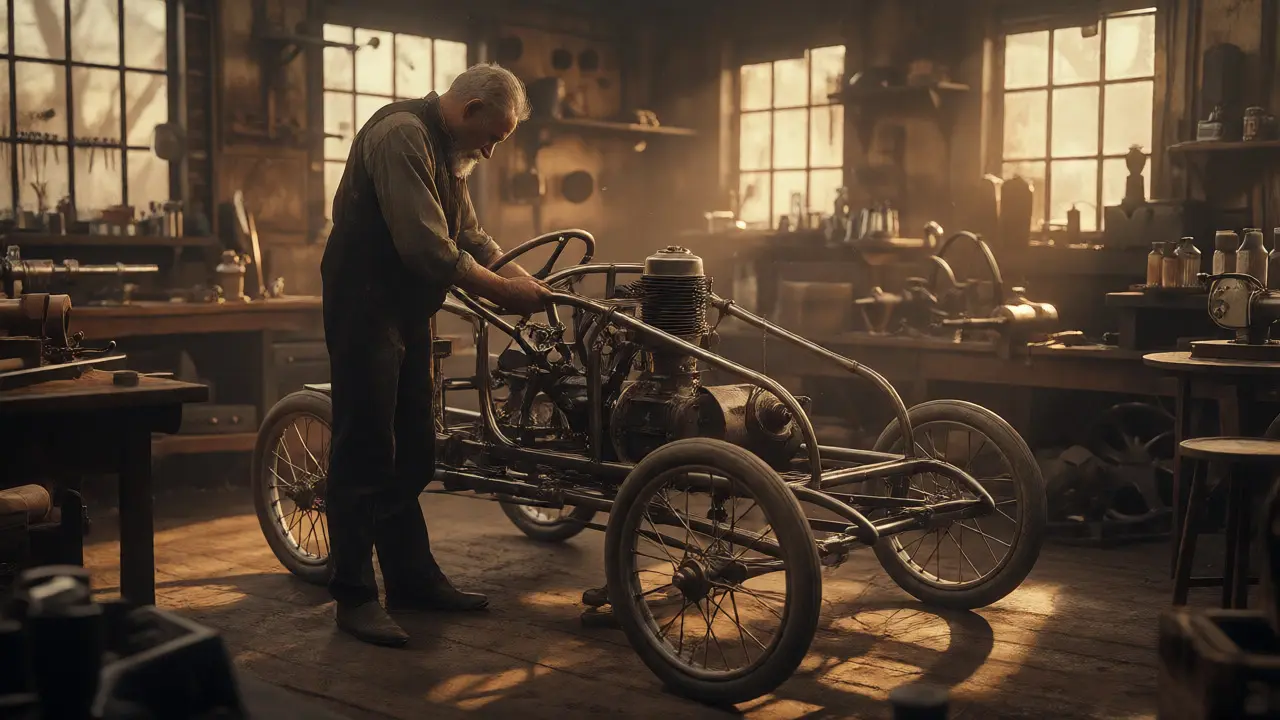
Imagine trying to build a working vehicle in your backyard shed with nothing but basic tools and a dream. That is exactly what Richard Stephens did in 1897. He didn't just assemble parts; he engineered the first all-British automobile, proving that the UK could compete with Germany and France in the nascent age of motoring.
Most people think of Henry Ford or Karl Benz when they hear "early cars." But the story of British motoring starts right here, in Coventry, with a man who refused to wait for imported technology. If you are curious about how the UK auto industry actually began, you need to look at Stephens' home-built machine. It wasn't flashy, but it was functional, and that made it revolutionary.
The Context: Why Britain Was Late to the Party
By the mid-1890s, Europe was buzzing with engine noise. Karl Benz had patented his Motorwagen in 1886, and Gottlieb Daimler was refining high-speed engines in Stuttgart. Meanwhile, Britain lagged behind. Why? Mostly because of the Red Flag Act of 1865. This law required a person to walk ahead of every self-propelled vehicle carrying a red flag, limiting speed to 4 mph in towns. It stifled innovation for decades.
When the act was repealed in 1896, allowing speeds up to 14 mph, engineers like Stephens saw an opportunity. They didn't have factories churning out cars yet. They had workshops, lathes, and a stubborn belief that internal combustion was the future. Stephens decided to build from scratch, not by copying a German design, but by creating something distinctly British.
Who Was Richard Stephens?
Richard Stephens wasn't a famous industrialist. He was a skilled mechanic and engineer based in Coventry. In the late 19th century, Coventry was already known for precision engineering, thanks to its bicycle industry. Companies like Dunlop and Rover started there. This ecosystem of metalworking expertise provided the perfect soil for Stephens to grow his idea.
Stephens understood that a car needed more than just an engine. It needed a transmission, a steering mechanism, and a chassis that could handle rough roads. He designed every component himself. There were no off-the-shelf parts lists in those days. If you wanted a gear, you cut it. If you wanted a piston, you cast it. His approach was pure DIY before the term existed.
Anatomy of the 1897 Home-Built Car
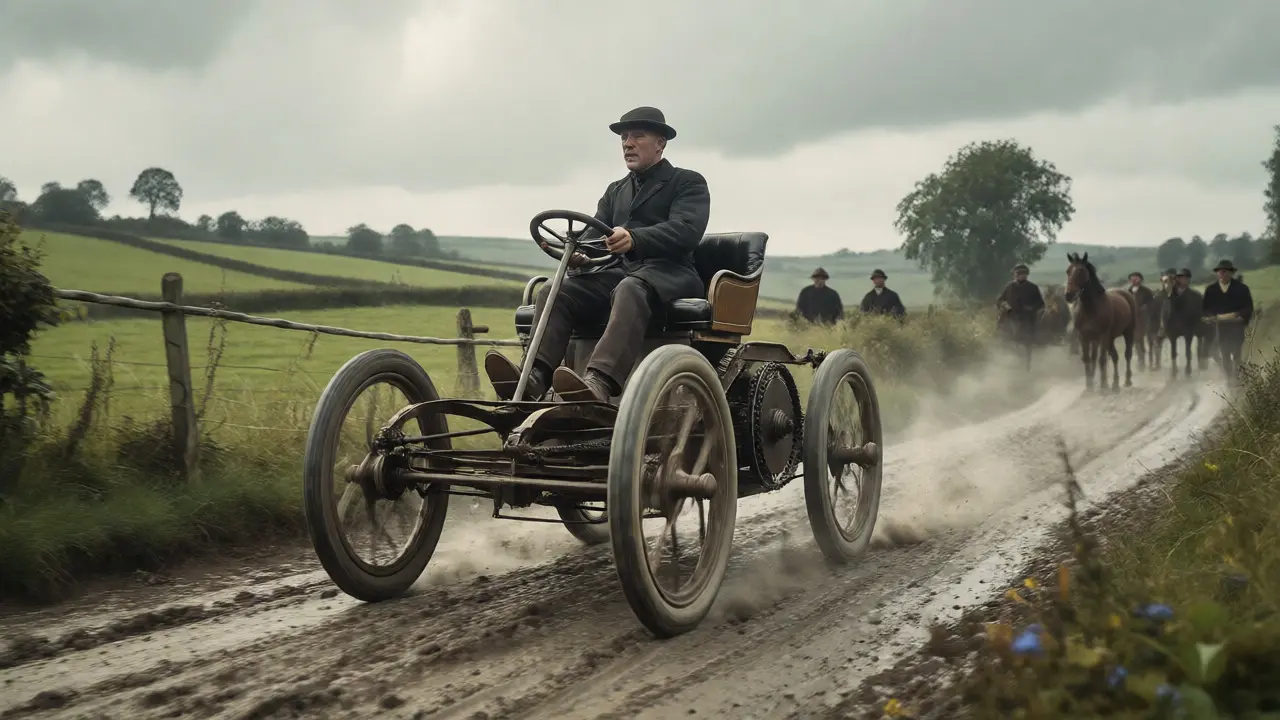
Let's break down what Stephens actually built. His 1897 vehicle was a two-seater runabout. It looked less like a modern car and more like a horseless carriage with an engine bolted underneath. But under the hood, it was sophisticated for its time.
| Component | Specification | Note |
|---|---|---|
| Engine Type | Single-cylinder, four-stroke | Water-cooled, approx. 3.5 hp |
| Transmission | Two-speed manual | Chain drive to rear axle |
| Ignition | Low-tension magneto | Battery-free ignition system |
| Top Speed | Approx. 15-20 mph | Dependent on road conditions |
| Weight | Lightweight tubular frame | Designed for agility |
The engine was the heart of the project. Stephens used a single-cylinder unit that produced roughly 3.5 horsepower. Today, that sounds tiny-your lawn mower has more power. But in 1897, moving a ton of steel and wood at 15 mph without horses was magic. The use of a low-tension magneto was particularly clever. Batteries were unreliable and heavy back then. A magneto generated its own spark, meaning the car could start even if the battery died. That reliability factor helped convince skeptics that motorcars weren't just toys.
Why "All-British" Matters
You might ask, why does it matter that it was "all-British"? Because most early cars in the UK were imports or assembled from foreign kits. French Panhard et Levassor engines were common. German Daimler licenses were widespread. By building every part domestically, Stephens proved that British manufacturing could stand on its own feet.
This claim isn't just patriotic fluff. It sparked a wave of local production. Once Stephens showed it was possible, other mechanics in Coventry and London followed suit. Companies like Lanchester and Vauxhall soon entered the scene, leveraging the same skills Stephens used. Without that initial proof of concept, the British auto industry might have remained a niche importer rather than a global powerhouse.
Challenges He Faced
Building a car in 1897 wasn't easy. Imagine sourcing fuel. Petrol wasn't sold at gas stations because gas stations didn't exist. You bought petrol in cans from chemists or ironmongers. It cost significantly more than horse feed. Plus, finding someone to fix your car when it broke down meant calling a blacksmith or a bicycle repairman, neither of whom knew much about internal combustion.
- Fuel Scarcity: Petrol was expensive and hard to find outside major cities.
- Road Conditions: Roads were often rutted and unpaved, punishing fragile suspensions.
- Lack of Infrastructure: No garages, no spare parts supply chain, no standardized bolts.
- Social Stigma: Cars were noisy, smelled bad, and scared horses, leading to public hostility.
Stephens had to be his own mechanic, driver, and fuel supplier. Every journey was an adventure. A flat tire could mean hours of work because tires were solid rubber or pneumatic but prone to punctures. Yet, he persisted. His success inspired others to take risks, knowing that if one man could do it in a shed, maybe a company could do it in a factory.
Legacy Beyond the Garage
Richard Stephens didn't become a household name like Henry Ford. He didn't mass-produce thousands of units. But his impact was foundational. He demonstrated that the internal combustion engine could be tamed and controlled using locally sourced materials and ingenuity.
His work contributed to the rapid growth of the UK automotive sector between 1900 and 1910. By 1903, Britain had over 100 car manufacturers. Many of these startups traced their inspiration directly to pioneers like Stephens. They saw that complexity wasn't a barrier-it was just a problem to solve. This mindset shaped British engineering culture: practical, robust, and inventive.
Today, when we talk about heritage brands like Jaguar or Aston Martin, we often forget their roots lie in this era of individual tinkering. Stephens represents the spirit of those early days. He reminds us that big industries start small, often in humble settings, driven by individuals who refuse to accept limitations.
Was Richard Stephens' car really the first British automobile?
It is widely recognized as the first *home-built* all-British automobile. While there were earlier experiments and steam vehicles, Stephens' 1897 model is cited by historians as the first successful, fully domestically manufactured internal combustion car intended for personal transport.
What happened to Richard Stephens after 1897?
Stephens continued working in engineering and manufacturing. Unlike some contemporaries who founded large companies, he remained focused on technical innovation and smaller-scale production. His specific later life records are sparse compared to industrial tycoons, but his contribution to Coventry's engineering reputation remains significant.
How much did it cost to run his car in 1897?
Running costs were high relative to income. Petrol cost about 2d (two pence) per gallon, which was expensive. Maintenance was also costly due to the lack of specialized mechanics. However, many owners found it cheaper than keeping a horse and carriage when factoring in stabling and feed.
Did Richard Stephens sell his design?
There is no evidence of mass commercial sales of his specific 1897 model. It served primarily as a prototype and proof of concept. However, his techniques influenced subsequent local manufacturers who did enter the market commercially in the early 1900s.
Where can I see a replica or original today?
Original examples are rare and often held in private collections or specialized museums like the Coventry Transport Museum. Replicas may exist among vintage car enthusiasts, but exact specifications vary since documentation from 1897 was not always rigorous.