Protecting British Character in a Multinational Era
 Nov, 2 2026
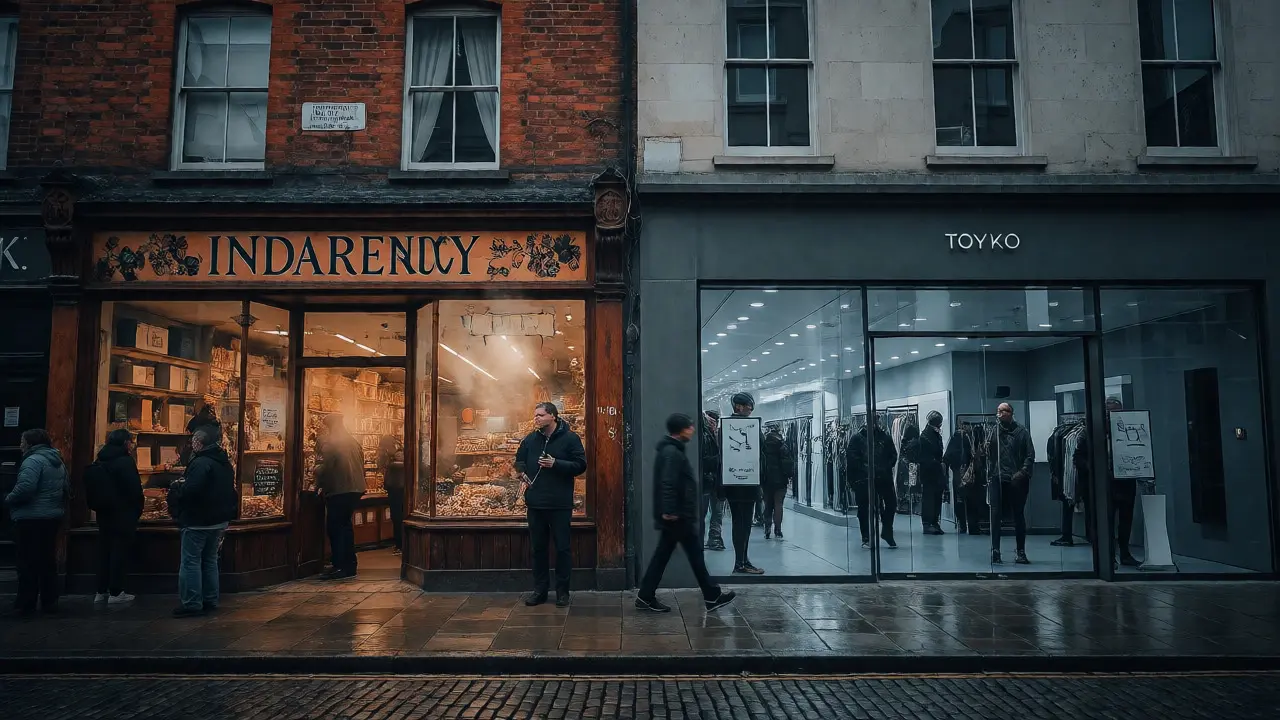
You walk into a shop on the high street. It looks familiar-the brickwork, the signage style-but the logo belongs to a conglomerate headquartered three time zones away. This isn't just about where your coffee comes from; it's about who decides what that shop sells and how it fits into the local fabric. The tension between global ownership and preserving distinct national identities has never been sharper. We are living in an era where capital flows freely across borders, but culture remains stubbornly local. How do you keep the soul of a place intact when its economic engines are owned by foreign hands?
The Paradox of Open Markets and Closed Cultures
Economics tells us that open markets drive efficiency. Culture tells us that uniqueness drives value. When these two collide, things get messy. Consider the UK retail sector. In the last decade, major chains have shifted from domestic ownership to international investment groups. On paper, this brings stability and capital injection. In practice, it often leads to homogenization. A store in Manchester starts looking exactly like a store in Milan or Tokyo because the central algorithm dictates inventory, not the local manager.
This isn't necessarily bad for business, but it is challenging for identity. The "British character" often cited in tourism brochures relies on specific architectural styles, independent businesses, and community-centric services. When a global entity standardizes these elements to maximize economies of scale, those subtle nuances disappear. You lose the quirky bookshop that stayed open late for students because the new owner prioritized uniform closing times across fifty countries.
Defining "British Character" in Economic Terms
What does "British character" actually mean when we talk about ownership? It’s not just about Union Jack flags. It refers to a specific set of operational values: a preference for long-term stewardship over short-term quarterly gains, a respect for local planning laws, and a commitment to local supply chains. These traits are hard to quantify but easy to spot when they’re missing.
Multinational corporations (MNCs) operate on different metrics. Their primary obligation is to shareholders, often located in London, New York, or Shanghai. If cutting costs means moving manufacturing out of Yorkshire, they will do it. If changing the brand name increases global recognition, they will change it. The challenge for policymakers and communities is distinguishing between beneficial foreign investment and extractive ownership that drains local wealth without reinvesting in the social fabric.
| Attribute | Local/Domestic Ownership | Global/Multinational Ownership |
|---|---|---|
| Decision Speed | Slow, consensus-driven | Fast, top-down directives |
| Profit Reinvestment | High percentage stays local | Repatriated to HQ or global funds |
| Brand Consistency | Varies by location | Standardized globally |
| Cultural Adaptation | Deep integration with community | Superficial localization efforts |

The Role of Planning and Heritage Laws
One of the few tools left to protect character is the planning system. The UK has some of the strictest heritage protection laws in the world. Organizations like Historic England play a crucial role here. They can block changes to listed buildings regardless of who owns them. But there is a limit. A global owner can buy a historic building, leave it empty for years waiting for asset appreciation, and still technically comply with the law while contributing nothing to the local economy.
This creates a loophole where financial speculation overrides cultural utility. The building exists, but its function as a community hub dies. To combat this, some councils are experimenting with "community right to buy" schemes, allowing locals to purchase assets before they fall into the hands of distant investors. It’s a slow process, but it puts control back in the hands of those who actually live there.

Consumer Power and Ethical Consumption
Can shoppers save the high street? Partially. There is a growing trend of "conscious consumerism," where buyers actively seek out brands with local roots or ethical supply chains. Data suggests that younger demographics, particularly Gen Z, are more likely to pay a premium for products that support local jobs. However, this is difficult to sustain when global giants use their massive budgets to undercut local prices.
The key here is transparency. Consumers need to know who owns what. Labels like "Made in Britain" help, but they don’t tell you who profits from the sale. Initiatives that highlight independent retailers versus corporate chains help clarify this distinction. When you choose a locally owned bakery over a franchise, you aren’t just buying bread; you’re voting for a model of ownership that keeps money circulating within your postcode.
Balancing Investment with Identity
We shouldn’t demonize global capital. Foreign investment creates jobs, builds infrastructure, and brings expertise that might otherwise be unavailable. The goal isn’t to close the borders but to manage the flow. Smart cities and regions are starting to implement policies that require foreign owners to demonstrate community benefit agreements. This might mean funding local schools, maintaining public spaces, or hiring locally at fair wages.
Think of it as a partnership rather than a takeover. When a multinational company respects local norms and integrates itself into the community, it enhances rather than erodes character. The failure mode occurs when companies treat a city merely as a data point on a spreadsheet, ignoring the human context. Protecting British character in a multinational era requires active engagement from all sides: governments must enforce rules, companies must respect culture, and consumers must make informed choices.
Does global ownership always harm local culture?
Not always. Many multinational companies successfully integrate into local cultures by adapting their operations to fit regional preferences. Harm usually occurs when standardization ignores local nuances or when profits are entirely repatriated without local reinvestment.
How can consumers identify locally owned businesses?
Look for signs such as unique branding, local staff knowledge, and involvement in community events. Checking corporate parentage via business registries or apps designed for ethical shopping can also reveal if a seemingly local shop is part of a larger global chain.
What role do government regulations play in protecting character?
Regulations like planning permissions, heritage listings, and tax incentives for local reinvestment help ensure that development aligns with community goals. Without these frameworks, market forces alone often prioritize speed and cost over cultural preservation.
Is "British character" a static concept?
No, culture evolves. Protecting character doesn’t mean freezing time. It means ensuring that changes reflect the will and values of the local population rather than being imposed solely by external financial interests.
Can small businesses compete with global owners?
Yes, by leveraging agility and personal connection. Small businesses can offer personalized service, niche products, and rapid adaptation to local trends-advantages that large, bureaucratic multinationals struggle to replicate efficiently.