Pioneer UK Car Manufacturing: How 1890s Patent Deals Shaped British Automakers
 Nov, 24 2026
The Great Patent Wall of the 1890s
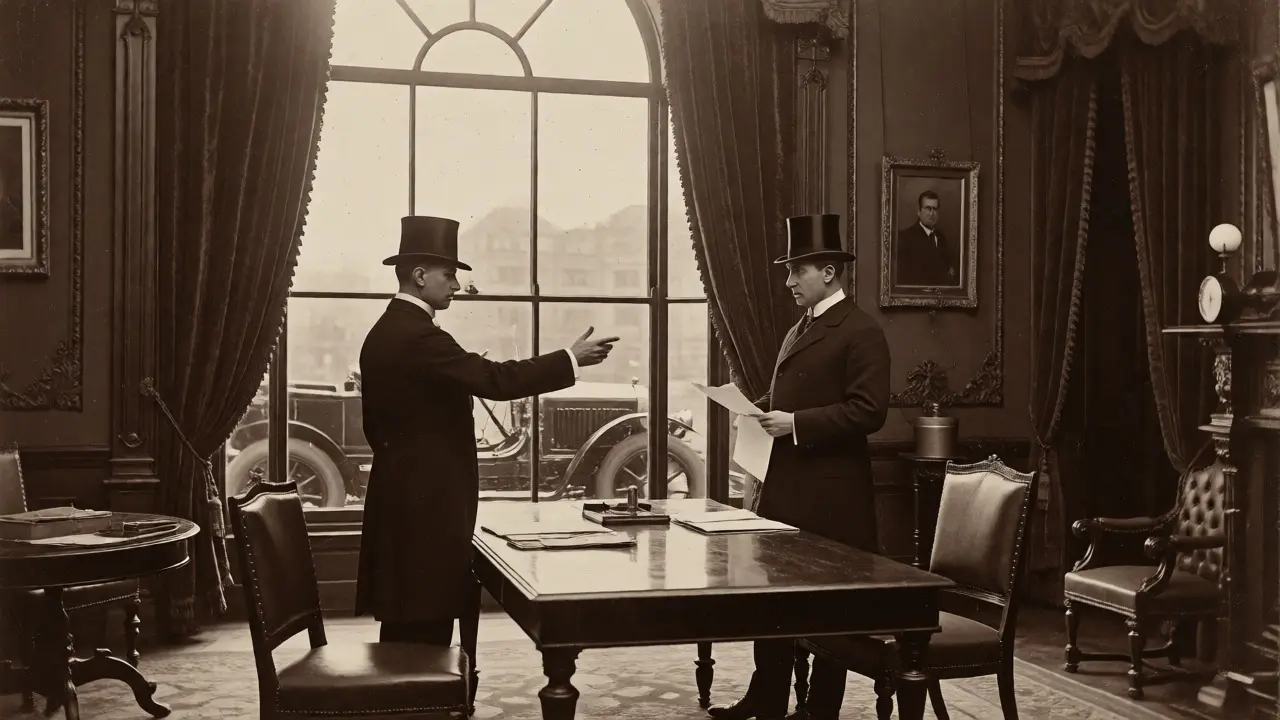
Imagine trying to build a Pioneer UK Car Manufacturing business in the late 19th century, only to find that every single screw you tighten might land you in court. That was the reality for early British engineers. While Germany and France were racing ahead with public domain innovations or aggressive licensing, Britain’s automotive sector hit a brick wall made of legal documents. The story isn’t just about cars; it’s about how intellectual property laws either strangle or stimulate an industry before it even learns to walk.
You might think the first cars appeared in garages overnight. They didn’t. They emerged from a complex web of patent deals that dictated who could make what, where, and how much they had to pay. For British automakers, these agreements weren’t just paperwork-they were survival kits. Some companies thrived by navigating this maze; others vanished because they couldn’t afford the toll.
Why Patents Mattered More Than Engines
In the 1890s, the internal combustion engine wasn’t a commodity. It was proprietary tech. If you wanted to use a four-stroke cycle, you needed permission. The Selden Patent loomed large globally, but in the UK, local protections mattered more. Engineers like Frederick Lanchester and Herbert Austin weren’t just mechanics; they were lawyers’ clients. Every design choice carried a legal risk assessment alongside a technical one.
This created a strange dynamic. Innovation slowed down not because people lacked ideas, but because they feared lawsuits. Why invent a new gear mechanism if someone else already patented a similar shape? This hesitation cost the UK valuable years during its most critical growth phase. Competitors on the continent, less burdened by restrictive cross-licensing at home, iterated faster. By the time British firms sorted out their legal standing, the market window for being "first" had largely closed.
| Company Type | Patent Strategy | Outcome |
|---|---|---|
| Licensed Builders | Paid royalties to foreign holders (e.g., Daimler) | Stable but low margins; dependent on licensor |
| Independent Inventors | Developed unique designs to bypass patents | High risk; some succeeded (Lanchester), many failed |
| Importers | Bought finished cars from France/Germany | Quick entry; no manufacturing base built |
The Daimler License: A Double-Edged Sword
You can’t talk about Pioneer UK Car Manufacturing without mentioning Daimler. In 1896, the Daimler Company Limited secured exclusive rights to manufacture and sell Daimler vehicles in the UK. This deal was massive. It gave them credibility and immediate access to proven technology. But it also locked them into a specific engineering path defined by German patents.
For other British firms, this meant they couldn’t just copy Daimler’s successful models. They had to innovate around them. This forced creativity, sure, but it also fragmented the industry. Instead of a unified national standard emerging, you saw dozens of slightly different engines, transmissions, and chassis designs. Each company was solving the same problems in isolation to avoid infringement. This lack of standardization made maintenance hard, parts scarce, and consumer trust shaky.
Frederick Lanchester and the Cost of Independence
Take Frederick Lanchester as a case study. He refused to rely on existing licensed designs. Instead, he developed his own disc brakes and independent suspension systems. These were brilliant innovations. But because they weren’t covered by the major patent pools of the day, he faced constant legal challenges and higher production costs. His cars were technically superior, often ahead of their time, but commercially fragile.
Lanchester’s struggle highlights a key truth: in the 1890s, being a good engineer wasn’t enough. You needed capital to fight legal battles. Smaller workshops couldn’t afford the litigation risks that larger, licensed firms like Daimler could absorb. This economic pressure favored consolidation early on, pushing smaller pioneers out of the market before they could scale up.
How Patent Pools Eventually Saved the Industry
The chaos of individual patent wars became unsustainable. By the early 1900s, the industry began moving toward collective licensing agreements. These pools allowed multiple manufacturers to use core technologies under standardized terms. This shift lowered barriers to entry and encouraged collaboration rather than pure competition on basic engineering.
For British automakers, this transition marked the end of the pioneer era and the start of industrial maturity. Companies could focus on marketing, reliability, and mass production techniques instead of worrying if their latest crankshaft design would trigger a lawsuit. The patent deals of the 1890s, while initially restrictive, eventually forced the creation of these cooperative frameworks that enabled the later boom in British car exports.
Legacy of the 1890s Legal Landscape
Today, we take it for granted that you can buy a car with any brand’s engine inside another brand’s body. That interoperability started here. The painful lessons of the 1890s taught the industry that hoarding basic patents stifles growth. Sharing them accelerates it.
If you look at modern EV battery patents or software copyrights, you’re seeing echoes of this same battle. Who owns the core tech? Who gets to use it? The Pioneer UK Car Manufacturing experience proves that legal frameworks are as important as mechanical ones. They determine which ideas survive long enough to change the world.
Frequently Asked Questions
Did the Selden Patent affect British car makers directly?
Not significantly. The Selden Patent was primarily enforced in the United States. British manufacturers dealt more with European patents, particularly those held by German and French entities like Daimler and Panhard et Levassor. UK law required local registration, so American patents had little direct impact on domestic production decisions.
Why did some British companies fail despite having good technology?
Many failed due to high legal costs associated with defending unique designs against patent infringement claims. Without the deep pockets to sustain prolonged litigation or the ability to license core technologies cheaply, small innovators couldn't achieve economies of scale. Their superior tech couldn't overcome their financial fragility.
What was the main benefit of the Daimler license for the UK?
It provided a stable, proven technological foundation for early UK production. This helped establish a skilled workforce and supply chain infrastructure. However, it also limited innovation freedom for other firms, forcing them to develop distinct, often more expensive, alternative solutions to avoid infringing on Daimler's protected designs.
How did patent deals influence car design uniformity?
Initially, they caused fragmentation. Because each company tried to design around existing patents, there was little standardization in components like engines or transmissions. This made repairs difficult and parts non-interchangeable. Later, the move toward patent pools helped restore some uniformity by allowing shared use of common designs.
Were all early British car makers involved in patent disputes?
Almost all significant players faced some form of patent challenge or licensing negotiation. Even companies importing cars had to ensure their suppliers' patents were valid in the UK. Those who ignored these issues often faced injunctions that halted sales, effectively killing the business before it gained traction.