Parts Supply and Standardization: How BMC Streamlined Post-War Production
 Nov, 27 2026
You have to understand the chaos of 1945. Britain was bankrupt, steel was rationed, and factories were still smelling like cordite from making tank transmissions. The government didn't just want cars; they wanted exports to pay off war debts. But how do you build millions of cars when you can barely get enough screws? You stop building bespoke machines for every model and start treating cars like appliances. This is where British Motor Corporation (BMC), formed in 1952, changed everything by merging Austin and Morris under one roof with a singular obsession: standardization of parts and streamlined production.
Before we get into the nuts and bolts, let’s look at what this actually meant for the average buyer and the factory floor. It wasn’t just about saving money. It was about survival in a global market dominated by American giants like Ford and GM. By forcing different car models to share engines, gearboxes, and electrical components, BMC created a system that was efficient, cheap to maintain, and surprisingly resilient.
The Problem: Bespoke Chaos in a Rationed World
In the early 1950s, if you bought an Austin A30 and a Morris Minor, you might think they were cousins. They looked similar because both companies had roots in the Nuffield Organization, but under the hood, they were strangers. Different engine mounts, different wiring looms, different brake master cylinders. For a mechanic, this was a nightmare. For a manufacturer, it was financial suicide.
Imagine running two kitchens. One makes pizza, the other makes pasta. If you buy separate ovens, separate flour suppliers, and separate chefs for each, your costs skyrocket. That was the pre-BMC reality. The British motor industry was fragmented. There were over a dozen major manufacturers, each guarding their proprietary designs like state secrets. When Leonard Lord, the driving force behind BMC’s formation, took charge, he saw this fragmentation as the biggest threat to British competitiveness.
Lord realized that while American cars were bigger and more powerful, they couldn’t compete on price or fuel efficiency in post-war Europe. But to win on price, BMC needed to slash production costs. The only way to do that was to reduce the number of unique parts. Less variety means fewer tools, less inventory, and faster assembly lines.
The Solution: The BMC Parts Catalogue Strategy
BMC didn’t just suggest standardization; they mandated it. The strategy was simple but brutal: if a part could be shared between an Austin, a Morris, and later a Riley or Wolseley, it had to be. This led to the creation of a massive, unified parts catalogue that became legendary among mechanics worldwide.
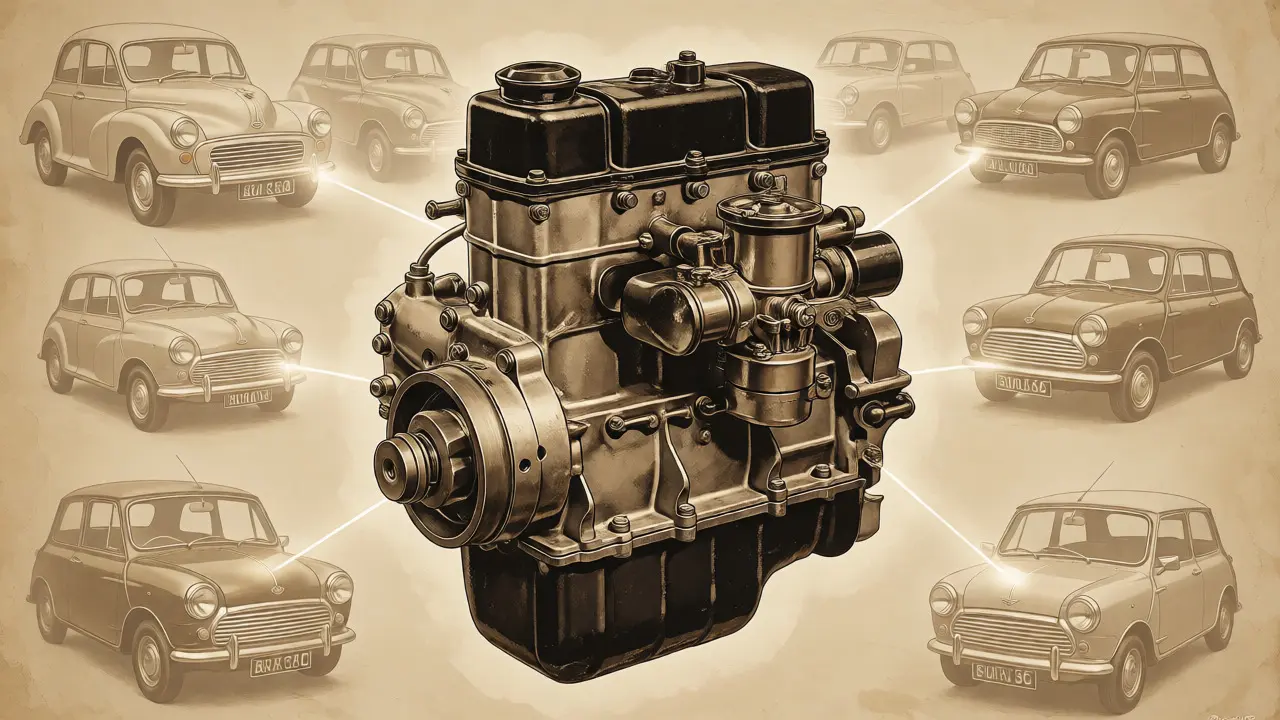
Consider the A-Series engine. Introduced in 1951, this small inline-four engine became the backbone of the company. It wasn’t the most advanced engine in the world-it lacked overhead cams and fancy fuel injection-but it was robust, easy to manufacture, and incredibly versatile. It powered everything from the tiny Mini to the larger Austin Cambridge.
Here is how the standardization impacted specific vehicle segments:
| Model | Production Years | Shared Components | Strategic Benefit |
|---|---|---|---|
| Morris Minor | 1948-1971 | A-Series Engine, Girling Brakes | Extended lifespan through easy repairs |
| Austin A35 | 1956-1967 | Minor Body Shell (modified), Same Gearbox | Reduced tooling costs for new models |
| Mini | 1959-2000 | A-Series Engine (transverse), Hydrolastic Suspension | Created a new class of economy car |
The table above shows a clear trend: as time went on, the sharing became more aggressive. The Mini, arguably BMC’s greatest success, relied entirely on the existing infrastructure of the A-Series engine and standardized suspension components. Because these parts were already being made in bulk for other cars, the cost per unit dropped significantly.
Supply Chain Efficiency: The Vertical Integration Model
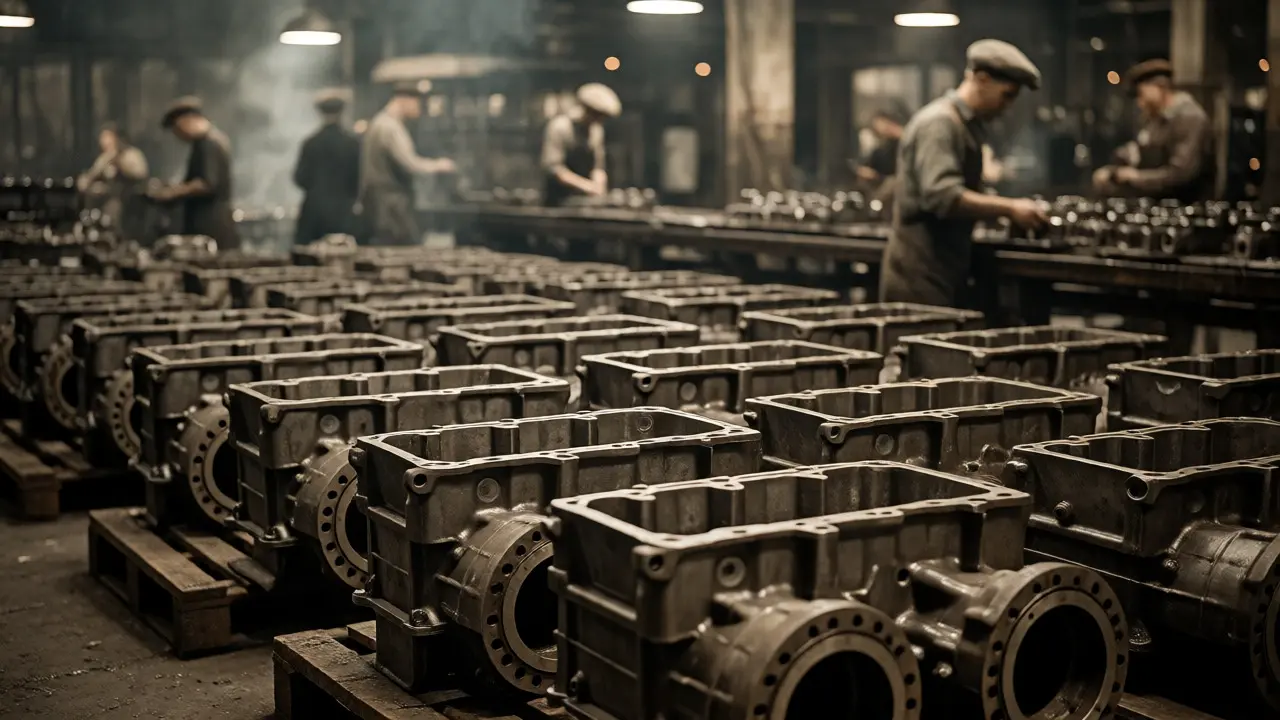
Standardization isn’t just about design; it’s about supply. BMC adopted a high degree of vertical integration. They didn’t just buy parts; they made them. From cast iron blocks to leather seats, much of the production happened within the BMC group. This gave them control over quality and timing, which was crucial during periods of material shortage.
Let’s talk about the Longbridge plant in Birmingham. This facility became the heart of BMC’s operations. By consolidating production here, BMC reduced shipping times between component manufacturing and final assembly. In a pre-JIT (Just-In-Time) era, having parts physically close to the assembly line was a massive competitive advantage.
This approach also helped with labor relations. With stable, high-volume production runs, workers had job security. They weren’t switching between five different car models every week; they were repeating the same tasks on standardized components. This increased proficiency and reduced errors, further lowering costs.
The Global Impact: Exports and Colonial Markets
Why did this matter globally? Because Britain’s economic recovery depended on exports. The US dollar gap was huge. BMC needed to sell cars abroad to earn hard currency. Standardized parts made this easier. A dealer in Australia or South Africa didn’t need to stock thousands of unique parts for different British brands. They could service an Austin, a Morris, and a Wolseley with the same inventory.
This uniformity built trust. Mechanics in Lagos or Sydney knew that if a BMC car broke down, they could likely fix it with locally available parts or those shipped from the UK in standard containers. This reliability turned BMC into a dominant player in Commonwealth markets. The Austin J2 pickup truck, for example, became ubiquitous in developing nations not because it was luxurious, but because its simple, standardized engineering meant it could be repaired with basic tools and common spare parts.
The Downside: Innovation Stagnation
Was all this standardization perfect? Not quite. While it saved money and boosted export numbers, it sometimes stifled innovation. Critics argued that BMC became too reliant on the A-Series engine and outdated chassis designs. As Japanese manufacturers like Toyota and Nissan began introducing newer, more efficient technologies in the 1960s, BMC struggled to keep up. Their focus on cost-cutting through standardization sometimes came at the expense of cutting-edge engineering.
Moreover, the heavy reliance on a few key components created vulnerabilities. If there was a defect in the A-Series engine or the Girling brake system, it affected nearly every model in the lineup. Recall management became complex because a single faulty batch of parts could impact sales across multiple brand names.

Lessons for Modern Manufacturing
What can modern manufacturers learn from BMC’s post-war strategy? First, simplicity scales. In an age of customization, there’s still value in modular platforms. Look at the Volkswagen Group today-they use the MQB platform across dozens of models, much like BMC used the A-Series. Second, supply chain resilience matters. BMC’s vertical integration protected them from external shocks, a lesson relevant again in our current era of chip shortages and trade disputes.
BMC proved that you don’t need to reinvent the wheel for every product. Sometimes, using the same wheel across different vehicles is the smartest business move. It allowed Britain to remain a significant automotive exporter for decades, despite lacking the raw resources of the United States.
Frequently Asked Questions
Why did BMC merge Austin and Morris?
The merger was driven by the need to compete against American giants. By combining resources, they could pool capital, reduce duplicate R&D efforts, and create economies of scale that neither company could achieve alone. Leonard Lord believed that consolidation was the only way to survive the post-war economic climate.
How did standardization affect repair costs for owners?
Repair costs dropped significantly. Since parts like spark plugs, filters, and brake pads were identical across many models, competition among suppliers drove prices down. Mechanics also worked faster because they didn’t need to diagnose unique systems for each brand, reducing labor hours.
Did standardization hurt the distinct identity of BMC brands?
Yes, to some extent. Over time, Austin, Morris, Wolseley, and Riley models became increasingly similar mechanically and even aesthetically. This led to "badge engineering," where cars were essentially the same vehicle with different grilles and logos, diluting the premium appeal of brands like Riley.
What was the role of the A-Series engine in BMC's success?
The A-Series engine was the cornerstone of BMC’s strategy. Its compact size, durability, and ease of mass production allowed it to power a vast range of vehicles from the 1950s to the 2000s. It provided the mechanical consistency needed to justify the high volume of standardized parts production.
How did BMC handle international distribution?
BMC leveraged its standardized parts catalog to simplify global logistics. Dealerships in foreign markets required less diverse inventory, making it cheaper to establish networks in countries like Australia, India, and Canada. This uniformity made BMC cars attractive to governments and fleets looking for low-maintenance options.