Oil Crisis Impacts on British Cars 1973 Cost Engineering and Model Strategy Shifts
 Mar, 29 2026
The Weekend That Changed Everything
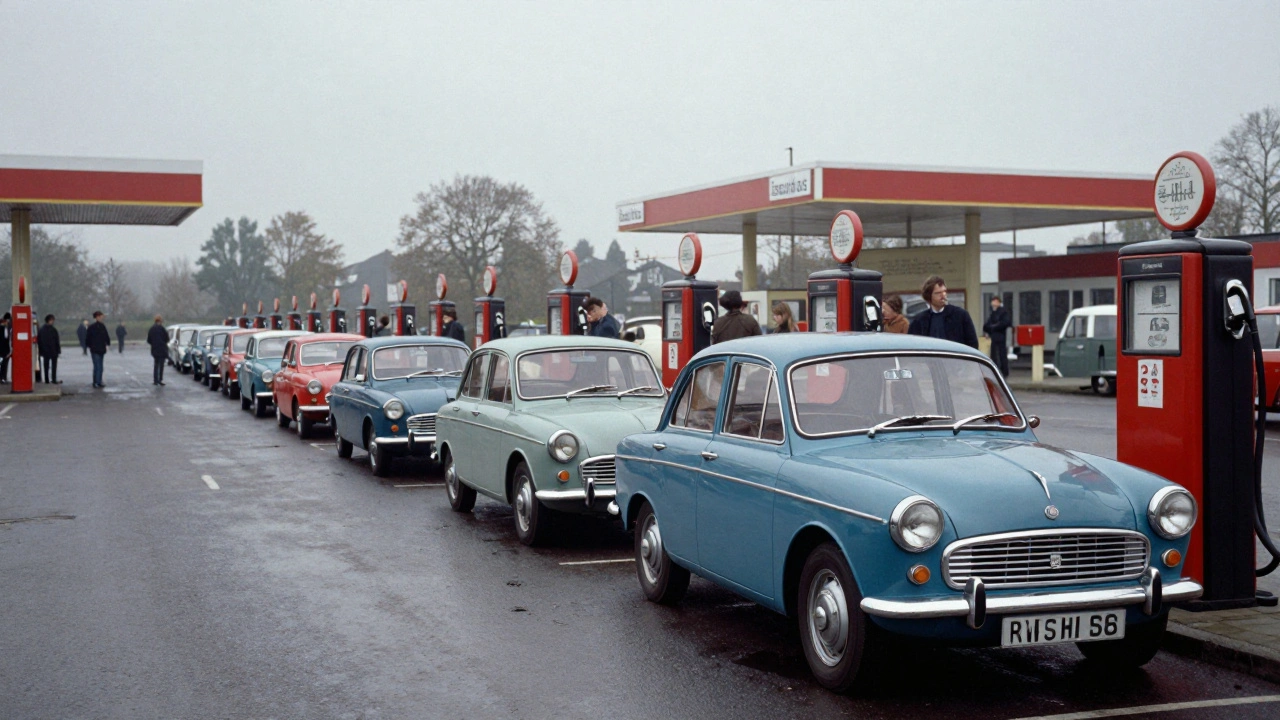
Picture the scene: October 1973. You pull your car into a service station in London, only to find long lines stretching out of sight. The prices on the pumps have jumped overnight. This was not a typical seasonal increase; it was the beginning of a global shockwave known as the Oil Crisis. For the average driver, the pump price was a annoyance. For British Leyland, it was a threat to survival.
At that time, the British motor industry was already struggling. We are talking about a massive conglomerate formed by merging several iconic brands. You had the heritage of Morris, the engineering reputation of Jaguar, and the everyday utility of Austin. When Arab nations cut off oil supplies following the Yom Kippur War, the demand for gasoline-powered cars evaporated instantly. Consumers looked at their fuel bills and suddenly realized their large six-cylinder saloons were financial disasters.
Understanding the Emergency
To get a clear picture, we need to look at the numbers. Before the embargo, crude oil hovered around $3 a barrel. By early 1974, it hit nearly $12. The ripple effect was immediate. In the United Kingdom, petrol rationing became a serious conversation in government circles. People who bought a new car in late 1973 faced the grim reality of holding an asset that was becoming obsolete before they could drive it home.
The 1973 Oil Crisis was a global energy emergency triggered by an embargo declared by Arab members of OPEC against countries supporting Israel in the Yom Kippur War. Also known as the Energy Crisis, it fundamentally shifted industrial priorities from power to efficiency.For manufacturers, this wasn't just about public sentiment. Regulatory pressure began mounting immediately. Governments started asking why new models were equipped with thirsty V8 engines when smaller displacements could move people just as effectively. The timeline was aggressive. There was no luxury of a slow transition plan. If you wanted sales, you needed miles per gallon, yesterday.
The State of British Leyland in 1973
You cannot understand the shift without understanding the company itself. British Leyland Motor Corporation (BLMC) was a political creation as much as a commercial one. It resulted from a merger of Austin-Morris and the Rootes Group. On paper, this consolidated resources. In practice, it created chaos. Different factories produced overlapping models using different parts lists.
The product range was bloated. They were making everything from the tiny Mini to the massive Land Rover Series II. When fuel prices spiked, the Mini survived because it was already efficient. The larger sedans like the Austin A90 Westminster struggled. Management had to make hard choices about which platforms would live and which would die. This decision-making process took place while factory floors were dealing with strikes and demanding pay rises that inflation was eating away.
| Model Line | Primary Engine Type | Fuel Consumption (Approx) | Vulnerability Level |
|---|---|---|---|
| Austin 1300 | Inline 4 Cylinder | 35 mpg | Medium |
| Rover P6B | V8 / Inline 4 | 22 mpg | High |
| Mini Mark III | Front-engine / Rear-drive | 45 mpg | Low |
| Morris Marina | Inline 4 Cylinder | 28 mpg | High |
As shown in the table above, vulnerability was directly linked to engine displacement. The Morris Marina, launched in 1971, suffered terribly because its design was outdated before it rolled off the line. It competed with the Ford Cortina, which offered better quality and reliability. With the oil spike, the Cortina's efficiency advantage widened further, leaving BLMA with unsold stock piling up in distribution yards across the Midlands.
Engineering the Solution
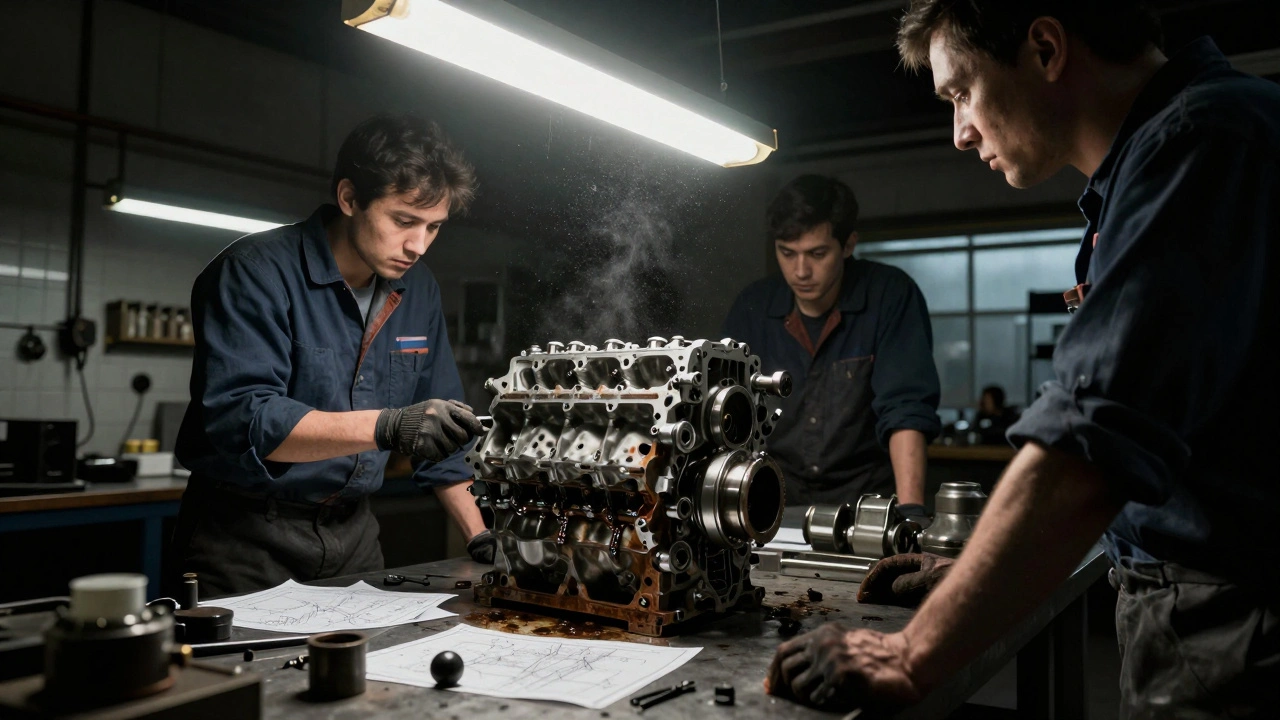
How does a massive corporation adapt quickly? The answer lies in cost engineering. Engineers were told to strip features without compromising safety. Gearboxes were simplified to reduce weight. Carburetors were retuned for leaner mixtures. However, this rush to cut costs often led to cutting corners elsewhere. Quality control slipped because budgets for tooling were slashed.
A notable example was the development of the Austin Allegro. Intended to replace the classic 1100 series, it was designed with styling cues meant to appeal to the European market. The engineering team focused heavily on packaging space, creating a roomy interior despite the small footprint. This was a direct response to the need for a compact car that didn't feel cramped. Yet, the suspension design borrowed too many components from older trucks to save money. The result was a ride that felt stiff and uncomfortable, frustrating buyers who expected smooth handling.
This highlights a crucial lesson in cost engineering: savings must come from design innovation, not component substitution. When the supply chain for rubber seals or electronic ignition modules tightened, BL substituted cheaper materials. These substitutions failed under real-world conditions, leading to corrosion issues that plagued owners for years. It damaged brand loyalty significantly.
Austin Allegro is a British car produced by British Leyland from 1971 to 1980, aimed at replacing the popular Austin 1100 but hindered by industrial disputes.. It remains a symbol of automotive design failure during turbulent economic times.Strategic Model Shifts
Management knew they couldn't rely on old successes forever. The Mini was aging and required a successor. Plans were drawn for the Metro, designed later to be aerodynamic enough to slice through traffic with less resistance. In the interim, model strategy focused on downscaling existing lines. The big executive cars saw engine size reductions. Six-cylinder options were removed from entry-level packages entirely.
This shift put immense pressure on the workforce. Production lines built for large chassis had to be modified for smaller dimensions. Skilled machinists found their specialized tools obsolete. Morale dropped. Strikes increased frequency as workers protested job losses disguised as restructuring efforts. This created a vicious cycle: production delays reduced revenue, forcing deeper cuts, causing more strikes. The competition, notably Volkswagen with their Golf launch later in the decade, moved faster.
By 1975, the dust had settled enough to measure damage. British Leyland had lost significant market share. The strategy of prioritizing low-cost vehicles failed to account for the fact that consumers still wanted comfort and durability. Cheap cars broke down frequently. The trade-off between upfront cost and longevity was lost on management. Customers switched brands, often moving to Japanese imports like Toyota, which offered reliability without sacrificing fuel economy.

The Long Tail of History
Looking back, the 1973 crisis did not destroy the British car industry overnight, but it accelerated a decline that had been brewing since the post-war boom ended. The culture of "good enough" engineering returned to the assembly lines. The focus remained on meeting quota rather than building a vehicle that would last twenty years.
The implications extended beyond the factory gates. It influenced driving behavior for generations. Drivers became hyper-aware of mileage. Even after prices stabilized in the late 70s, the preference for smaller engines persisted in the UK market compared to the US. The mindset shifted permanently toward value retention of fuel.
We can trace the lineage of modern hybrid technology back to these lessons. The urgency felt in 1973 set a precedent for environmental regulations. As we look at today's electric vehicle mandates, the DNA of that original fuel panic remains visible in policy discussions. It forced the industry to realize that external forces-like global energy markets-could dictate product design more effectively than internal boardroom meetings ever could.
Key Takeaways for Modern Observers
- Crisis management in manufacturing requires rapid prototyping and supply chain flexibility.
- Brand reputation takes decades to build but can be damaged by a few years of poor quality control.
- Fuel efficiency is not just an environmental choice; it is an economic imperative.
- Industrial relations play a critical role in the ability to pivot production strategies.
Did the 1973 Oil Crisis affect all British car manufacturers equally?
No, companies with efficient fleets like Mini makers fared better initially. Heavyweight manufacturers like Rolls-Royce and BLM faced steeper declines until they adapted. Independent firms were slower to react than the state-supported giants.
What specific cost engineering techniques were used?
Techniques included sharing parts across different models, simplifying trim levels, removing chrome accents, and switching to lighter alloys where feasible to improve fuel consumption.
How long did the impact last?
While oil prices eventually normalized, the consumer behavior change regarding fuel economy lasted for decades, influencing the popularity of small cars into the 2000s.
Did British Leyland ever recover financially?
They received nationalized funding in the 1970s but continued to struggle with profitability, leading to eventual breakups and private ownership in later years.
Which model replaced the Mini?
The Austin Metro, launched in 1980, served as the spiritual successor, designed specifically with aerodynamics and fuel economy in mind.