Mini Proportions: Alec Issigonis's Secrets to Space Efficiency and Car Character
 Apr, 9 2026
The Magic of the Transverse Engine
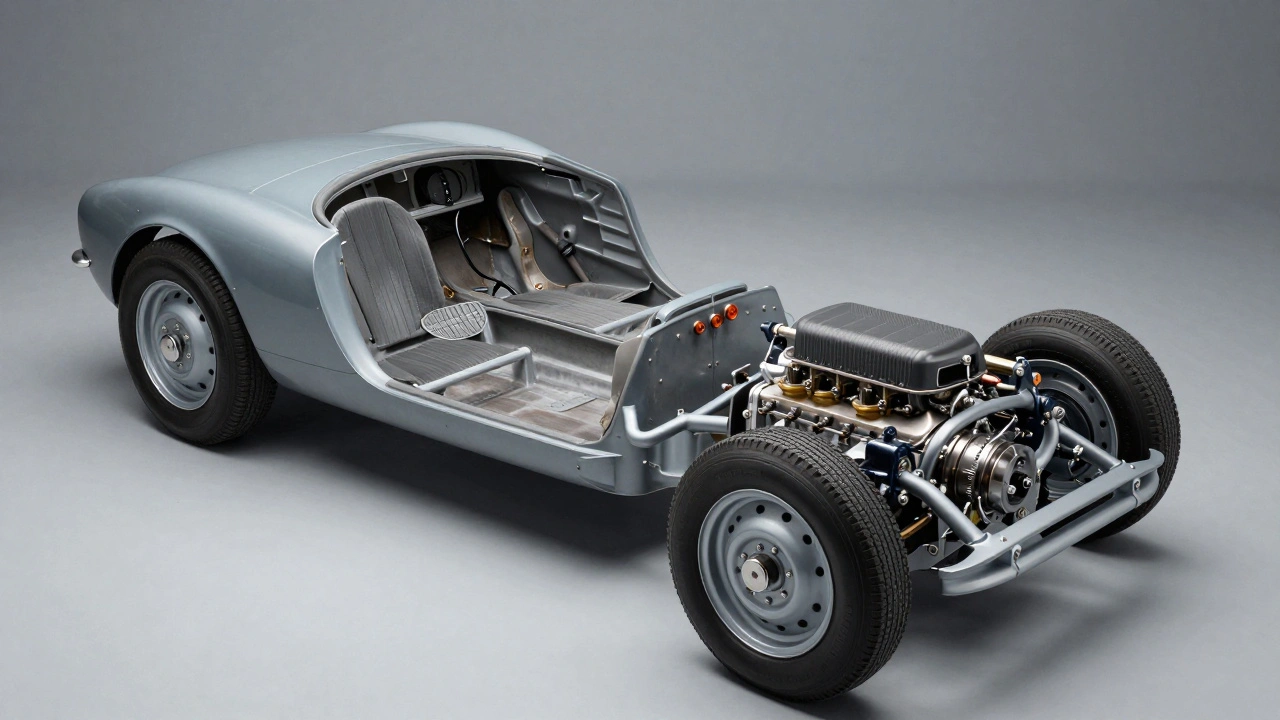
Before the Mini arrived, most small cars followed a predictable pattern: the engine sat lengthwise, pushing the passengers further back and leaving a massive gap between the front wheel and the dashboard. Issigonis realized that if he turned the engine 90 degrees, he could reclaim a huge chunk of the cabin. By using a Transverse Engine layout, where the engine sits crosswise, he pushed the wheels to the absolute corners of the chassis. This layout is the secret sauce. When you move the wheels out, you maximize the wheelbase relative to the total length of the car. It's like moving the legs of a table to the very edges so you can actually fit chairs underneath.
This wasn't just a clever trick; it was a systemic change. He paired this with a Front-Wheel Drive system. By removing the bulky driveshaft that usually runs down the center of a car, he deleted the "transmission hump" from the floor. This allowed the floor to be completely flat, meaning a passenger in the back didn't have to sit with their knees knocking together. In a car that's only 10 feet long, every single inch of floor space is a luxury.
Wheel Placement and the "Slab-Sided" Philosophy
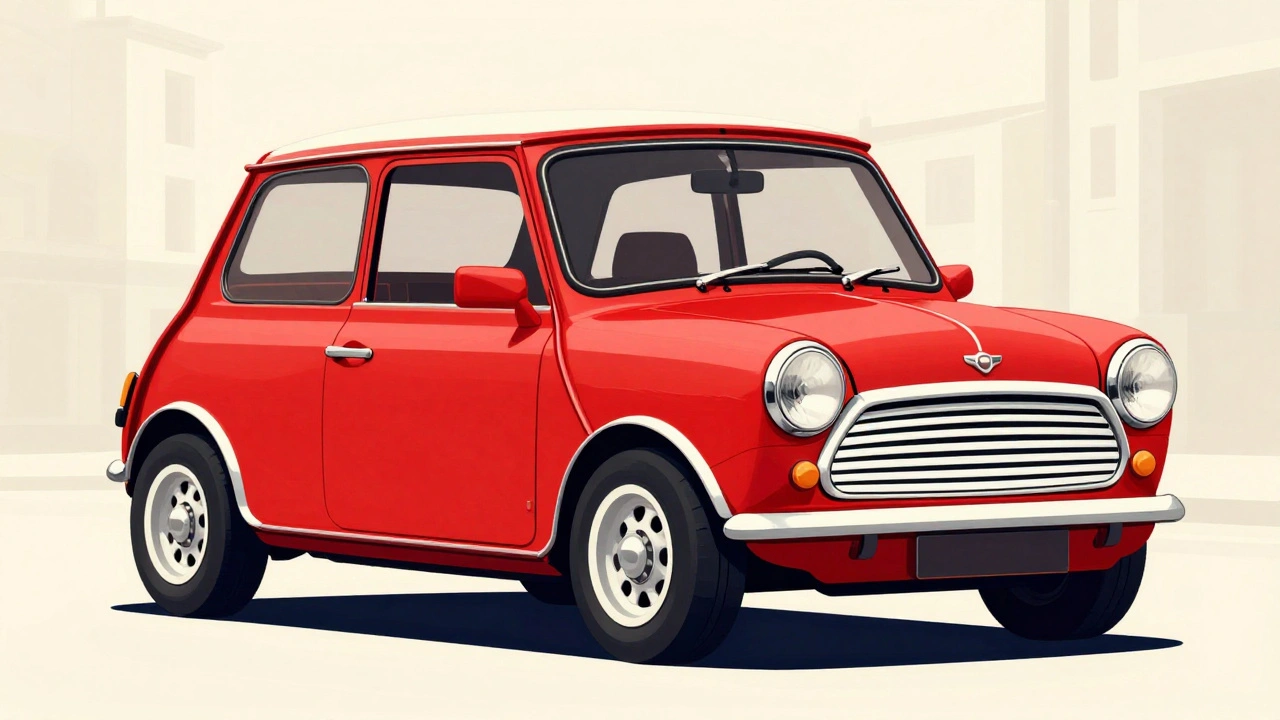
Look at a classic Mini and you'll notice the wheels aren't tucked under the body-they are practically poking out. Issigonis intentionally minimized the "overhangs," which is the distance from the wheels to the bumpers. Why? Because overhangs are dead weight. They don't carry passengers and they don't carry cargo; they just make the car longer and harder to park.
By keeping the wheels at the corners, he created a short, stubby silhouette that gave the car an inherently playful character. It looks like a go-kart for the road. This creates a psychological effect: the car feels approachable and agile. When the center of gravity is tight and the wheels are wide apart relative to the body, the car handles like it's on rails. You aren't fighting the car's mass; you're dancing with it.
| Feature | Traditional Design | Issigonis Tactics | Result |
|---|---|---|---|
| Engine Orientation | Longitudinal (Lengthwise) | Transverse (Crosswise) | More legroom |
| Drive System | Rear-Wheel Drive | Front-Wheel Drive | Flat interior floor |
| Wheel Position | Deeply recessed/Long overhangs | At the extreme corners | Maximum wheelbase |
| Cabin Ratio | Small interior / Large shell | Large interior / Tiny shell | High space efficiency |
How Space Efficiency Creates Personality
There's a weird paradox in design: when you optimize for pure utility, you often end up with something incredibly stylish. The Mini's "character" didn't come from a stylist adding chrome trim or fancy fins; it came from the honesty of its proportions. Because the car was designed around the human body rather than a traditional automotive silhouette, it developed a quirky, honest charm. It looks efficient because it is efficient.
Think about the BMC Mini's tiny 10-inch wheels. Most engineers would have wanted larger wheels for stability, but Issigonis knew that larger wheels would eat into the cabin space. By using the smallest wheels possible, he kept the floor low and the ceiling high. This gave the car its signature "box-on-wheels" look. It tells the world that this car isn't trying to impress you with status-it's here to get you through a crowded city street without breaking a sweat.
The Ripple Effect on Modern Car Design
You can see Issigonis's fingerprints on almost every modern City Car. From the Fiat 500 to the Honda Fit, the goal is always the same: maximize the interior while minimizing the exterior footprint. The concept of the "one-box' design, where the hood blends almost seamlessly into the windshield to save space, is a direct descendant of the Mini's logic. We've just added aerodynamics and safety bumpers to the mix.
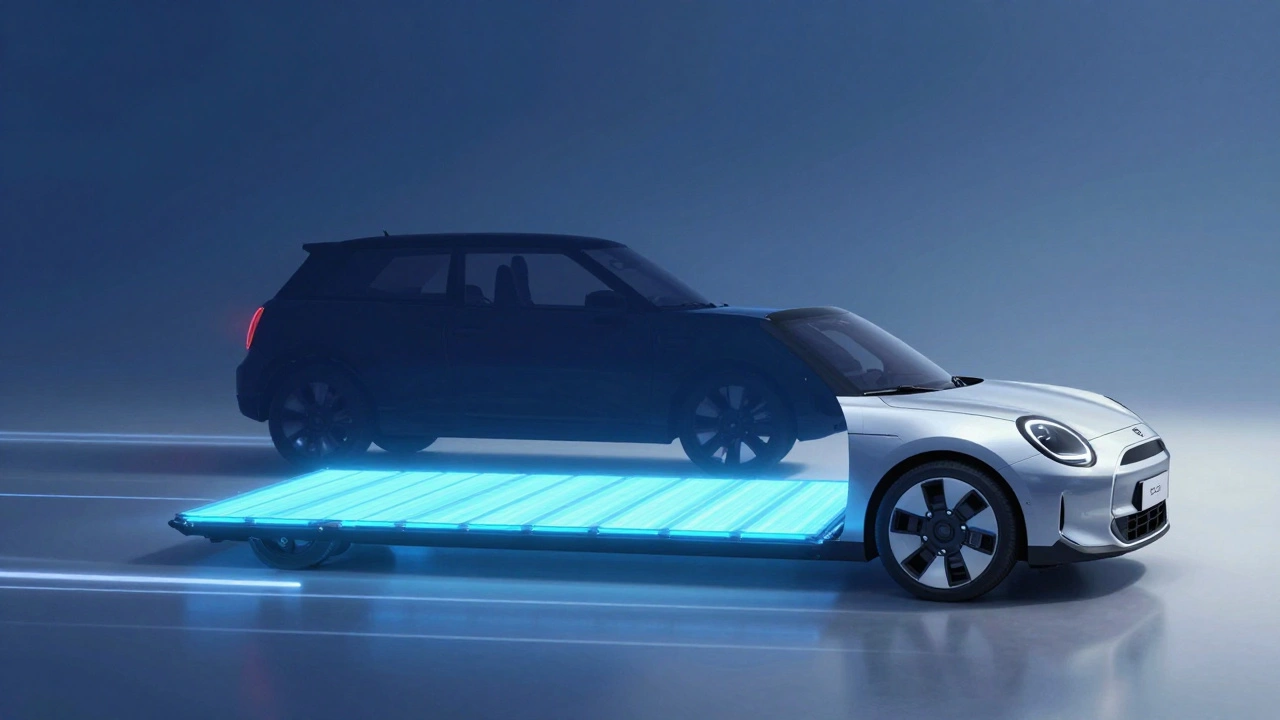
Even the shift toward Electric Vehicles (EVs) is essentially an Issigonis-style revolution. Since EV batteries often sit in a flat pack under the floor and electric motors are much smaller than combustion engines, designers are once again fighting to push the wheels to the corners and flatten the floor. We are returning to the Mini's core philosophy: why waste a single cubic centimeter of space?
Common Mistakes in Modern "Mini" Design
Many modern car companies make the mistake of designing a "mini' car by just shrinking a big car. They keep the long hood and the traditional proportions, but just scale everything down. This is why some small cars feel cramped and clumsy. They have the look of a small car but not the logic of one. They lack the aggressive space-efficiency tactics that Issigonis championed.
A true Issigonis-style design asks: "What is the smallest possible shell that can comfortably hold four people?" Instead of starting with a style and fitting people inside, he started with the people and built the shell around them. When you do that, you get a car that feels larger on the inside than it looks on the outside-a magic trick that continues to define the best of urban mobility.
Why did Issigonis use such small wheels?
He used 10-inch wheels to keep the car's overall height low while maximizing the interior volume. Larger wheels would have required larger wheel arches, which would have pushed the floor up or the seats forward, eating into the precious cabin space.
Is the transverse engine layout still used today?
Yes, it is the standard for the vast majority of modern front-wheel-drive cars. Almost every compact car, hatchback, and crossover uses this layout because it is the most efficient way to package a powertrain in a small space.
What is a "wheelbase" and why does it matter for space?
The wheelbase is the distance between the center of the front wheels and the center of the rear wheels. By pushing the wheels to the extreme corners, Issigonis maximized the wheelbase relative to the total car length, which directly increases the available room for passengers.
Did the Mini's design affect safety?
In its era, the focus was on efficiency, not crash testing. The lack of long overhangs (crumple zones) meant that the original Mini didn't have the same impact absorption as modern cars. This is why modern "minis" are significantly larger-they need space for airbags and safety structures.
Why is the Mini considered to have "character"?
Its character comes from its disproportionate appearance-it looks like a toy because it rejects the traditional long-hood, short-deck look of the 1950s. This honesty and functionality create a visual identity that feels playful and rebellious.
Next Steps for Design Enthusiasts
If you want to apply these lessons to your own projects-whether it's furniture design, architecture, or product development-start by identifying your "dead space." Look for the areas where a component (like an engine or a support beam) is taking up more room than it needs to. Ask yourself if you can rotate that component or move it to the periphery.
For those interested in the evolution of this style, look into the transition from the original Mini to the Modern Mini Cooper. You'll see a fascinating tension between the original's ruthless efficiency and the modern need for luxury and safety. It's a masterclass in how a design legacy evolves over half a century.