Lightweight Futures: Chapman’s Philosophy in Modern Batteries
 Oct, 10 2026
You’ve heard the quote. "Simplify, then add lightness." It’s stamped on the back of every Lotus brochure and quoted by every car enthusiast who has ever tried to make a heavy sedan feel agile. But here is the uncomfortable truth: for decades, we treated Colin Chapman’s philosophy as a design aesthetic rather than an engineering imperative. We stripped out sound deadening and air conditioning, thinking that was enough. Today, with the electric vehicle revolution hitting a wall of diminishing returns, that old mantra is no longer just about handling. It is the only way to solve the energy density crisis.
Think about the last EV you drove. It felt fast, sure. But did it feel light? Probably not. Most modern electric cars are heavier than their internal combustion predecessors by hundreds of pounds. Why? Because batteries are dense, expensive, and stubbornly heavy. We are trying to shove 100 kWh of energy into a chassis designed for 50 kg of fuel. The result? A car that handles like a boat and tires that wear out in half the time. If Chapman were alive today, he wouldn’t be adding more battery capacity to fix range anxiety. He would be asking why the battery weighs so much in the first place.
The Weight Spiral of Modern EVs
There is a vicious cycle at play in current automotive engineering. You want more range, so you add more battery cells. More cells mean more weight. That extra weight requires stronger suspension, bigger brakes, and a stiffer frame. Those structural reinforcements add even more weight. Then, because the car is heavier, it consumes more energy per mile, which makes you want to add even more battery cells. It is a death spiral of mass.
This isn't just a theory. Look at the data from recent industry reports. The average curb weight of new vehicles in the US has risen by nearly 30% since 2000. For EVs, the trend is accelerating. A Tesla Model S Plaid weighs over 4,800 pounds. Compare that to a Porsche 911 Turbo, which manages similar performance figures but weighs significantly less. The difference isn't just power; it's efficiency. Every 10% reduction in vehicle weight improves acceleration by roughly 6-8% and extends braking distance capabilities. In an EV, weight reduction directly translates to range extension without touching the chemistry of the cell.
| Metric | Standard Heavy EV | Chapman-Inspired Light EV | Impact |
|---|---|---|---|
| Curb Weight | 5,000 lbs | 3,800 lbs | -24% |
| Range (EPA Est.) | 300 miles | 380 miles* | +27% |
| Tire Wear Rate | High | Low | -30% |
| Braking Energy Loss | High | Low | Regen Efficiency +15% |
Batteries Are Not Just Energy Storage
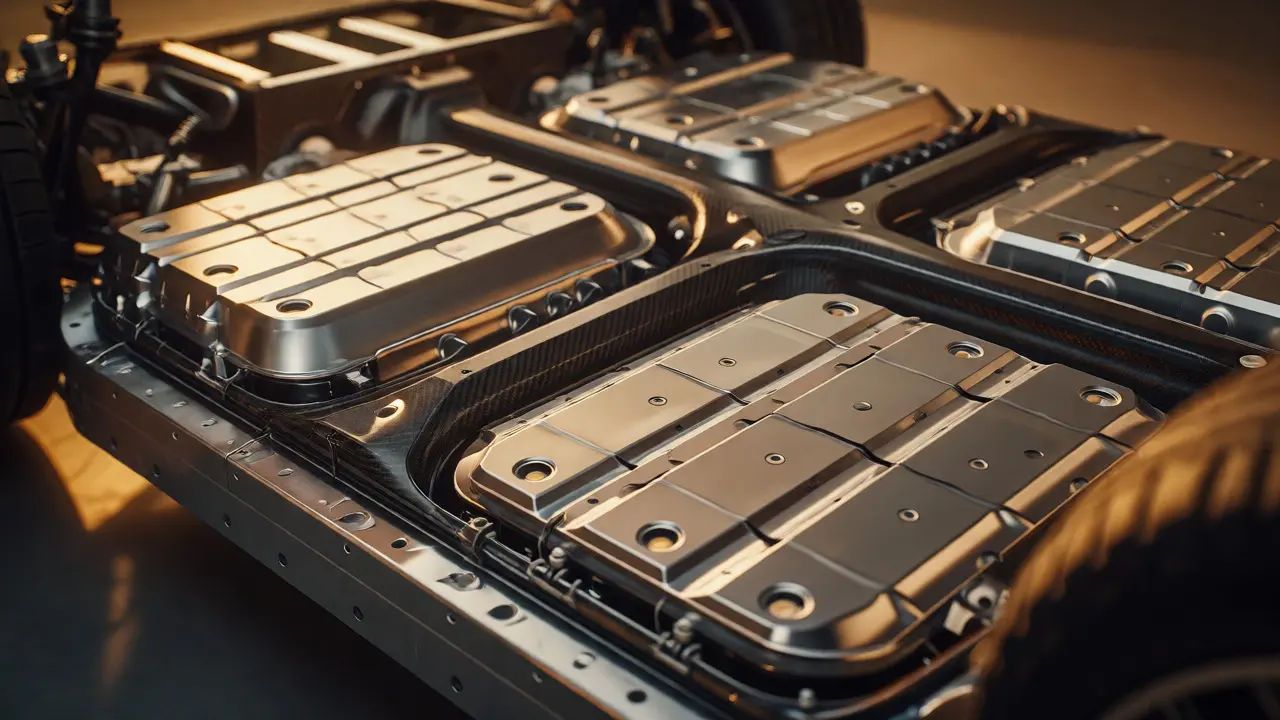
We tend to view batteries as chemical containers that store electrical energy. This view is outdated. In the context of lightweight engineering, the battery pack is also a structural component. And right now, most packs are poorly optimized structures. They are often housed in massive aluminum or steel boxes that do little to contribute to the car's torsional rigidity. They are just heavy bricks sitting under the floor.
Chapman understood that every part of a car must pull its weight. Literally. If a component doesn't help the car go faster, stop faster, or turn better, it should be gone. Applying this to batteries means rethinking the enclosure. Instead of a separate box, why not use the battery casing as a stressed member of the chassis? Companies like Rivian and Tesla have started doing this with "cell-to-chassis" designs, where the battery cells themselves provide structural support. This eliminates redundant metal frames, saving weight while increasing stiffness.
But it goes deeper than the casing. Consider the cooling systems. Liquid cooling loops add pumps, hoses, radiators, and coolant fluid-all heavy. Is liquid cooling always necessary? For a high-performance sports car, yes. For a commuter city car? Maybe not. Air-cooled systems, while less efficient at peak loads, eliminate kilograms of plumbing. Chapman would likely argue that if you can manage heat through passive conduction and airflow, you shouldn't pay the weight penalty of active liquid management unless absolutely necessary.
Material Science: The New Aluminum
In Chapman’s day, "lightness" meant thinner gauge steel or swapping steel for aluminum. Today, the palette is richer but more complex. We have carbon fiber composites, magnesium alloys, and advanced high-strength steels. The challenge isn't finding light materials; it's using them intelligently.
Carbon Fiber Reinforced Polymer (CFRP) is a composite material consisting of carbon fibers embedded in a resin matrix, known for its exceptional strength-to-weight ratio. However, CFRP is expensive and slow to manufacture. Chapman hated waste-not just of weight, but of money and time. Would he use carbon fiber everywhere? Unlikely. He would use it strategically. Think of it as surgical precision. Use CFRP for the roof, the hood, and the seat frames-places where mass sits high up or far from the center of gravity. Keep cheaper, lighter alloys for the subframes and suspension components.
Magnesium is another contender. It is roughly 33% lighter than aluminum and 75% lighter than steel. Yet, it suffers from corrosion issues and cost barriers. Recent advances in coating technologies and alloy formulations are making magnesium viable for steering columns, seat frames, and even transmission housings. If you can save 5 kg on a steering column, you save 5 kg that the engine (or motor) doesn't have to rotate. That reduces rotational inertia, making the car respond instantly to your inputs.

Aerodynamics: The Invisible Weight
Here is a concept many engineers miss: aerodynamic drag acts like virtual weight. At highway speeds, overcoming air resistance consumes more energy than rolling resistance. If you reduce the drag coefficient (Cd), you effectively lighten the car's load on the battery. Chapman was obsessed with aerodynamics long before wind tunnels became standard. His Lotus Type 78 and 79 ground-effect cars manipulated air pressure to push the car down, improving grip without adding mechanical downforce weight.
For EVs, aero is critical. A small reduction in Cd can translate to significant range gains. Active grille shutters, flush door handles, and sealed underbodies are standard now. But what about shape? Many EVs look like bubbles because designers prioritize interior space over aerodynamic purity. A teardrop shape cuts through air efficiently, but packaging batteries flat on the floor forces a boxier profile. Solving this requires a holistic approach. Maybe the battery pack needs to be shaped differently-tapered towards the rear-to improve airflow underneath the car. This isn't just styling; it's functional mass management.
The Human Factor: Simplification
Chapman’s second commandment was "Simplify." Modern cars are incredibly complex. They have dozens of ECUs, miles of wiring harnesses, and sensors galore. Each wire adds weight. Each connector adds potential failure points. To truly apply Chapman’s philosophy, we need to simplify the electronics architecture.
Consider the wiring harness. In a luxury SUV, the harness can weigh over 100 pounds. By moving to zonal architectures-where fewer, more powerful computers control larger zones of the car-we can drastically reduce cable length. Less copper means less weight. Less complexity means easier assembly and lower costs. Imagine an EV with 30% less wiring weight. That is free range. That is free agility.
Also, question the necessity of features. Do we need heated seats, ventilated seats, and massage functions all at once? Each motor, pump, and controller adds grams, then kilograms. While comfort matters, there is a point where feature bloat undermines performance. A minimalist approach might offer a basic thermal management system that cools the cabin efficiently without excessive hardware. Simplicity isn't about being cheap; it's about being focused.

Implementation Strategy: How to Apply Chapman’s Rules
If you are designing a next-generation EV or upgrading an existing fleet, how do you actually implement these ideas? Here is a practical checklist derived from Chapman’s principles:
- Audit Rotational Mass: Focus on wheels, tires, and brake rotors. These components have a disproportionate effect on acceleration and handling due to rotational inertia. Switching from cast iron to carbon-ceramic brakes saves weight where it counts most.
- Integrate Structure: Don't bolt parts together; fuse them. Use die-cast aluminum bodies that incorporate mounting points for suspension and batteries, reducing the need for separate brackets and fasteners.
- Rethink Cooling: Evaluate if passive cooling solutions can handle 80% of driving scenarios. Reserve active liquid cooling for peak performance bursts.
- Minimize Wiring: Adopt a zonal electronic architecture. Reduce the number of ECUs and shorten cable runs. Every meter of copper saved is a gram of weight saved.
- Optimize Aero: Treat air as a physical barrier. Smooth out underbody surfaces and taper rear ends to reduce drag, effectively lowering the energy required to maintain speed.
This approach requires a cultural shift within engineering teams. It means saying "no" to easy fixes that add weight. It means spending more time on simulation and testing to ensure that removing a bracket doesn't compromise safety or NVH (Noise, Vibration, Harshness). It is harder work, but the payoff is a car that feels alive.
The Future is Light
As we move toward 2030 and beyond, regulations will tighten on emissions and energy consumption. Consumers are becoming aware of the environmental cost of manufacturing large, heavy vehicles. The era of "range anxiety" driven by brute-force battery addition is ending. The future belongs to those who understand that energy efficiency starts with mass reduction.
Colin Chapman didn't just build fast cars; he built efficient machines. He proved that you don't need more horsepower to go faster-you need less resistance. In the electric age, resistance comes from weight and drag. By applying his philosophy to batteries and materials, we aren't just honoring history. We are solving the physics problems that threaten to stall the EV revolution. The answer isn't a bigger battery. It's a lighter car.
Why is weight reduction more critical for EVs than ICE cars?
EVs rely on stored energy in batteries, which have a much lower energy density than gasoline. Therefore, carrying excess weight directly depletes the limited battery charge faster. In an ICE car, the fuel tank gets lighter as you drive, but in an EV, the battery weight remains constant until it's empty. Reducing vehicle mass extends range and improves efficiency disproportionately compared to traditional cars.
Can carbon fiber replace steel entirely in EV chassis?
Not yet, primarily due to cost and repairability. Carbon fiber is excellent for specific high-stress or high-mass areas like roofs and monocoques. However, mixing materials (multi-material construction) using aluminum, high-strength steel, and carbon fiber allows engineers to optimize strength-to-weight ratios while keeping production feasible and repairs manageable.
How does simplifying electronics save weight?
Modern cars have kilometers of wiring harnesses connecting dozens of Electronic Control Units (ECUs). By adopting zonal architectures with fewer, more powerful processors, manufacturers can drastically reduce the amount of copper wiring needed. This saves significant weight (often 10-20 kg) and reduces assembly complexity.
Does lighter weight compromise safety in crashes?
No, provided the engineering is done correctly. Modern lightweight materials like high-strength steel and aluminum alloys can absorb impact energy more effectively than older mild steels. Additionally, lower mass reduces kinetic energy during a collision ($KE = \frac{1}{2}mv^2$), potentially lowering crash forces if the structure is designed to manage deceleration properly.
What is the biggest barrier to implementing Chapman’s philosophy today?
Consumer expectations for comfort and technology. Features like panoramic glass roofs, heavy infotainment screens, and extensive driver-assist sensors add weight. Balancing these desires with the need for efficiency requires creative engineering and sometimes a willingness to sacrifice certain luxuries for performance gains.