Land Rover Defender: Modern Utility Meets Classic British Design
 Apr, 13 2026
The Core of Utility Design
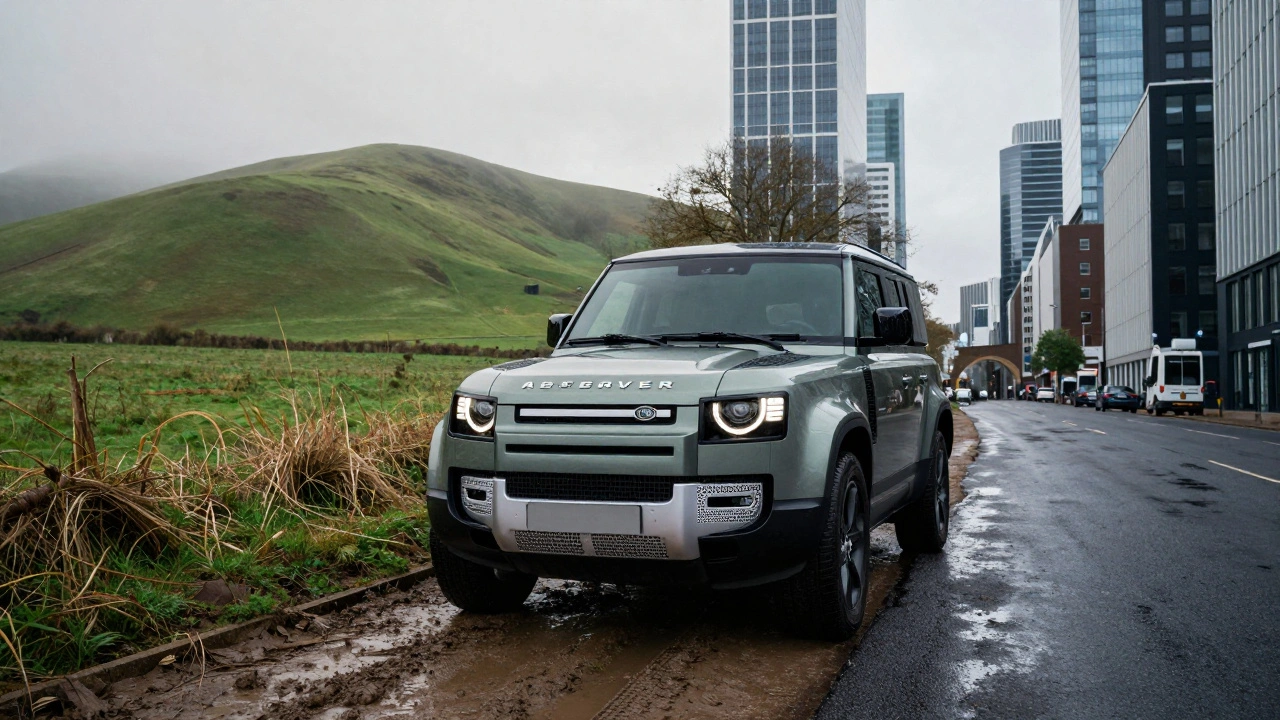
Utility design isn't about adding gadgets; it's about removing everything that doesn't serve a purpose. The original Series I Land Rover was built for farmers after World War II, using aluminum for the body because steel was scarce. That spirit of "make it work" is what defines the Defender's DNA. In the modern version, this manifests as a "box-on-box" silhouette. Why? Because vertical walls maximize interior cargo space and provide a clear view of the vehicle's corners when you're navigating a narrow trail. When you look at the flat roof and the short overhangs, you're seeing engineering decisions disguised as style. A short overhang allows the car to climb steep inclines without the bumper digging into the dirt. This is a prime example of form following function. The modern chassis uses a D8 Architecture, which is an all-aluminum monocoque. It's significantly stiffer than the old ladder frame, meaning the car handles better on the highway but remains nearly as capable in the wild.Bridging the Gap Between Classic and Modern
How do you make a vehicle look like a 1948 icon while meeting 2026 safety standards? You focus on the "visual anchors." The round headlights and the squared-off rear end are non-negotiable. However, the modern Defender swaps out the clunky manual locks and leaking seals for precision-engineered components. Inside, the design shifts from "industrial tool" to "refined workshop." You'll find exposed bolt heads and rugged rubber flooring that you can literally hose down, yet these are paired with high-definition touchscreens and premium leather. It's a calculated contrast. By keeping the ruggedness in the tactile areas-the floors, the door handles-and putting the luxury in the digital interface, the design avoids feeling like a fragile luxury SUV masquerading as a truck.| Attribute | Classic Series/Defender | Modern Defender (L663) |
|---|---|---|
| Chassis Type | Steel Ladder Frame | Aluminum Monocoque |
| Interior Focus | Purely Utilitarian | Rugged Luxury |
| Drive System | Manual Transfer Case | Electronic Terrain Response |
| Body Material | Aluminum/Steel Panels | Advanced Aluminum Alloy |
Engineering for the Modern Landscape
Today's "off-roading" isn't just about crossing rivers; it's about versatility. The Air Suspension system is the secret weapon here. By allowing the driver to raise the ride height, the vehicle can clear obstacles that would have stopped the classic model in its tracks. Then there's the Terrain Response system. This is essentially a brain for the car. Instead of the driver manually shifting gears and locking differentials, the car senses the surface-be it sand, rock, or snow-and adjusts the torque distribution automatically. It takes the guesswork out of the equation. You aren't just driving a machine; you're operating a system that understands the ground beneath it. Consider a scenario where you're driving through a muddy forest trail. In the old days, you'd be fighting the steering wheel and praying the clutch holds. Now, the electronic lockers ensure that power goes to the wheels with the most grip, while the adaptive cruise control manages your speed on the descent. The utility is still there, but the friction is gone.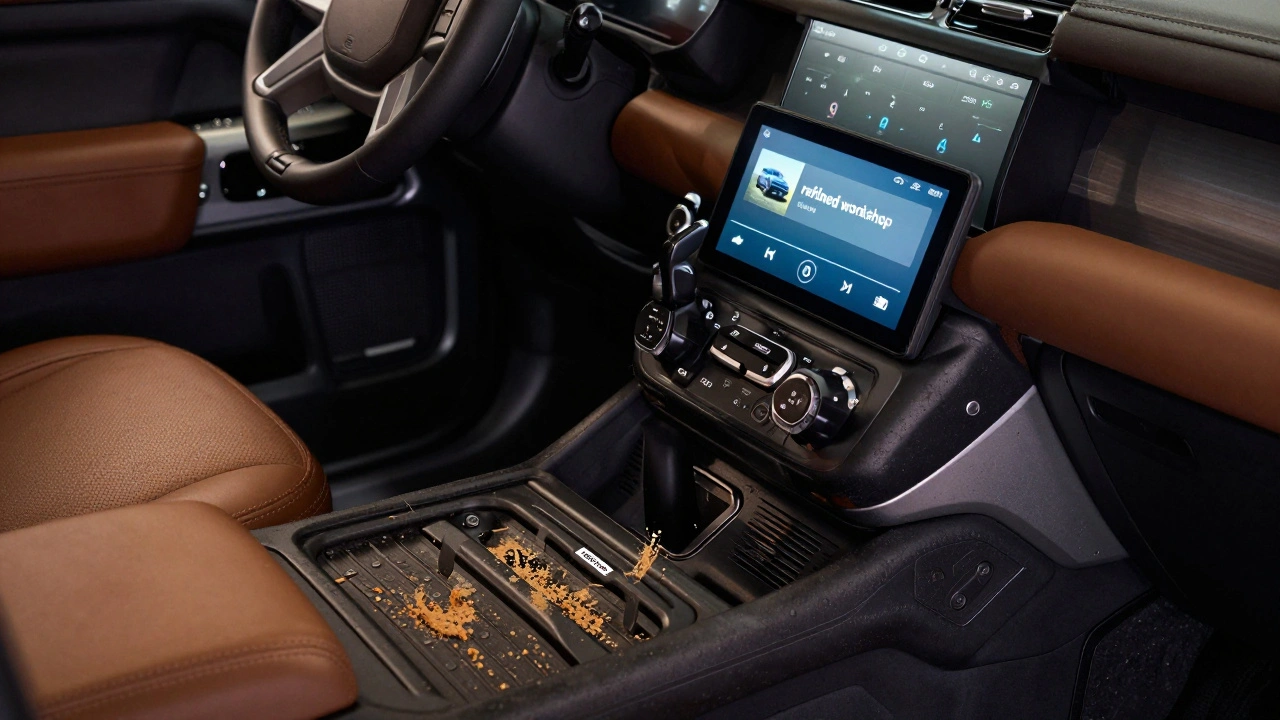
Sustainability and the Shift to Electric
Utility design is currently facing its biggest pivot yet: the move away from the internal combustion engine. For a brand built on the rumble of a diesel engine, this is a risky transition. However, the Defender's design is uniquely suited for Electric Vehicles (EVs). Batteries are heavy and flat, making them perfect for a floor-mounted chassis. This lowers the center of gravity, which actually improves stability when tilting on a slope. The transition to electric power doesn't just reduce emissions; it provides instant torque, which is exactly what you need when trying to pull a heavy load out of a ditch. The design challenge now is maintaining that "mechanical" feel in a silent, digital world.The Psychology of Heritage Branding
Why do people care that it looks like a 70-year-old tractor? Because in an era of generic, wind-tunnel-shaped crossovers, authenticity is a luxury. The Defender doesn't try to be aerodynamic; it tries to be honest. This is known as "heritage-driven design." It leverages the emotional connection users have with the past to justify a premium price tag in the present. When a buyer chooses a Defender over a generic luxury SUV, they aren't just buying a set of features. They are buying into a narrative of adventure and reliability. This is why Land Rover keeps the design cues subtle. If they went too far with the retro look, it would feel like a costume. By blending the classic DNA with a sharp, modern edge, they've created a vehicle that feels appropriate both at a gala and in a gale.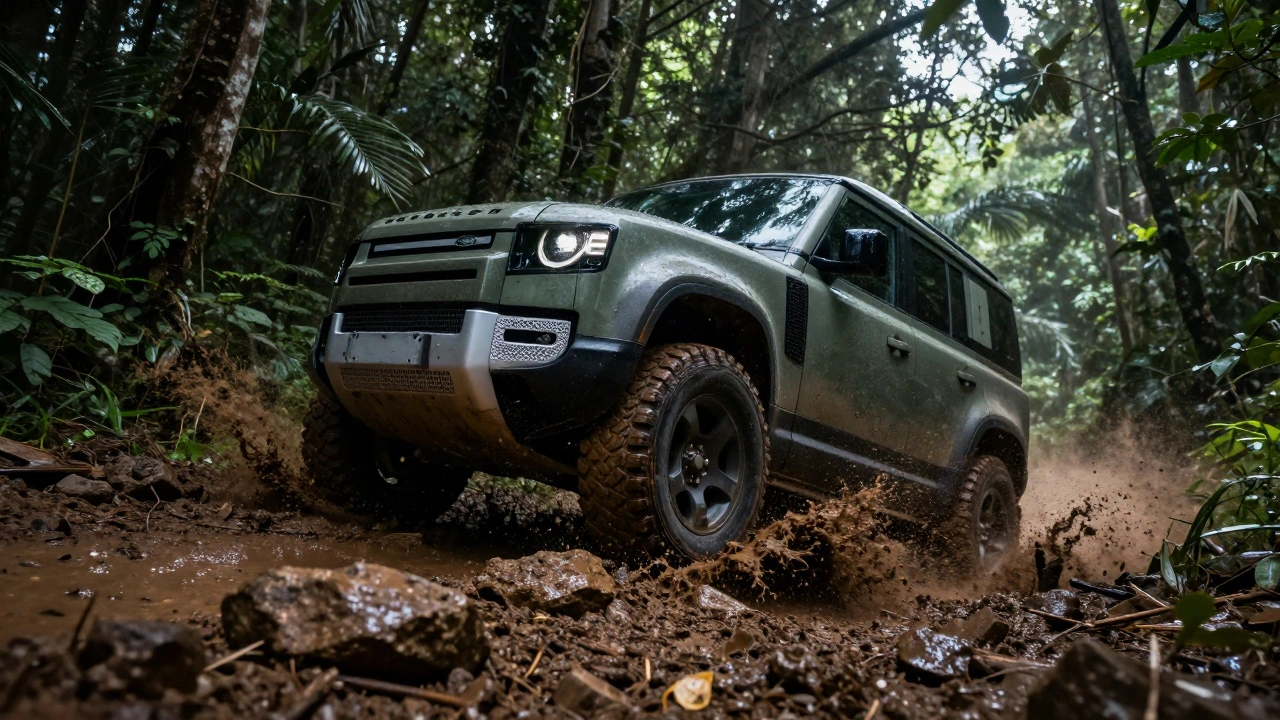
Avoiding the Utility Trap
One of the biggest risks in modern utility design is "feature creep." This happens when a tool becomes so complex that it's no longer useful. To avoid this, the Defender focuses on intuitive controls. Physical buttons for the most critical functions remain, ensuring that a driver wearing thick gloves can still operate the vehicle without scrolling through three menus on a screen. Another trap is over-refinement. If a car is too precious, the owner becomes afraid to get it dirty. The Defender counters this by using materials that are designed to age. The plastics are high-impact, and the fabrics are water-resistant. The goal is for the vehicle to look *better* with a few scratches and some dried mud on the wheel arches. That is the ultimate expression of utility: a product that doesn't fear the environment it was built for.Is the modern Defender as capable as the original classic model?
In most measurable ways, yes. While the classic had a raw, mechanical simplicity, the modern Defender uses advanced air suspension and electronic lockers to achieve better approach and departure angles. It can traverse more difficult terrain with significantly less effort from the driver.
What is the main difference between the monocoque and ladder frame chassis?
A ladder frame (used in the classic) is essentially two long rails with cross-members, which is great for heavy hauling but can flex and feel unstable at high speeds. The monocoque (used in the modern version) integrates the chassis and body into one single unit, providing much higher rigidity, better crash safety, and improved on-road handling.
Does the modern design compromise on interior space?
Actually, it improves it. By utilizing a modern architecture, Land Rover was able to optimize the interior packaging. The "boxy" exterior is maintained, but the interior lacks the intrusive structural pillars of the old models, creating more usable room for passengers and gear.
Why use aluminum for the body instead of steel?
Aluminum is lighter than steel, which helps with fuel efficiency and acceleration. More importantly for a utility vehicle, it doesn't rust in the same way steel does, which is critical for cars that spend their lives in salt, mud, and rain.
Can the modern Defender be customized for specific jobs?
Yes, the design includes an ecosystem of accessories. Because the roof and sides are relatively flat, owners can easily add roof racks, external gear carriers, and snorkels. This modularity is a direct carry-over from the classic utility DNA.