Labour Skills in the Edwardian Car Industry: How Britain Trained Its First Auto Workforce
 Aug, 17 2026
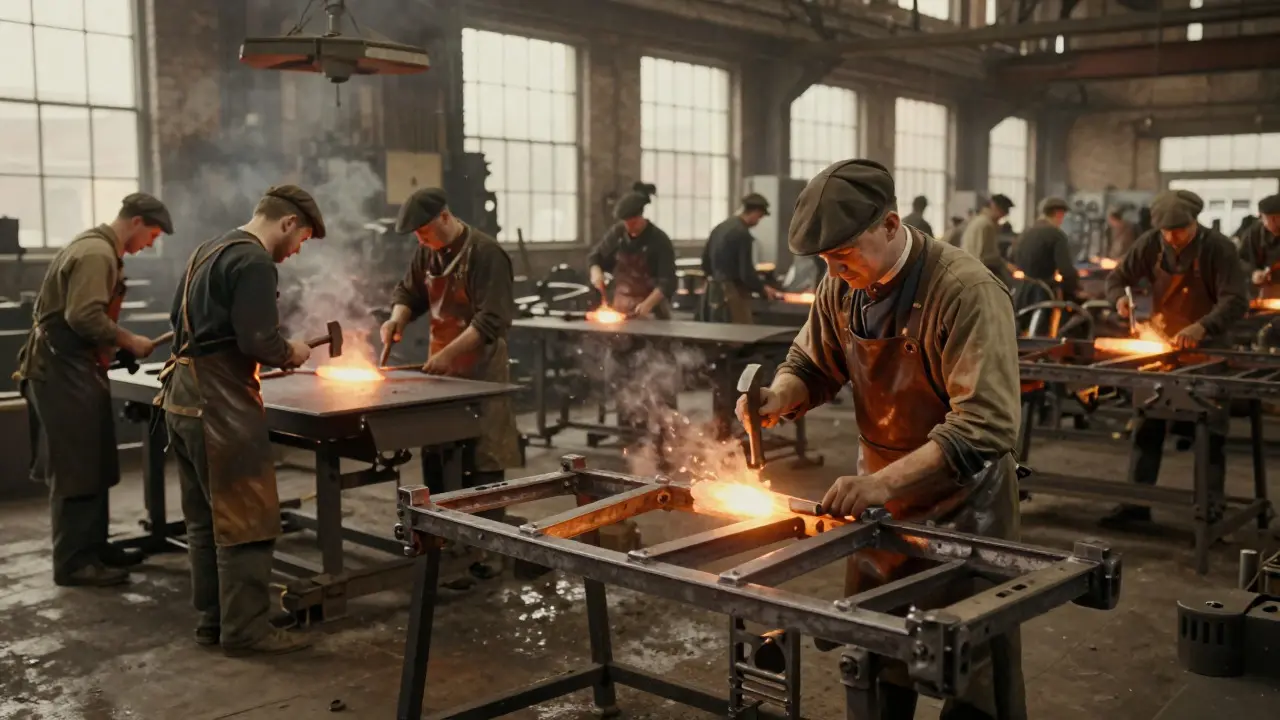
Imagine walking into a factory floor in Birmingham in 1905. The air smells of machine oil and hot metal. You see men in leather aprons hammering steel sheets with rhythmic precision. These aren't just laborers; they are skilled artisans transitioning from carriage making to motor vehicle assembly. This shift defined the Edwardian car industry is the period of rapid growth in British automobile manufacturing between 1901 and 1914, characterized by the adaptation of existing craft skills to new mechanical demands. Understanding how this workforce was trained reveals why Britain became one of the world's leading car producers before World War I.
The transition wasn't instant. It relied on a specific mix of traditional craftsmanship and emerging technical knowledge. Here is what you need to know about the human capital behind the early British motor revolution:
- Existing carriage and bicycle trades provided the foundational physical skills for chassis construction.
- Formal engineering education played a minor role compared to on-the-job apprenticeships.
- Specialized roles like engine fitters emerged distinct from general mechanics.
- Union structures adapted slowly, often resisting new technologies initially.
From Carriages to Cars: The Skill Transfer
Before the first mass-produced cars rolled off the line, Britain had a robust ecosystem of coachbuilders. Companies like Humber and Daimler (UK operations) didn't start from scratch. They hired carpenters who knew how to shape wood and blacksmiths who understood ironwork. The core skill set for building a car chassis in the early 1900s was nearly identical to that required for a horse-drawn carriage frame. Men who could align axles and reinforce suspension points were immediately valuable.
However, the introduction of internal combustion engines changed the game. A carriage builder didn't necessarily know how to balance a crankshaft or tune a carburetor. This gap created a demand for a new type of worker: the engine mechanic. Unlike the body shop, where traditional tools sufficed, the engine bay required precision measurement and an understanding of thermodynamics. This divergence forced factories to create separate departments with different training requirements, setting the stage for specialized labor roles that persist today.
The Role of Apprenticeship vs. Formal Education
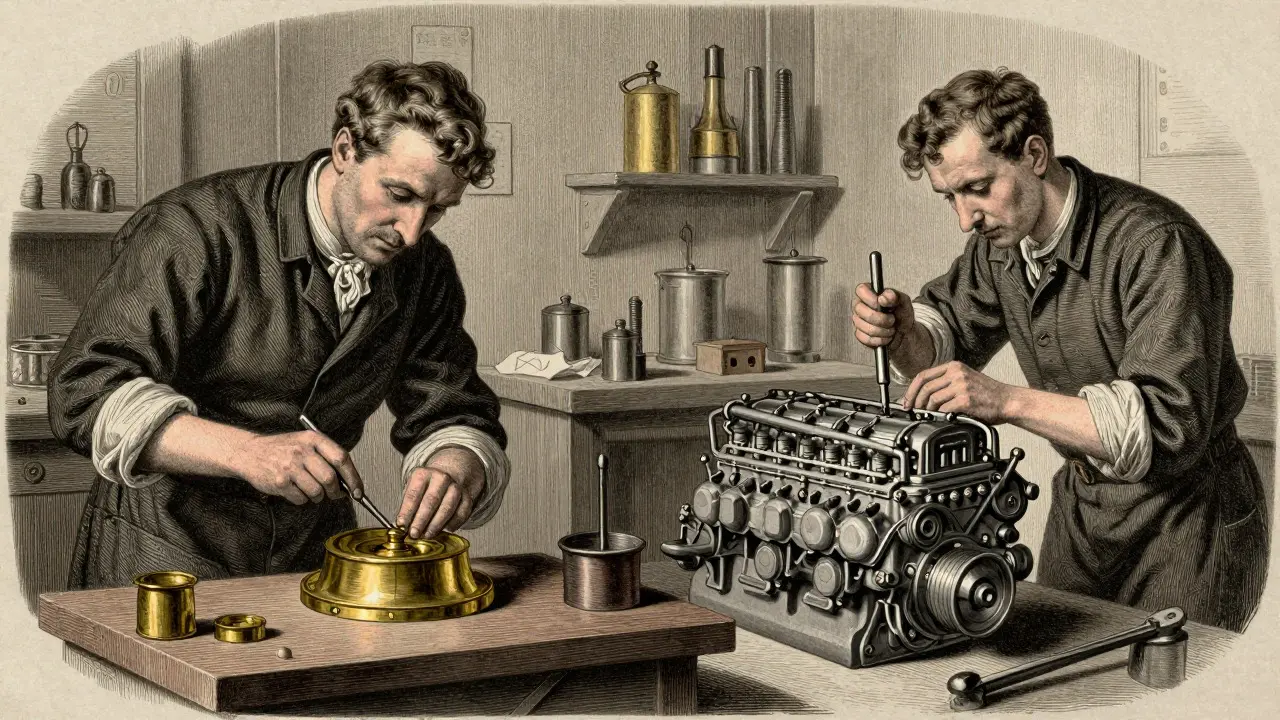
You might assume that university-educated engineers built these early cars. In reality, the vast majority of the workforce came through the traditional seven-year apprenticeship system. A young man would join a firm at age 14 or 15, learning by doing. He started with simple tasks-cleaning parts, polishing brass-and gradually moved to complex assembly. By the time he qualified as a journeyman around age 21, he had absorbed the tacit knowledge of the trade through observation and repetition.
Formal technical colleges existed, but they served a niche market. Institutions like the Royal College of Science in London produced design engineers and managers, not shop-floor workers. For the average factory employee, education meant practical instruction within the workplace. This "learning by ear" method was fast and effective for standardization but slow for innovation. When manufacturers introduced new designs, such as the sliding gear box or the self-starter, veteran craftsmen sometimes struggled because their muscle memory was calibrated to older, simpler mechanisms. Newer apprentices, exposed to these innovations earlier, often outperformed their senior colleagues in adapting to change.
Defining the New Roles: Fitters, Machinists, and Assemblers
As production volumes increased, the generic term "mechanic" broke down into more specific job titles. Each role required a distinct skill profile and training path.
| Role | Primary Skills Required | Training Source | Typical Entry Age |
|---|---|---|---|
| Chassis Fitter | Blacksmithing, Carpentry, Alignment | Carriage/Bicycle Trade | 14-16 |
| Engine Mechanic | Precision Fitting, Diagnostics, Thermodynamics | On-the-Job + Technical Manuals | 16-18 |
| Machinist | Lathe Operation, Milling, Tool Maintenance | Engineering Works Apprenticeship | 14-15 |
| Body Builder | Woodworking, Upholstery, Painting | Cabinetmaking/Carpentry | 14-16 |
Notice the distinction between the Chassis Fitter and the Engine Mechanic. The former dealt with structural integrity and weight distribution, skills honed in the heavy industry of carriage making. The latter dealt with moving parts and fuel efficiency, requiring a finer touch and more theoretical knowledge. This separation allowed factories to scale production by specializing tasks, a precursor to the assembly line methods that would dominate later decades.
Union Dynamics and Resistance to Change
Skills weren't just learned; they were protected. Trade unions, particularly the Amalgamated Society of Engineers (ASE), played a crucial role in defining who could do what work. In the Edwardian era, unions were often skeptical of new automotive technologies. Why? Because automation threatened to de-skill certain jobs. If a machine could stamp out a door panel in seconds, did the carpenter still have value?
This tension led to frequent disputes over "piece rates" versus "time rates." Workers feared that if management introduced faster machinery, their wages would drop despite higher output. To maintain their status, skilled workers insisted on keeping control over the pace of work. This dynamic slowed the adoption of certain efficiencies in British plants compared to American competitors, who operated with less rigid union structures. However, it also preserved high-quality craftsmanship, which became a selling point for premium British brands like Rolls-Royce and Bentley, even as they began to emerge.
The Impact of Mass Production Techniques
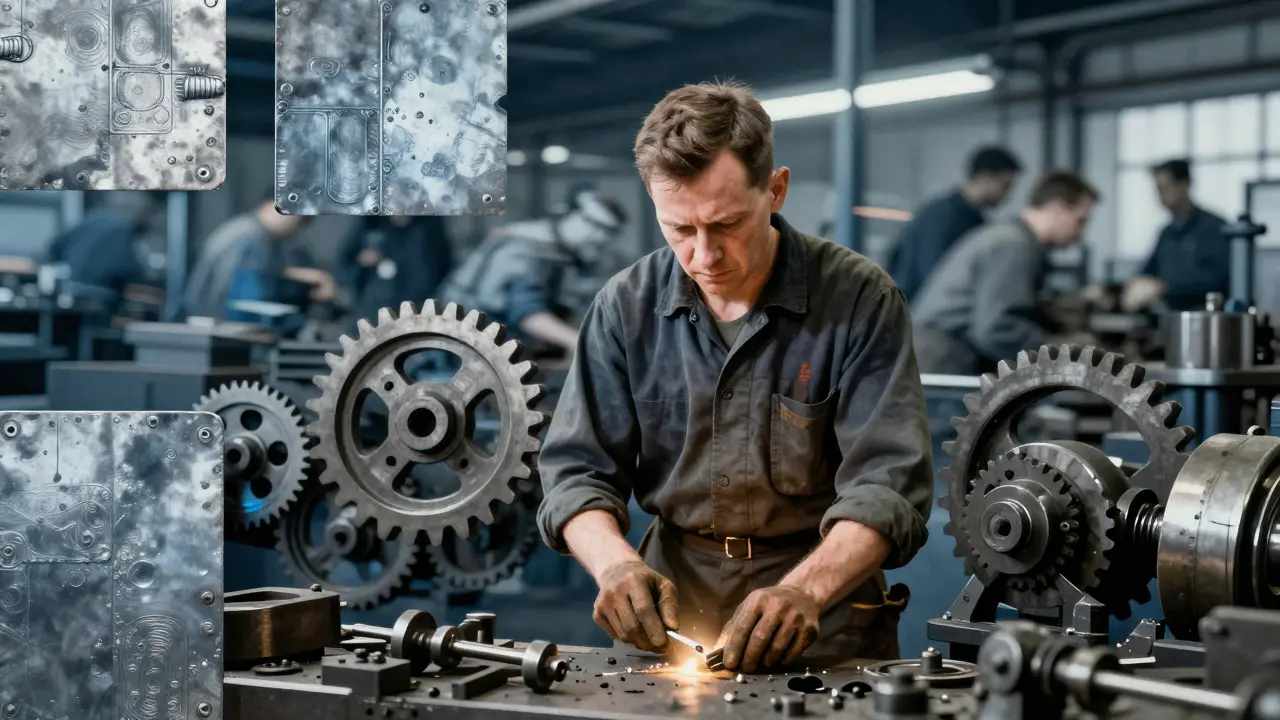
While the US was pioneering Henry Ford's moving assembly line, Britain remained largely attached to batch production. This difference in methodology directly influenced how skills were valued. In a batch system, a single worker might complete an entire sub-assembly, giving them a sense of ownership and mastery over the final product. In a flow system, tasks are broken down into tiny, repetitive motions.
British manufacturers like Vauxhall experimented with flow production in the late 1900s, but faced significant resistance from their workforce. Workers argued that breaking down tasks reduced the dignity of the craft. Training programs had to adapt to address this cultural friction. Managers found that highlighting the economic benefits-higher wages due to increased throughput-was more effective than appealing to technical superiority. The result was a hybrid model: standardized parts produced by machinists, but final assembly and quality checks performed by skilled fitters. This compromise allowed Britain to increase output without completely alienating its skilled labor base.
Why This History Matters Today
Understanding the Edwardian workforce helps explain modern debates about automation and job displacement. The fears of the early 20th-century carriage maker watching his trade evolve into something unrecognizable mirror today's anxieties about AI and robotics. The solution then, as now, lay in reskilling and clear communication about new opportunities. The British auto industry survived the transition not by discarding its skilled workers, but by integrating them into new workflows that valued their experience while introducing necessary technological upgrades.
The legacy of this period is visible in the enduring reputation of British engineering. The emphasis on precision fitting and quality control, rooted in the craft traditions of the Edwardian era, remains a hallmark of the sector. While the tools have changed from hand hammers to CNC machines, the fundamental requirement for skilled, adaptable labor remains constant. The history of how Britain trained its first auto workforce is a testament to the resilience of human expertise in the face of industrial transformation.
Did universities train most workers in the Edwardian car industry?
No, formal university education was rare among shop-floor workers. Most gained their skills through traditional apprenticeships in related trades like carriage making or bicycle repair, supplemented by on-the-job training within automotive firms.
How did the British approach to auto manufacturing differ from the American approach in the early 1900s?
Britain relied heavily on batch production and skilled craftsmanship, maintaining higher levels of manual dexterity and individual responsibility per worker. The US, particularly under Ford, pushed for full assembly line integration, which required less specialized skill per station but demanded stricter speed and coordination.
What role did trade unions play in the development of auto skills?
Unions protected existing skill sets and wage rates, often resisting new technologies that threatened to de-skill jobs. This helped preserve high-quality craftsmanship but sometimes slowed the adoption of more efficient production methods compared to non-unionized regions.
Which specific trades provided the most workers for the early British auto industry?
The primary sources of labor were carriage builders, bicycle mechanics, and general engineering machinists. These groups possessed the relevant mechanical knowledge and physical skills needed for chassis construction and basic engine maintenance.
How long did it take to train a competent auto worker in the Edwardian era?
A standard apprenticeship lasted seven years, starting around age 14. However, many workers entered the industry with prior experience in related trades, reducing the time needed to become productive to a few months of specific automotive training.