Jaguar E-Type: The 1961 Geneva Icon of Beauty and Speed
 Nov, 18 2026
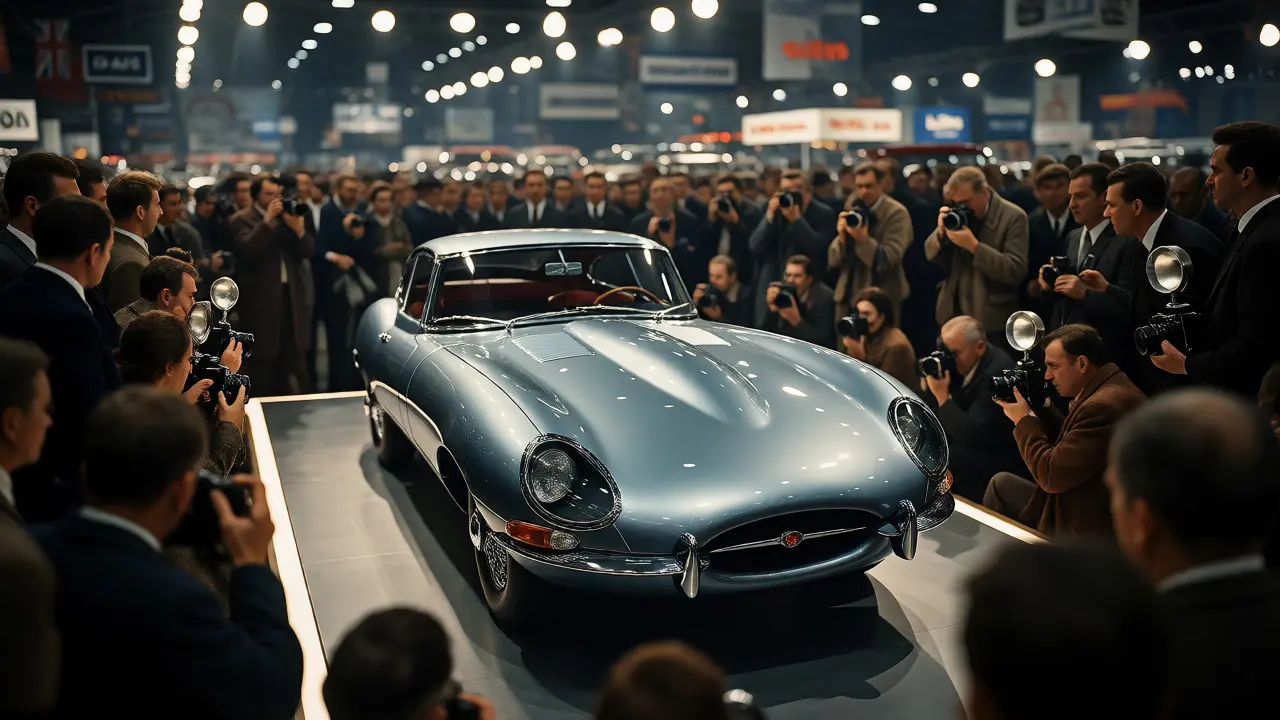
Enzo Ferrari called it the most beautiful car ever made. That’s a big claim coming from the man who built some of the fastest, most aggressive machines on earth. But when Jaguar E-Type rolled onto the stage at the 1961 Geneva Motor Show, even the cynical press couldn’t look away. It wasn’t just pretty; it was a technological leap that embarrassed cars costing three times as much. If you’ve ever wondered why this specific British sports car still commands attention sixty-five years later, you need to understand what happened in that Swiss hall.
The year was 1961. The world was changing fast, but the car industry was stuck in a loop of separate chassis and heavy bodies. Jaguar wanted to break that cycle. They didn’t just want a faster XK-150; they wanted a machine that combined racing pedigree with everyday usability. The result was a monocoque structure, independent rear suspension, and disc brakes all around. This wasn’t incremental improvement. It was a revolution wrapped in aluminum and steel.
Why Geneva Was the Perfect Stage
Geneva isn’t just any auto show. It’s where manufacturers go to prove global relevance. For Jaguar, launching the E-Type there was a strategic masterstroke. The European market was booming, and buyers were hungry for performance that didn’t require a pit crew to maintain. The E-Type offered 150 horsepower from its 3.8-liter inline-six engine, capable of hitting 150 mph. At $4,950 in the US, it undercut rivals like the Aston Martin DB4 by nearly half the price.
Imagine walking into the Palexpo exhibition center today. You see a low-slung coupe with a hood that stretches forever and a tail that tapers to a point. No chrome bumpers ruining the lines. Just pure aerodynamic intent. Journalists swarmed the stand. Photos hit newspapers worldwide within hours. The buzz wasn’t about reliability or fuel economy-it was about desire. People didn’t just want to drive it; they wanted to own a piece of art.
The Engineering Behind the Beauty
Beauty is often skin deep, but not here. The E-Type’s design stemmed from functional engineering needs led by Malcolm Sayer, an aeronautical engineer turned automotive designer. He used wind tunnel data to shape the body, ensuring air flowed smoothly over the roofline. This reduced drag and increased stability at high speeds.
- Monocoque Construction: Unlike traditional body-on-frame designs, the E-Type used a unitary body shell. This made the car lighter and stiffer, improving handling without adding weight.
- Independent Rear Suspension (IRS): Most competitors relied on solid axles. The IRS allowed each wheel to move independently, providing better grip and a smoother ride over uneven roads.
- Disc Brakes: Standard equipment across all four wheels. Drum brakes fade under heat; discs don’t. This gave drivers confidence to push harder on track days.
The cockpit was minimalist but driver-focused. A large speedometer dominated the dash, reminding you this was a performance tool. The gear shifter sat close to the steering wheel, inviting quick shifts. It felt raw, alive, and unapologetically British.
Series 1 vs. Later Models: What Changed?
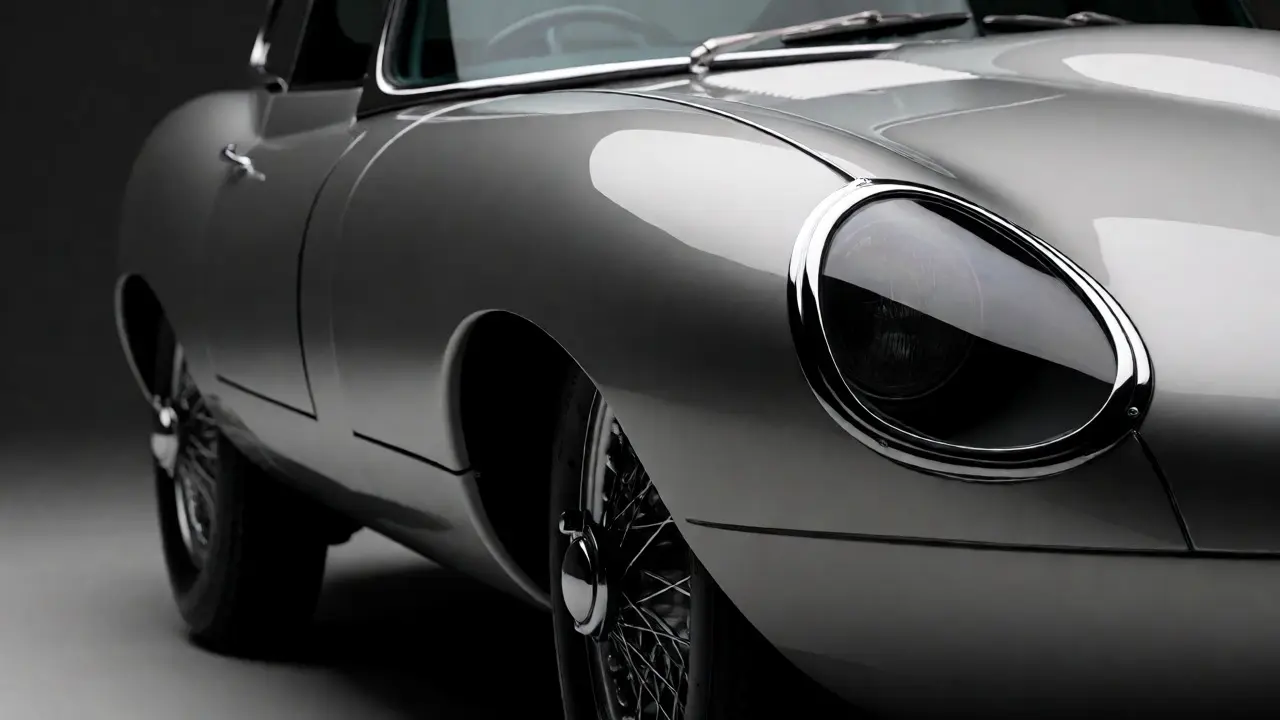
Not all E-Types are created equal. Purists argue the Series 1 models produced between 1961 and 1967 hold the highest value. Why? Because they kept the original glass headlamps covered by smooth fairings. These covers protected the lights and maintained the sleek profile. Later models swapped them for open headlights, which looked more utilitarian but less elegant.
| Feature | Series 1 (1961-1967) | Series 2 (1968-1971) | Series 3 (1971-1974) |
|---|---|---|---|
| Headlights | Glass-covered fairings | Open round headlights | Open round headlights |
| Engine | 3.8L or 4.2L Inline-Six | 4.2L Inline-Six | 5.3L V12 |
| Brakes | Dual-circuit disc brakes | Larger disc brakes | Ventilated disc brakes |
| Interior | Metal switches, simple gauges | Plastic switches, improved ventilation | Leather seats, wood trim, power options |
| Collector Value | Highest demand | Niche appeal | Lower prestige among purists |
The Series 2 addressed safety regulations, particularly in the US. Federal laws required larger bumpers and side markers, which slightly altered the front end. Some enthusiasts hate these changes, calling them "clumsy." Others appreciate the added safety features. The Series 3 introduced the massive V12 engine, offering immense power but sacrificing some agility due to increased front-end weight.
Owning an E-Type Today: Reality Check
If you’re thinking about buying one, prepare yourself. These cars aren’t turnkey investments unless you pay top dollar for a restored example. Rust is the enemy. The monocoque structure means corrosion can compromise structural integrity quickly. Check sills, floor pans, and boot floors carefully. A professional inspection costs money but saves thousands in repairs.
Maintenance requires specialist knowledge. Parts availability has improved thanks to companies like SNG Barratt and Moss Motors, but sourcing original components remains expensive. Electrical systems can be finicky, especially in early models with Lucas generators. Many owners upgrade to alternators for better reliability. Fuel consumption hovers around 15-20 mpg, depending on driving style. It’s not economical, but who cares when you’re hearing that straight-six roar?
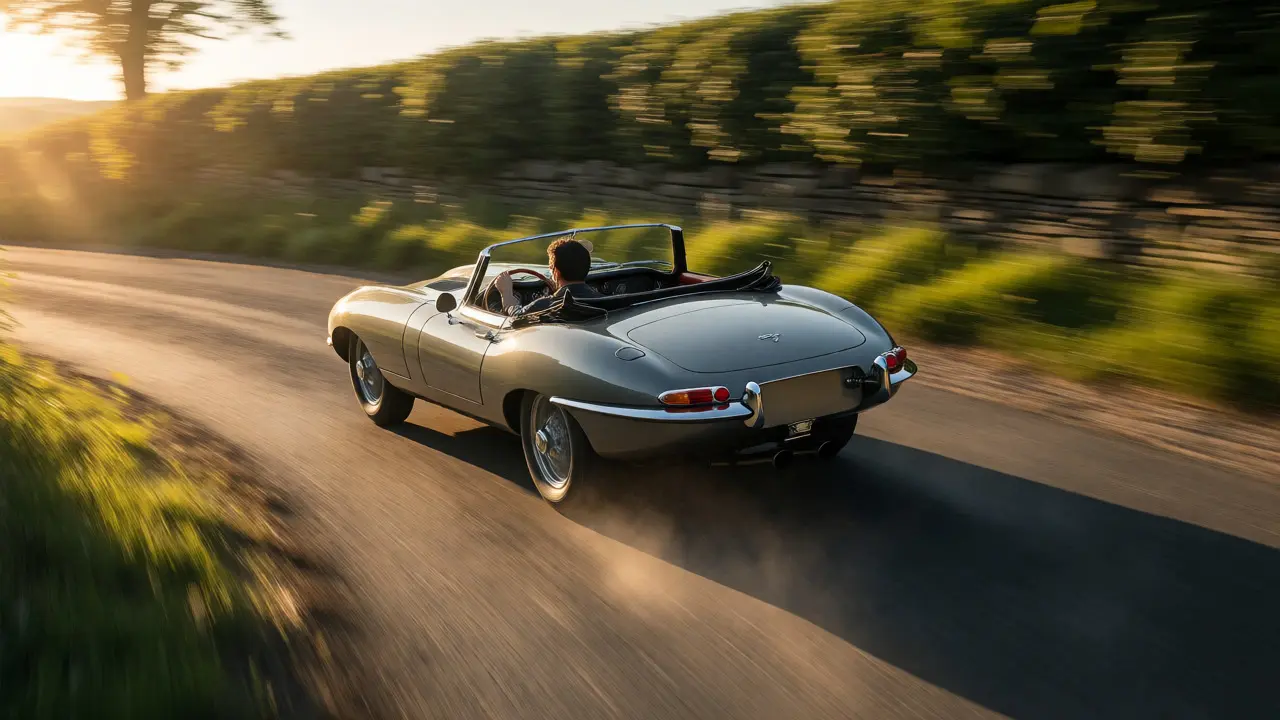
Driving an E-Type is visceral. The steering is heavy at low speeds but tightens up as you accelerate. The clutch is firm, requiring strong left-leg muscles. Shifting feels mechanical, precise, and satisfying. On winding roads, the balance shines. You feel connected to the road, yet comfortable enough for long-distance touring. It’s a grand tourer first, sports car second.
Cultural Impact Beyond Cars
The E-Type transcended automotive circles. It appeared in films, music videos, and fashion spreads. Its image symbolized swinging London, mod culture, and youthful rebellion. Celebrities like Frank Sinatra and Steve McQueen owned them, boosting their status. Owning an E-Type signaled taste, wealth, and an appreciation for design.
Today, auctions regularly see six-figure prices for clean Series 1 coupes. Convertibles, known as Roadsters, fetch premiums too. The market fluctuates, but interest remains steady. Young collectors are entering the scene, drawn by analog driving experiences in a digital age. They want noise, vibration, and character-things modern EVs struggle to replicate authentically.
Restoration trends also shift. Early restorations aimed for factory perfection. Now, many owners prefer "preservation" over restoration. Keeping patina intact tells a story. Scratches, dents, and faded paint become badges of honor rather than flaws to erase. This approach appeals to those valuing history over showroom shine.
Frequently Asked Questions
Was the Jaguar E-Type really designed by Enzo Ferrari?
No, Enzo Ferrari did not design it. He famously described it as "the most beautiful car ever made" after seeing it at the 1961 Geneva Motor Show. The actual designers were Malcolm Sayer, who handled the aerodynamics, and William Lyons, who oversaw the overall aesthetic and production decisions.
What makes Series 1 E-Types more valuable than Series 2 or 3?
Series 1 models retain the original glass-covered headlamp fairings, which preserve the car's sleek, uninterrupted lines. Later models adopted exposed headlights due to safety regulations, altering the front-end appearance. Collectors prize the Series 1 for its purity of design and closer adherence to the original vision.
Is the Jaguar E-Type reliable for daily driving?
With proper maintenance, yes. However, it requires regular attention to cooling systems, electrical components, and rust prevention. Modern upgrades like electronic ignition and upgraded radiators improve reliability significantly. It’s not as dependable as a modern Toyota, but well-maintained examples can serve as weekend cruisers or even daily drivers in mild climates.
How much does it cost to restore a Jaguar E-Type?
Full nut-and-bolt restorations typically range from $100,000 to $200,000 depending on the model, condition, and quality of workmanship. Partial restorations focusing on mechanicals and interior might cost $30,000-$60,000. Prices vary widely based on geographic location and specialist reputation.
Did Jaguar produce other versions besides the Coupe and Roadster?
Yes, Jaguar produced the 2+2 version, which featured a longer wheelbase and rear seats suitable for children or short trips. While less popular initially due to perceived lack of elegance, the 2+2 offers practicality and is now gaining collector interest as a rare variant.