Jaguar Design: Balancing Aerodynamics and Aesthetics
 Apr, 10 2026
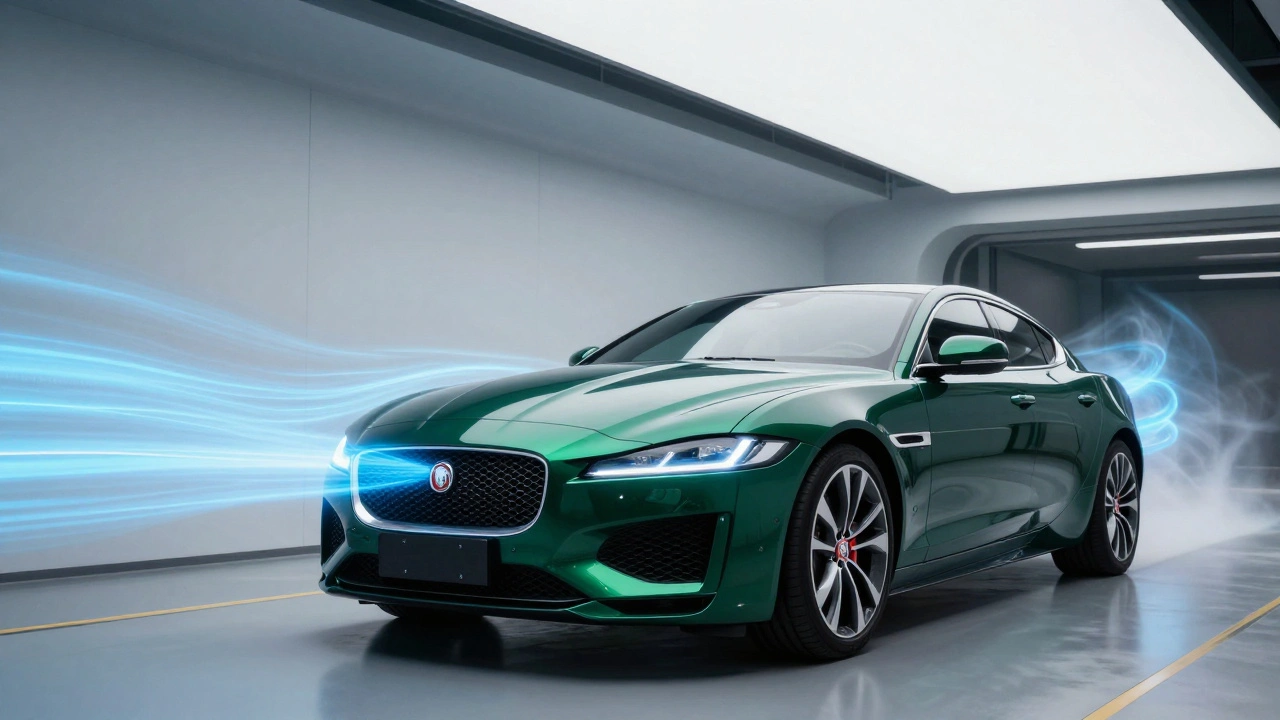
When you look at a modern Jaguar, you aren't just seeing a stylist's whim. You're seeing a calculated battle against fluid dynamics. The goal is simple yet incredibly hard: achieve a low drag coefficient without making the car look like a melted soap bar. If you've ever wondered why some luxury cars look bulky while others look effortless, it comes down to how they manage the air that hits them at 120 mph.
The Secret of the Slippery Shape
To understand the Jaguar approach, we have to talk about how air actually behaves. In the world of physics, Aerodynamics is the study of how gases interact with moving objects . For a car, this means minimizing the air that gets trapped in front of the vehicle and ensuring the air that flows over it doesn't create a vacuum that pulls the car backward.
Jaguar focuses on the "teardrop" principle. Nature already solved aerodynamics with the seed of a maple tree or a falling raindrop. By tapering the rear of the car and keeping the front rounded, Jaguar reduces the wake of turbulent air. This isn't just about fuel economy or top speed; it's about stability. When air flows smoothly, the car doesn't shake, and the wind noise in the cabin drops to a whisper. Think of it as the difference between pushing a flat piece of plywood through water versus a streamlined torpedo.
| Feature | Function | Result |
|---|---|---|
| Low Drag Coefficient | Reduces air resistance | Higher top speed, better MPG |
| Downforce/Lift | Presses car toward road | Increased grip in corners |
| Laminar Flow | Smooth air movement | Lower wind noise (NVH) |
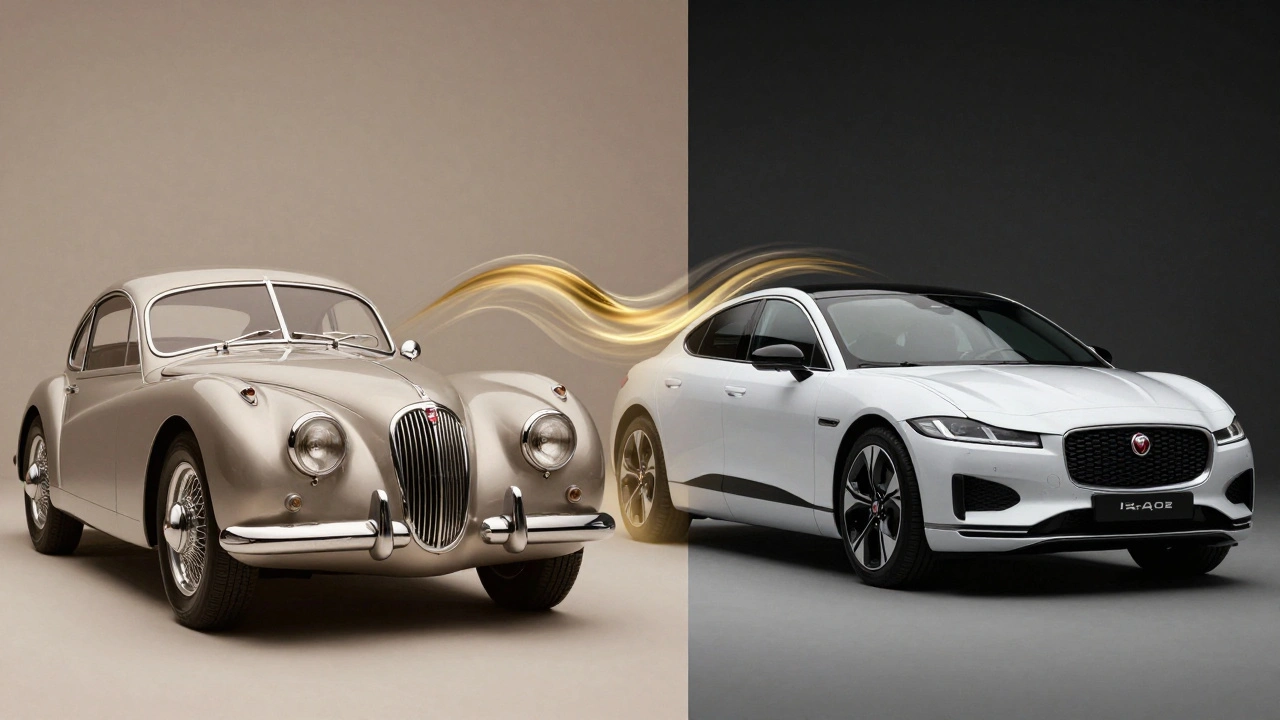
From the XK120 to the I-PACE
The legacy started with the Jaguar XK120 is a post-war sports car known for its sweeping lines and record-breaking speed . In 1948, it wasn't about computer simulations; it was about a designer's eye. The XK120 had a low profile and flowing fenders that instinctively guided air around the body. It proved that a car could be an object of art while still being one of the fastest machines on the planet. This established the brand's DNA: beauty must be functional.
Fast forward to the modern era, and the approach has evolved into something high-tech. Take the Jaguar I-PACE is an all-electric performance SUV designed with a cab-forward architecture . Because electric cars don't need a massive radiator for a combustion engine, Jaguar redesigned the entire front end. They added a "channel" that directs air from the front hood, over the roof, and out through the back. This reduces the amount of air hitting the windshield, which is one of the biggest sources of drag on any vehicle. It's a masterclass in using a new powertrain to unlock a more beautiful, efficient shape.
The Tension Between Lift and Downforce
Here is where the real engineering happens. If a car is too "slippery," it can actually become a wing. At high speeds, air moving faster over the top of the car than underneath it creates lift. That is a nightmare for a driver; it makes the steering feel light and vague. To fix this, Jaguar employs Downforce is a downward force created by the air flowing over a vehicle's surfaces .
They don't always use a giant, ugly wing like you'd see on a race car. Instead, they use "invisible" aero. This includes subtle underbody panels that smooth out the airflow beneath the chassis and integrated spoilers that are molded directly into the trunk lid. By managing the air pressure, they keep the car glued to the road without ruining the silhouette. It's a game of millimeters. A slight change in the angle of a bumper can be the difference between a car that feels planted and one that feels nervous at 70 mph.
The Role of Computational Fluid Dynamics
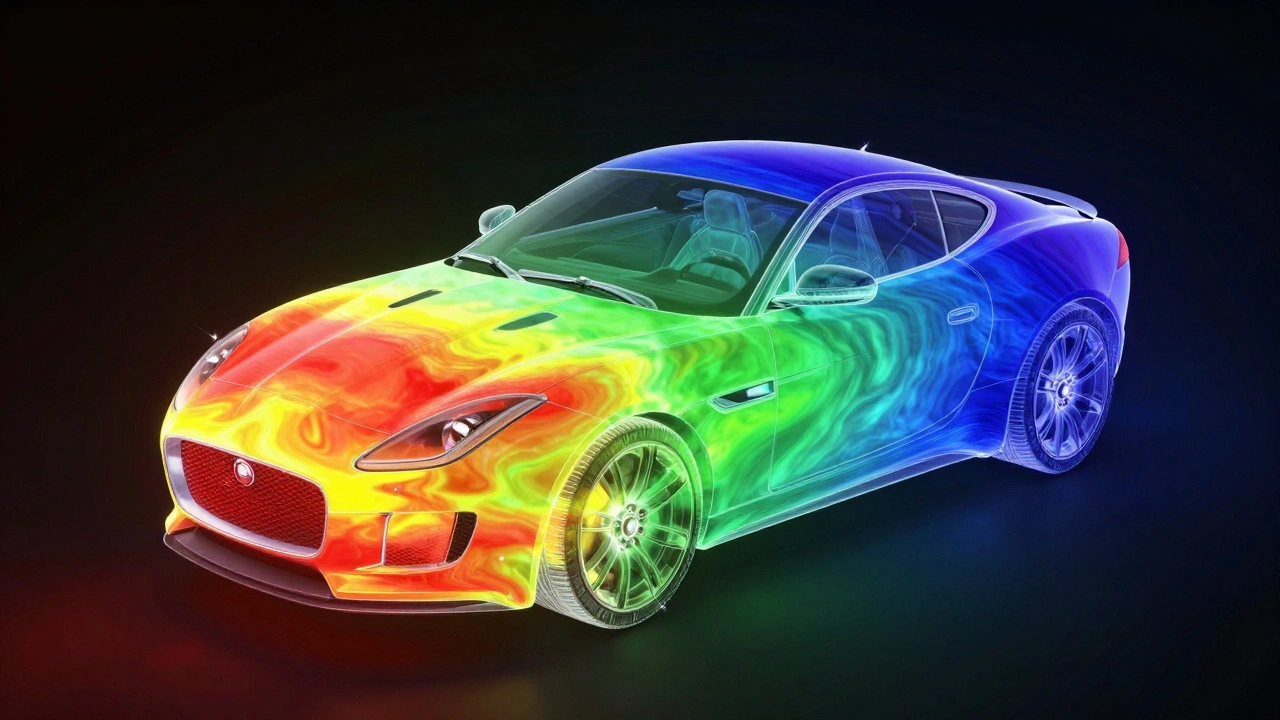
Back in the day, designers used clay models and a hope for the best. Now, they use Computational Fluid Dynamics is a branch of fluid mechanics that uses numerical analysis and data structures to analyze and solve problems that describe fluid flows , or CFD. This software allows engineers to see the air as a colorful map of pressures and velocities before a single piece of metal is cut.
CFD lets Jaguar experiment with "vortex generators"-tiny shapes that keep the air attached to the car's body longer, preventing it from breaking away and creating drag. They can simulate how a rain droplet moves across the side mirror to ensure the driver's vision stays clear. But here is the catch: computers often suggest shapes that look boring. The Jaguar philosophy is to use CFD to validate a beautiful design, rather than letting the software dictate the look. They find the "sweet spot" where the physics and the art overlap.
Visual Weight and Proportions
Aerodynamics isn't just about the wind; it's about how the car looks while it's standing still. Jaguar uses "visual weight" to create the illusion of speed. By pushing the cabin backward and lengthening the hood, they create a silhouette that suggests movement. This is a psychological trick that complements the physical aerodynamics. When a car looks like it's moving even when parked, it satisfies the human desire for grace and power.
The use of curves over sharp angles is a deliberate choice. Sharp edges cause the air to "detach," which creates turbulence and noise. Smooth, sweeping transitions-like the way the A-pillar blends into the roofline-keep the flow laminar. This is why you see so few harsh 90-degree angles on a Jaguar. Every line is intended to guide the eye and the air in the same direction.

Common Aerodynamic Pitfalls to Avoid
Many manufacturers fall into the trap of adding "fake" aero-plastic vents that don't actually move any air. Jaguar avoids this by ensuring that most of their vents serve a dual purpose. For example, a side vent might cool the brakes while simultaneously releasing high-pressure air from the wheel arch to reduce lift. If a feature doesn't help the car cut through the air or cool a component, it usually doesn't make the cut.
Another mistake is over-optimizing for a single speed. A car that is incredibly efficient at 150 mph might be unstable in a crosswind at 60 mph. Jaguar balances their designs to ensure the car is predictable in the real world, not just in a sterile wind tunnel environment. This involves testing in a variety of conditions, from the wind-swept plains of the UK to the heat of the desert.
What exactly is a drag coefficient?
A drag coefficient (Cd) is a dimensionless number that represents how easily an object moves through the air. A lower number means the car is more aerodynamic. For context, a brick has a high Cd, while a sleek Jaguar might have a Cd around 0.24 to 0.29, meaning it pushes far less air out of its way.
Does better aerodynamics always mean better fuel economy?
Generally, yes. When a car has less air resistance, the engine (or battery) doesn't have to work as hard to maintain speed. However, this is most noticeable at high speeds. At city speeds (under 30 mph), aerodynamics matter much less than the weight of the car and the efficiency of the transmission.
Why do electric cars like the I-PACE look so different?
Electric vehicles (EVs) don't have a bulky internal combustion engine in the front. This allows designers to move the driver's seat forward (cab-forward design), creating a shorter hood and a more aerodynamic nose, which significantly reduces the car's wind profile.
What is the difference between downforce and drag?
Drag is the air pushing back against the car, which slows it down. Downforce is the air pushing the car down into the pavement, which increases grip. The goal of a luxury sports car is to minimize drag while maintaining enough downforce for safety and handling.
How does the "teardrop" shape help?
A teardrop shape is the most aerodynamic form because it allows air to close back together smoothly behind the object. By tapering the rear of the car, Jaguar prevents a large pocket of low-pressure air from forming, which would otherwise act like a vacuum pulling the car backward.
What to Look for in Design
If you're admiring a car and want to spot the "Jaguar approach," look at the transitions. Do the lines flow from the headlight to the taillight without abrupt breaks? Does the roofline curve gently into the rear window? These are signs of a design focused on laminar flow.
For the enthusiast, the next step is to explore how these shapes impact the driving experience. Pay attention to the wind noise when you hit highway speeds. If the cabin remains quiet despite the speed, you're feeling the results of successful aerodynamic sculpting. The beauty isn't just in the paint and the leather-it's in the invisible way the car dances with the wind.