Interwar Rolls-Royce: Precision Engineering and Luxury on the Road
 Sep, 16 2026
You could hear a pin drop in a Rolls-Royce cabin at 60 mph. That wasn't just marketing hype; it was engineering reality. Between the two World Wars, Britain didn't just build cars-they crafted moving sanctuaries that redefined what luxury meant. If you think modern luxury is about touchscreens and leather stitching, you haven't met the interwar era's obsession with silence, smoothness, and sheer mechanical perfection.
This period, spanning roughly from 1918 to 1939, represents the golden age of British automotive craftsmanship. It’s when Henry Royce’s engineering genius merged with Charles Rolls’ sales vision into a brand synonymous with unattainable elegance. But how did they actually do it? And why does a car from the 1920s still command more respect than many modern supercars?
The Philosophy of Silent Power
Let’s get one thing straight: interwar Rolls-Royces weren’t fast in the way we understand speed today. They weren’t built for cornering G-forces or drag-strip times. They were built for progress. The goal was to move occupants from point A to point B without them feeling like they’d moved at all. This required a specific kind of engineering discipline that prioritized refinement over raw output.
The secret weapon was the inline-six engine. Unlike the four-cylinder engines common in cheaper cars, which often vibrated themselves apart, the six-cylinder layout offered inherent balance. Rolls-Royce took this concept and pushed it to an extreme. They used massive displacement-often around 7.7 liters in the Phantom models-to generate torque at incredibly low RPMs. You barely touched the throttle, and the car surged forward with effortless grace. No gear changes needed. No clutch slipping. Just power.
This approach demanded rigorous testing. Before any model left the factory, every single engine was run-in on a test bed for hours. Mechanics listened for even the slightest irregularity. If a bearing ticked, the engine was stripped down and rebuilt. This wasn't quality control; it was obsessive-compulsive disorder applied to metalworking. The result was a drivetrain so smooth that drivers reported forgetting they were driving entirely.
Chassis Engineering: The Foundation of Refinement
A luxurious body means nothing if the chassis rattles. Interwar Rolls-Royces relied on ladder-frame chassis constructed from high-grade nickel steel. These frames were flexible enough to absorb road imperfections but rigid enough to maintain alignment over hundreds of miles. The suspension system played a critical role here. Early models used semi-elliptic leaf springs, while later iterations experimented with independent front suspension systems inspired by aviation technology.
| Model | Production Years | Engine Displacement | Top Speed (Approx.) | Notable Feature |
|---|---|---|---|---|
| Silver Ghost | 1906-1925 | 7.4L - 7.7L | 60 mph | Known as "The Best Car in the World" |
| Phantom I | 1925-1931 | 7.7L | 70 mph | First model with hydraulic brakes standard |
| Phantom II | 1929-1936 | 7.7L | 75 mph | Improved cross-flow cylinder head |
| Wraith | 1938-1939 | 6.2L | 85 mph | Streamlined coupe design for higher speeds |
Braking systems also evolved during this time. While competitors stuck with cable-operated drums, Rolls-Royce adopted servo-assisted drum brakes across all four wheels. This was a safety feature disguised as convenience. It allowed a driver to stop a three-ton vehicle with minimal pedal effort, preserving the calm demeanor inside the cabin. Panic stops were rare because anticipation was part of the driving culture these cars encouraged.
The Art of Coachbuilding
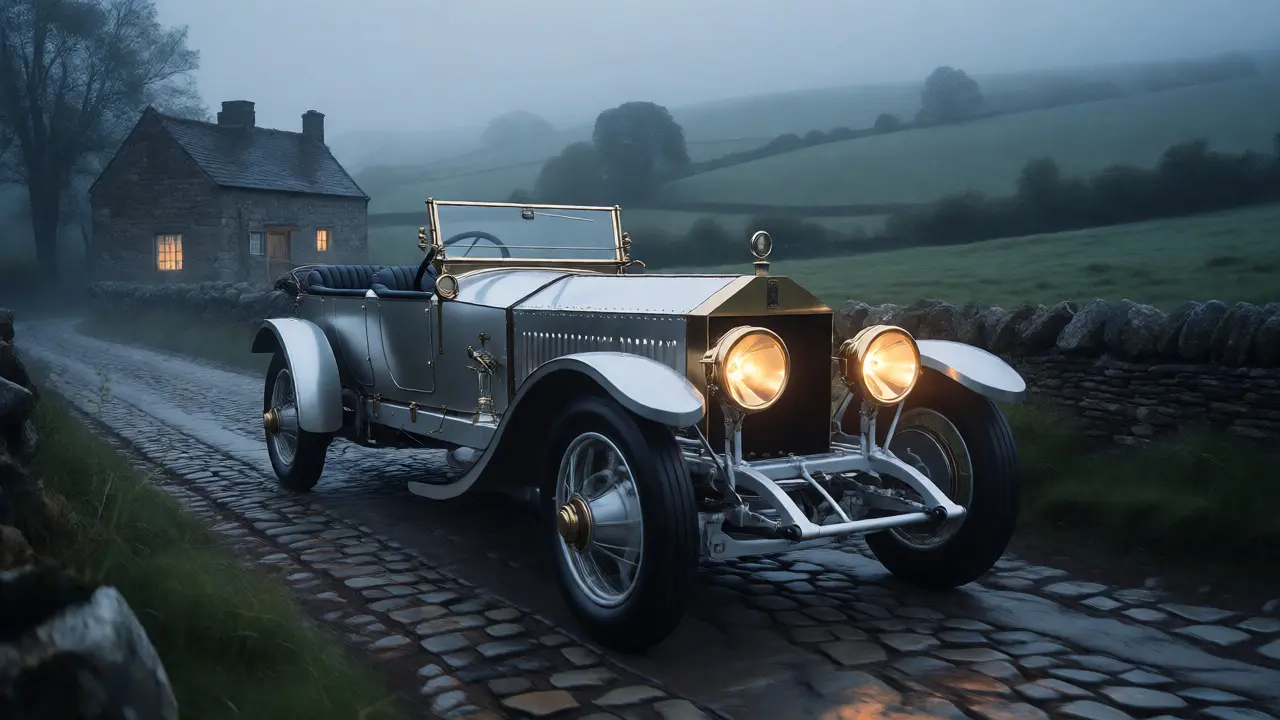
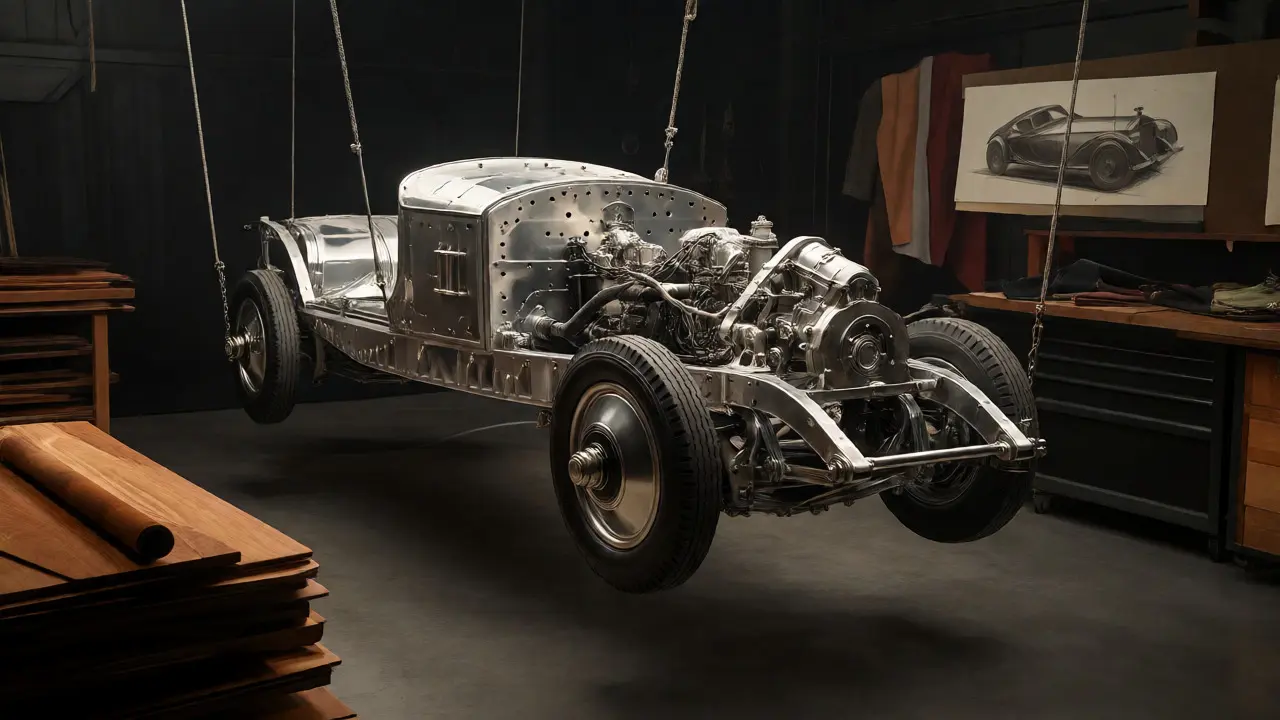
Here’s where things get interesting. Rolls-Royce didn’t build most of their bodies. They sold the rolling chassis-the engine, transmission, axles, and frame-and let independent coachbuilders create the upper structure. Names like Barker, Hooper, and Park Ward became legendary in their own right.
This separation allowed for incredible customization. A banker might order a formal limousine with partition glass and folding jump seats. An adventurer might request a tourer with ample luggage space and heavy-duty fenders. The coachbuilder handled everything from woodwork to upholstery, using materials sourced from the best suppliers in Europe. Walnut veneers, hand-stitched Connolly leather, and wool broadcloth were standard fare.
Why did this matter? Because it turned each car into a unique artifact. Two Phantom IIs could look completely different depending on who built the body. One might be a sleek, aerodynamic sedan; another, a boxy, imposing state carriage. This variety kept the brand fresh despite the underlying mechanics remaining largely unchanged for decades.
Ownership Culture and Maintenance
Owning an interwar Rolls-Royce wasn’t just about status-it was a commitment. These machines required regular attention. Oil changes happened every few hundred miles. Grease fittings needed lubrication after every long trip. Tires were expensive and prone to punctures given the narrow cross-sections of the era.
Most owners employed full-time chauffeurs. This wasn’t purely ostentatious; it made practical sense. Driving a manual gearbox with non-synchromesh gears requires skill and patience. Shifting smoothly between gears without grinding demands practice. A professional driver ensured the car operated within its optimal parameters, extending its lifespan significantly.
Maintenance manuals from the 1930s read like novels. They detailed procedures for adjusting valve clearances, timing ignition points, and bleeding brake lines. Owners who attempted DIY repairs often found themselves overwhelmed by the complexity. Yet, those who mastered the care routine enjoyed vehicles that remained reliable well into the 1950s and beyond.
Legacy on Modern Roads
Today, seeing an interwar Rolls-Royce on public roads is a rarity. Most reside in museums or private collections. Those that do drive are usually maintained by specialists who treat them more like aircraft than automobiles. Parts are scarce, and fabrication skills have dwindled. Finding a skilled mechanic who understands pre-war electrical systems is harder than finding a heart surgeon.
Yet, the influence persists. Modern Rolls-Royce models still emphasize silence and ride comfort above all else. The current Phantom features air suspension tuned to mimic the floatiness of its ancestors. Even the sound insulation strategies trace back to the double-glazed windows and thick carpeting pioneered in the 1920s.
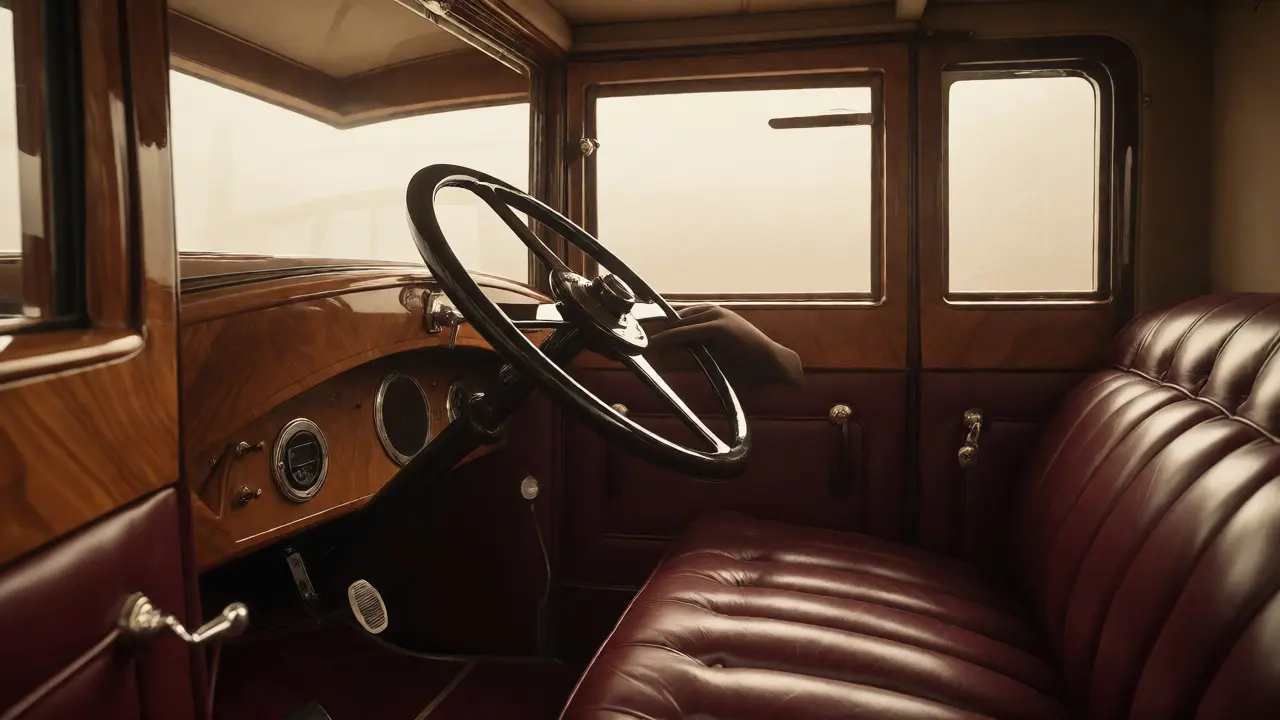
If you ever get the chance to sit in one, take the opportunity. Feel the weight of the steering wheel. Listen to the absence of noise. Notice how the controls feel solid, not plasticky. You’re experiencing a philosophy that valued human comfort over mechanical efficiency. In an age of disposable tech, that permanence feels radical.
Why were interwar Rolls-Royces considered slow?
They weren't designed for speed. Top speeds ranged from 60 to 85 mph, which was adequate for the roads of the time. The focus was on torque and smooth acceleration rather than peak velocity, allowing effortless cruising without frequent gear changes.
Did Rolls-Royce build their own bodies?
Generally, no. Rolls-Royce manufactured the chassis and mechanical components. Independent coachbuilders like Barker, Hooper, and Park Ward constructed the passenger compartments according to customer specifications, resulting in diverse styles.
What made the Silver Ghost special?
Produced until 1925, the Silver Ghost earned the nickname "The Best Car in the World" due to its exceptional reliability and quiet operation. Its robust engineering set the standard for future luxury vehicles.
How difficult is it to maintain an interwar Rolls-Royce today?
Extremely difficult. Parts are rare and often require custom fabrication. Specialized knowledge of pre-war mechanical and electrical systems is essential. Regular maintenance intervals are shorter than modern cars, demanding significant time and financial investment.
Were interwar Rolls-Royces safe?
For their time, yes. They featured advanced braking systems compared to competitors, including servo-assisted four-wheel brakes. However, they lacked modern safety features like crumple zones, seatbelts, or airbags, relying instead on robust construction and predictable handling.