Interwar British Automotive Suppliers: Chassis, Bodies, and Engine Innovation
 Aug, 17 2026
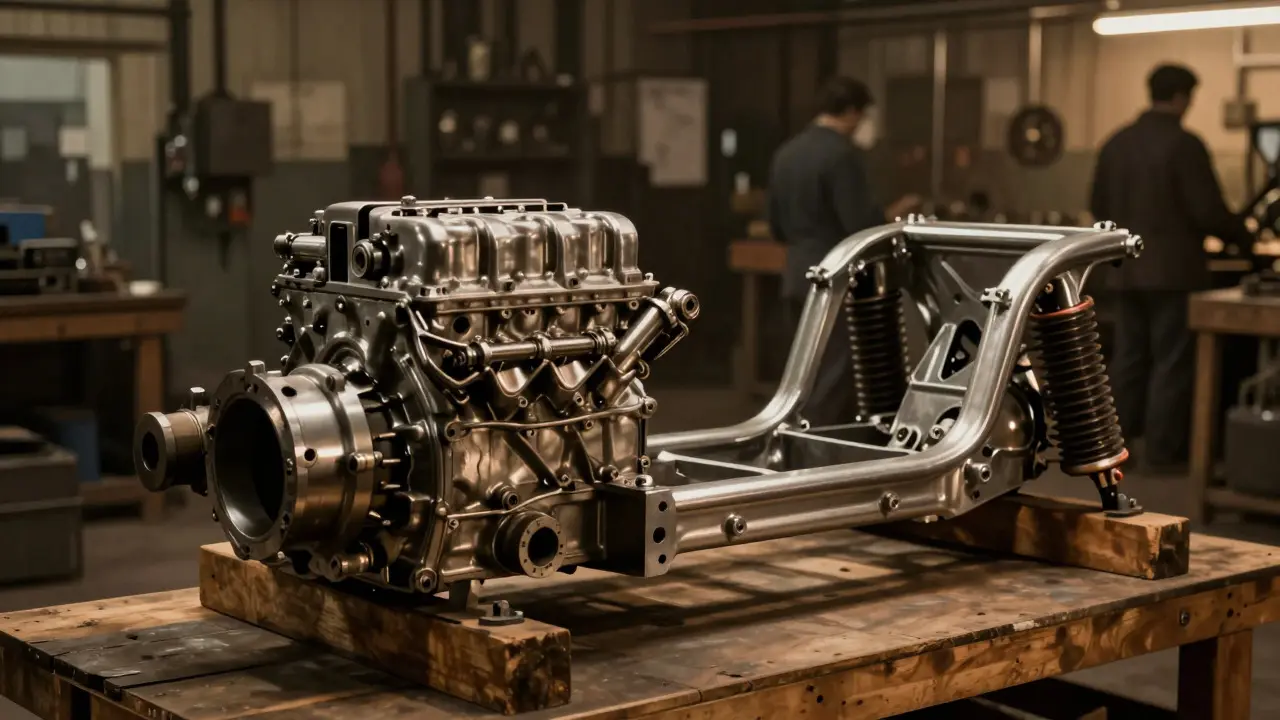
Between 1918 and 1939, the British automotive industry underwent a radical transformation that defined the modern car. It wasn't just about making cars; it was about separating the creation of the mechanical core from the aesthetic shell. This era saw the rise of specialized chassis manufacturers is companies that produced the fundamental structural frame, engine, and drivetrain of a vehicle. These firms sold their bare metal to independent body builders, creating a unique ecosystem where engineering and artistry were distinct trades. Understanding this split is key to appreciating why British cars of the 1920s and 1930s looked so different from their American or German counterparts.
The Anatomy of an Interwar Car
To grasp the significance of suppliers, you have to understand what they actually provided. A typical interwar British car consisted of three main components: the chassis, the engine, and the body. The chassis included the frame rails, suspension, transmission, and often the engine itself. The body was the passenger compartment, built separately by a coachbuilder. This modularity allowed for incredible variety. You could buy a robust Bentley is a luxury automobile manufacturer known for its high-performance engines and hand-built quality. chassis and fit it with a sporty coupe or a stately limousine, depending on your taste and budget.
This separation meant that the reputation of the car depended heavily on the synergy between the two parties. If the chassis was too heavy for the body, handling suffered. If the body was poorly aligned, wind noise and vibration became issues. This dynamic drove both groups to innovate constantly. Chassis makers focused on power-to-weight ratios and reliability, while coachbuilders obsessed over aerodynamics, interior comfort, and visual elegance.
Leading Chassis Manufacturers
A few names dominated the landscape during these two decades. Each had a distinct identity that influenced how their cars were perceived and used.
- Rolls-Royce: Known as the "best car in the world," Rolls-Royce set the benchmark for luxury. Their 6.5-liter and later 7.7-liter engines were legendary for smoothness. They supplied chassis to top-tier coachbuilders like Park Ward and Mulliner Park Ward. The focus was on silence, refinement, and durability rather than raw speed.
- Bentley: Under W.O. Bentley, the company became synonymous with performance. The 4½-liter and 6½-liter models were racing machines first and road cars second. When Rolls-Royce acquired Bentley in 1931, the brand retained its sporting spirit but gained access to Rolls-Royce's engineering resources.
- Vauxhall: As part of General Motors, Vauxhall brought mass-production techniques to Britain. While less prestigious than Bentley, Vauxhall offered reliable, affordable cars for the middle class. Their Blackfriars plant in London was one of the most advanced manufacturing facilities in Europe at the time.
- Alvis: Based in Coventry, Alvis was known for its distinctive "Vee" grille and innovative engineering. They pioneered the use of all-independent suspension and produced some of the fastest production cars of the 1930s. Their TD series was a favorite among enthusiasts who wanted performance without the Bentley price tag.
- Lanchester: Another Coventry-based firm, Lanchester offered a range of models from small city cars to large touring vehicles. They were known for their practicality and decent performance, appealing to professionals and families alike.
The Art of Coachbuilding
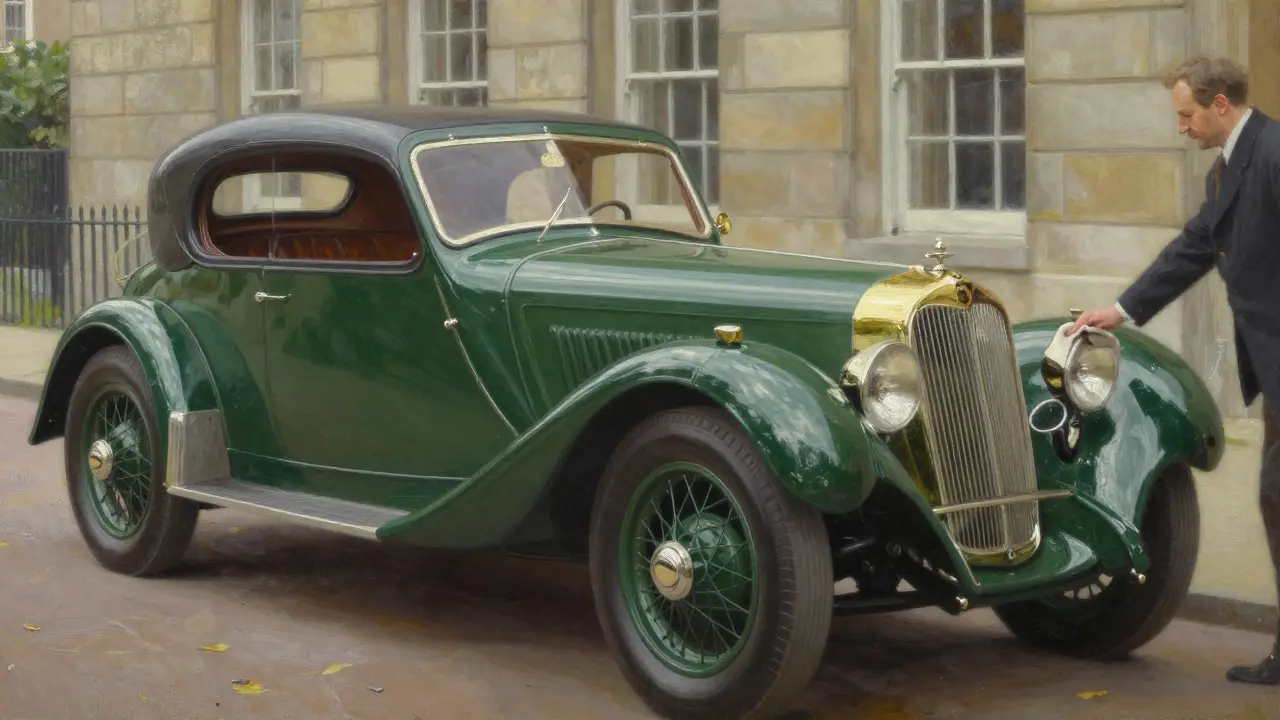
If the chassis was the skeleton, the body was the soul. Independent coachbuilders were artisans who transformed steel frames into works of art. They didn't just build boxes; they crafted environments. Top-tier coachbuilders included H.J. Mulliner, James & Co., and Hooper & Co.
These firms employed hundreds of skilled workers-woodworkers, upholsterers, painters, and fitters. The process was slow and labor-intensive. A single custom body could take months to complete. Clients would specify every detail: the type of wood veneer, the color of the leather, the style of the door handles. This level of personalization is virtually impossible in today's mass-produced automotive industry.
The relationship between chassis maker and coachbuilder was critical. For example, H.J. Mulliner is a prominent British coachbuilder famous for designing bodies for Rolls-Royce and Bentley. had a long-standing partnership with Rolls-Royce. Their designs were instantly recognizable, characterized by clean lines and elegant proportions. Similarly, James & Co. was closely associated with Bentley, producing many of the iconic racing coupes.
Engine Technology and Innovation
The interwar period saw significant advances in engine design. Early cars relied on low-compression, four-valve engines that were powerful but thirsty. By the late 1920s, engineers were experimenting with higher compression ratios, overhead camshafts, and supercharging.
Supercharging was a major trend, especially in sports cars. Brands like Bugatti and Alfa Romeo led the way, but British manufacturers followed suit. Bentley, for instance, offered supercharged versions of their 4½-liter model, which could reach speeds over 100 mph-a remarkable feat for the time. However, superchargers added complexity and cost, making them a niche feature for wealthy buyers seeking ultimate performance.
Another innovation was the shift from carburetors to more precise fuel delivery systems. While carburetors remained dominant throughout the period, manufacturers refined their designs to improve throttle response and fuel efficiency. This attention to detail helped establish the reputation of British engines for being responsive and tunable.
| Manufacturer | Primary Focus | Notable Model | Typical Coachbuilder Partners |
|---|---|---|---|
| Rolls-Royce | Luxury and Refinement | Phantom II | Park Ward, Mulliner |
| Bentley | Performance and Sport | 4½ Liter | James & Co., Mulliner |
| Vauxhall | Mass Market Reliability | Victory Series | In-house (mostly) |
| Alvis | Engineering Innovation | TD 21 | Custom order only |
| Lanchester | Practical Versatility | 20/60 | Various independents |
Economic Challenges and Industry Consolidation
The Great Depression of the 1930s hit the British automotive industry hard. Luxury car sales plummeted as wealth shrank, forcing many small manufacturers to close. Larger firms began to consolidate, acquiring smaller rivals or merging operations to survive. This trend accelerated after World War II, leading to the dominance of a few major brands like Austin, Morris, and Rover.
During the interwar years, however, the diversity of the market was still evident. Dozens of companies produced chassis, and even more built bodies. This competition drove innovation but also made the industry vulnerable to economic shocks. Buyers had choices, but those choices came with risks. Some smaller firms went bankrupt mid-order, leaving customers waiting for parts or support that never arrived.
Legacy of the Interwar Era
The legacy of this period is profound. It established the concept of the bespoke car, where individual expression was valued over uniformity. It also laid the groundwork for the modern automotive supply chain, where specialized suppliers provide components to larger assemblers. Today, when you see a classic Bentley or Rolls-Royce, you're looking at the culmination of this collaborative effort between engineers and artists.
For collectors and historians, understanding the roles of chassis makers and coachbuilders helps explain the unique character of these vehicles. Each car is a snapshot of a specific moment in time, reflecting the tastes, technologies, and economic conditions of its era. The interwar years remain a golden age of automotive design, a period when the car was not just a mode of transport, but a statement of identity.
What is the difference between a chassis manufacturer and a coachbuilder?
A chassis manufacturer produces the mechanical foundation of the car, including the frame, engine, transmission, and suspension. A coachbuilder designs and constructs the body, which houses the passengers and cargo. In the interwar era, these were separate businesses that worked together to create the final vehicle.
Why did British cars have such diverse body styles?
The separation of chassis and body production allowed for customization. Buyers could choose from a wide range of body styles, from open tourers to enclosed saloons, based on their preferences. This flexibility was a hallmark of the British automotive industry during the 1920s and 1930s.
Which British chassis manufacturer was considered the most luxurious?
Rolls-Royce was widely regarded as the most luxurious. Their cars were known for their silent operation, superior materials, and meticulous craftsmanship. Owning a Rolls-Royce was a symbol of status and success in the interwar period.
How did the Great Depression affect the British automotive industry?
The depression caused a sharp decline in demand for luxury goods, including high-end cars. Many small manufacturers went out of business, and larger firms had to cut costs and reduce output. This led to consolidation and a shift towards more affordable models.
What role did supercharging play in interwar car performance?
Supercharging allowed engines to produce more power from the same displacement. It was particularly popular in sports cars and racing models. While effective, superchargers increased maintenance requirements and fuel consumption, making them a premium option for performance-focused buyers.