Industrial Relations and the Fall of British Leyland: How 1970s Strikes Ruined UK Car Quality
 Apr, 5 2026
The Chaos of the British Leyland Era
To understand why the quality plummeted, we first have to look at British Leyland is a massive, state-owned automotive conglomerate formed in 1968 by merging several struggling British brands like Austin, Morris, and Triumph. It was an attempt to create a "national champion" that could fight off global giants, but it was basically a house of cards. The company inherited a mess of outdated plants, overlapping product lines, and a workforce that had grown tired of being ignored.
By the early 1970s, the culture inside these factories was fractured. You didn't just have a manager and a worker; you had a complex web of Trade Unions organized labor groups that negotiated pay and working conditions who held immense power. This power dynamic created a situation where a single shop steward could halt an entire assembly line if a minor grievance wasn't addressed immediately.
When the Assembly Line Becomes a Weapon
The 1970s in the UK were defined by "industrial unrest." For a worker at a plant like Longbridge, a strike wasn't just a last resort; it was a frequent tool for negotiation. But here is where it hit the cars: the "wildcat strike." These were unofficial walkouts that happened without the union leadership's formal approval.
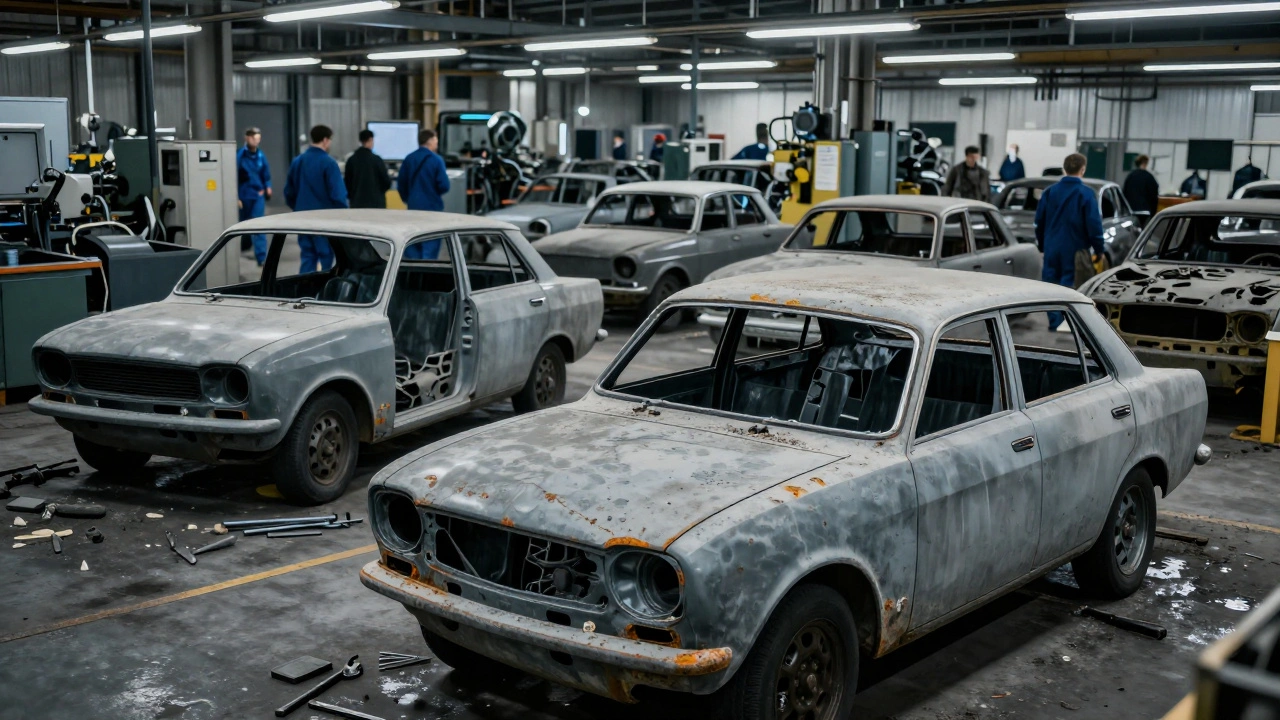
When workers walked off the job every few days, the flow of parts stopped. A car might sit half-finished on the line for a week, collecting dust and rust. When the workers eventually returned, they were often rushing to make up for lost time to meet quotas. Quality control became an afterthought. If a panel didn't fit quite right, they just hammered it into place and pushed it through. This is how the reputation for "poor build quality" became a permanent scar on the British car industry.
The Shop Steward System and Management Paralysis
One of the biggest hurdles was the rise of the shop steward. In most companies, the boss gives an order, and it happens. At British Leyland, the shop steward acted as a middleman with veto power. If a manager wanted to introduce a new, more efficient way of fitting a gearbox, the steward could argue it changed the "terms and conditions" of the job.
This led to a strange phenomenon where management stopped trying to improve things. Why bother investing in a new robotic arm or a better painting process if the union would just strike against it? The result was a technological freeze. While Volkswagen and Toyota were refining lean manufacturing and precision engineering in the 70s, British factories were still using methods from the 1940s, fighting over a few pence per hour in wages.
A Comparison of Manufacturing Philosophies
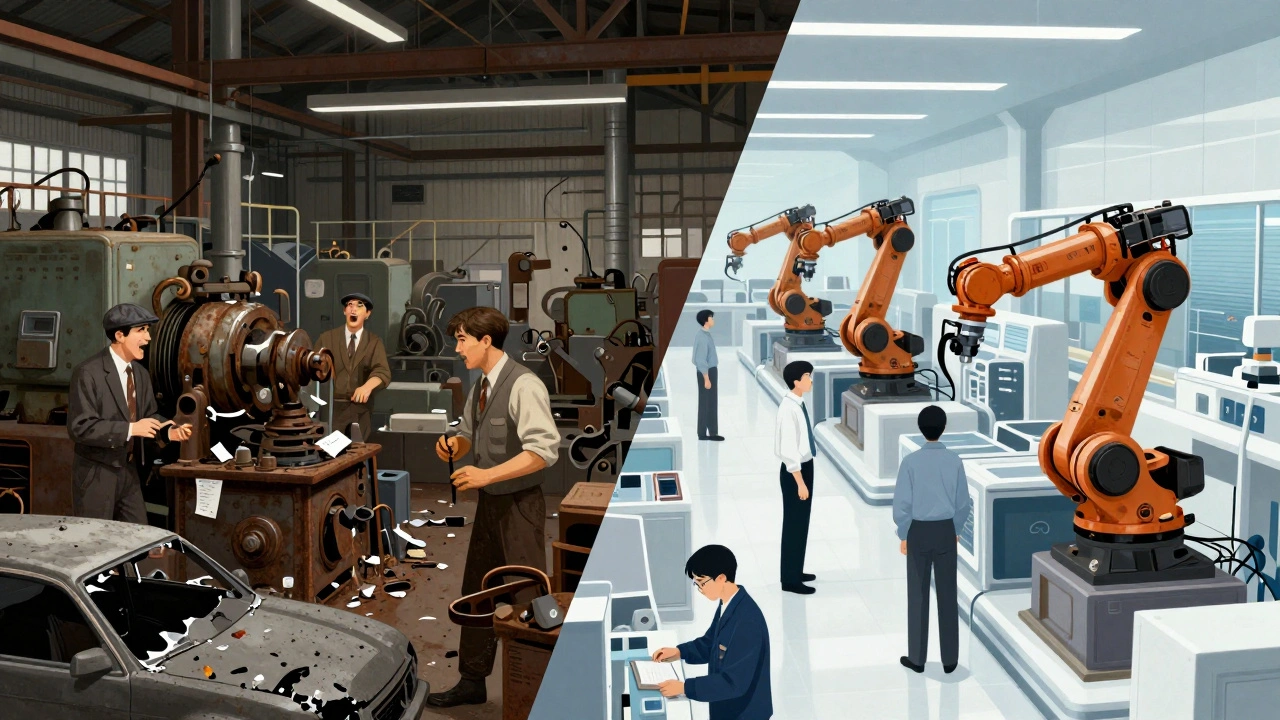
The difference between the UK approach and the emerging global standard was staggering. While the UK was bogged down in conflict, other nations were treating the factory as a science.
| Feature | British Leyland (UK) | Japanese/German Model | ||||
|---|---|---|---|---|---|---|
| Labor Relation | Adversarial / Conflict-heavy | Collaborative / Long-term | Process Focus | Reactive / Piece-meal | Standardized / Continuous Improvement (Kaizen) | |
| Quality Control | End-of-line inspection | Built-in at every stage | ||||
| Management Style | Hierarchical and detached | Hands-on and integrated |
The Japanese, in particular, were using a system called Lean Manufacturing a methodology focused on minimizing waste and maximizing productivity without sacrificing quality. They empowered workers to stop the line to fix a mistake. In the UK, stopping the line was a political act, not a quality act.
The State Intervention Trap
By 1975, the company was bleeding money so fast that the UK government had to step in. The UK Government the national administrative body that nationalized British Leyland to prevent total collapse decided that the industry was "too big to fail." They pumped millions of pounds of taxpayer money into the company.
This created a "moral hazard." Because the government would always provide a bailout, management didn't feel the pressure to fix the industrial relations, and the unions knew the company couldn't actually go bankrupt. This safety net actually prolonged the agony, keeping inefficient plants open and preventing the radical restructuring needed to compete with the high-quality imports flooding the market.
The Human Cost of Poor Quality
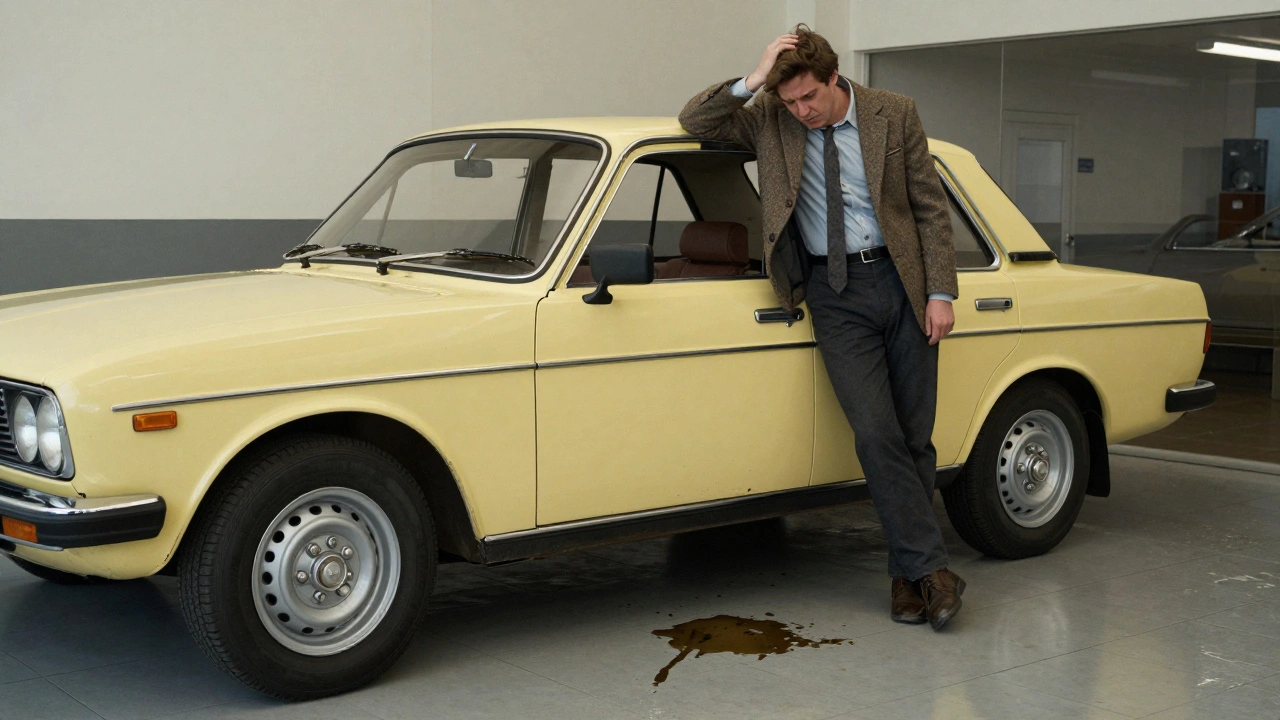
For the customer, the result was a disaster. The Austin Allegro is often cited as the poster child for this era. It was meant to be a modern family car, but due to the chaos in the factories, it arrived with flawed suspension, poor paint, and a confusing interior.
When a customer bought an Allegro or a Marina, they weren't just buying a car; they were buying the byproduct of a decade of labor disputes. If the workers were on strike during the week the interior trim was installed, you might find gaps in the dashboard or loose wiring. This destroyed consumer trust. Once a brand becomes known for being "unreliable," it takes decades to fix, regardless of how good the new engineers are.
The Legacy of the 70s Crash
The era of strikes and disruption eventually ended, but not without a massive cultural shift. It took the arrival of Margaret Thatcher and her aggressive approach to the Trade Unions in the 1980s to break the cycle of wildcat strikes. Only after the power shifted back to management could the factories begin to modernize.
Eventually, the remnants of the company were sold off, leading to the creation of Rover Group and eventually attracting foreign investment. The lesson learned was clear: you cannot have a high-quality product if you have a low-quality relationship between the people who design the car and the people who build it. The 1970s were a masterclass in how not to run a business.
Why were there so many strikes at British Leyland in the 1970s?
The strikes were caused by a combination of low wages, poor working conditions, and a deep lack of trust between the workforce and the management. The rise of powerful shop stewards meant that small local disputes often escalated into full factory shutdowns.
How exactly did strikes lower the quality of the cars?
Strikes disrupted the "just-in-time" flow of parts. When production stopped and started abruptly, cars sat unfinished, and the subsequent rush to catch up led to skipped quality checks, poor fit and finish, and rushed assembly.
What was the role of the UK government in this?
The government nationalized British Leyland to prevent thousands of job losses. However, by providing endless financial bailouts, they removed the incentive for the company to modernize its management or resolve its labor disputes effectively.
Which cars suffered the most from this era?
Models like the Austin Allegro and the Morris Marina are the most famous examples. These cars were plagued by reliability issues and poor build quality that directly reflected the industrial chaos of the time.
Did other UK companies face similar issues?
Yes, the "Winter of Discontent" in the late 70s saw widespread strikes across various sectors, including coal and rail, but the automotive sector was particularly hit because car assembly requires a highly synchronized chain of thousands of parts.