How Wartime Production Expertise Powered UK Civilian Car Manufacturing After 1945
 Nov, 20 2026
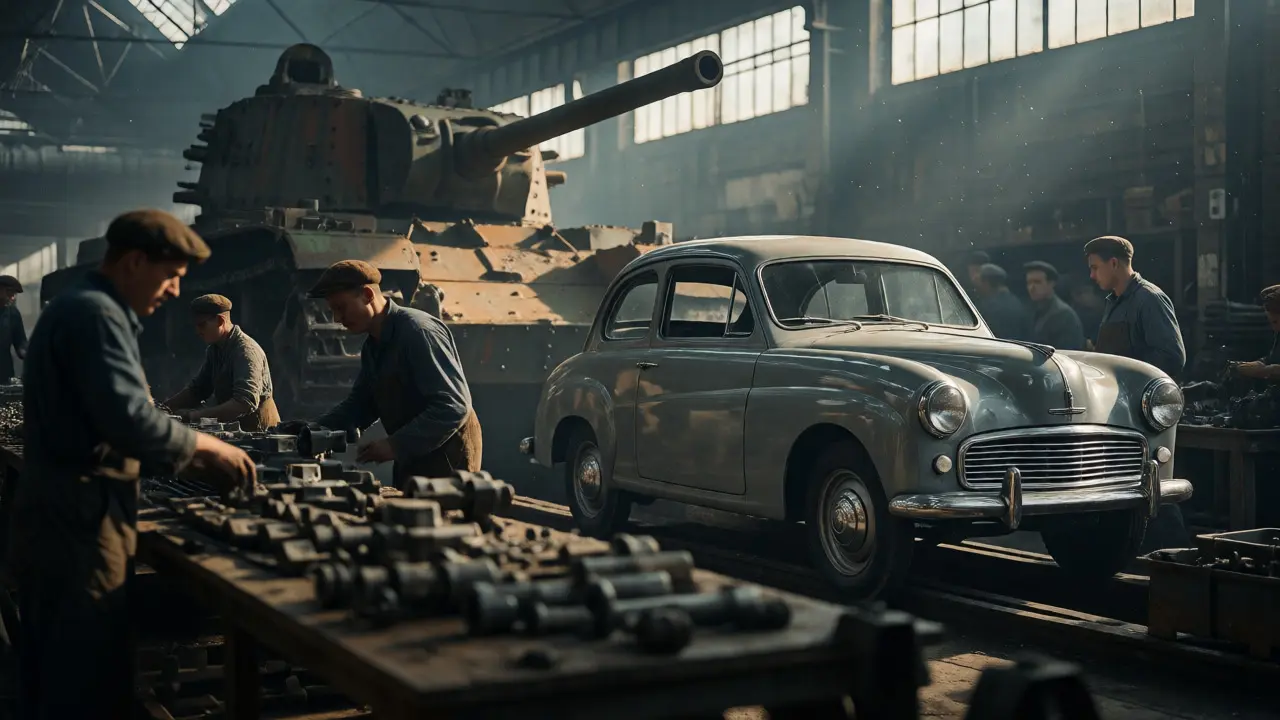
You might think the British car industry's golden age began with the launch of the Mini or the Jaguar E-Type. But the real engine behind that success wasn't just good design-it was leftover military muscle. By 1945, Britain had spent six years building tanks, aircraft engines, and trucks at a scale no civilian market had ever seen. When the guns fell silent, those factories didn't shut down. They pivoted.
This shift is one of the most overlooked chapters in industrial history. The postwar boom in UK civilian car manufacturing wasn't a miracle; it was a direct result of wartime expertise being repurposed for peacetime needs. From assembly line techniques to metallurgy breakthroughs, the lessons learned on the battlefield drove the cars you see in classic collections today.
The Industrial Pivot: From Tanks to Tourers
When World War II ended, Britain faced a paradox. There was massive industrial capacity but almost no consumer goods. Factories like Rootes Group and Standard Motor Company were geared up for war. They had skilled workers, specialized machinery, and established supply chains. But they needed a product.
The government's response was pragmatic. They prioritized export earnings over domestic consumption. Why? Because the US dollar was king, and Britain needed it to pay off war debts. So, manufacturers were encouraged to build cars for overseas markets first. This constraint forced innovation. Engineers had to make cars that were robust enough for rough roads abroad but cheap enough to compete with American giants.
Wartime experience gave them a head start. Building a Spitfire required precision engineering and rapid production rates. Translating that to a Triumph Mayflower or a Austin A40 meant applying rigorous quality control standards to mass-produced vehicles. It wasn't perfect-early postwar cars were often quirky-but the foundation was solid.
Assembly Line Techniques: The Hidden Legacy
American mass production methods, particularly the Fordist model, influenced global manufacturing. But during the war, British factories adapted these ideas under extreme pressure. They couldn't afford downtime. If a tank assembly line stopped, lives were at risk. This urgency led to streamlined workflows that later benefited civilian car production.
Consider Morris Motors. Before the war, their plants were traditional. During the conflict, they expanded rapidly, adopting modular construction techniques used in aircraft manufacturing. After 1945, this modularity allowed them to produce the Morris Minor efficiently. The Minor wasn't just a car; it was a testament to how wartime efficiency could be scaled down for family sedans.
Here’s how the transition worked in practice:
- Standardization: Military parts had to be interchangeable. Postwar cars adopted similar standards, making repairs easier and cheaper.
- Labor Training: Women who entered factories during the war brought new skills. Many stayed on, bringing discipline and attention to detail to assembly lines.
- Supply Chain Resilience: Wartime shortages taught managers to diversify suppliers. This reduced vulnerability to raw material price spikes in the late 1940s.
These weren't abstract concepts. They were hard-won lessons. A factory manager who had kept a tank plant running despite bomb raids knew exactly how to keep a car plant running during a coal strike.
Materials Science: Steel, Aluminum, and Innovation
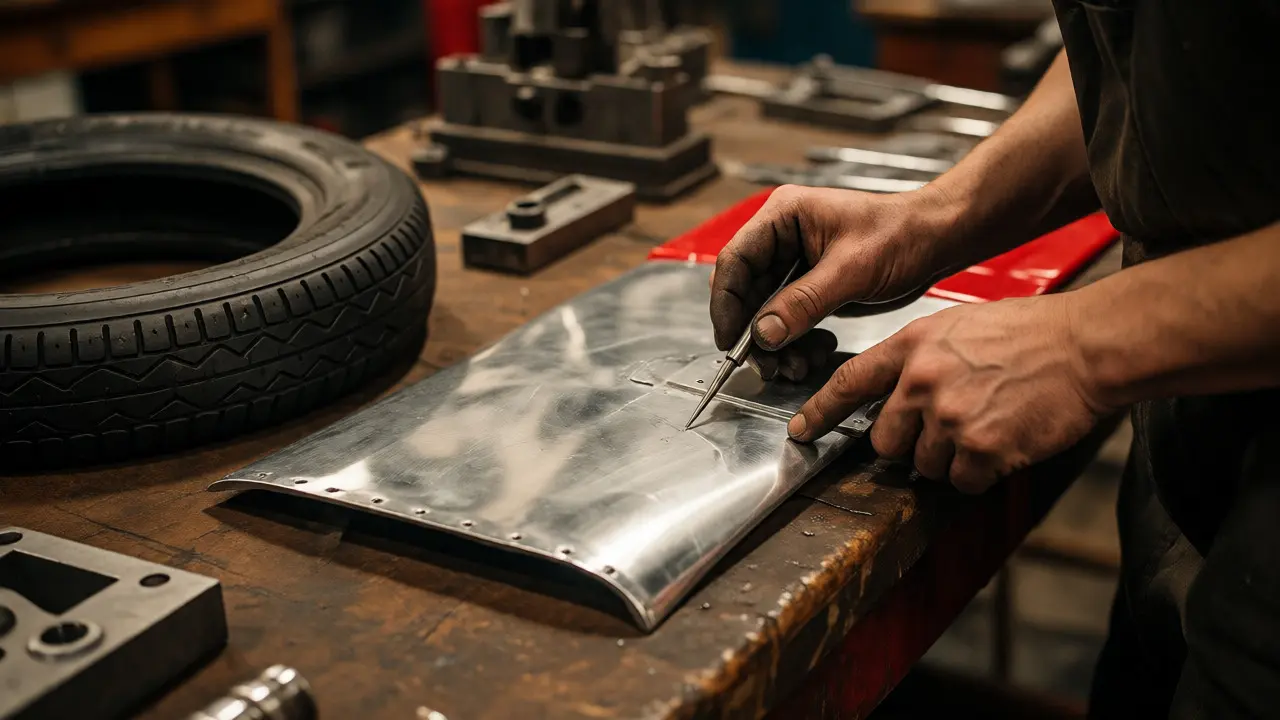
War drives material science. You need lighter aircraft, stronger armor, and more durable tires. These demands pushed research forward. After 1945, this knowledge flowed into civilian products.
Take aluminum. During the war, it was critical for aircraft bodies. Postwar, companies like Alvis experimented with lightweight alloys for car bodies. While steel remained dominant due to cost, the expertise in working with alternative materials gave British makers an edge in niche markets.
Another area was rubber. Synthetic rubber production surged during the war because natural rubber supplies from Asia were cut off by Japan. By 1945, Britain had developed reliable synthetic alternatives. This technology directly improved tire durability and availability for civilian cars, which was crucial when imports were restricted.
| Wartime Technology | Civilian Application | Impact on Industry |
|---|---|---|
| Aircraft Engine Cooling | Car Radiator Design | Improved reliability in hot climates |
| Tank Armor Metallurgy | Chassis Strength | Lighter yet stronger frames |
| Synthetic Rubber | Tire Production | Reduced import dependency |
| Mass Production Jigs | Body Panel Stamping | Faster assembly times |
The Export Imperative: Quality Over Quantity
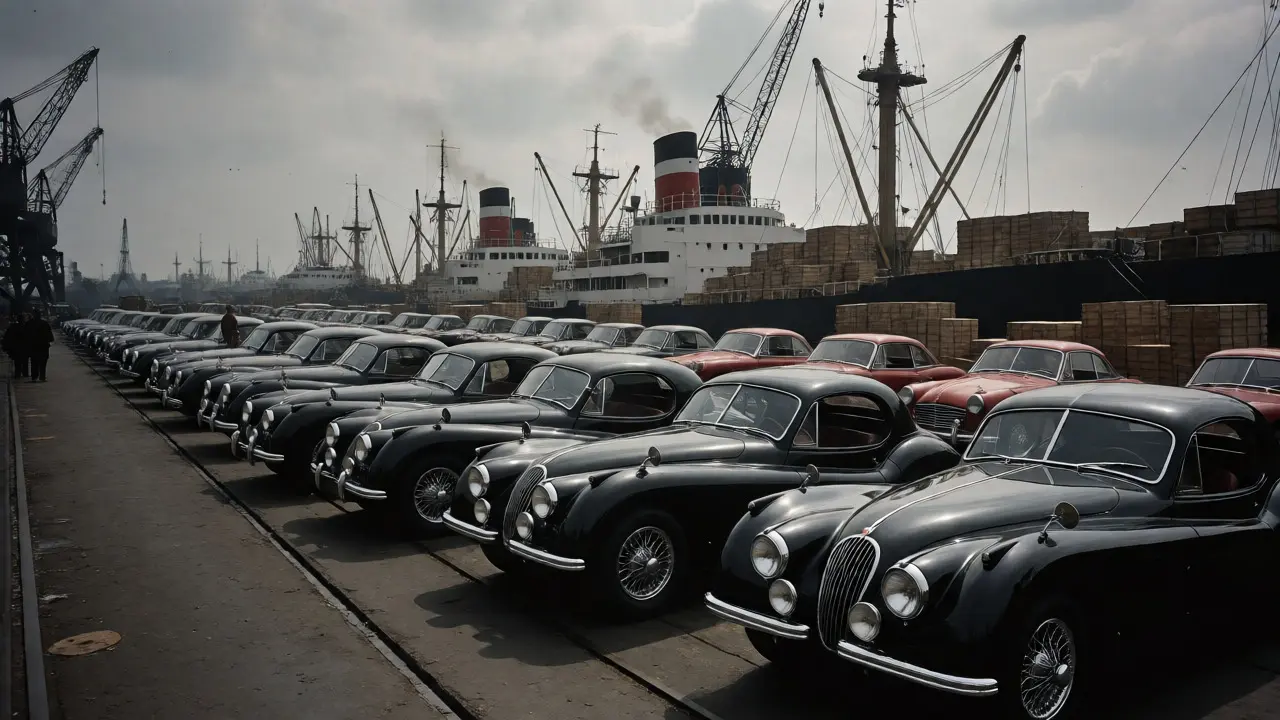
Because domestic sales were rationed until 1950, British manufacturers focused on exports. This was a double-edged sword. On one hand, it limited local access to new cars. On the other, it forced high quality. Foreign buyers, especially in the Commonwealth and Europe, expected value for money.
Companies like Jaguar leveraged their racing heritage and wartime engineering prowess to capture the premium market. The XK120, launched in 1948, showcased what happened when sports car passion met industrial capability. It wasn't just fast; it was built to last, using techniques refined during aircraft engine production.
Meanwhile, volume makers like BMC (British Motor Corporation) targeted the mid-market. Their strategy relied on economies of scale achieved through shared platforms-a concept born out of wartime resource pooling. Sharing components across brands like Austin and Morris reduced costs without sacrificing perceived quality.
Workforce Transformation: Skills That Lasted
You can't separate the machines from the people. The workforce that built Spitfires and Churchill tanks was highly trained. When peace came, many of these workers moved to car plants. They brought with them a culture of precision and problem-solving.
This human capital was invaluable. In an era before computers controlled robots, skilled hands made the difference. A worker who had calibrated artillery sights could spot a misaligned door hinge instantly. This attention to detail helped British cars maintain a reputation for craftsmanship, even as competitors like Germany rebuilt their industries from scratch.
Moreover, the social dynamics changed. Unions became powerful advocates for better conditions, leading to more stable labor relations in the auto sector. This stability attracted investment, further boosting production capabilities throughout the 1950s.
Legacy and Lessons
By the mid-1950s, the initial surge of postwar adaptation had settled into steady growth. The UK was exporting millions of cars annually. Much of this success traced back to the infrastructure and know-how established between 1939 and 1945.
It's worth remembering that not all transitions were smooth. Some companies struggled to adapt, clinging to outdated designs while others innovated aggressively. But overall, the ability to pivot from war to peace defined the era. It showed that industrial resilience isn't just about having big factories; it's about flexible minds and adaptable systems.
Today, as we face our own industrial challenges, the story of postwar British car manufacturing offers a blueprint. It proves that crisis-driven innovation, if properly channeled, can create lasting economic benefits. The cars may be old, but the principles remain relevant.
Why did the UK prioritize car exports after WWII?
The UK needed foreign currency, specifically US dollars, to repay Lend-Lease debts and buy essential imports like food and fuel. Domestic car sales were also rationed to conserve materials, so manufacturers turned to international markets to generate revenue.
Which British car companies benefited most from wartime expertise?
Companies like Rootes, Standard, Morris, and Jaguar benefited significantly. They utilized existing factory layouts, skilled workforces, and advanced engineering techniques developed during the production of aircraft, tanks, and trucks.
Did women play a role in postwar car manufacturing?
Yes, many women who worked in munitions and aircraft factories during the war stayed in the industrial workforce. They contributed to assembly lines and quality control, bringing valuable skills and helping maintain production levels during the transition to peace.
How did rationing affect early postwar car ownership?
Rationing lasted until 1950, meaning new cars were scarce and expensive for ordinary Britons. Most new vehicles were exported, leaving the domestic market reliant on older pre-war models or second-hand purchases, which delayed the widespread adoption of new designs.
What specific technologies transferred from war to cars?
Key transfers included synthetic rubber for tires, advanced metallurgy for stronger chassis, precision machining techniques from aircraft engines, and efficient assembly line methods derived from tank production.