How UK Studios Shape Global Car Design
 Nov, 28 2026
You might think that when a Chinese company buys a British brand, or an American giant swallows up a European nameplate, the soul of the car goes with it. That’s a common misconception. In reality, some of the most distinctive vehicles on the road today-whether they wear a MG, Jaguar, or Mini badge-are still being sketched, modeled, and refined in the UK. The ownership might be foreign, but the design DNA remains stubbornly, brilliantly British.
This isn’t just about nostalgia. It’s about a specific kind of creative power. UK design studios have become the invisible engine behind many globally owned marques. They don’t just make cars look pretty; they translate complex engineering constraints into emotional experiences. If you’ve ever wondered why a Lotus feels so different from a Tesla, even if both are electric, part of the answer lies in who held the pen first.
The Paradox of Foreign Owners and Local Hands
It sounds counterintuitive. Why would a multinational corporation keep its design headquarters in London or Coventry instead of moving it to Shanghai, Detroit, or Munich? Cost is rarely the primary driver here. Talent is. The UK has a dense ecosystem of industrial designers, clay modelers, and interface specialists that simply doesn’t exist elsewhere at this scale.
Take JLR (Jaguar Land Rover). Owned by India’s Tata Motors since 2008, the group retains its design nerve center in Gaydon, Warwickshire. The decision wasn’t sentimental. It was strategic. Moving that talent pool would have meant losing decades of accumulated knowledge about how to balance luxury with ruggedness-a specific British specialty.
Similarly, MG Motor is now wholly owned by China’s SAIC Group. Yet, the design studio for MG remains in London. Why? Because SAIC knows that if they want their cars to appeal to European and global buyers, they need a design language that speaks to those markets. A team based in Shanghai might miss the subtle cues that resonate in Paris or Berlin. By keeping the studio in the UK, they buy authenticity.
What Makes British Design Distinct?
So, what exactly are these studios bringing to the table? It’s not just about union jacks or tea breaks. There’s a tangible methodology at play.
- Narrative First: British designers often start with a story before they draw a line. Is the car a rebellious outsider? A dignified elder statesman? This narrative approach creates stronger emotional connections than purely data-driven design.
- Proportion Over Decoration: There’s a cultural preference for getting the silhouette right. Think of the Aston Martin DB11. Its beauty comes from long hoods and short overhangs, not from added chrome strips.
- Human-Centric Interfaces: With companies like Apple and Dyson also rooted in the region, there’s a cross-pollination of ideas. Automotive interiors in the UK are increasingly borrowing from consumer electronics’ focus on intuitive touch and minimalism.
This approach contrasts sharply with other global hubs. German design tends to prioritize technical precision and visibility of engineering. Italian design often leans toward artistic flair and bold shapes. British design sits in a unique middle ground: it’s pragmatic enough for daily use but expressive enough to stand out.
The Role of Independent Studios
Not all UK design happens inside big OEM walls. Independent consultancies play a huge role in shaping globally owned brands. Firms like Peter Stevens (formerly associated with Lotus) or smaller boutique agencies often take on projects for clients who lack in-house capacity or want an outside perspective.
These studios offer agility. When a new EV startup needs a concept car in six months, they can’t wait for a large corporation’s bureaucratic process. They hire a London-based firm that can deliver a full-scale mockup quickly. This speed-to-market advantage keeps the UK relevant even as traditional manufacturing moves offshore.
| Region | Primary Focus | Typical Output | Key Strength |
|---|---|---|---|
| United Kingdom | Narrative & Proportion | Emotional, distinct silhouettes | Brand storytelling |
| Germany | Engineering & Precision | Functional, high-quality execution | Technical reliability |
| Italy | Artistry & Emotion | Bold, sculptural forms | Visual impact |
| Japan | Efficiency & Harmony | Clean, minimalist interiors | User experience |

Challenges in a Shifting Landscape
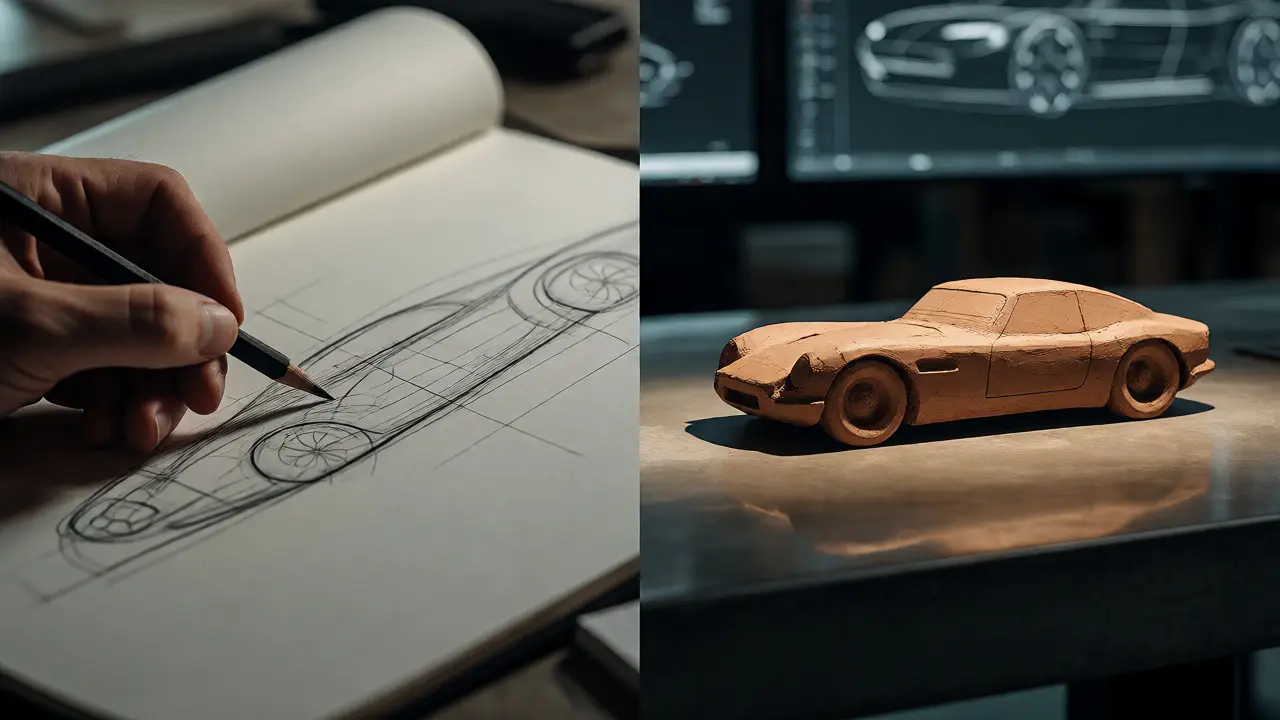
It’s not all smooth sailing. Brexit complicated things. Suddenly, hiring a talented designer from France or Spain became harder due to visa rules. Supply chains for materials like leather and wood were disrupted. But the industry adapted. Many studios went hybrid, allowing remote collaboration while keeping key physical processes-like clay modeling-in the UK.
Another challenge is the rise of software-defined vehicles. As cars become more like computers on wheels, the importance of hardware aesthetics might fade. However, early evidence suggests the opposite. In a sea of identical-looking EVs, physical design becomes the main differentiator. You can’t “download” a better shape. So, the demand for skilled form-makers hasn’t dropped; it’s arguably increased.
Why This Matters for Buyers
If you’re shopping for a car, understanding this dynamic helps you spot quality. A vehicle designed in the UK often has a certain coherence. The exterior flows into the interior. The controls feel placed by someone who cared about ergonomics, not just cost-cutting.
Check the press kit. If it mentions a design studio in London, Coventry, or Birmingham, that’s a good sign. It means the brand invested in local expertise. For example, the Vauxhall Astra (owned by Stellantis) saw a design refresh led by teams influenced by British styling principles, resulting in sharper lines compared to previous generations.
Ultimately, global ownership changes where the money goes, but not necessarily where the creativity lives. The UK’s ability to export design talent ensures that even if a brand is Chinese, Indian, or American-owned, it can still carry a piece of British ingenuity. That’s a value proposition worth noticing next time you’re in the showroom.
Do UK design studios only work for British brands?
No. Major international automakers frequently commission UK studios for specific models or concept cars. The reputation for creative excellence attracts global clients seeking a fresh perspective or specialized expertise in areas like interior architecture or sustainable materials.
Has Brexit affected the automotive design industry in the UK?
Yes, initially. It created friction in hiring EU nationals and moving physical prototypes across borders. However, the industry has largely adapted through digital workflows and revised immigration schemes for skilled workers, maintaining the UK’s status as a design hub.
Why do foreign owners keep design teams in the UK?
Primarily to access the deep talent pool and preserve brand identity. Designing for Western markets requires an understanding of local tastes, regulations, and cultural nuances. Keeping teams in the UK helps foreign owners maintain authenticity and appeal to their target customers.
Is computer-aided design replacing human designers in the UK?
It’s augmenting them, not replacing them. AI tools help generate variations and optimize aerodynamics, but the final aesthetic judgment, emotional resonance, and brand alignment still require human intuition. UK studios are leading the way in integrating these tools effectively.
Which UK cities are known for automotive design?
London is the biggest hub, home to JLR’s advanced design center and many independent studios. Coventry and the Midlands remain crucial due to their proximity to manufacturing plants and historic ties to companies like Jaguar and Aston Martin. Brighton also hosts several niche mobility design firms.