How UK Income Policy Shaped Car Choices in the 1950s
 Nov, 13 2026
Imagine you are a skilled factory worker in Birmingham in 1954. You have a steady job, a growing family, and a sudden itch to buy your first new car. But when you walk into the showroom, the salesperson doesn’t just ask what color you want. He asks about your salary bracket, your credit history, and whether you can prove you won’t spend too much on petrol. This wasn’t just sales talk; it was government policy. In Post-War Britain, the state didn’t just regulate traffic-it regulated who could afford to drive.
The story of the British car industry in the 1950s is often told through the lens of engineering triumphs like the Mini or the Jaguar E-Type. But for the average buyer, the real story was one of scarcity, rationing, and strict economic controls. The government’s Income Policy and broader monetary restrictions directly dictated which vehicles hit the market and, more importantly, which ones actually reached the customer’s driveway. If you think buying a used Honda Civic today is stressful, try navigating the Purchase Tax hurdles of 1952.
The Shadow of Rationing and Production Limits
To understand why the 1950s car market looked the way it did, you have to look at the immediate aftermath of World War II. By 1945, Britain’s manufacturing base was exhausted. Factories that had built Spitfires and Lancaster bombers needed to pivot back to civilian goods, but raw materials were scarce. Steel, rubber, and aluminum were all controlled by the Ministry of Supply. The government implemented a system where manufacturers couldn’t just build what they wanted; they had to meet export targets before selling domestically.
This created a bizarre paradox. British cars were world-class exports, earning precious dollars for the struggling economy. So, if you were a British citizen wanting a new Austin A30, you weren’t just waiting for production capacity-you were waiting for the government to decide that enough cars had been shipped to America or Australia to justify building one for you. For many families, this meant keeping their pre-war vehicles running for decades longer than intended. It wasn’t nostalgia; it was necessity.
Purchase Tax: The Invisible Hand That Slapped Buyers
If rationing limited supply, Purchase Tax crushed demand. Introduced during the war and kept in place throughout the 1950s, this tax was levied on the retail price of new goods. For cars, the rate fluctuated wildly, often sitting between 33% and 67%. Yes, sixty-seven percent. Imagine paying $10,000 for a car only to be charged another $6,700 in tax before you drove it home.
This policy had a profound effect on vehicle design. Manufacturers couldn’t just make bigger, more luxurious cars because the tax would push them out of reach for the middle class. Instead, they engineered compact, efficient vehicles that maximized utility while minimizing cost. This era birthed the "people’s car" concept in the UK, long before the Volkswagen Beetle became a global icon. The Morris Minor, launched in 1948, was a direct response to these constraints. Its simple, boxy shape wasn’t just an aesthetic choice; it was a calculation to keep the taxable value low while providing four doors and decent trunk space.
| Policy Mechanism | Direct Impact on Buyer | Resulting Vehicle Trend |
|---|---|---|
| Purchase Tax (up to 67%) | Massively inflated sticker prices, limiting buyers to lower brackets. | Small, utilitarian saloons (e.g., Austin A40 Farina). |
| Export-First Quotas | Long waiting lists for domestic buyers (often 1-2 years). | High retention of older, pre-war models. |
| Credit Restrictions | Limited access to hire-purchase loans for working-class buyers. | Rise of second-hand markets and kit cars. |
| Fuel Rationing (ended 1950) | Uncertainty about running costs delayed purchases early in the decade. | Preference for fuel-efficient engines over large V8s. |
The Rise of the Microcar and Kit Car Culture
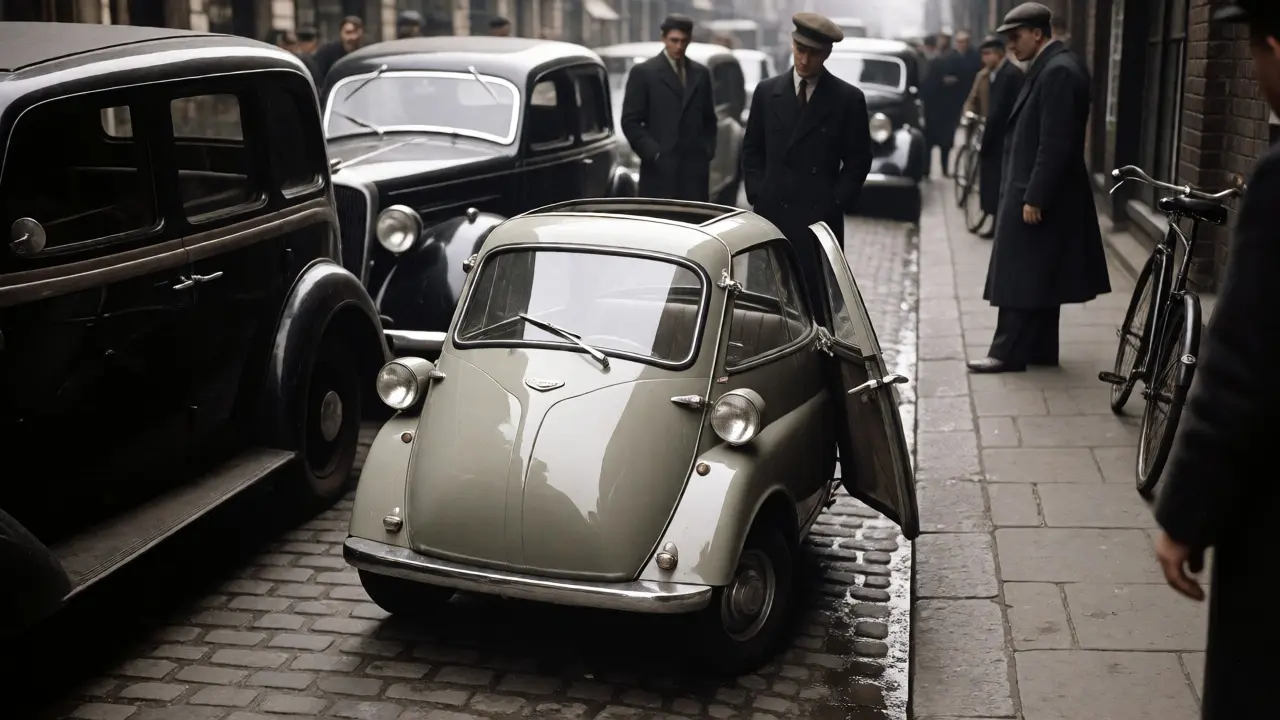
When the mainstream market becomes too expensive due to taxes, innovation moves to the fringes. The 1950s saw an explosion of microcars in Britain. Vehicles like the Isetta and the Bubble Car (officially the Messerschmitt KR200) filled the gap for those who couldn’t afford a full-sized saloon. These three-wheeled wonders were technically motorcycles in some legal classifications, allowing them to dodge certain taxes and insurance requirements.
Simultaneously, the kit car movement took off. Enthusiasts bought chassis and body kits from companies like Lotus or AC Cars and assembled them themselves. Why? Because if you built it yourself, you avoided the manufacturer’s profit margin and, crucially, the full weight of the Purchase Tax applied to finished goods. It was a loophole born of desperation. A young mechanic with a spare garage could own a sports car that looked like a Ferrari but cost a fraction of the price, provided he had the patience to bolt the panels together himself.
Hire-Purchase and the Middle-Class Dream
By the mid-1950s, things began to loosen. The Conservative government under Harold Macmillan famously declared that most people had never had it so good. This optimism coincided with changes in banking regulations that made hire-purchase (installment buying) more accessible. Before this, banks viewed lending money for consumer durables as risky. But as inflation stabilized and wages rose, finance houses began competing aggressively for customers.
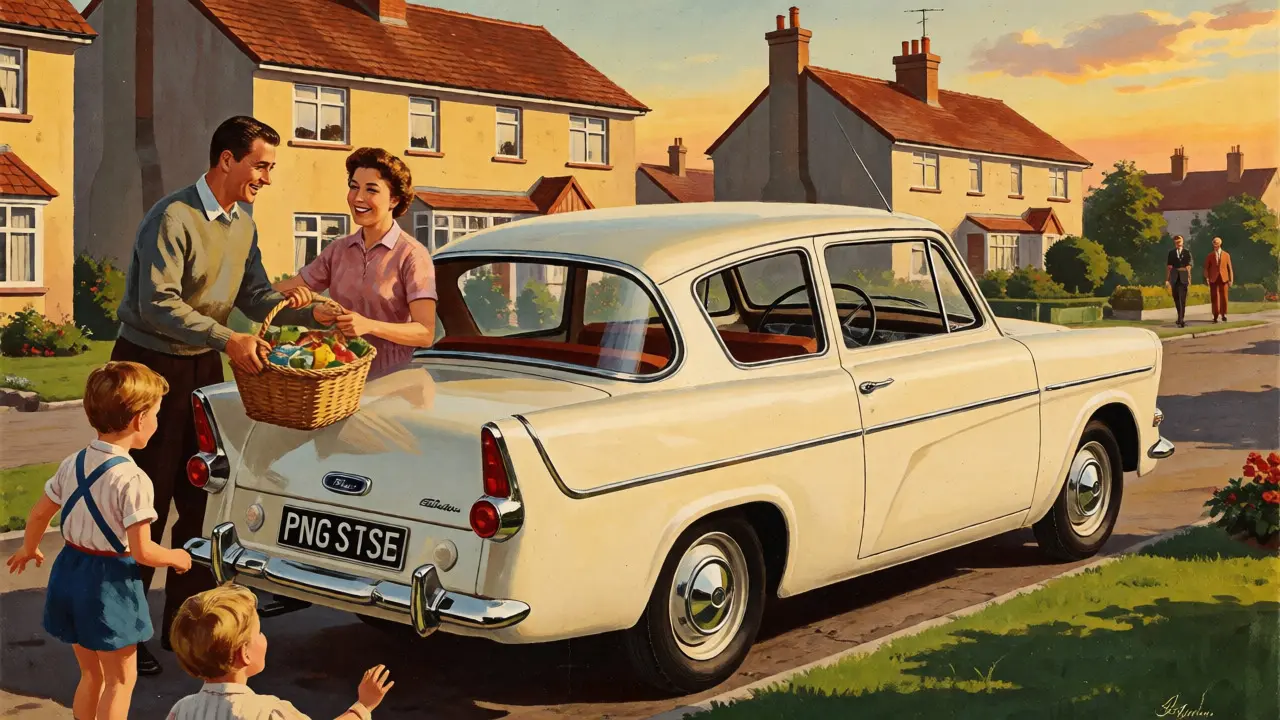
This shift changed the face of the British road. Suddenly, families who previously walked or took buses could afford a monthly payment on a new Ford Anglia. Salesmen started offering "trade-in" deals, encouraging owners to swap their old, reliable Morris Minors for the latest model. The culture of ownership shifted from "buy once and keep forever" to "upgrade every few years." This was the beginning of the modern automotive consumer cycle, fueled not just by desire, but by financial products designed to overcome the high upfront costs imposed by tax.
Regional Disparities and the North-South Divide
It’s important to note that this experience wasn’t uniform across the UK. In industrial hubs like Coventry and Oxford, where car manufacturing jobs were plentiful, workers often had company discounts or priority access to new stock. A Ford employee might get a discount on an Anglia, making the tax burden slightly more palatable. Meanwhile, in rural Wales or Scotland, where public transport was sparse and incomes lower, the car remained a luxury item well into the 1960s.
Furthermore, the availability of specific models varied. London drivers faced congestion charges (in the form of parking fees and fines) and narrow streets, favoring smaller cars. In contrast, farmers in East Anglia needed robust vehicles capable of handling rough terrain, leading to higher adoption rates of Land Rovers and other utility vehicles. The "average" UK car buyer of the 1950s didn’t exist; there were dozens of distinct markets shaped by local economics and infrastructure.
Legacy of the 1950s Constraints
The policies of the 1950s left a lasting mark on British automotive identity. They fostered a culture of practicality over prestige. While Americans were buying tail-finned Cadillacs, Britons were proud of their economical, repairable Fords and Austins. This mindset persisted even after Purchase Tax was eventually replaced by VAT in 1973. The British preference for small, efficient cars-culminating in the global success of the Mini in 1959-was rooted in the economic pressures of the previous decade.
Today, when we debate electric vehicle incentives or congestion zones, we’re having the same conversation our grandparents had. The tools have changed, but the core question remains: how do we balance individual mobility with national economic goals? The 1950s proved that policy doesn’t just influence car choices; it defines them.
What was Purchase Tax in the UK?
Purchase Tax was a consumption tax introduced in the UK during World War II and maintained through the 1950s. It was levied on the retail price of new goods, including cars, with rates often exceeding 30%, significantly increasing the cost of vehicle ownership for ordinary citizens.
Why were there waiting lists for new cars in the 1950s?
Waiting lists existed primarily because the UK government prioritized car exports to earn foreign currency. Manufacturers were required to meet export quotas before selling units domestically, creating artificial scarcity for British buyers despite high demand.
Did everyone in 1950s Britain own a car?
No. Car ownership was still a privilege of the middle and upper classes. Many working-class families relied on public transport, bicycles, or older pre-war vehicles. High taxes and limited credit access kept ownership rates lower than in contemporary America.
What role did microcars play in the 1950s market?
Microcars like the Isetta offered an affordable alternative to full-sized saloons. Their small size and lower engine capacity helped buyers avoid higher tax brackets and insurance premiums, making personal mobility accessible to those priced out of the standard market.
How did hire-purchase change car buying?
Hire-purchase allowed buyers to pay for cars in installments rather than lump sums. As banking regulations relaxed in the mid-1950s, this financing method expanded the pool of potential buyers, accelerating the transition from car ownership as a luxury to a middle-class norm.