How Pre-War Mergers Created the British Motor Corporation Giants
 Apr, 9 2026
The Survival Instinct of the Interwar Era
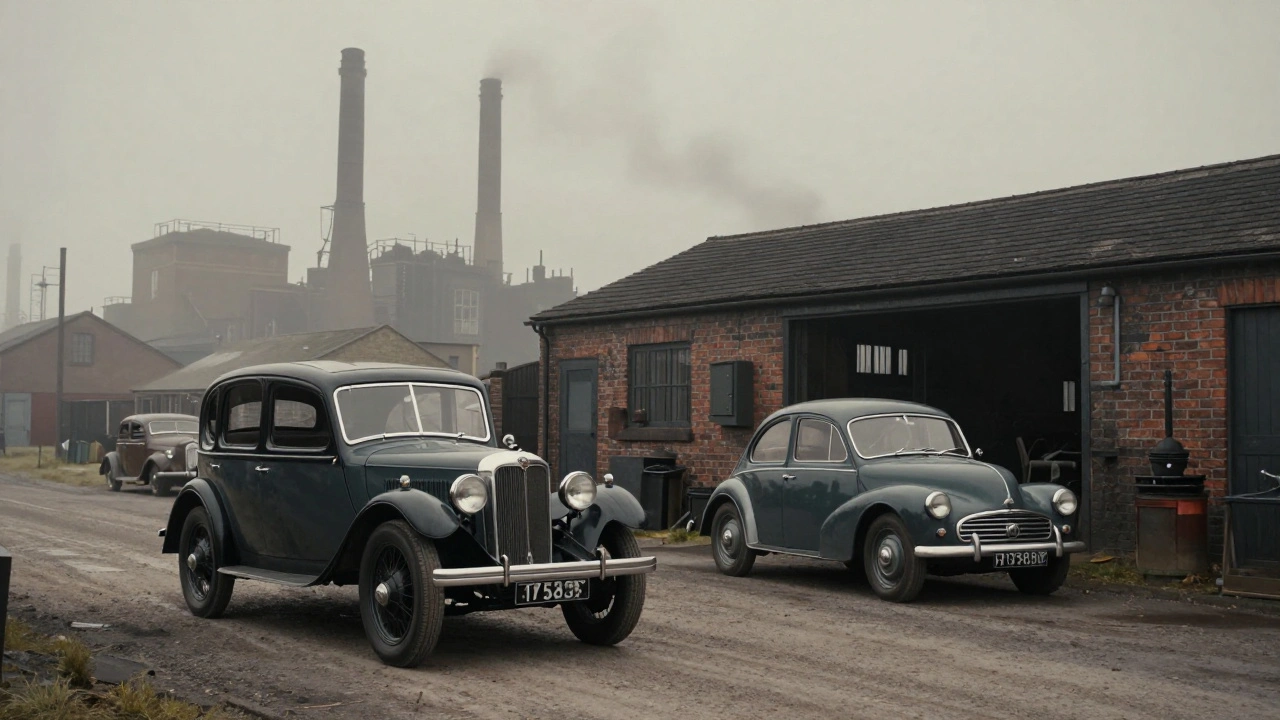
During the Interwar period, the UK car market looked like a chaotic patchwork. You had dozens of manufacturers, from tiny boutique shops to mid-sized firms, all fighting for a middle class that was barely growing. While Henry Ford was perfecting the assembly line in Michigan, British firms were still largely obsessed with craft. But by the mid-1930s, the math stopped adding up. The cost of developing new engines and chassis was skyrocketing, and no single medium-sized firm could afford the R&D on its own. This created a climate of "defensive mergers." Companies weren't merging because they wanted to conquer the world; they were merging so they wouldn't go bankrupt. This is where we see the early seeds of what would become BMC. The industry shifted from a focus on individual brand prestige to a focus on shared platforms-though they didn't call them that back then. They called it "rationalization."The Austin and Morris Rivalry
To understand the roots of the BMC giant, you have to look at two men: Herbert Austin and William Morris. Austin Motor Company and Morris Motors were the titans of the era, but they spent decades trying to out-maneuver each other. Austin focused on engineering excellence and a slightly more upscale feel, while Morris was the master of the budget-friendly, mass-market vehicle. Despite their rivalry, both companies realized that the American model of vertical integration was the only way to survive. Morris, in particular, began buying up smaller suppliers. By the time the 1930s hit their stride, Morris wasn't just selling cars; he was controlling the steel and the rubber. This move toward controlling the entire supply chain mirrored the strategies that would later define the BMC era. When these two giants eventually shook hands in 1952, they weren't merging two companies; they were merging two massive industrial ecosystems that had been preparing for this collision for twenty years.The Role of the Lean Years
Between 1929 and 1939, the Great Depression acted as a filter. Only the firms with enough capital or the right partnerships survived. This era saw the rise of the Morris Garages network, which gave Morris a distribution advantage that Austin simply couldn't match. This distribution network became a key asset during the post-war expansion. Meanwhile, smaller players like Riley and Wolseley were being absorbed. These weren't just additions to a portfolio; they were strategic acquisitions of "brand equity." By folding Wolseley into the Morris umbrella, Morris could suddenly sell to the wealthy upper-middle class without having to build a luxury brand from scratch. This "badge engineering"-putting a different logo on a similar chassis-became the hallmark of the post-war BMC strategy, but the practice was perfected in the late 30s.| Attribute | Austin Motor Company | Morris Motors |
|---|---|---|
| Market Focus | Engineering/Upper-Mid | Mass Market/Budget |
| Growth Strategy | Product Refinement | Aggressive Acquisition |
| Supply Chain | Selective Outsourcing | Vertical Integration |
| Distribution | Traditional Dealerships | Expansive Garage Network |
War as a Catalyst for Integration
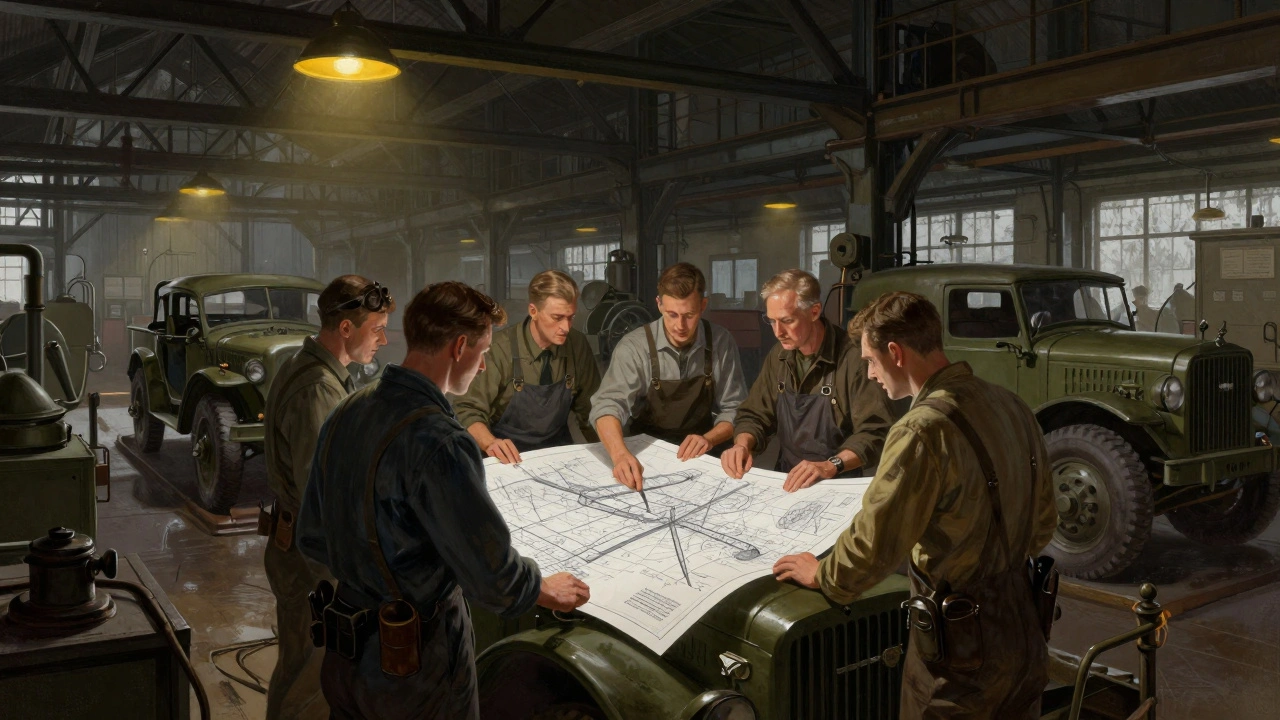
When World War II broke out, the British government essentially took over the automotive industry. The Ministry of Supply told companies what to build-aircraft parts, munitions, and military trucks. This forced an unprecedented level of cooperation. For the first time, engineers from competing firms were sharing blueprints and manufacturing techniques under government mandate. This "forced marriage" during the war years stripped away the corporate silos. By 1945, the leadership at Austin and Morris realized that the old way of fighting for every single customer was obsolete. The war had proven that they could work together to achieve massive output. The psychological barrier to merging had been broken by the necessity of the war effort. The infrastructure for BMC was built not in a boardroom, but in the wartime factories of the Midlands.The Blueprint for the 1952 Merger
By the time the British Motor Corporation was officially formed in 1952, it was less of a new invention and more of a formalization of trends that had been happening for two decades. The pre-war mergers provided the critical mass, and the wartime cooperation provided the operational logic. BMC didn't just want to be a car company; they wanted to be the General Motors of Europe. They adopted the multi-brand strategy they had practiced in the 30s, using brands like MG and Jaguar (briefly) to cover every single price point. However, the flaw was that they took the pre-war "defensive" mentality into the post-war era. Instead of innovating, they focused on protecting their turf, a habit learned during the lean years of the 1930s.
The Legacy of Pre-War Logic in a Post-War World
Why does this matter today? Because the failure of BMC in the 1960s can be traced directly back to these roots. The company was built on the logic of the 1930s-consolidation for survival-rather than the logic of the 1960s-innovation for competition. They were so focused on the industrial scale they had spent twenty years building that they missed the shift toward specialized, high-quality consumer demands. They had the factories, the distribution, and the brands, but they were operating with a mindset of "how do we survive the next dip?" rather than "how do we lead the next decade?" The pre-war mergers set up the giants, but they also baked in a level of bureaucracy and institutional inertia that eventually became impossible to overcome.What was the main reason for automotive mergers in the 1930s?
The primary driver was "rationalization." The cost of developing new technologies and the need for economies of scale made it impossible for small, independent firms to compete with the emerging mass-production techniques coming from the US.
How did World War II affect the formation of BMC?
The war forced competing companies to collaborate under the Ministry of Supply. This broke down corporate rivalries and proved that integrated production was more efficient than fragmented competition.
What is "badge engineering" in the context of British cars?
Badge engineering is the practice of selling the same basic vehicle under different brand names. BMC used this to leverage the prestige of brands like Wolseley while using the cheaper chassis and engines developed by Morris or Austin.
Who were the key figures behind the rise of the British motor industry?
Herbert Austin and William Morris were the dominant figures. Their respective companies, Austin and Morris, provided the industrial foundation and the corporate culture that eventually merged into the British Motor Corporation.
Did BMC succeed in its goal to become the GM of Europe?
Initially, yes, in terms of scale and market share. However, they failed in the long run because they prioritized industrial consolidation over product innovation, leading to a decline in quality and competitiveness by the 1960s.