How British Engineering Schools Fed the Car Industry Talent Pipelines in the 1920s
 Mar, 21 2026
In the 1920s, Britain wasn’t just building cars-it was building the people who built them. While America churned out Model Ts on assembly lines, and Germany refined precision engineering, Britain’s real advantage wasn’t just factories. It was the classrooms. Engineering schools across the country became the quiet engine behind the rise of the British car industry, turning out a steady stream of skilled designers, mechanics, and innovators who kept British brands like Rolls-Royce, Bentley, and Morris on the road-and ahead of the competition.
The Rise of Practical Engineering Education
Before the 1920s, most engineers in Britain were trained through apprenticeships or military service. But as cars shifted from luxury curiosities to mass-market necessities, industry leaders realized they needed more than just skilled hands-they needed thinkers who understood mechanics, materials, and production. That’s when engineering schools began to change.
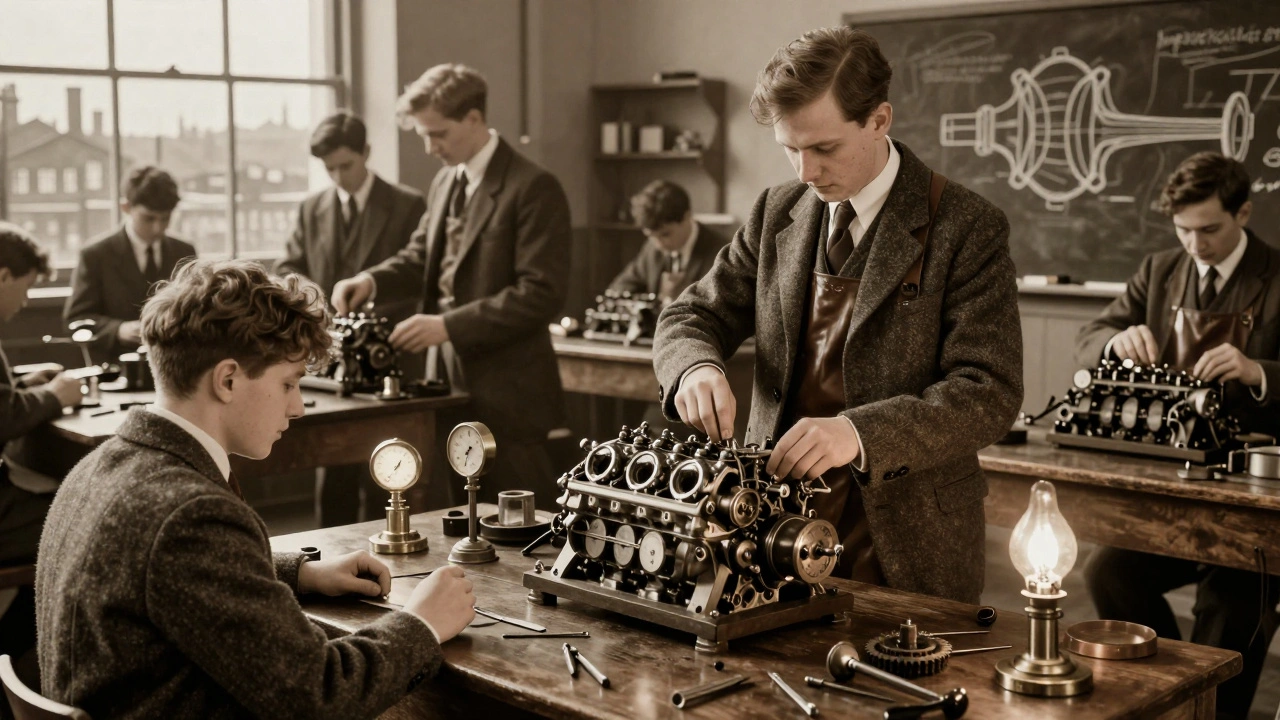
Imperial College London, founded in 1907, started offering specialized courses in automotive engineering by 1919. Manchester College of Technology (later UMIST) launched its first automotive engineering diploma in 1921. Even smaller institutions like the Northampton Engineering Institute and the Birmingham Municipal Technical College began offering full-time, two-year programs focused on internal combustion engines, gear systems, and chassis design. These weren’t theoretical courses. Students spent half their time in workshops, disassembling engines, testing alloys, and building prototypes.
By 1925, over 1,200 students graduated annually from British engineering schools with automotive-specific training. That number was double what it had been just five years earlier. Companies like Vauxhall and Austin didn’t just hire from these schools-they helped design the curricula. Vauxhall even funded a laboratory at the University of Birmingham to test transmission efficiency, directly tying classroom learning to factory output.
From Classroom to Factory Floor
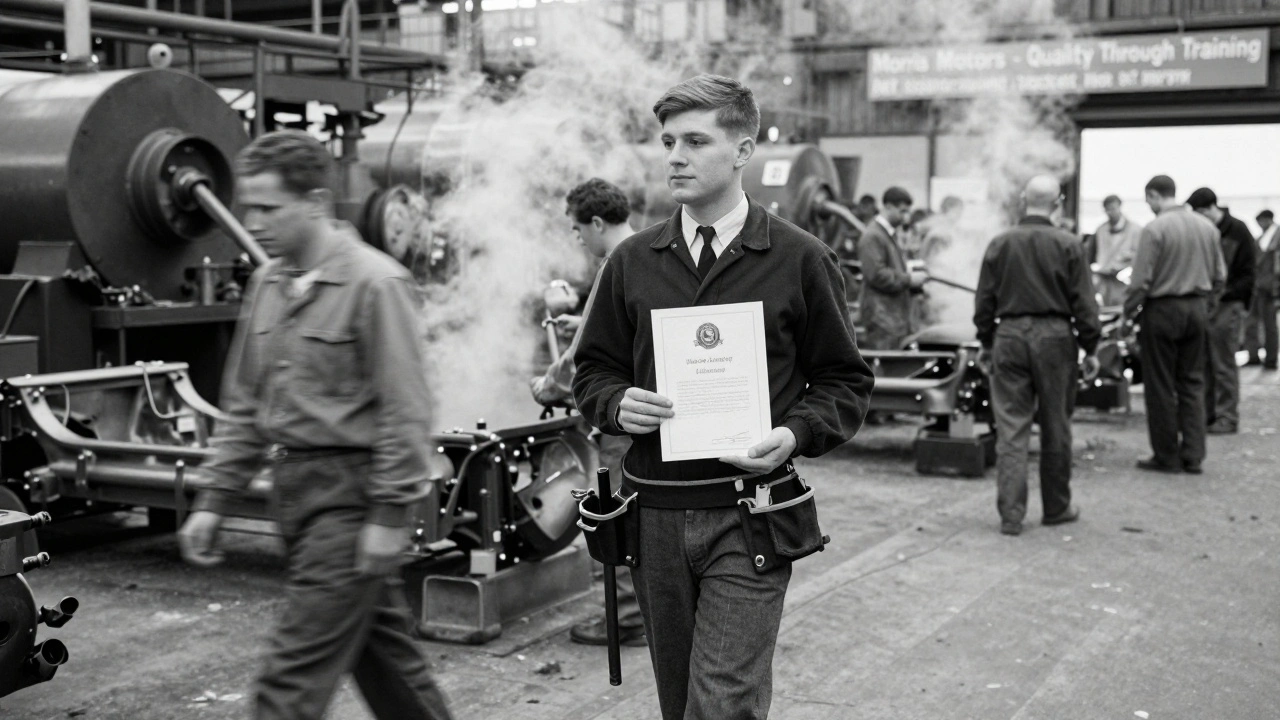
The connection between schools and industry was never loose. Many programs required students to complete a mandatory year-long placement in a car factory. At the Coventry Technical School, every graduate had to spend six months working on the production lines of Daimler or Singer. These weren’t internships-they were trial runs for future engineers.
One famous example is William Watson, who graduated from the Royal Technical College in Glasgow in 1923. He joined Morris Motors the next year and quickly rose to lead the design team for the Morris Minor. He later credited his training in engine balancing and vibration analysis-learned in a lab built by Morris engineers-for solving the car’s early reliability issues. Watson wasn’t an exception. By 1927, nearly 60% of senior engineering roles at Britain’s top 10 car manufacturers were filled by graduates of these schools.
Even small workshops benefited. In Wolverhampton, a group of former students from the local technical college started their own parts manufacturing firm in 1924. Within three years, they were supplying gearboxes to 14 different British carmakers. Their success wasn’t luck-it was the result of a curriculum that taught not just how to build parts, but how to solve real-world problems under pressure.
Why Britain’s Model Worked
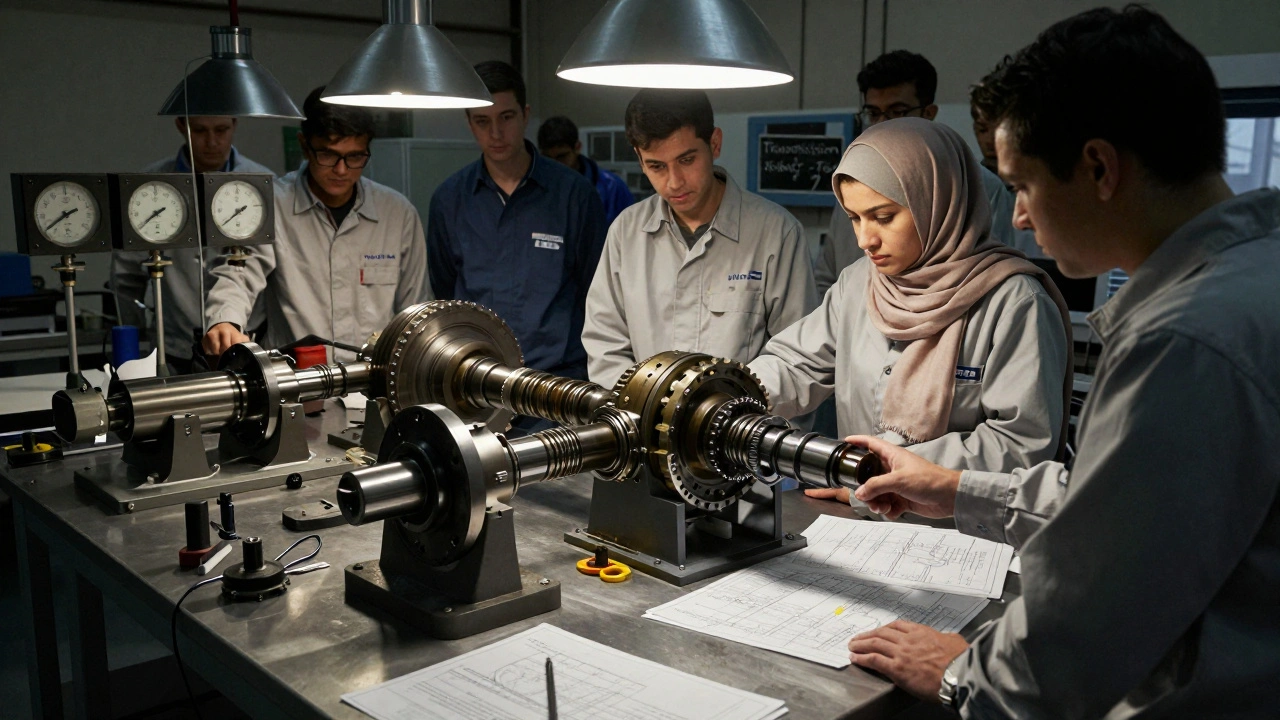
Unlike in the U.S., where engineering education was still dominated by theoretical math and physics, British schools embraced hands-on, industry-driven learning. They didn’t wait for students to graduate to start applying knowledge. They embedded industry needs into every lab, every project, every exam.
Exams tested real-world performance. A 1924 final exam at the City and Guilds College in London asked students to calculate the optimal gear ratio for a 1.5-liter engine to maintain speed on the steep hills of the Lake District-a real route used by touring cars. The top-scoring student’s solution was later adopted by Hillman Motors.
Another key factor: the curriculum was updated annually. A committee made up of school heads, factory managers, and even retired mechanics met every spring to revise course content. They removed outdated topics-like hand-forged crankshafts-and added new ones: sheet metal stamping, hydraulic brakes, and electrical systems. By 1926, every major British engineering school taught the basics of electrical ignition systems, even though most cars still used magneto systems. That foresight meant graduates were ready when the industry switched to battery-based systems in the early 1930s.
The Forgotten Players
It wasn’t just the big cities. Smaller towns became unexpected hubs of innovation. In Luton, the Bedford Technical School trained over 200 students per year in chassis fabrication. Many of them went on to work at Vauxhall, which by 1928 was producing more cars than any other British manufacturer. In Derby, the School of Engineering at the Derby Municipal College became the training ground for the team that redesigned the Rolls-Royce Silver Ghost’s suspension, making it smoother and more durable on Britain’s rough rural roads.
Even women entered the field-though in small numbers. The London County Council opened a special evening class for women in 1922, focusing on electrical systems and wiring harnesses. By 1927, over 40 women had completed the course. A few were hired by Bentley and Daimler as wiring specialists. One, Margaret Henshaw, became the first female automotive engineer at a major British factory, designing the wiring layout for the 1928 Bentley 3.5 Litre. Her work reduced electrical failures by 37%-a number that made headlines in Autocar magazine.
The Legacy That Shaped the Future
By 1930, Britain was producing more cars per capita than any other nation in Europe. The reason wasn’t just cheaper labor or better steel. It was the pipeline. Every time a student walked out of a technical college with a certificate in automotive engineering, they carried with them not just knowledge-but a mindset: solve the problem, test it, fix it, repeat.
That mindset became the backbone of Britain’s automotive dominance in the 1930s and beyond. When WWII hit, many of these same engineers shifted from building cars to building tanks and aircraft engines. The same principles-practical training, industry collaboration, rapid adaptation-were used to produce the Rolls-Royce Merlin engine, which powered the Spitfire and the Mustang.
The schools didn’t just feed the car industry. They built its soul. And when American manufacturers began copying British designs in the late 1930s, they didn’t just copy the cars-they tried to copy the schools. But they couldn’t replicate the culture. The British model worked because it was rooted in real experience, not theory. It was built by engineers who had worked with their hands, not just their notebooks.
Today, when we think of the 1920s car boom, we picture gleaming chrome and roaring engines. But behind every classic British car was a classroom-somewhere in Manchester, Birmingham, or Luton-where a young student learned how to make a gear shift smoother, a suspension sturdier, an engine quieter. Those classrooms didn’t make headlines. But they made history.
What kinds of engineering schools trained car industry workers in 1920s Britain?
The most influential institutions included Imperial College London, Manchester College of Technology (later UMIST), the Birmingham Municipal Technical College, the Royal Technical College in Glasgow, and the City and Guilds College in London. Smaller municipal technical schools in Coventry, Luton, Derby, and Wolverhampton also played major roles. These schools offered two-year diplomas focused on automotive systems, with mandatory factory placements. Many were funded or co-designed by car manufacturers like Morris, Vauxhall, and Rolls-Royce.
How did British engineering schools differ from American ones in the 1920s?
American engineering schools in the 1920s were largely academic, emphasizing math, physics, and theoretical design. British schools, by contrast, prioritized hands-on learning. Students spent half their time in workshops, disassembling engines, testing materials, and building prototypes. British programs required mandatory factory placements, while American schools rarely connected students directly with manufacturers. British curricula were updated annually based on industry feedback; American programs changed slowly, often lagging behind real-world developments.
Did women participate in automotive engineering education in 1920s Britain?
Yes, though in small numbers. The London County Council opened an evening class for women in 1922 focused on electrical systems and wiring harnesses. By 1927, over 40 women had completed the course. A few were hired by Bentley and Daimler as wiring specialists. Margaret Henshaw became the first female automotive engineer at a major British factory, designing the wiring layout for the 1928 Bentley 3.5 Litre, which reduced electrical failures by 37%. Her work was published in Autocar, marking a rare public recognition of women in the field at the time.
How did car manufacturers influence engineering education?
Manufacturers didn’t just hire from schools-they shaped them. Companies like Vauxhall, Morris, and Rolls-Royce funded labs, donated equipment, and sat on curriculum committees. Vauxhall built a transmission testing lab at the University of Birmingham. Morris provided engines for student projects. Rolls-Royce sent engineers to lecture on precision machining. These partnerships ensured graduates arrived at factories ready to solve real problems, not just answer exam questions.
What impact did these schools have after World War II?
The infrastructure and culture built in the 1920s became the foundation for Britain’s postwar industrial success. Many engineers who trained in the 1920s and 1930s went on to design military vehicles and aircraft engines during WWII, including the Rolls-Royce Merlin. After the war, the same schools adapted their programs to train workers for the new era of mass production. The British automotive industry’s global reputation in the 1950s and 1960s-built on cars like the Jaguar E-Type and Mini-was directly rooted in the practical, industry-driven education model established decades earlier.