Future Skills for British Auto Jobs: Electrification, Software, and Composites
 Apr, 6 2026
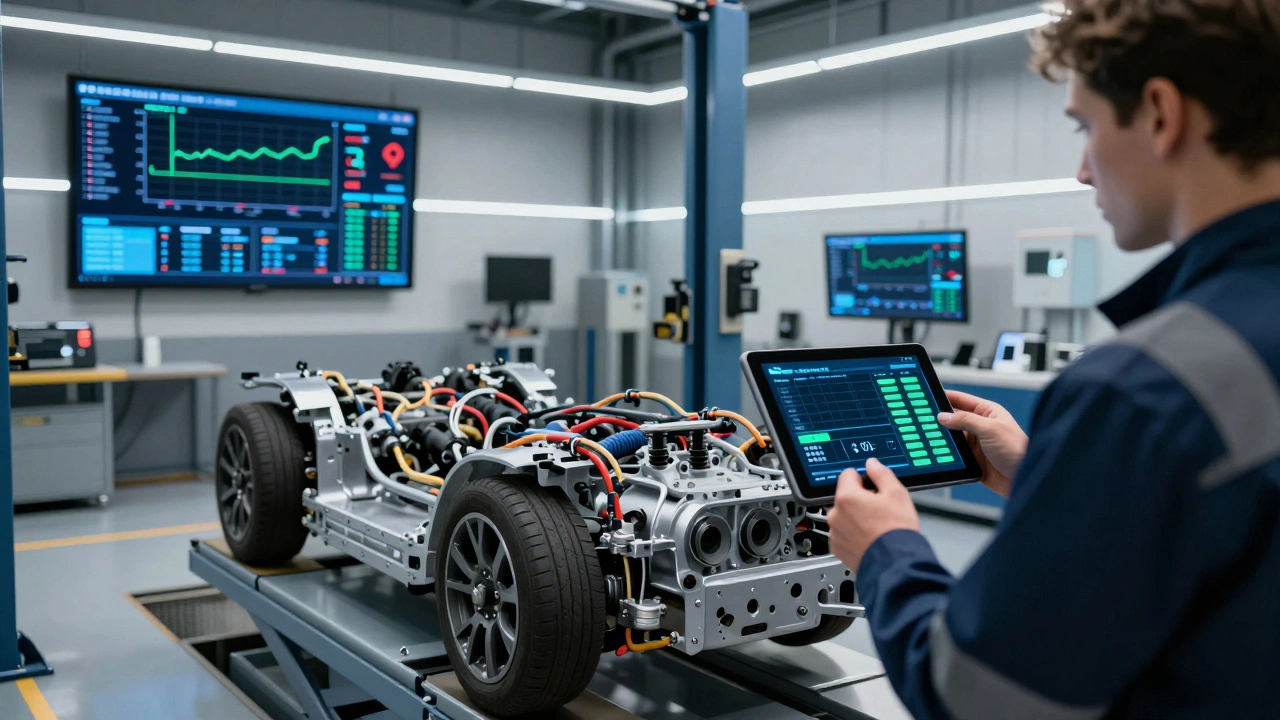
Here is a quick look at what is actually changing:
- Battery Chemistry: Moving beyond simple assembly to managing thermal runaway and energy density.
- Software-Defined Vehicles: Cars are now computers on wheels, requiring cloud integration and OTA (Over-the-Air) updates.
- Advanced Materials: Shifting from stamped steel to thermoplastic composites to drop vehicle weight.
The Electric Pivot: Beyond the Plug
When people talk about electrification, they usually just mean swapping an engine for a motor. But for a professional in the UK, it is much deeper than that. We are seeing the rise of the Electric Vehicle (EV) is a vehicle that uses one or more electric motors for propulsion, relying on rechargeable battery packs instead of internal combustion. This shift creates a massive demand for high-voltage technicians.
You can't just treat a 400V or 800V battery system like a 12V car battery. It is lethal if you get it wrong. This means the modern workforce needs certification in high-voltage safety and a deep understanding of Battery Management Systems (BMS) is an electronic system that monitors the state of a battery to ensure it operates within a safe operating area. For example, a technician at a Jaguar Land Rover plant now spends as much time analyzing cell balancing data as they do checking physical connections. If the BMS fails, the car doesn't just stop; it could become a fire hazard.
We are also seeing a move toward Solid-State Batteries is a battery technology that uses solid electrodes and a solid electrolyte, instead of the liquid or polymer gel electrolytes found in lithium-ion batteries. Once these hit mass production in the UK, the skills needed for manufacturing will shift from liquid chemical handling to thin-film deposition and vacuum processing. It is a leap from chemistry to physics.
Software is the New Chassis
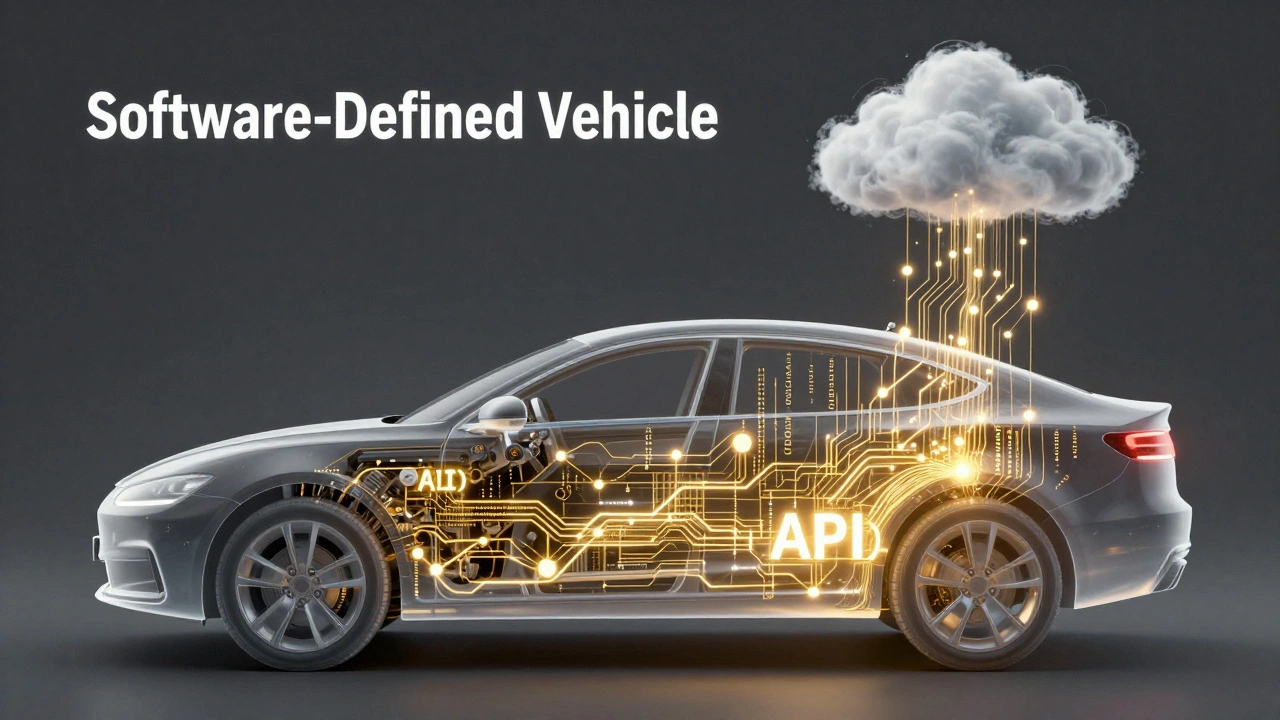
For decades, the 'soul' of a British car was its handling and engine note. Now, the soul is the code. We have entered the era of the Software-Defined Vehicle (SDV). In this world, the hardware is just a shell for the software. This means the most valuable person in the room isn't necessarily the one who can weld a frame, but the one who can write a clean API.
One of the biggest hurdles is Over-the-Air (OTA) Updates is the wireless delivery of new software, firmware, or configuration updates to vehicles, allowing manufacturers to fix bugs or add features without a physical recall. Think about it: a car can get a performance boost or a new safety feature while it sits in a driveway in Birmingham. To make this work, engineers need to be proficient in C++ is a general-purpose programming language used extensively in automotive systems for its high performance and hardware-level control and Python is a versatile language used in the UK auto sector for data analysis, AI prototyping, and testing automation.
But it's not just about coding. It's about Cybersecurity is the practice of protecting vehicle networks and data from unauthorized access and malicious attacks. When a car is connected to the cloud, it is an endpoint on a network. If a hacker can access the braking system via the infotainment screen, the company is finished. This is why we are seeing a surge in jobs for security architects who understand CAN bus protocols and encrypted gateways.
| Traditional Role | Future Equivalent | Core Skill Required | Tooling/Tech |
|---|---|---|---|
| Engine Mechanic | EV Powertrain Specialist | High-Voltage Safety | Insulated Tools, Oscilloscopes |
| ECU Tuner | Embedded Software Engineer | Real-time OS (RTOS) | C++, Linux, Adaptive AUTOSAR |
| Body Shop Tech | Composites Technician | Polymer Chemistry | Autoclaves, Resin Transfer Molding |
| Quality Inspector | Data Analyst / ML Engineer | Predictive Modeling | TensorFlow, PyTorch |
The Lightweight Revolution: Composites and Polymers
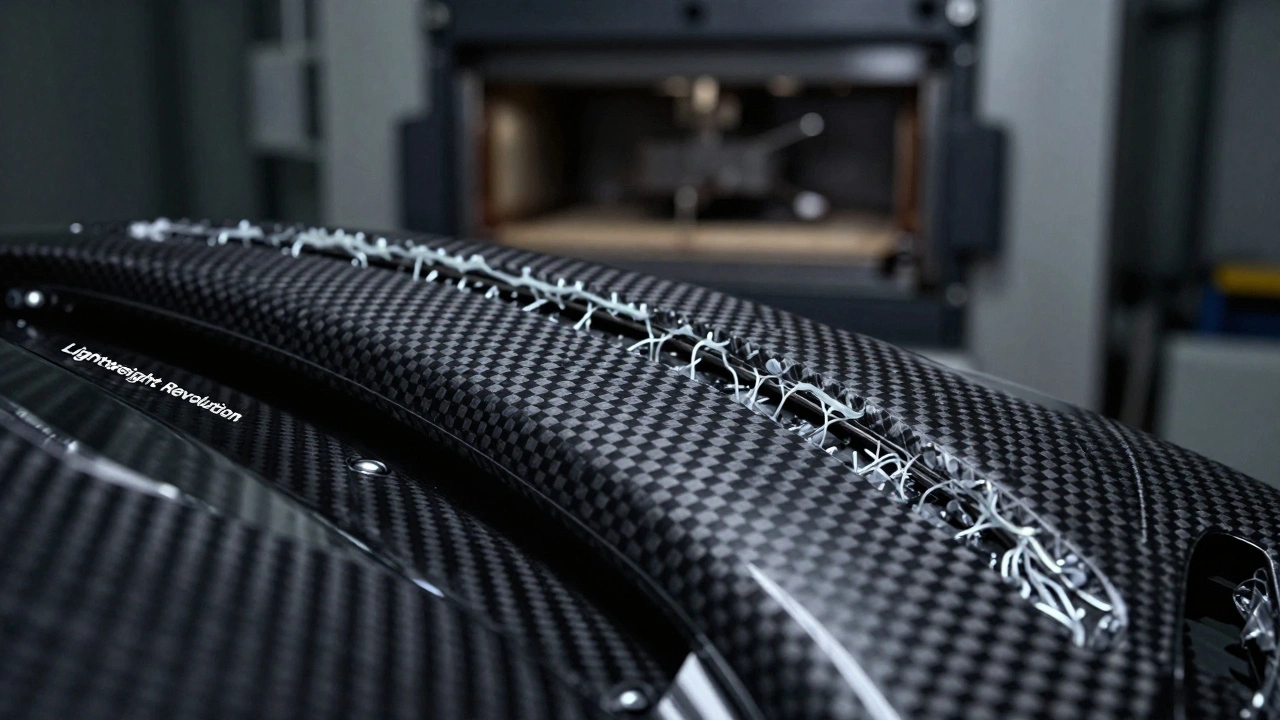
Batteries are heavy. Really heavy. To keep an EV from feeling like a tank, we have to strip weight from everywhere else. This is where Carbon Fiber Reinforced Polymer (CFRP) is a composite material consisting of carbon fibers embedded in a polymer matrix, offering an extremely high strength-to-weight ratio comes into play. In the UK, where we have a huge heritage in Formula 1, this technology is trickling down to consumer cars.
Working with composites is nothing like working with steel. You aren't stamping a sheet of metal; you are essentially baking a part. This requires knowledge of Resin Transfer Molding (RTM) is a process where liquid resin is injected into a closed mold containing a fiber preform to create complex, lightweight parts. A technician now needs to understand curing cycles, vacuum pressures, and the chemical behavior of epoxies. If the temperature in the autoclave is off by five degrees, the structural integrity of the chassis is compromised.
The next frontier is sustainability. We can't just use carbon fiber forever because it is hard to recycle. The industry is pivoting toward Thermoplastic Composites is composite materials that can be reheated and reshaped, making them significantly easier to recycle than thermoset plastics. Learning how to weld these plastics using ultrasonic or laser techniques is a high-value skill that very few people currently possess in the UK workforce.
Bridging the Gap: How to Upskill
You don't need a new degree to stay relevant, but you do need a strategy. The biggest mistake people make is trying to learn everything at once. Instead, focus on the intersection of your current skill and the new tech. If you are a mechanical engineer, don't try to become a full-stack developer. Instead, learn Mechatronics is a multidisciplinary field that combines mechanical engineering, electronics, and computer control to create smart systems. Learn how a sensor triggers a mechanical actuator via a software loop.
Practical steps for a career pivot include:
- Get Certified in EV Safety: Look for IMI (Institute of the Motor Industry) certifications. This is the baseline for any physical work on EVs.
- Learn Basic Python: You don't need to build apps, but you need to be able to script data extraction from a vehicle's log.
- Study Material Science: Understand the difference between thermosets and thermoplastics. This will move you from a 'part swapper' to a 'process expert'.
- Master Agile Methodology: Automotive development has moved from the 'Waterfall' model (design everything, then build) to 'Agile' (build a prototype, test, and iterate). This is how software companies work, and now it's how car companies work.
The New Ecosystem: Interconnectivity and AI
Finally, we have to talk about the brain of the car. Artificial Intelligence (AI) is the simulation of human intelligence processes by machines, especially computer systems, used in cars for autonomous driving and predictive maintenance is no longer a sci-fi trope. It is currently being integrated into Advanced Driver Assistance Systems (ADAS). For the UK worker, this means a shift toward data curation and validation.
We need people who can 'label' data for AI. For example, if a car's camera sees a rainy street in London, the AI needs to know that a pedestrian with an umbrella is still a pedestrian. This requires human-in-the-loop validation. Moreover, the rise of V2X (Vehicle-to-Everything) is a communication system that allows a vehicle to communicate with other vehicles, infrastructure, and pedestrians to improve safety and traffic flow means that cars will soon be talking to traffic lights and parking garages. The people who can manage these network protocols will be the architects of the next city.
Will software engineers replace traditional mechanics?
Not replace, but redefine. While the need for oil changes is disappearing, the need for physical assembly, chassis repair, and hardware installation remains. The 'mechanic' of the future is a hybrid technician who can use a diagnostic tablet as effectively as a wrench.
Is carbon fiber too expensive for mass-market British cars?
Pure carbon fiber is expensive, but the industry is moving toward hybrid composites and recycled plastics. The goal isn't to make every car a supercar, but to use these materials in strategic areas to offset the weight of heavy batteries.
Which programming language is most important for auto jobs?
C++ is critical for embedded systems and real-time performance (the parts of the car that can't afford a lag, like brakes). Python is essential for the high-level logic, AI training, and testing tools used during development.
What is the biggest risk for workers who don't upskill?
The risk is 'skill obsolescence'. As internal combustion engines (ICE) are phased out by UK regulations, the demand for traditional engine rebuilding will plummet, leaving those without EV or software training in a shrinking job market.
How does V2X technology actually affect a job role?
It creates a need for systems integration specialists. Someone has to ensure the car's onboard computer can 'talk' to a city's 5G infrastructure without latency or security breaches. This is a mix of automotive engineering and network administration.
What to do next
If you are just starting out or looking to pivot, don't panic. The transition is happening over a decade, not a weekend. Start by identifying your 'anchor skill'-the thing you are already great at-and find its digital or electric twin. If you love the physical build, go deep into composites. If you love the logic of how things work, dive into embedded software. The UK's automotive legacy is moving from the garage to the lab; make sure you have a seat at the table.