Ford vs. Wolseley: How Mass Production Changed British Cars in 1913
 Nov, 15 2026
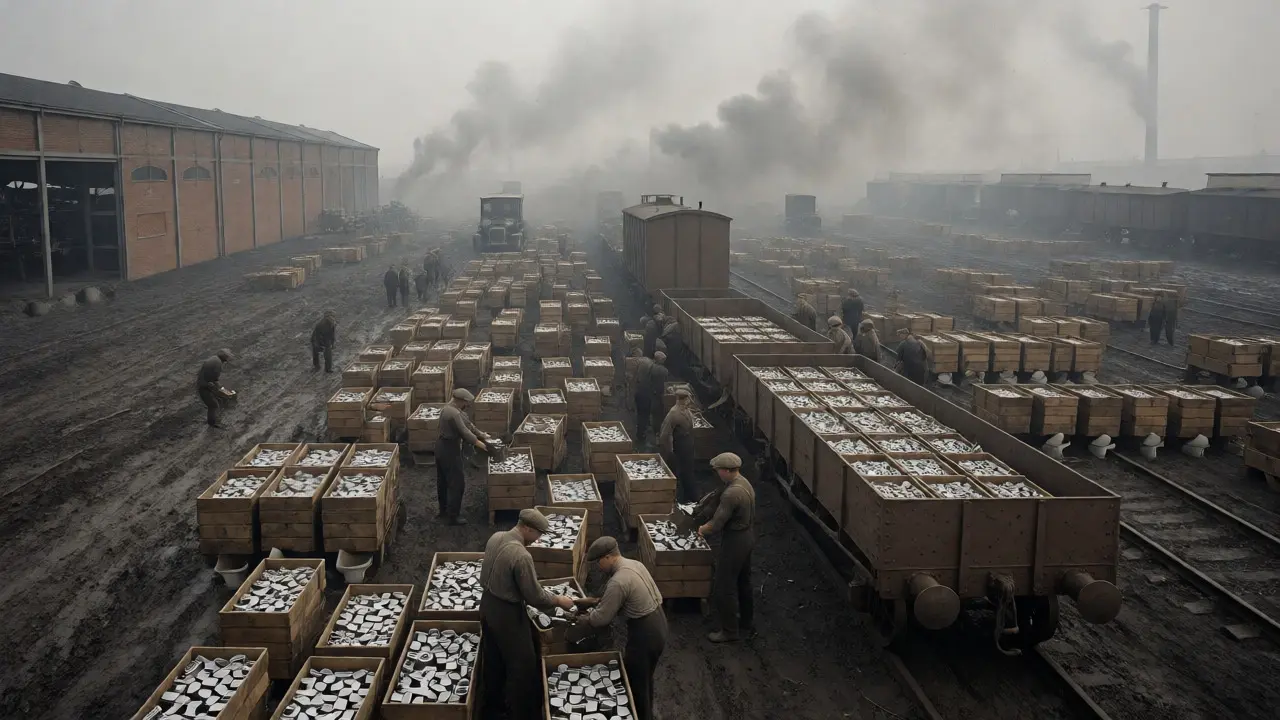
Imagine standing in a muddy field in Trafford Park, Manchester, in 1913. The air smells of coal smoke and hot metal. On one side, you see Ford is an American automobile manufacturer that pioneered the moving assembly line for mass production. Also known as Ford Motor Company, it was founded by Henry Ford in 1903. On the other, across the country in Birmingham, Wolseley is a British luxury car manufacturer that relied on skilled craftsmanship and batch production methods. Established in 1896, Wolseley represented the traditional European approach to building vehicles. This wasn't just a rivalry between two brands; it was a clash of philosophies that would decide the future of the entire British auto industry.
Most people think mass production started with cars, but in Britain, it started with machines making parts. By 1913, the gap between these two approaches had become a chasm. One company was selling thousands of identical cars to ordinary workers. The other was still hand-fitting fenders to chassis like they were tailoring suits. Who won? And more importantly, why did the "better" car lose?
The Two Philosophies of Building a Car
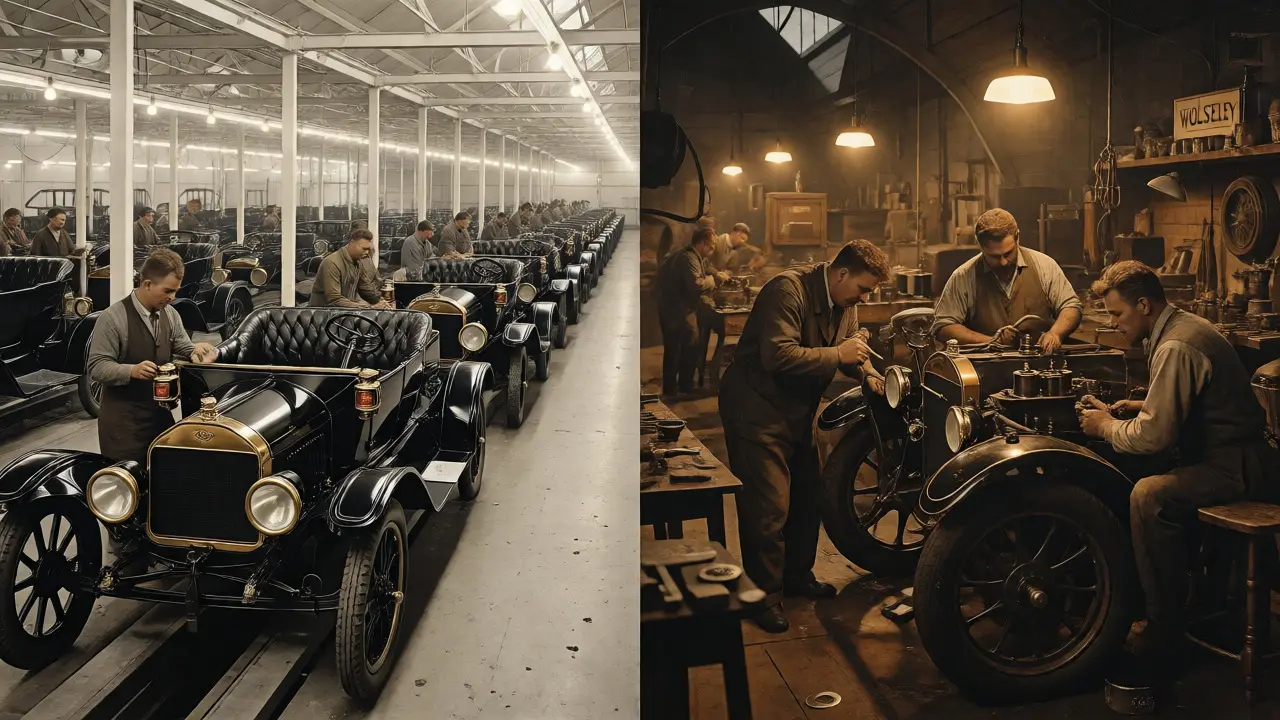
To understand what happened in 1913, you have to look at how each company defined quality. For Wolseley, quality meant precision fitting by hand. Every part was adjusted to fit every other part. If a door didn't close perfectly, a mechanic filed it down until it did. This resulted in beautiful, durable cars, but it took forever to build them. A single Wolseley could take weeks to complete because the work depended entirely on the skill of individual artisans.
Ford, specifically the Model T, redefined quality as interchangeability. If you bought a Ford engine block, it fit into any Ford car made that year. No filing. No adjusting. Just bolt it on. This required incredibly precise machine tools and strict tolerances. It wasn't about the beauty of the finish; it was about the speed of the assembly. In 1913, Ford introduced the moving assembly line in Highland Park, Michigan, but the ripple effects hit Manchester hard. The goal wasn't just to make cars cheaper; it was to make them so cheap that factory workers could buy them.
This fundamental difference created two distinct types of labor. Wolseley needed master craftsmen who understood the whole vehicle. Ford needed semi-skilled workers who could repeat one task all day long. This shift didn't just change the factory floor; it changed society. It created the modern consumer class.
Manchester’s Industrial Advantage
Why did Ford choose Manchester? It wasn't random. Trafford Park was already an industrial hub. It had rail links, canals, and a workforce used to heavy engineering. But there was another factor: competition. Before Ford arrived, the British market was dominated by small workshops and established players like Wolseley, Daimler, and Rover. These companies produced high-end vehicles for the wealthy. They ignored the middle class because they couldn't afford to produce enough volume to lower prices.
Ford saw the untapped potential of the working man. By setting up in Manchester, they bypassed the London-centric elite networks. They tapped into the raw industrial muscle of the North. The local government supported this because it promised jobs. Thousands of men moved to Trafford Park to work in the new plant. They weren't just building cars; they were building a new economic model.
Wolseley, based in Birmingham, tried to adapt. They recognized the threat. But their infrastructure was built for flexibility, not volume. Their factories were designed to switch between models quickly. Ford's factory was designed to do one thing only, over and over again. This rigidity became Ford's greatest strength. While Wolseley struggled to scale up without losing its artisanal identity, Ford scaled effortlessly.
The Economics of Volume vs. Value
Let's look at the numbers. In 1913, a basic Wolseley cost around £150 to £200. That was a lot of money-equivalent to several years' wages for a clerk. A Ford Model T, imported initially before full local production ramped up, cost significantly less. As soon as Ford began assembling locally in Manchester, costs dropped further due to reduced shipping and tariffs.
The math favored Ford decisively. High fixed costs (the factory, the machines) were spread over thousands of units. Low variable costs (labor, materials) per unit meant massive margins even at low prices. Wolseley had low fixed costs but high variable costs. Every extra car cost almost as much to make as the first one because it required the same amount of skilled human time.
| Feature | Ford Motor Company | Wolseley Motors |
|---|---|---|
| Production Method | Moving Assembly Line | Batch Production / Craftsmanship |
| Target Market | Mass Market / Working Class | Luxury / Upper Middle Class |
| Part Interchangeability | High (Strict Tolerances) | Low (Hand-Fitted) |
| Price Strategy | Low Price, High Volume | High Price, Low Volume |
| Labor Requirement | Semi-Skilled Workers | Skilled Artisans/Mechanics |
This table shows why the battle was lopsided. Wolseley wasn't necessarily making "worse" cars. In fact, many enthusiasts argued Wolseleys were smoother and better finished. But they were making cars for a shrinking demographic. The wealthy didn't need multiple cars. The working class did. Ford captured the growth segment; Wolseley fought over the stagnant one.
Supply Chain and Standardization
You can't run an assembly line if your suppliers send you mismatched parts. This was the hidden weapon in Ford's arsenal. Henry Ford demanded absolute standardization from his vendors. Bolts, screws, nuts-they all had to meet exact specifications. If a supplier failed, they were cut off. This forced the entire British supply chain to upgrade its manufacturing standards.
Wolseley, conversely, often sourced bespoke components. They worked closely with specialized foundries and coachbuilders. This allowed for customization but killed efficiency. When a batch of gears came in slightly off-spec, Wolseley mechanics fixed it. At Ford, the batch was rejected. This pressure pushed British engineering toward modern quality control methods. Companies like Lucas Electrical and Dunlop adapted to Ford's demands, becoming global giants in the process.
Standardization also simplified maintenance. If you broke a part on a Ford, you ordered a replacement. It fit. If you broke a part on a Wolseley, you might need a mechanic to fabricate a fix or adjust the old part. For the average user, convenience trumped prestige. The car became an appliance, not a jewel.
The Impact on British Industry
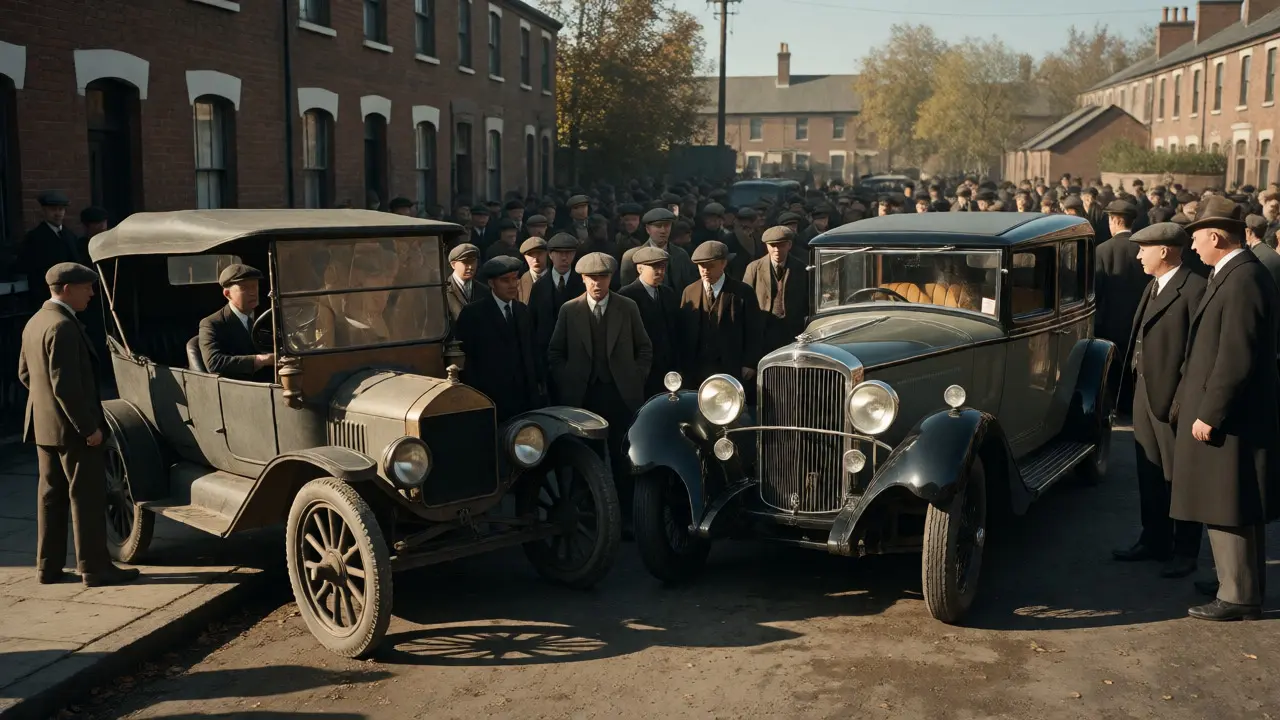
The arrival of Ford in Manchester sent shockwaves through the UK. Other manufacturers scrambled to copy the system. Austin Motor Company in Longbridge adopted assembly lines. Morris Motors later followed suit. Even Wolseley eventually had to pivot, merging with other firms to survive. The era of the boutique carmaker was ending.
This transition wasn't smooth. Skilled workers resisted the de-skilling of labor. Unions clashed with management over pace and pay. The psychological impact was profound. Work became repetitive. The pride of craftsmanship gave way to the pride of productivity. But the result was undeniable: cars became accessible. By the late 1920s, Britain had one of the highest rates of car ownership in Europe, largely thanks to the models established in 1913.
Wolseley didn't disappear overnight. It continued to produce prestigious vehicles, eventually becoming part of larger conglomerates. But it never regained its dominant position. The market had shifted permanently toward volume. The lesson was clear: in industrial manufacturing, consistency beats perfection.
Key Takeaways
- Process Innovation: Ford succeeded not because its car was technically superior, but because its production process was vastly more efficient.
- Market Shift: The focus moved from serving the wealthy elite to serving the emerging middle and working classes.
- Supply Chain Pressure: Mass production forced suppliers to adopt strict quality controls and standardization, raising the bar for the entire industry.
- Labor Transformation: The shift from skilled craftsmanship to semi-skilled assembly line work changed the nature of employment in Britain.
- Economic Scale: High volume allowed for lower prices, which in turn expanded the customer base, creating a positive feedback loop of growth.
Did Ford invent the assembly line?
No, the concept existed earlier in meatpacking plants and other industries. However, Ford Motor Company was the first to apply the moving assembly line effectively to automobile manufacturing, combining it with interchangeable parts to achieve unprecedented speed and cost reduction.
Why did Wolseley struggle against Ford?
Wolseley relied on skilled craftsmanship and batch production, which made their cars expensive and slow to build. They targeted a smaller, wealthier market. Ford's mass production model lowered costs dramatically, allowing them to sell to the masses, a segment Wolseley ignored or couldn't serve profitably.
What role did Manchester play in this comparison?
Manchester, specifically Trafford Park, was chosen by Ford for its existing industrial infrastructure, transport links, and available labor force. It served as the entry point for Ford's mass production philosophy into the British market, challenging established makers like Wolseley based in Birmingham.
Were Ford cars considered good quality in 1913?
Quality was defined differently. Ford cars were rugged, reliable, and easy to repair, but often crude in finish compared to luxury brands. Wolseley cars offered superior finish and performance but required more maintenance and were harder to repair due to non-interchangeable parts. Ford prioritized functional reliability over aesthetic refinement.
How did this rivalry affect British suppliers?
It forced suppliers to adopt stricter tolerances and standardization. Companies had to invest in better machine tools to meet Ford's demand for interchangeable parts. This raised the overall engineering standard of the British automotive supply chain, benefiting the industry in the long run despite the short-term disruption.