Export Success Stories: How British Everyday Cars Reached the Commonwealth
 May, 22 2026
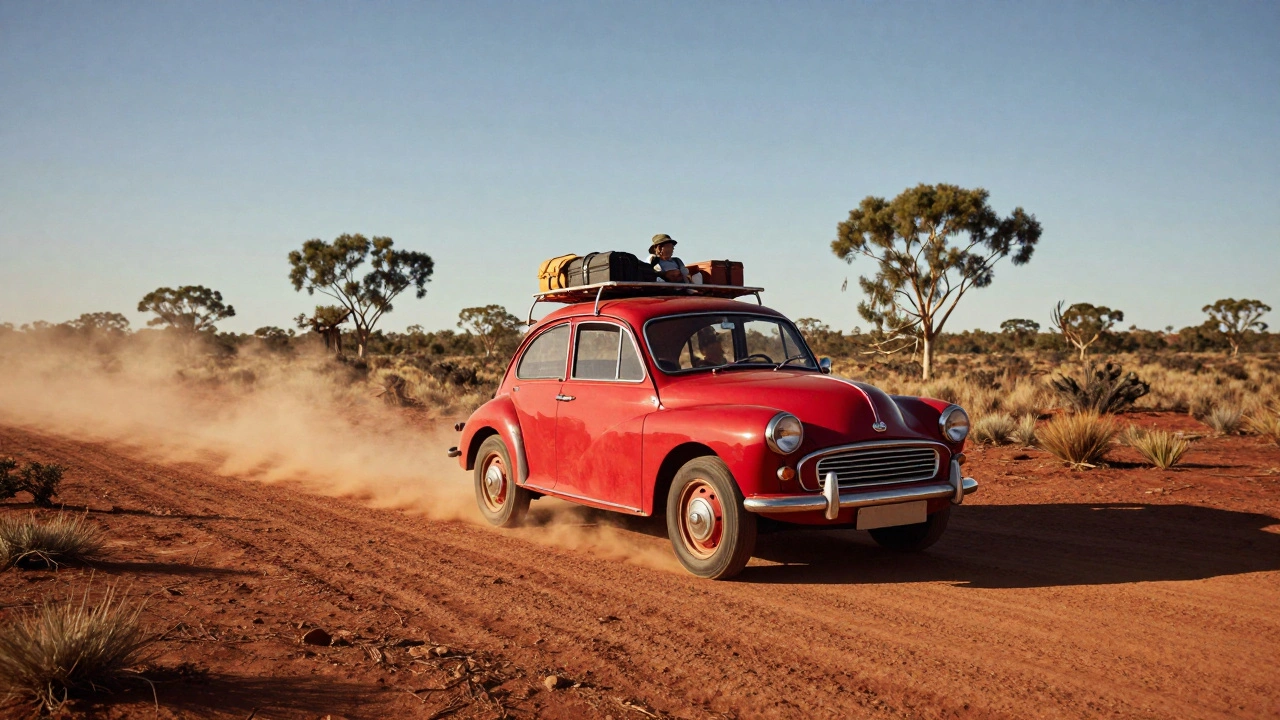
Picture a dusty road in rural Australia, circa 1960. A bright red Morris Minor bounces along, carrying a family of five and their luggage. It’s not a luxury liner; it’s a workhorse. Now imagine that same scene in New Zealand, South Africa, or even Canada. This wasn’t just happenstance. It was the result of a deliberate, massive industrial strategy by Britain to flood its former colonies with affordable, reliable family cars.
The story of how British everyday cars reached the Commonwealth is one of empire, economics, and engineering compromise. It explains why so many older Australians still remember their first car as an MG, and why the Austin Princess became a symbol of middle-class stability in post-war Britain and beyond. But it also tells a tale of eventual decline, as local manufacturing took over and Japanese reliability challenged British dominance.
The Empire Strikes Back: Why Export Was Essential
After World War II, Britain was broke. The domestic market was rationed, and people couldn’t afford new cars. Meanwhile, countries like Australia and New Zealand were booming. They had money, they wanted cars, and they trusted British brands because of cultural ties. For British manufacturers like BMC (British Motor Corporation), exporting wasn’t just an option; it was survival.
The Commonwealth provided a unique advantage. Trade agreements often favored British goods, reducing tariffs and making these cars cheaper than American or European alternatives. If you lived in Sydney in the 1950s, buying a Ford from Detroit meant paying heavy import duties. Buying a Morris Oxford from Birmingham? Much easier on the wallet. This economic reality created a captive market for British steel and rubber.
But there was a catch. These cars weren’t built for tropical heat, sandy roads, or long distances between service stations. Engineers had to adapt. Radiators got bigger. Cooling systems were tweaked. Tires were reinforced. The "everyday" British car had to become tough enough to survive the outback.
The Heroes of the Road: Key Models That Defined an Era
Not every British car succeeded abroad. Some were too fragile, some too expensive. But a few models became legends. Let’s look at the ones that really moved the needle.
| Model | Manufacturer | Years Active | Key Feature | Primary Markets |
|---|---|---|---|---|
| Morris Minor | Morris Motors | 1948-1971 | Simple mechanics, easy repair | Australia, NZ, UK |
| MG Midget | BMC/MG | 1961-1979 | Lightweight, fun driving | Australia, USA, Europe |
| Austin Princess | Austin Motor Company | 1956-1974 | Comfortable, spacious interior | UK, Commonwealth |
| Hillman Imp | Hillman | 1963-1976 | Compact, rear-engine design | Europe, Australia |
| Triumph Herald | Triumph | 1959-1971 | Sports sedan styling | UK, Export markets |
The Morris Minor was the undisputed king. Its simple body-on-frame construction meant that if a part broke, you could fix it with basic tools. In remote areas where dealerships were hundreds of miles away, this was crucial. Mechanics in Adelaide could keep a Minor running indefinitely because the parts were universal and cheap.
Then there was the MG Midget. While technically a sports car, it appealed to young families who wanted something faster than a saloon but safer than a motorcycle. It exported the idea of "British fun" globally. However, its small size and lack of heating made it less popular in colder climates like Canada, showing that even successful exports had geographic limits.
The Austin Princess targeted the upper-middle class. It offered more space and better insulation than the Minor. In cities like Johannesburg or Toronto, it signaled status without the pretension of a Rolls-Royce. It proved that British cars could compete in the premium segment, not just the budget end.
Local Manufacturing: From Import to Assembly
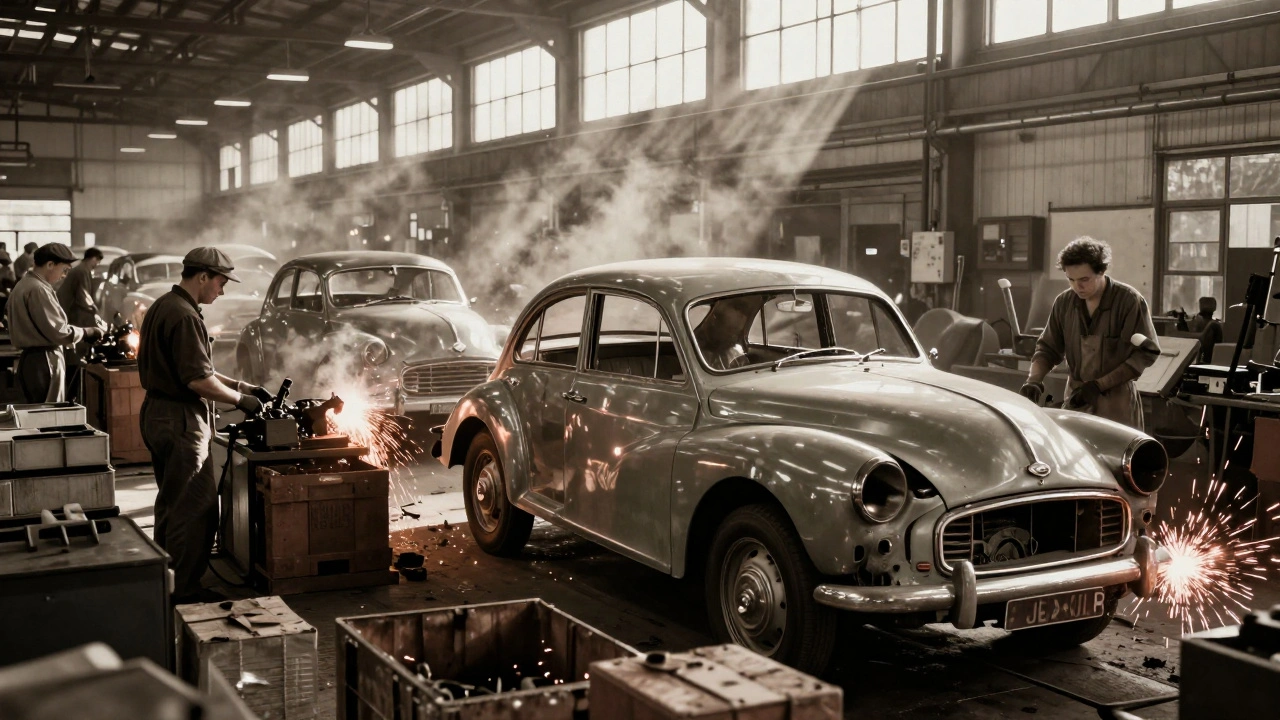
Initially, most cars arrived Completely Knocked Down (CKD) in crates. Local factories would bolt them together. This saved on shipping costs and tariffs. But as demand grew, countries like Australia started demanding full local production. Why pay for British labor when Australian workers could do it?
This shift changed everything. BMC set up massive plants in Port Melbourne, Australia. Suddenly, the Morris Oxford wasn’t just a British car; it was an Australian-made product. This localization helped jobs but also led to quality issues. To cut costs, local plants sometimes used lower-grade materials or skipped rigorous testing. An Australian-built Minor might feel slightly different from a British one. Owners noticed.
Moreover, local preferences influenced design. Australians liked larger engines for towing and hot weather cooling. So, while the UK version of a car might have a modest 1.5-liter engine, the export version often came with a beefier 2.0-liter unit. This customization was key to maintaining relevance in diverse markets.
The Rise of Competition: Japan and America Encroach
By the late 1960s, the monopoly was breaking. Japanese manufacturers like Toyota and Honda began exporting cars that were smaller, cheaper, and incredibly reliable. The Toyota Corolla entered Australia in 1966 and quickly gained traction. It didn’t rust as fast as British cars. It required less maintenance. And it got better gas mileage.
American cars also remained strong, especially trucks and large sedans. But the real threat was reliability. British cars suffered from poor quality control. Rust was a major issue. Electrical gremlins were common. A driver in New Zealand might buy a Triumph Herald expecting elegance, only to find the roof collapsing within three years due to corrosion.
Consumer reports and word-of-mouth spread fast. People started asking: "Why buy British if I have to spend half my income on repairs?" The emotional tie to the Empire faded as practical concerns took over. Younger buyers saw Japanese cars as modern and efficient, while British cars felt outdated and temperamental.
Legacy: What Remains Today?
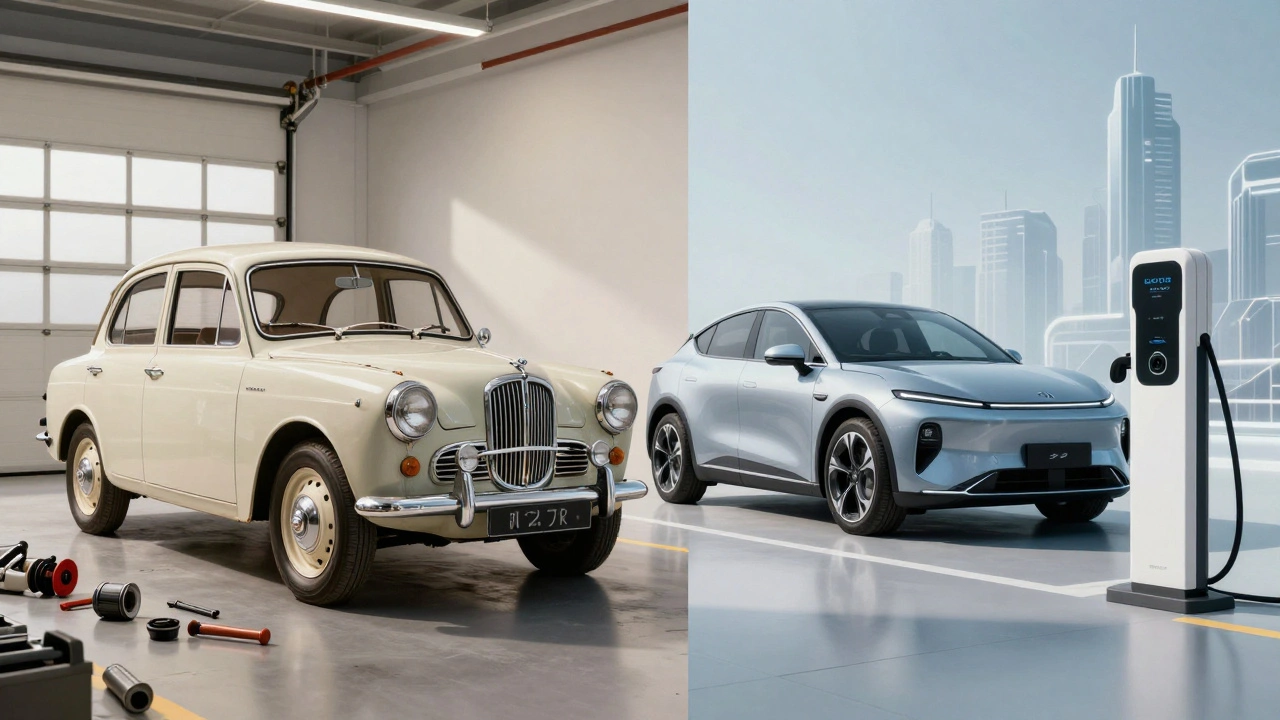
Today, you won’t see many original British family cars on the road. Most have been scrapped or turned into museum pieces. But their impact is lasting. They shaped the automotive culture of the Commonwealth. Many current car owners in Australia and New Zealand grew up with British badges in their garages.
Enthusiasts still restore these vehicles. The classic car market values the Morris Minor and Austin Princess highly. Parts are still available, thanks to dedicated suppliers who keep the legacy alive. Clubs meet regularly to share tips on fixing those notorious electrical systems.
For historians, this era represents a pivotal moment in global trade. It shows how political alliances can drive industrial policy. It also serves as a cautionary tale about ignoring quality and innovation. Britain held onto its past too tightly, failing to adapt to changing consumer needs until it was too late.
Lessons for Modern Automotive Exports
What can we learn from this history? First, localization matters. You can’t sell the exact same product everywhere. Climate, infrastructure, and cultural preferences dictate success. Second, reliability beats brand loyalty. No matter how strong your heritage, if your car breaks down, customers will leave. Third, cost competitiveness is non-negotiable. When cheaper, better alternatives appear, tradition alone won’t save you.
Modern electric vehicle makers face similar challenges. They must adapt batteries for extreme temperatures, build local charging networks, and ensure supply chains are resilient. The principles remain the same, even if the technology has changed.
Why did British cars dominate the Commonwealth market?
British cars dominated due to favorable trade agreements, cultural ties, and a lack of strong local competition in the immediate post-war period. Tariffs protected British imports, making them cheaper than American or European rivals in countries like Australia and New Zealand.
Which British car was the most popular export?
The Morris Minor was arguably the most popular. Its simplicity, durability, and ease of repair made it ideal for remote areas and varied climates across the Commonwealth.
How did Japanese competition affect British car sales?
Japanese cars offered superior reliability, fuel efficiency, and lower maintenance costs. As brands like Toyota and Honda gained trust, British manufacturers lost market share rapidly in the 1970s and 1980s.
Were British cars modified for export markets?
Yes. Manufacturers often added larger radiators for hotter climates, reinforced suspensions for rougher roads, and sometimes increased engine sizes to meet local performance expectations.
Is it hard to find parts for old British Commonwealth cars today?
While original equipment manufacturer (OEM) parts are scarce, a robust aftermarket exists. Specialized suppliers produce reproduction parts for classics like the Morris Minor and Austin Princess, keeping restoration projects viable.