Export Strategies for British Luxury Cars: How Global Owners Open New Markets
 Oct, 24 2026
You just bought a Rolls-Royce Phantom in London. It’s perfect. But now you live in Dubai, or maybe you’re looking to flip it in Singapore. Suddenly, the dream feels like a logistical nightmare. Customs forms, compliance checks, and that terrifying moment when your $400,000 asset sits on a boat for six weeks. Sound familiar?
Here is the truth most dealers won’t tell you: owning a British luxury car globally isn’t just about having money. It’s about understanding the invisible web of regulations, logistics, and cultural preferences that connect markets from Manchester to Mumbai. The right strategy turns a bureaucratic headache into a competitive advantage.
Why British Brands Are Different
Let’s be clear. A German sedan is a product. A Bentley Continental GT is an event. This distinction matters because the export process treats them differently. German cars are often standardized across regions. British luxury vehicles, particularly those from Aston Martin or Jaguar Land Rover, frequently feature bespoke specifications that don’t map neatly onto foreign homologation rules.
When you export a custom-spec Range Rover Autobiography, you aren’t just moving metal. You’re moving a unique configuration of leather grades, paint codes, and infotainment systems that might not exist in the destination country’s database. This creates friction. To open new markets effectively, you need to treat every export as a bespoke project, not a routine shipment.
The Regulatory Maze: Homologation and Compliance
The biggest killer of export deals isn’t price; it’s paperwork. Specifically, homologation. This is the technical term for proving your car meets the safety and emissions standards of the destination country. In the UK, you follow DVLA rules. In the US, you deal with NHTSA and EPA. In the EU, it’s a different beast entirely.
For example, exporting a 2026 McLaren Artura to the United States requires an Importer of Record (IOR). If the car doesn’t have a valid FMVSS sticker, you can’t register it. Period. Many private owners miss this until the car is stuck at the Port of New York. The fix? Work with specialists who understand "Show or Display" exemptions for rare models, or ensure your dealer provides the correct compliance documentation before the wheels leave the factory floor.
| Destination Market | Primary Barrier | Strategic Mitigation |
|---|---|---|
| United States | EPA/NHTSA Compliance & Tariffs | Use IOR services; verify VIN history for pre-1988 or Show/Display eligibility. |
| China | High Import Duties (up to 15%) & VAT | Leverage Free Trade Zones; consider CKD (Completely Knocked Down) assembly options. |
| UAE/Middle East | Right-hand drive restrictions (varies) | Source Left-hand drive specs early; partner with local GCC-compliant dealers. |
| Australia | Road Rules & Safety Standards (ADR) | Pre-inspect lighting and seatbelt anchors; budget for modification costs. |
Logistics: RoRo vs. Container Shipping
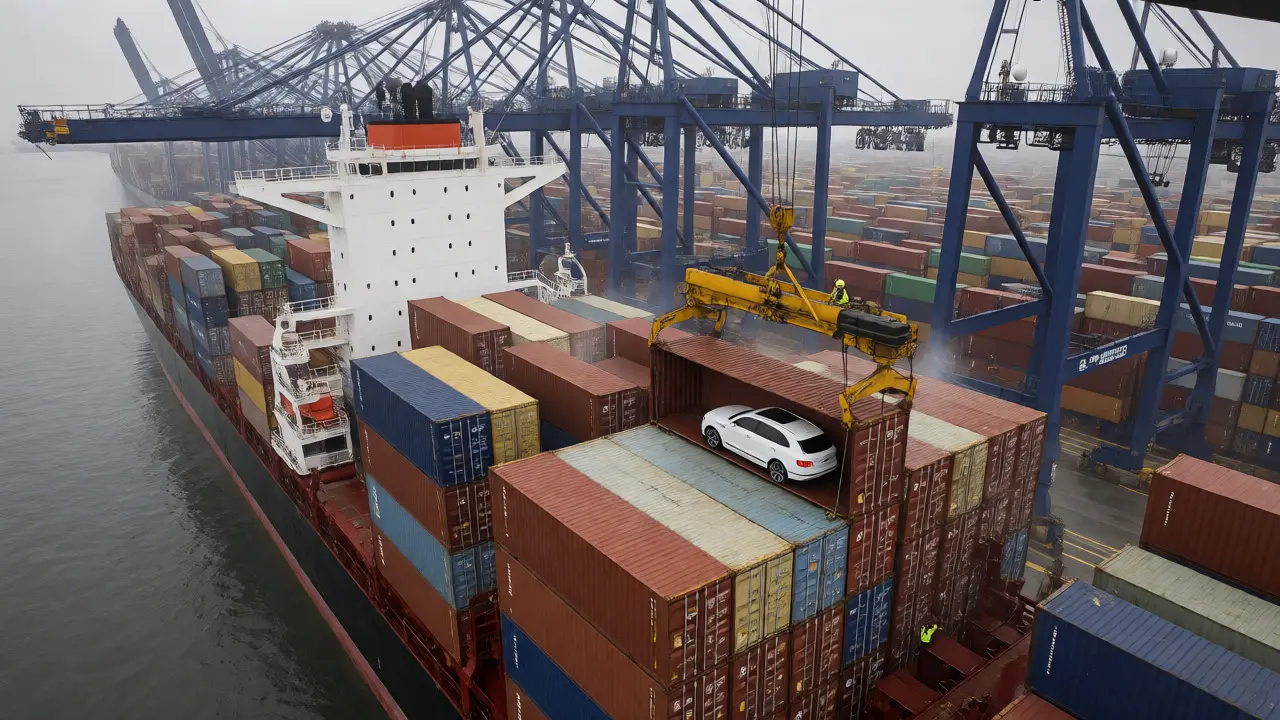
Once the paperwork is sorted, you have to move the car. Most people default to Roll-on/Roll-off (RoRo) because it’s cheaper. For a standard family car, sure. But for a Bentley Bentayga? Think again.
RoRo means your car is driven onto a ship, exposed to salt air, potential shifting during storms, and handling damage. Insurance claims for scratches and dents on RoRo shipments are surprisingly common. For high-value British luxury cars, container shipping is almost always worth the extra cost. A 40-foot container allows you to pack the car with climate control, secure straps, and even personal items. It’s safer, faster to unload, and preserves the vehicle’s condition, which directly impacts resale value in the destination market.
Market Positioning: Where Does Your Car Fit?
Not all markets want the same British car. Understanding local tastes prevents you from dumping inventory into a dead zone.
- Middle East: Loves high-performance convertibles and SUVs. The Aston Martin DBX707 thrives here because it combines prestige with desert-ready capability. Buyers prioritize brand status and V8 power over fuel efficiency.
- Asia-Pacific (Singapore/Hong Kong): Hyper-regulated but wealthy. Small, efficient luxury sedans and hybrids do well due to space constraints and tax structures favoring lower engine capacities. A Jaguar F-Pace P300 hybrid is a smarter bet than a massive V8 here.
- North America: Values tech integration and warranty support. American buyers are wary of maintenance complexity. If you export a used Land Rover Defender, having a transferable service history from an authorized UK dealer adds significant trust.
This isn’t just theory. Dealerships in Miami report higher turnover rates for LHD (Left-Hand Drive) British sports cars compared to RHD imports, simply because they fit the local driving culture without adaptation hassles.
Financial Strategy: Currency and Taxes
Money moves slower than cars. When you export, you face exchange rate risks and tax traps. The UK uses VAT (Value Added Tax). If you buy a new car in the UK and export it outside the EU, you can reclaim the 20% VAT. But you must prove the car left the country within a specific timeframe, usually three months. Missing this deadline wipes out your profit margin instantly.
Then there’s currency fluctuation. The British Pound has been volatile recently. If you buy in GBP and sell in USD or EUR, a 5% swing in exchange rates can eat your entire markup. Smart exporters use forward contracts to lock in exchange rates at the time of purchase, not delivery. This simple financial hedge protects your bottom line against the whims of the forex market.

Building Trust: The After-Sales Gap
Here is the secret weapon for opening new markets: after-sales support. British luxury cars require specialized maintenance. A generic mechanic in Bangkok might not know how to diagnose a fault in a Bentley Flying Spur’s adaptive suspension system.
If you’re selling or importing these cars, you must offer a solution. Partner with independent specialists certified by the manufacturer. Offer extended warranties that cover major components like the transmission or engine block. In emerging markets, this peace of mind is worth more than a discount. It transforms your business from a transactional seller into a long-term partner.
Action Plan for Global Owners
Ready to expand? Here is your checklist:
- Verify Specifications: Confirm the car’s build sheet matches the destination country’s requirements (e.g., fog lights, speedometer units).
- Secure Compliance: Hire an Importer of Record if dealing with the US or complex EU transfers.
- Choose Container Shipping: Protect your asset’s condition for better resale value.
- Lock Exchange Rates: Hedge against currency volatility before final payment.
- Arrange Service Support: Identify certified repair shops in the destination city before the car arrives.
Exporting British luxury cars is not for the faint of heart. But for those who master the details, the rewards are substantial. You aren’t just moving a vehicle; you’re bridging cultures and fulfilling dreams across borders.
Can I export a right-hand drive car to the USA?
Generally, no, unless the car is at least 25 years old or qualifies for a "Show or Display" exemption. Most modern British cars sold in the US must be Left-Hand Drive (LHD) to comply with Federal Motor Vehicle Safety Standards (FMVSS). Always check the specific model year and make against current NHTSA guidelines before purchasing.
How long does it take to ship a car from the UK to the Middle East?
Transit time typically ranges from 10 to 14 days depending on the port of entry (e.g., Jebel Ali in Dubai or Jeddah in Saudi Arabia). However, total processing time including customs clearance, inspection, and registration can extend the timeline to 4-6 weeks. Delays often occur due to incomplete documentation or non-compliance with local GCC standards.
Is it cheaper to buy a British car in the UK and export it?
It depends on the destination. In countries with high import duties like China or Brazil, the savings may be negligible or negative after taxes. In markets with lower tariffs or where specific models are scarce, such as parts of Southeast Asia or the Middle East, buying directly from the UK source can save 10-20%. Always calculate the landed cost, including shipping, insurance, and duties, before deciding.
What documents are required for exporting a car from the UK?
You will need the V5C registration certificate (logbook), a bill of sale, proof of insurance, and a completed export declaration form (EX1 or EX30). Additionally, many destinations require a Certificate of Conformity (CoC) from the manufacturer to prove the vehicle meets their safety standards. Ensure all names match exactly across documents to avoid customs delays.
Do British luxury cars hold value better in global markets?
Limited-edition models from brands like Aston Martin and McLaren tend to retain value well globally due to rarity. However, mass-produced luxury SUVs like the Range Rover can depreciate faster in markets with abundant supply. Maintenance costs also influence resale value; cars with full service histories from authorized dealers command higher prices in secondary markets.