Export Heroes of the 1950s: British Cars That Conquered Global Markets
 Aug, 17 2026
Imagine driving a car that doesn't just move you from A to B, but makes you feel like you're winning a race against the world. In the early 1950s, that feeling was the secret weapon of the British automotive industry. While European rivals were rebuilding factories and American giants were dominating domestic sales, British manufacturers found a different path. They didn't try to out-mass America or out-engineer Germany in every metric. Instead, they sold style, personality, and performance. This strategy turned modest production runs into global best-sellers, making brands like Jaguar is a luxury car manufacturer known for its sporty heritage and engineering excellence. and MG is a brand specializing in affordable, high-performance sports cars. household names on four continents.
The Postwar Context: Why Britain Won
To understand why these models succeeded, you have to look at what happened before them. The end of World War II left Europe's industrial base shattered. German and French automakers spent the late 1940s just trying to get basic sedans back on the road. Meanwhile, the United States had an insatiable appetite for large, powerful V8s, but the domestic market was saturated with similar offerings. There was a gap in the global market for something lighter, faster, and more emotionally engaging than a standard sedan, but not as expensive as a Rolls-Royce.
Britain filled this gap perfectly. The country had a deep culture of motoring and racing that dated back decades. Engineers understood how to make small engines punch above their weight. More importantly, designers knew how to package that power in a way that looked elegant. The result was a wave of vehicles that appealed to the emerging middle class in the US, Australia, and Western Europe who wanted a taste of speed without the cost of a full-sized American muscle car.
The Flagship: Jaguar XK120
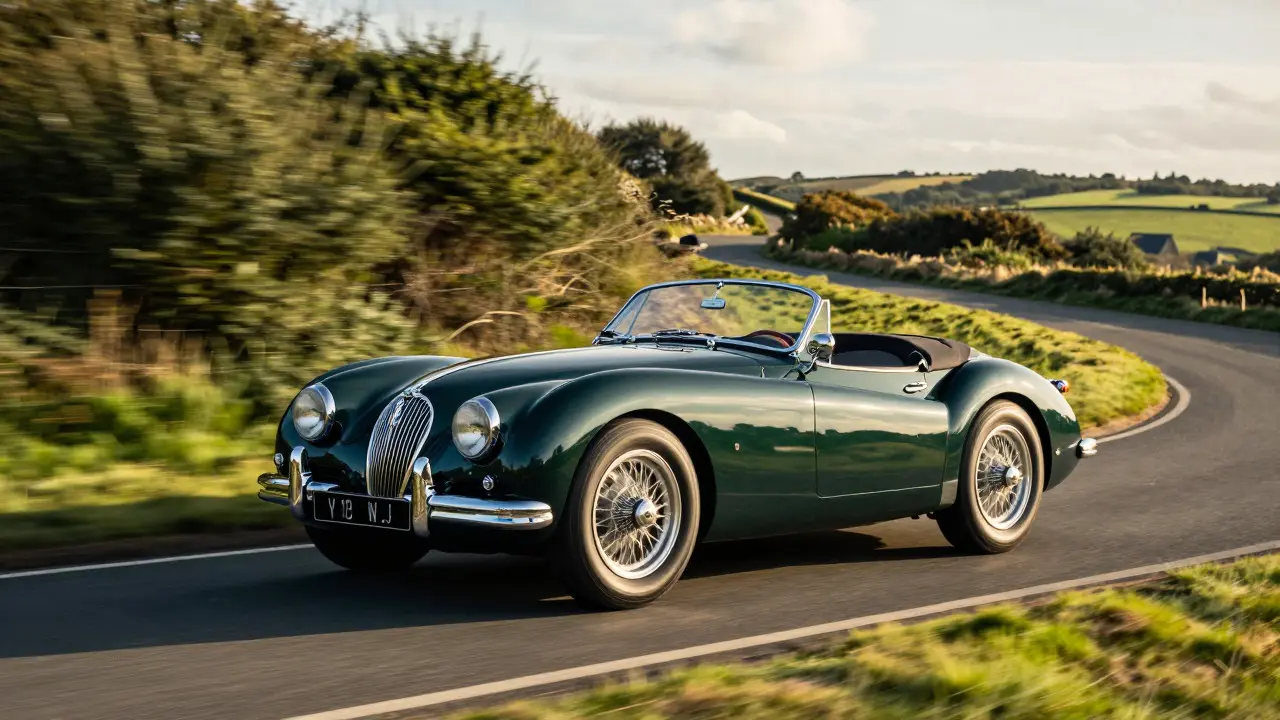
You can't talk about 1950s British exports without starting with the Jaguar XK120 is the first mass-produced car to exceed 120 mph, launched in 1949.. It wasn't just fast; it was a statement. When it hit the roads, it became the fastest production car in the world. For a brief moment, it held the land-speed record. This wasn't marketing fluff; it was mechanical reality. The XK120 featured a straight-six engine that produced 180 horsepower, which was staggering for a car of its size.
What made the XK120 a commercial success wasn't just the speed. It was the design. Malcolm Sayer’s bodywork gave the car a sleek, aerodynamic profile that looked modern even by today's standards. It offered a choice between a coupe and a convertible, appealing to both practical buyers and pure enthusiasts. In the US, where the car was imported in significant numbers, it became a symbol of sophistication. Owning one meant you were part of an exclusive club of drivers who valued engineering over brute force.
The People's Champion: MG MGA
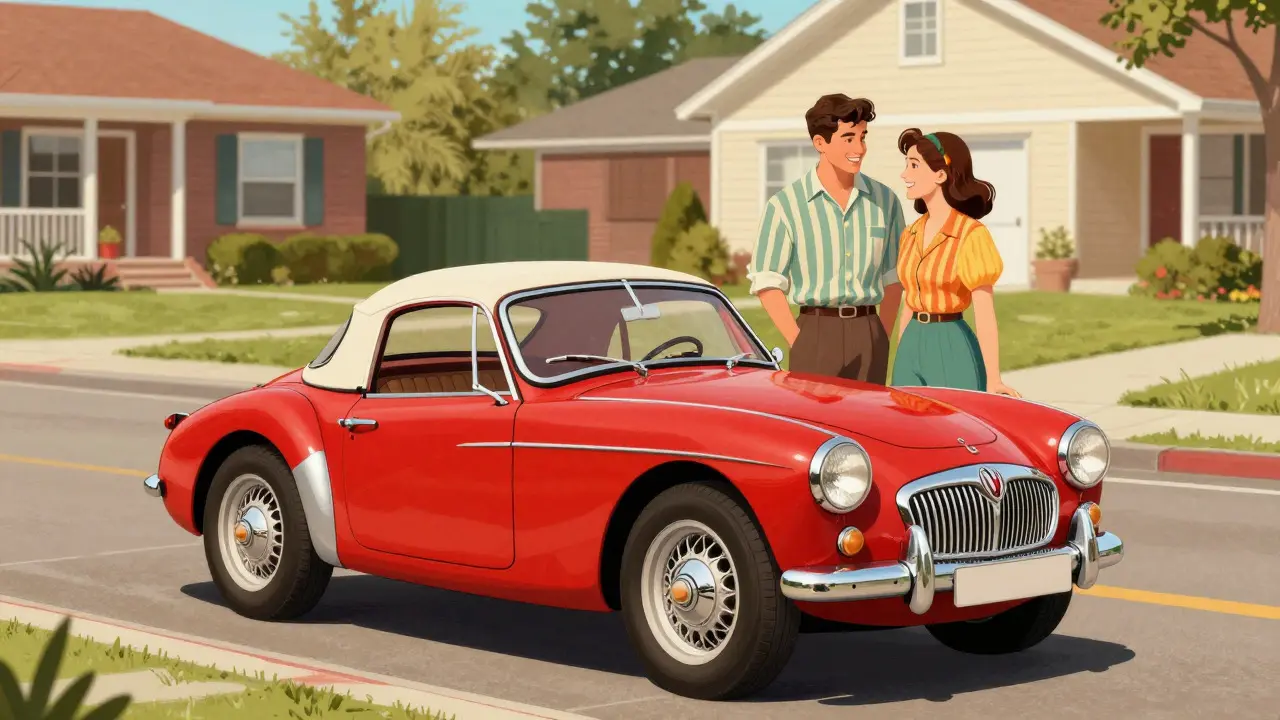
If the Jaguar was the aristocrat, the MG MGA is a lightweight sports car introduced in 1955, known for its affordability and handling. was the people's champion. Launched in 1955, the MGA replaced the earlier TD and TF models. It was designed to be simpler, cheaper to build, and easier to maintain. But don't let the "simple" label fool you. The MGA handled beautifully. Its chassis was stiff, its steering precise, and its brakes reliable. For a fraction of the price of a Jaguar, you got a car that could hold its own on a winding country road.
The MGA's success was driven by volume. While Jaguars were built in smaller batches, MGs rolled off the line in the thousands. By the end of the 1950s, the MGA had become one of the best-selling sports cars in history. Its popularity was particularly strong in the United States, where it was seen as the entry point into the world of performance driving. Many owners would start with an MGA and eventually trade up to a Jaguar or a Ferrari, creating a loyal customer base for the entire British automotive sector.
The Family Favorite: Morris Minor
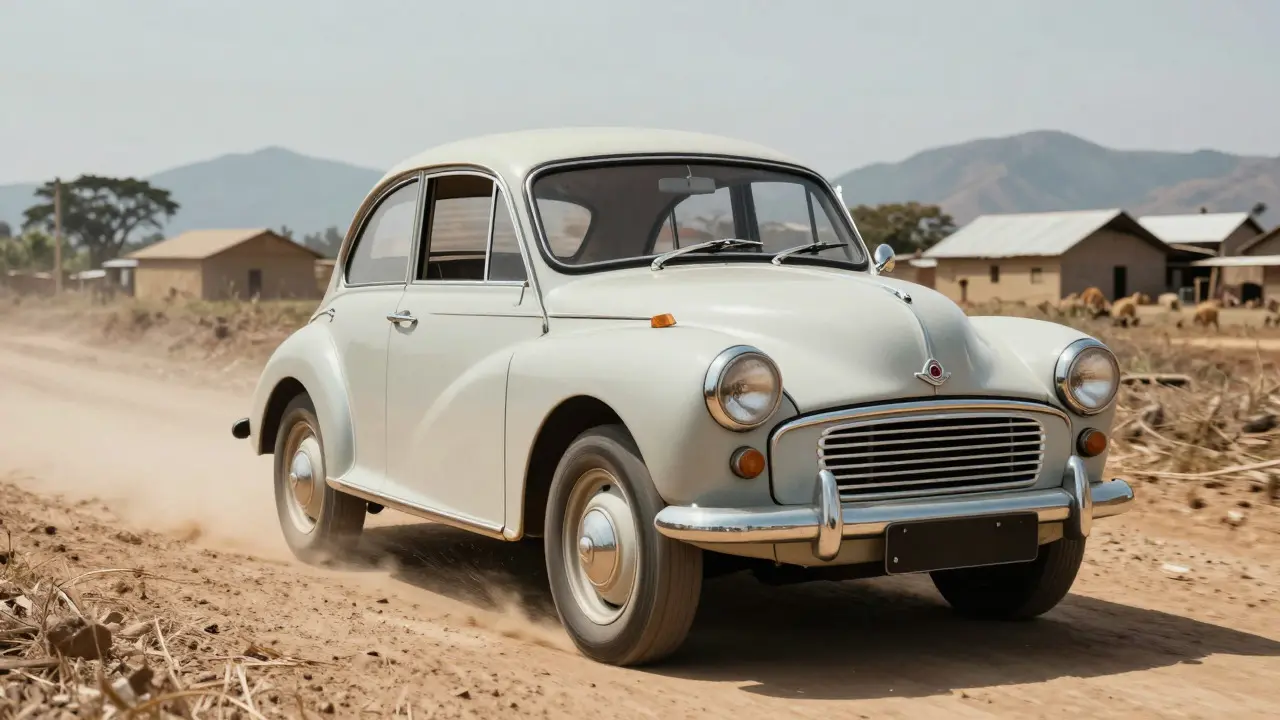
Not all export heroes were sports cars. The Morris Minor is a compact family car produced from 1952 to 1971, renowned for its reliability and value. proved that British engineering could win hearts in the everyday segment. Introduced in 1952, the Minor was a radical departure from the heavy, clunky cars that dominated the pre-war era. It was light, nimble, and surprisingly comfortable. The suspension was independent, which was rare for a car of its price range at the time. This meant it rode smoothly over bad roads, a crucial feature for customers in rural areas or countries with less developed infrastructure.
The Minor was a massive hit in the UK, but its export success was equally impressive. It was sold in over 60 countries, including Australia, South Africa, and parts of Asia. Its reputation for durability meant it often lasted decades. In many developing markets, the Morris Minor became the default choice for families and small businesses. It wasn't glamorous, but it worked. And in the 1950s, reliability was a luxury that many buyers couldn't afford to compromise on.
The Sporty Challenger: Austin-Healey 3000
Another key player in the export story was the Austin-Healey 3000 is a grand tourer produced from 1959, combining Austin's manufacturing with Healey's sports car expertise.. This model represented a strategic partnership between two major British firms. Austin provided the platform and manufacturing capacity, while Healey brought the sports car tuning and design flair. The result was a car that was more refined and comfortable than the MG, yet still capable of serious speed.
The 3000 was aimed at a slightly older demographic than the MGA. It was a grand tourer, designed for long-distance travel in style. The interior was well-appointed, and the ride was smooth. For buyers who wanted the thrill of driving a British sports car but also needed space for luggage and passengers, the Austin-Healey was the perfect fit. It became particularly popular in the US, where it competed directly with Italian imports like the Alfa Romeo Spider. The 3000 offered comparable performance at a lower price point, making it a smart buy for discerning consumers.
Comparing the Export Leaders
To see how these models stacked up, let's look at some key specifications and market positions. Each car served a different niche, which allowed British manufacturers to capture a wide slice of the global market.
| Model | Launch Year | Engine Type | Horsepower | Primary Market Appeal |
|---|---|---|---|---|
| Jaguar XK120 | 1949 | Straight-6 | 180 hp | High-performance luxury |
| MG MGA | 1955 | Straight-4 | 85 hp | Affordable sports entry |
| Morris Minor | 1952 | Straight-4 | 34 hp | Reliable family utility |
| Austin-Healey 3000 | 1959 | Straight-6 | 130 hp | Grand touring comfort |
This table highlights the diversity of the British offer. You had the top-tier speedster, the accessible fun car, the practical daily driver, and the stylish tourer. Together, they formed a complete portfolio that addressed almost every buyer need except for the ultra-luxury limousine segment, which was dominated by Rolls-Royce and Bentley.
Why These Cars Resonated Globally
There are several reasons why these specific models resonated so strongly with international buyers. First, there was the element of novelty. In the 1950s, owning a foreign car was a status symbol. It showed that you had traveled, that you appreciated different cultures, and that you had the means to import goods. British cars, with their distinctive right-hand drive (for most models) and unique styling, stood out in traffic. They were conversation starters.
Second, the quality-to-price ratio was unbeatable. American cars were getting bigger and heavier, but they weren't necessarily getting better in terms of driving dynamics. Japanese cars hadn't yet entered the global market in force. So, for a buyer looking for a balance of performance, style, and value, British cars were the only real option. They offered a level of craftsmanship that was evident in the details-the stitching on the seats, the finish of the paint, the precision of the gauges.
Finally, the cultural cachet played a role. British motoring was associated with royalty, racing legends, and classic elegance. Driving a Jaguar or an MG connected the owner to this heritage. It wasn't just a machine; it was a piece of history. This emotional connection helped sustain demand even when competitors started to catch up in technical specifications.
The Legacy of the 1950s Exports
The success of these 1950s models laid the groundwork for the British automotive industry's future. It established the brand reputations that persist today. Jaguar is still synonymous with luxury and speed. MG has been revived as a brand under Chinese ownership, but its roots are firmly planted in the 1950s. The Morris Minor may be discontinued, but its legacy lives on in the reliability standards expected of modern compact cars. The Austin-Healey name is gone, but its influence can be seen in the grand tourers produced by other manufacturers.
More broadly, these exports demonstrated that a country with limited resources could compete globally through innovation and branding. Britain didn't have the raw material wealth of the US or the industrial scale of Germany, but it had talent and creativity. By focusing on what it did best-designing and building distinctive, high-quality vehicles-it carved out a profitable niche that sustained the industry through the economic challenges of the 1960s and 1970s.
Frequently Asked Questions
Which British car was the best seller in the 1950s?
The Morris Minor was likely the highest-volume seller due to its position as a family car. However, in terms of prestige and impact on the sports car market, the MG MGA and Jaguar XK120 were the most significant commercial successes.
Were British cars more expensive than American cars in the 1950s?
Generally, yes. Import duties and shipping costs made British cars significantly more expensive than equivalent domestic American models. However, they were often priced below comparable American luxury or high-performance options, offering better value for money in the enthusiast segment.
What was the main reason for the failure of the British car industry later in the century?
While the 1950s were a golden age, the industry struggled later due to labor disputes, lack of investment in modern manufacturing techniques, and intense competition from Japan and Germany. The focus on hand-built quality, which was an asset in the 1950s, became a liability as economies of scale became crucial.
Can I still buy a new car based on these 1950s designs?
No, these specific models are no longer in production. However, Jaguar continues to produce modern cars that inherit the DNA of the XK120. MG has been relaunched with electric vehicles. The Morris Minor and Austin-Healey are historical models available only as classics.
How did the Morris Minor contribute to the development of modern compact cars?
The Morris Minor pioneered the use of independent front suspension in a low-cost car. This technology improved handling and ride comfort, setting a standard that other manufacturers followed. It demonstrated that affordable cars could be engineered with care, influencing the design philosophy of subsequent generations of compact vehicles.