Engineering Firsts: The Lanchester Disc Brake and Its Automotive Legacy
 Oct, 26 2026
You probably don’t think about your brakes until you need them. But for decades, stopping a car was a dangerous gamble. Drum brakes overheated, faded under pressure, and failed when you needed them most. Then, in the mid-1900s, a British engineer changed everything. He didn’t just tweak an existing system; he reinvented how cars stop. His name was Frederick Lanchester, and his invention, the hydraulically operated disc brake, laid the groundwork for every modern vehicle on the road today.
It sounds simple now. A caliper squeezes pads against a spinning rotor. But back then, it was radical. Why did it take so long to catch on? And why does this specific British engineering feat still matter to mechanics and drivers everywhere? Let’s look at the story behind the metal.
The Problem with Stopping Power
To appreciate the solution, you have to understand the problem. Before disc brakes, almost every car used drum brakes. These systems worked by pushing shoes outward against the inside of a rotating drum. It’s effective enough for low speeds, but physics gets messy at higher velocities.
Here is the issue: friction creates heat. In a drum system, that heat has nowhere to go. The drum encloses the mechanism, trapping thermal energy. As the temperature rises, the metal expands. This expansion actually moves the brake shoes away from the drum surface, reducing contact area. Engineers call this "brake fade." If you were driving down a steep hill in the 1950s, your brakes might feel spongy or simply vanish. You’d pump the pedal, hoping for magic, while the car continued to accelerate due to gravity.
Lanchester saw this flaw clearly. He wasn’t just building cars; he was solving aerodynamic and mechanical puzzles. His approach was scientific, not just intuitive. He realized that if the braking surface was exposed to air, it could cool faster. If the force was applied directly to the outside of the wheel, rather than the inside, heat dissipation would improve dramatically.
Frederick Lanchester: The Engineer Behind the Idea
Frederick Lanchester was not your typical mechanic. Born in London in 1868, he was a polymath-an aerodynamicist, a mathematician, and an automotive pioneer. He built his first self-propelled vehicle in 1895, years before many competitors. But his mind was always racing ahead of production realities.
Lanchester’s company, Lanchester Motor Company, produced luxury cars known for their smooth engines and innovative transmissions. However, the company struggled financially. Despite being acquired by BSA (Birmingham Small Arms Company) in 1931, the brand retained its reputation for technical excellence. Lanchester himself left the company earlier, focusing on other inventions, including aircraft propellers and military theory.
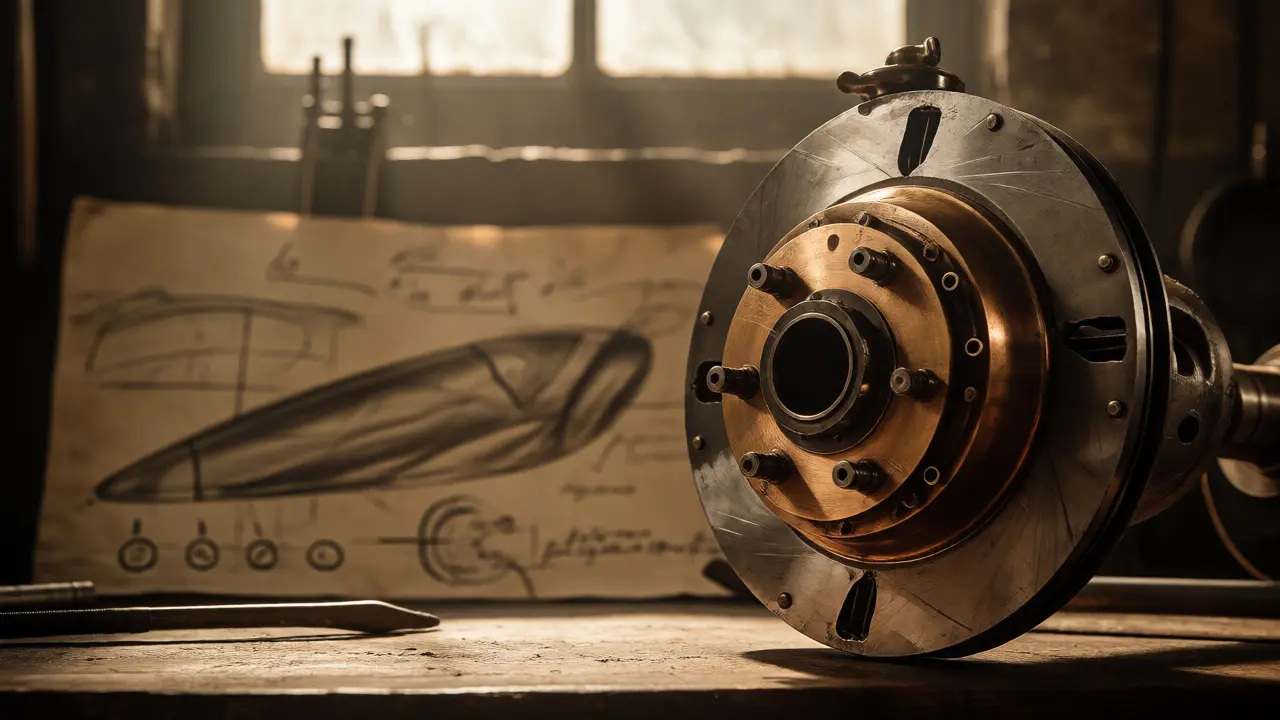
But his work on braking remained his most lasting automotive contribution. While others were refining drums, Lanchester patented a disc brake system in 1902. Yes, 1902. That’s over a century ago. So why didn’t we see them on roads immediately? The answer lies in materials science. Early steel rotors warped easily, and hydraulic seals leaked. The concept was sound, but the technology to build it reliably hadn’t caught up yet.
How the Lanchester System Worked
The core principle of the Lanchester disc brake remains unchanged in modern vehicles. Imagine a flat circular plate attached to the wheel hub. This is the rotor. When you press the brake pedal, hydraulic fluid pushes pistons in a caliper mounted over the edge of the rotor. These pistons clamp brake pads onto both sides of the rotor. Friction slows the rotation.
This design offers three distinct advantages over drums:
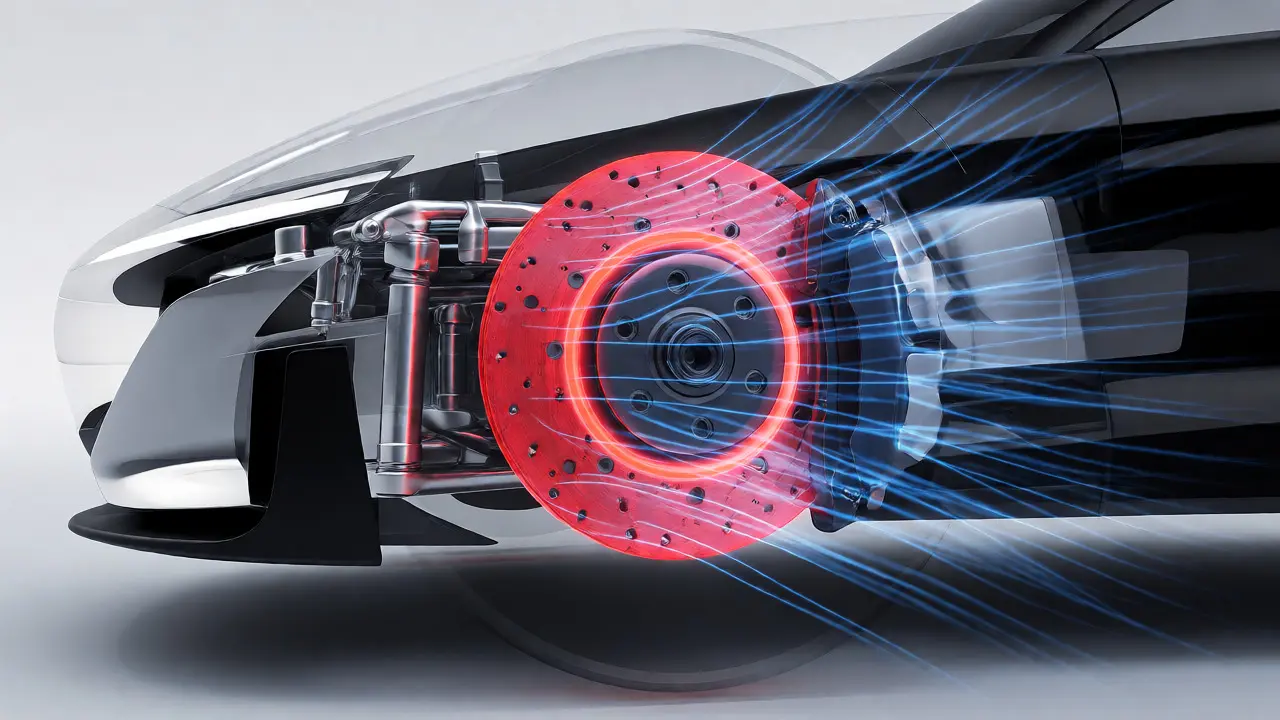
- Heat Dissipation: The rotor is exposed to airflow. As the wheel spins, air rushes over the hot metal, cooling it rapidly.
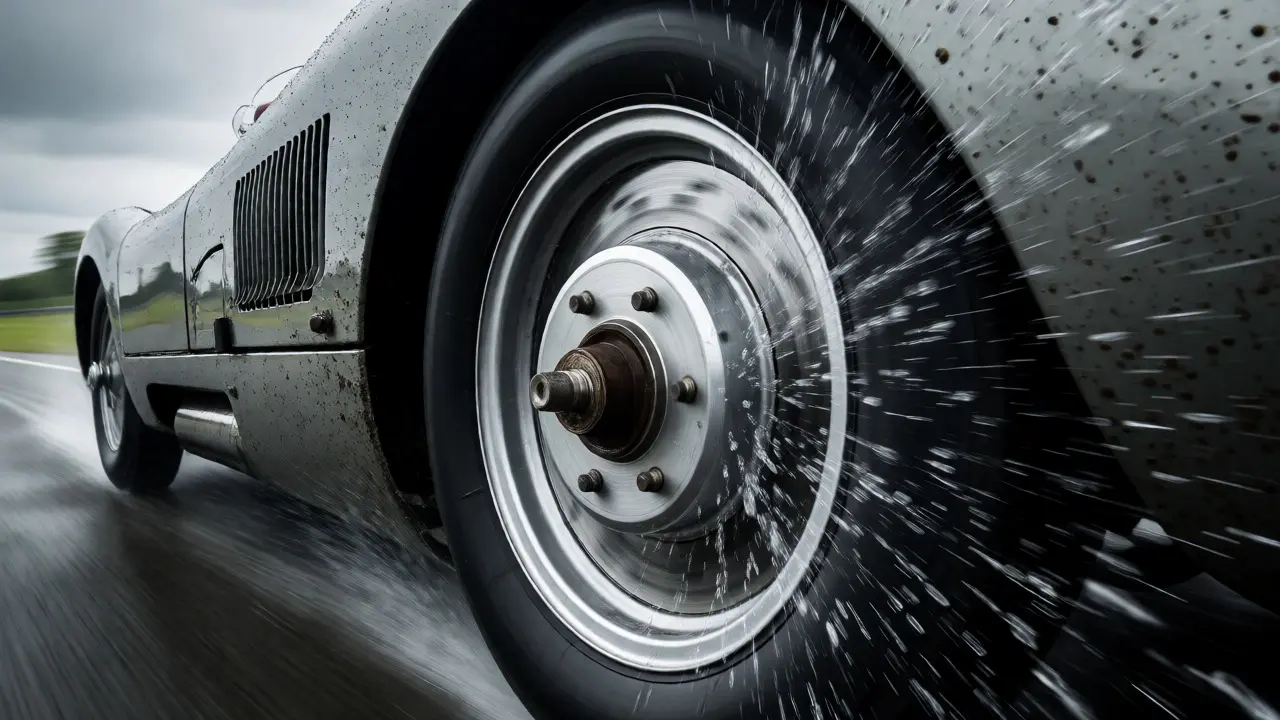
- Self-Cleaning: Water and mud are flung off the spinning rotor by centrifugal force. Drum brakes tend to trap water, leading to reduced effectiveness after rain or splashes.
- Consistent Pedal Feel: Because the pads move perpendicular to the rotor face, the distance they travel doesn’t change significantly as they wear. This keeps the brake pedal position consistent.
Lanchester’s original patents detailed these mechanisms with precise mathematical rigor. He calculated the torque required to stop a vehicle of a given mass at a specific speed. This quantitative approach set him apart from contemporaries who relied on trial and error.
Why It Took Decades to Become Standard
If the idea was patented in 1902, why do we associate disc brakes with the 1960s and 70s? Several barriers slowed adoption.
First, manufacturing costs. Machining flat, true rotors was expensive compared to casting simple drums. Second, reliability issues. Early hydraulic systems suffered from seal degradation. Leaking fluid meant loss of pressure. Third, industry inertia. Car manufacturers had massive investments in drum brake tooling. Switching required retooling entire factories.
The breakthrough came later, driven by racing. Jaguar, another British icon, used Dunlop disc brakes on the C-Type and D-Type race cars in the 1950s. These cars dominated Le Mans, proving that discs could handle extreme stress without fading. This public demonstration broke the skepticism. Once consumers saw racers using them, demand trickled down to street cars.
By the 1960s, Citroën began fitting disc brakes on the front wheels of models like the DS. By the 1970s, four-wheel disc systems became common on performance vehicles. Today, even economy cars use them. The path from Lanchester’s patent to universal standard took nearly 70 years, but the trajectory was inevitable.
Comparing Braking Technologies
Understanding where disc brakes fit in the broader landscape helps clarify their significance. Here is how the main types stack up.
| Feature | Drum Brakes | Disc Brakes |
|---|---|---|
| Heat Management | Poor. Heat is trapped inside the drum. | Excellent. Airflow cools the exposed rotor. |
| Water Resistance | Low. Water accumulates, reducing friction. | High. Centrifugal force sheds water quickly. |
| Maintenance Cost | Low. Parts are cheap and easy to replace. | Higher. Rotors and pads cost more initially. |
| Stopping Power | Adequate for light loads and low speeds. | Superior for high speeds and heavy loads. |
| Complexity | Simple mechanical linkage. | Requires precise hydraulics and machining. |
Notice that drum brakes aren’t obsolete. Many rear-wheel setups still use them because they require less force to actuate and can serve as parking brakes easily. But for primary stopping power, especially at the front where weight transfer occurs during braking, discs are unmatched.
Legacy in Modern Engineering
Every time you slam on the brakes to avoid a collision, you’re relying on principles Lanchester codified. The basic geometry hasn’t changed much. We’ve improved materials-using carbon-ceramic composites instead of plain steel-and added electronics like ABS (Anti-lock Braking System). But the fundamental action-clamping pads to a spinning disc-is pure Lanchester.
This case study illustrates a broader truth in engineering: good ideas often wait for better tools. Lanchester had the right concept but lacked the metallurgy and sealing technology to make it practical for mass production. Innovation isn’t just about invention; it’s about timing and ecosystem readiness.
For students of automotive history, the Lanchester disc brake serves as a reminder to look beyond the obvious inventors. We often credit German or American firms for modern conveniences, but Britain’s contribution to foundational automotive safety tech is profound. From the internal combustion engine refinements to transmission designs, British engineers shaped the DNA of the modern car.
Frequently Asked Questions
Did Frederick Lanchester invent the very first disc brake?
Not exactly. There were earlier concepts, such as those by John Thompson in 1902 for bicycles and horse-drawn carriages. However, Lanchester is credited with the first practical, hydraulically operated disc brake specifically designed for automobiles. His 1902 patent and subsequent prototypes demonstrated the viability of the system for motor vehicles, distinguishing his work from earlier theoretical or non-automotive applications.
Why did it take so long for disc brakes to become standard on cars?
Several factors delayed adoption. Manufacturing costs were high compared to drum brakes. Early materials warped under heat, and hydraulic seals were unreliable. Additionally, the auto industry was heavily invested in existing drum brake infrastructure. It wasn't until advancements in metallurgy and sealing technologies in the 1950s, combined with successful racing demonstrations by teams like Jaguar, that manufacturers felt confident switching to discs for consumer vehicles.
Are drum brakes completely obsolete?
No. Drum brakes are still widely used, particularly on the rear wheels of economy cars and trucks. They are cheaper to produce, simpler to maintain, and often incorporate the parking brake mechanism within the same assembly. For lighter vehicles with lower performance demands, drum brakes provide sufficient stopping power at a lower cost, making them a practical choice despite the superiority of disc brakes in high-stress scenarios.
What role did racing play in popularizing disc brakes?
Racing served as the ultimate testing ground. In the 1950s, Jaguar fitted disc brakes to their C-Type and D-Type race cars. These vehicles won prestigious races like Le Mans, demonstrating that disc brakes could withstand repeated hard stops without fading. This public proof-of-concept convinced skeptical manufacturers and consumers that the technology was reliable and superior, accelerating its transition from track to street.
How does a disc brake cool down faster than a drum brake?
A disc brake's rotor is fully exposed to the air. As the wheel rotates, fresh air flows over the entire surface of the rotor, carrying heat away efficiently. In contrast, a drum brake encloses the friction surfaces inside a metal shell. This enclosure traps heat, causing temperatures to rise rapidly and leading to brake fade. The open design of the disc allows for continuous convective cooling, maintaining consistent braking performance.