Electric Roadmaps: How Tata, Geely, and VW Plan EV Futures for British Marques
 Aug, 30 2026
You might think buying a Jaguar or a Lotus means you’re supporting British industry. But look closer at the ownership structure, and you’ll see something different. Jaguar Land Rover is owned by India’s Tata Motors. Lotus and Volvo belong to China’s Geely Holding Group. And while Bentley remains under German Volkswagen Group, its future is tied to European regulatory pressures just as much as Indian or Chinese ones. This isn’t just corporate trivia. It dictates where your next electric car is designed, built, and what tech it uses. The race to electrify these iconic brands is happening right now, and the strategies differ wildly based on who holds the checkbook.
The Great Ownership Shift
For decades, British automotive history was defined by national pride. Today, it’s defined by global capital flows. When Tata Motors acquired Jaguar Land Rover (JLR) in 2008, critics feared the brand would lose its soul. Instead, Tata injected stability when JLR was bleeding cash. Fast forward to today, and that same parent company is steering JLR through one of the most aggressive pivots in automotive history. They aren’t just tweaking engines; they are rebuilding the entire architecture from scratch.
Meanwhile, Geely’s acquisition of Volvo Cars in 2010 and later stakes in Lotus proved that Chinese capital could preserve heritage while accelerating innovation. Geely didn’t strip-mine these brands. They shared platforms. This collaboration allowed Volvo to develop safe, efficient electric vehicles faster than many rivals. Now, with Lotus fully under Geely’s umbrella, the lightweight sports car maker is transforming into an electric luxury performance brand. These ownership structures create unique ecosystems where technology flows across borders, blurring the lines between "British" engineering and global manufacturing realities.
Tata’s High-Stakes Gamble with JLR
Tata Motors has made it clear: Jaguar will become a pure-electric brand by 2025, while Land Rover transitions gradually. This isn’t a gentle glide path. It’s a sprint. Under CEO Adrian Mardell, JLR launched its "Reimagine" strategy, which prioritizes high-margin electric vehicles over volume sales. The logic? Compete with Porsche and Mercedes on desirability, not price.
To achieve this, Tata is investing heavily in new electric architectures. The MLA-Flex platform is central to this plan. Unlike older platforms adapted for batteries, MLA-Flex is designed natively for electrification. It supports both battery-electric and plug-in hybrid powertrains, giving Land Rover flexibility during the transition. For Jaguar, however, there is no hybrid safety net. Every model must be electric.
This approach carries significant risk. If the market slows down, JLR lacks a low-cost entry-level EV to catch budget-conscious buyers. Their first all-electric Jaguar, expected around 2026-2027, needs to be a halo product-something people wait in line for. Tata’s experience with Tata Nexon EV in India gives them confidence in battery management, but scaling that expertise to premium British luxury is a different beast entirely. They are betting that customers will pay a premium for the badge and the design, even if the underlying tech shares roots with mass-market models.
Geely’s Platform Sharing Strategy
If Tata is playing a solo act, Geely is running an orchestra. The Chinese giant understands efficiency through scale. By sharing components across Volvo, Lotus, Polestar, and even Smart, Geely drives down costs without sacrificing quality. This is the secret weapon behind their EV success.
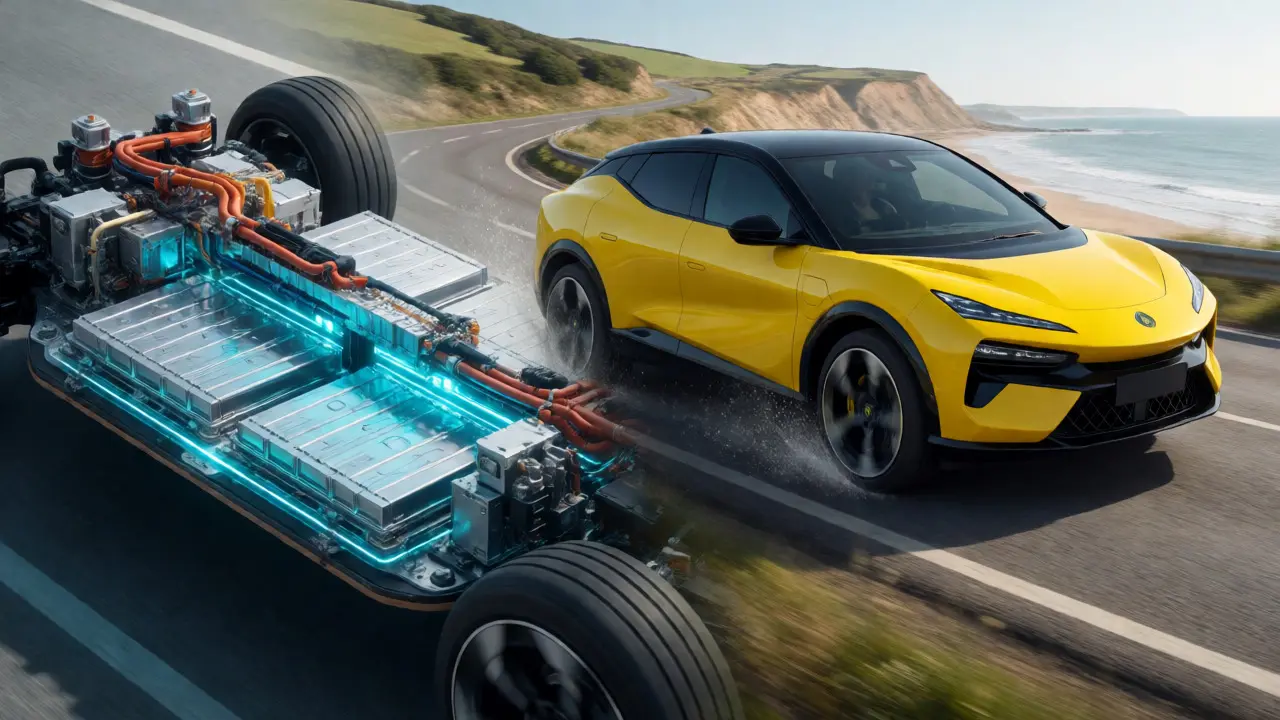
SEA Architecture (Sustainable Experience Architecture) is the backbone of this strategy. Developed by Geely’s research arm, SEA is a modular skateboard platform used by multiple brands. It allows rapid development of everything from compact city cars to high-performance SUVs. Lotus leverages this for its new Eletre SUV, combining British handling dynamics with Chinese battery density and software speed.
For Volvo, this meant launching the EX30, a small, affordable electric SUV that undercut competitors on price. That affordability wasn’t magic; it came from using standardized parts sourced globally. Geely’s ability to integrate hardware and software quickly gives these British-Swedish brands an edge. While traditional automakers struggle with software bugs, Geely-backed brands often ship updates faster, keeping cars feeling current longer. This synergy turns ownership into a technological advantage, proving that cross-border collaboration can accelerate innovation rather than dilute it.
VW Group’s Conservative Precision
Volkswagen Group takes a different tack. As owners of Bentley, Audi, and Porsche, they have deep pockets but face strict European emissions regulations. Their strategy is methodical, focusing on platform standardization across the group. The PPE Platform (Premium Platform Electric), developed jointly with Porsche, serves as the foundation for future electric Audis and Porsches. Bentley’s first fully electric model will likely utilize derivatives of this architecture or the upcoming SSP (Scalable Systems Platform).
Unlike the agile startups, VW moves slowly but surely. They prioritize build quality and long-term durability over cutting-edge experimental features. For Bentley, this means maintaining the ultra-luxury feel while swapping combustion engines for silent motors. The challenge here is weight management. Luxury cars are already heavy; adding batteries makes them heavier. VW’s engineers focus on optimizing range per kilowatt-hour rather than chasing maximum specs. This conservative approach appeals to traditional luxury buyers who value reliability over novelty. However, it risks falling behind in software sophistication compared to Tesla or Geely-backed brands.
| Brand | Parent Company | Primary Platform | EV Launch Timeline | Strategic Focus |
|---|---|---|---|---|
| Jaguar | Tata Motors | MLA-Flex / New EV Arch | 2025-2027 | Pure Electric Premium |
| Land Rover | Tata Motors | MLA-Flex | Gradual Transition | Hybrid & BEV Mix |
| Lotus | Geely Holding | SEA Architecture | 2024 (Eletre) | Performance Luxury |
| Volvo | Geely Holding | SPA2 / SEA | 2024-2025 | Safety & Accessibility |
| Bentley | VW Group | PPE / SSP | 2026+ | Ultra-Luxury Heritage |
Supply Chain Realities
Owning a brand doesn’t mean controlling its supply chain. Each parent company sources batteries differently. Tata relies on partnerships with companies like Godrej and potentially CATL for localized production in India and UK. Geely has vertical integration advantages, owning battery manufacturers and raw material stakes. This allows them to secure lithium and cobalt supplies more cheaply and reliably.
VW Group, meanwhile, has invested billions in cell factories across Europe. They aim to reduce dependency on Asian suppliers. For consumers, this matters because supply chain control impacts pricing and availability. If a shortage hits, Geely-owned brands might weather the storm better due to integrated sourcing. VW’s massive scale helps negotiate prices, but bureaucratic hurdles can slow adaptation. Understanding these backend differences helps explain why some EVs arrive on time while others face delays.
What This Means for Buyers
So, why should you care about who owns your car? Because ownership dictates the user experience. A Jaguar EV will likely emphasize design flair and driving dynamics, reflecting British heritage. A Lotus EV will prioritize performance metrics and lightweight engineering. A Bentley EV will focus on silence, craftsmanship, and status.
However, the underlying tech may surprise you. You might find that your "British" car runs on software developed in Sweden or China. This isn’t a downgrade; it’s a feature. Global teams bring diverse perspectives, leading to more robust products. When shopping for an EV from these marques, look beyond the badge. Investigate the platform. Check the software update policy. Ask about battery warranty terms. These details reveal the true strength of the parent company’s commitment.
Ultimately, the era of purely national carmakers is over. We live in a world of global collaborations. Tata, Geely, and VW are testing new models for how legacy brands can survive the electric shift. Some will succeed brilliantly. Others might struggle to adapt. Your job as a buyer is to spot which combination of heritage and modern capability offers the best value for your money.
Is Jaguar still considered a British brand?
Yes, Jaguar retains its British identity in terms of design, engineering headquarters, and cultural heritage. However, it is financially and strategically controlled by Tata Motors, an Indian multinational corporation. The cars are primarily manufactured in the UK, but key technologies and strategic decisions originate from Tata's global network.
How does Geely influence Lotus's electric vehicles?
Geely provides Lotus with access to advanced electric vehicle platforms, specifically the SEA Architecture. This allows Lotus to develop electric models like the Eletre faster and more cost-effectively than if they had built everything from scratch. Geely also assists with supply chain logistics and software development, leveraging economies of scale.
Why is Bentley moving to electric vehicles so slowly?
Bentley operates in the ultra-luxury segment, where customers expect perfection and longevity. Rushing an EV launch risks damaging the brand's reputation for reliability. Additionally, integrating high-capacity batteries without compromising the luxurious interior space and ride comfort requires extensive engineering. Volkswagen Group's cautious approach ensures that when Bentley launches its EV, it meets the highest standards of quality and performance.
Do I get better software updates with Geely-owned brands?
Generally, yes. Geely's integrated approach to hardware and software, particularly through its partnership with Polestar and its own R&D centers, often results in faster and more frequent over-the-air (OTA) updates. Brands like Volvo and Lotus benefit from this infrastructure, allowing them to refine vehicle performance and add features remotely more efficiently than some traditional competitors.
Will Tata increase the price of Jaguar EVs?
Tata's "Reimagine" strategy focuses on raising margins by positioning Jaguar as a more exclusive, high-end brand. This suggests that future Jaguar EVs may carry higher price tags compared to previous internal combustion models, aiming to compete directly with Porsche and high-spec Mercedes-Benz EQ models rather than mass-market alternatives.