DB5 and James Bond: How a British Sports GT Became a Global Cultural Icon
 Mar, 15 2026
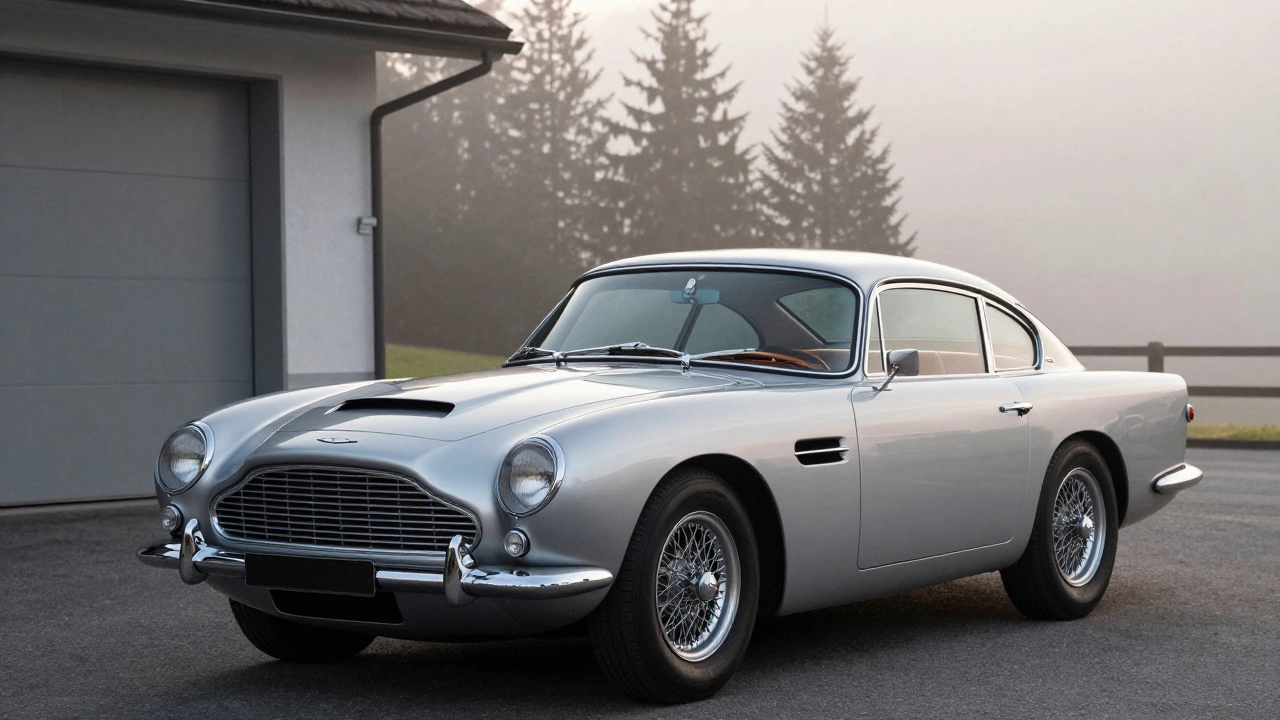
The Aston Martin DB5 wasn't just another luxury coupe when it rolled off the production line in 1963. It was a machine built for elegance, speed, and quiet dominance on winding European roads. But within two years, it became something far more powerful: a symbol of cool, danger, and sophistication that reached every corner of the planet. All because of a single movie.
Before the Gun Barrel: The DB5 as a Real Machine
The DB5 was Aston Martin’s answer to the Ferrari 250 GT and the Jaguar E-Type. It carried a 4.0-liter straight-six engine, tuned to deliver 282 horsepower. That might sound modest today, but in the mid-1960s, it meant 0 to 60 mph in under eight seconds and a top speed of 141 mph. It had a sleek, hand-built aluminum body, a refined interior with leather and walnut trim, and a suspension system that balanced comfort with precise handling. Only 1,020 were ever made. Each one cost around £3,500 - roughly $9,000 at the time, or over $80,000 today adjusted for inflation.
It was a car for bankers, diplomats, and industrialists who wanted performance without the flash. It didn’t scream for attention. It commanded respect. But none of that mattered when it was handed over to a fictional British agent.
The Moment Everything Changed: Goldfinger
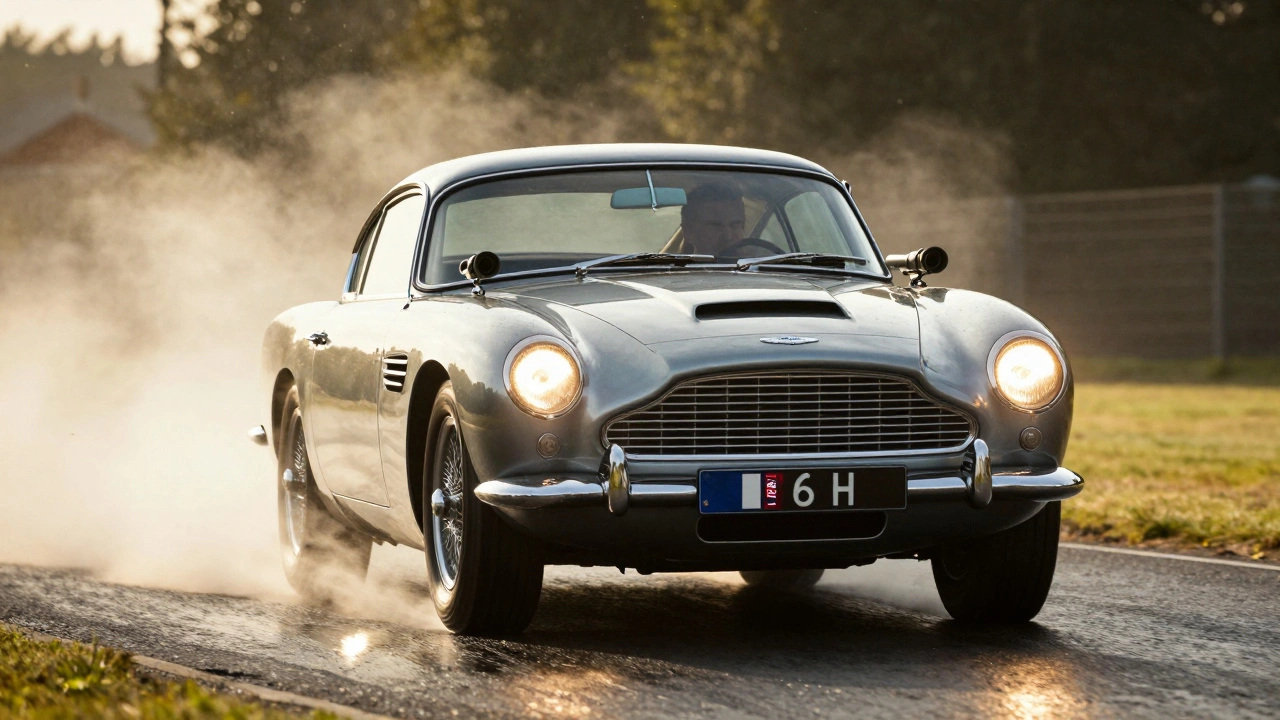
On October 18, 1964, audiences worldwide watched as Sean Connery slid into a silver DB5 outside a Swiss garage. The car had no weapons. No gadgets. Just a quiet, polished presence. Then, in the next scene, the car was revealed with hidden features: a passenger ejection seat, a revolving license plate, bulletproof shielding, and - most famously - a machine gun mounted behind the front headlights.
That wasn’t a marketing stunt. It was a collaboration between the film’s producers and Aston Martin’s engineers. The car wasn’t modified by Hollywood prop masters - it was built by the same people who built the real DB5s. The ejector seat? Real. The tire slashers? Functional. The oil slick dispenser? Tested on closed roads.
By the end of Goldfinger, the DB5 wasn’t just a car. It was a character. It had personality. It had secrets. And it had a license to kill.
From Screen to Streets: The Cultural Ripple
After Goldfinger, sales of the DB5 didn’t skyrocket - it was still too expensive and too rare. But something else happened. The car became mythic.
Teenagers in New York, Tokyo, and Sydney started drawing the DB5 in their notebooks. Model kits flew off shelves. Car magazines ran cover stories titled “The Real 007.” Even people who didn’t care about cars began recognizing its silhouette. The DB5 became shorthand for luxury, espionage, and British cool.
By the time Thunderball (1965) and Goldfinger’s sequel Thunderball featured the car again, the DB5 was already cemented in pop culture. Later films like GoldenEye (1995) and Skyfall (2012) brought it back - not as a relic, but as a living icon. In Skyfall, the car explodes in a fiery crash. Fans didn’t mourn the loss. They celebrated its final act.
Why This Car? Why Not the Others?
There were other movie cars. The Ford Mustang in Bullitt. The Pontiac Firebird in Smoky and the Bandit. The DeLorean in Back to the Future. But none of them carried the same weight.
The DB5 worked because it was real. It wasn’t a prop designed for cinema. It was a production car that just happened to be upgraded for a spy. That authenticity made it believable. When Bond drove it, you believed he could outrun a villain’s convoy. When it fired its guns, you didn’t laugh - you held your breath.
And unlike other movie cars, the DB5 never became a joke. It never got parodied into oblivion. It remained dignified. Even when it was turned into a video game, a LEGO set, or a collectible scale model, it kept its gravitas.
The Legacy: Auctions, Replicas, and a Living Legend
In 2019, the actual DB5 used in Goldfinger and Thunderball sold at auction for $6.4 million. It was the most expensive car ever sold at the time - and it wasn’t even the fastest or rarest DB5. It was the one that had been in the film.
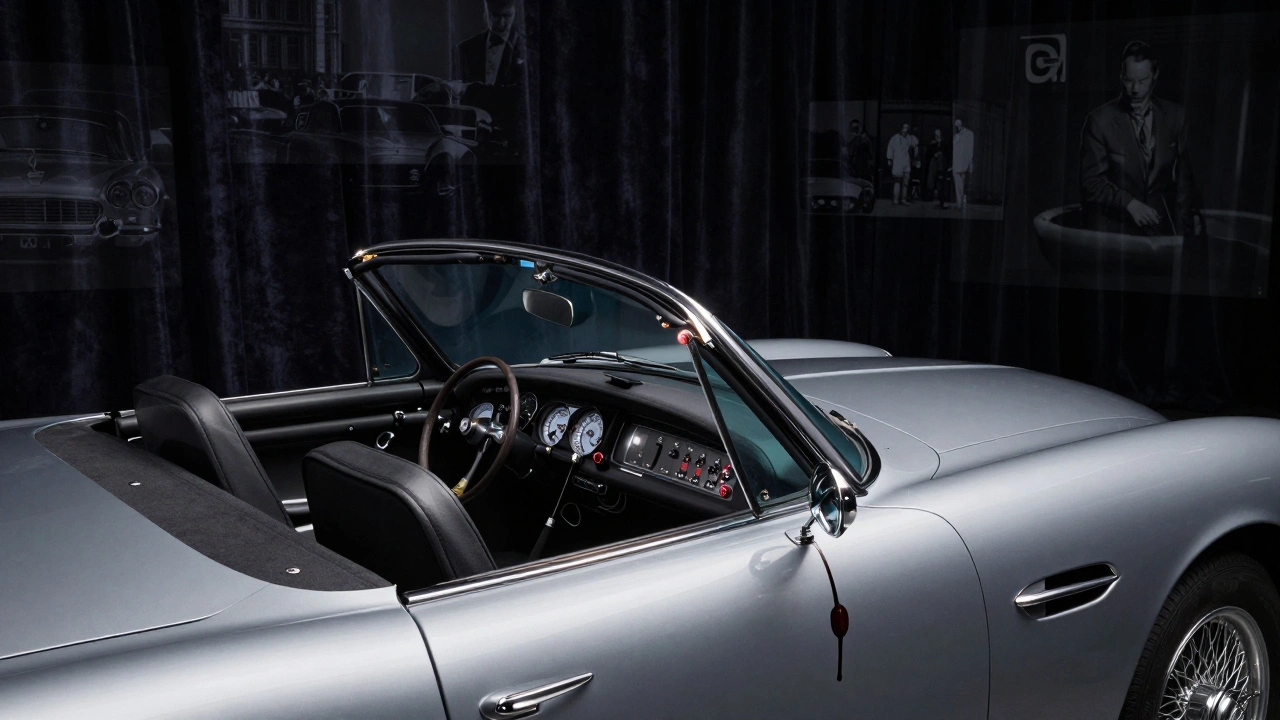
Today, Aston Martin offers official DB5 Continuation models - 25 brand-new cars built to the exact 1963 specs, complete with working gadgets. Each costs over $3 million. Buyers don’t just want the car. They want the story. The legacy. The connection to Bond.
And it’s not just collectors. Police forces in the UK have used DB5s in promotional campaigns. Schools teach automotive design using the DB5 as a case study. Even the British government has used its image in tourism ads.
The Unspoken Truth: It Wasn’t the Car - It Was the Moment
The DB5 didn’t become iconic because it was perfect. It became iconic because it arrived at the right time.
Post-war Britain was rebuilding its identity. The Cold War was heating up. The world craved heroes who were sharp, calm, and stylish. James Bond gave them that. And the DB5? It was the perfect vehicle - literally - for that fantasy.
It had no need for flashy neon lights or roaring V8s. Its power came from restraint. From the quiet hum of its engine. From the way its doors clicked shut. From the way it could disappear into a London fog, only to reappear seconds later with a bullet hole in the windshield.
That’s why, over 60 years later, people still pause when they see a DB5 on the street. They don’t just see a car. They see a piece of history. A symbol of elegance under pressure. A machine that didn’t just transport people - it transported imagination.
Why is the Aston Martin DB5 so valuable today?
The DB5 is valuable because of its rarity, craftsmanship, and its direct link to the James Bond films. Only 1,020 were ever made, and fewer than 10 were used in the original movies. The car used in Goldfinger sold for $6.4 million in 2019, not because of its mechanical specs, but because it carried the legacy of 007. Collectors pay for history, not just horsepower.
Did the gadgets in the DB5 actually work?
Yes, most of them did. The ejector seat, oil slick, and machine guns were real, functional modifications built by Aston Martin engineers and special effects experts. The car was tested on closed tracks before filming. The bulletproof shields were made of real armor plating. Even the revolving license plates were mechanically engineered to flip between UK and foreign plates - and they worked on camera.
How many DB5s were used in James Bond films?
At least seven DB5s were used across multiple Bond films. Two were destroyed during filming - one in Goldfinger and another in Thunderball. One was used as a stunt car in GoldenEye, and two were used for close-up shots in Skyfall. The surviving film cars are now in museums or private collections.
Can you buy a new Aston Martin DB5 today?
Yes - but not the original model. Aston Martin released the DB5 Continuation in 2019, a limited run of 25 brand-new cars built using original tooling and materials. Each one is hand-assembled, includes working gadgets like the ejector seat and machine guns, and costs over $3 million. These are not replicas - they’re official, factory-built DB5s made decades after production ended.
Why didn’t other luxury cars become as iconic as the DB5?
Other luxury cars were fast or beautiful, but none combined elegance with a narrative. The DB5 was never just a car - it was part of a story that millions lived through. It wasn’t marketed as a spy car; it became one by accident. That authenticity, paired with the global reach of Bond films, gave it a cultural weight no other vehicle achieved. A Ferrari might be faster, a Rolls-Royce more luxurious - but only the DB5 made you feel like you could be James Bond.