Coventry Car Cluster Origins: Why 1890s Suppliers Drove UK Automotive History
 Aug, 16 2026
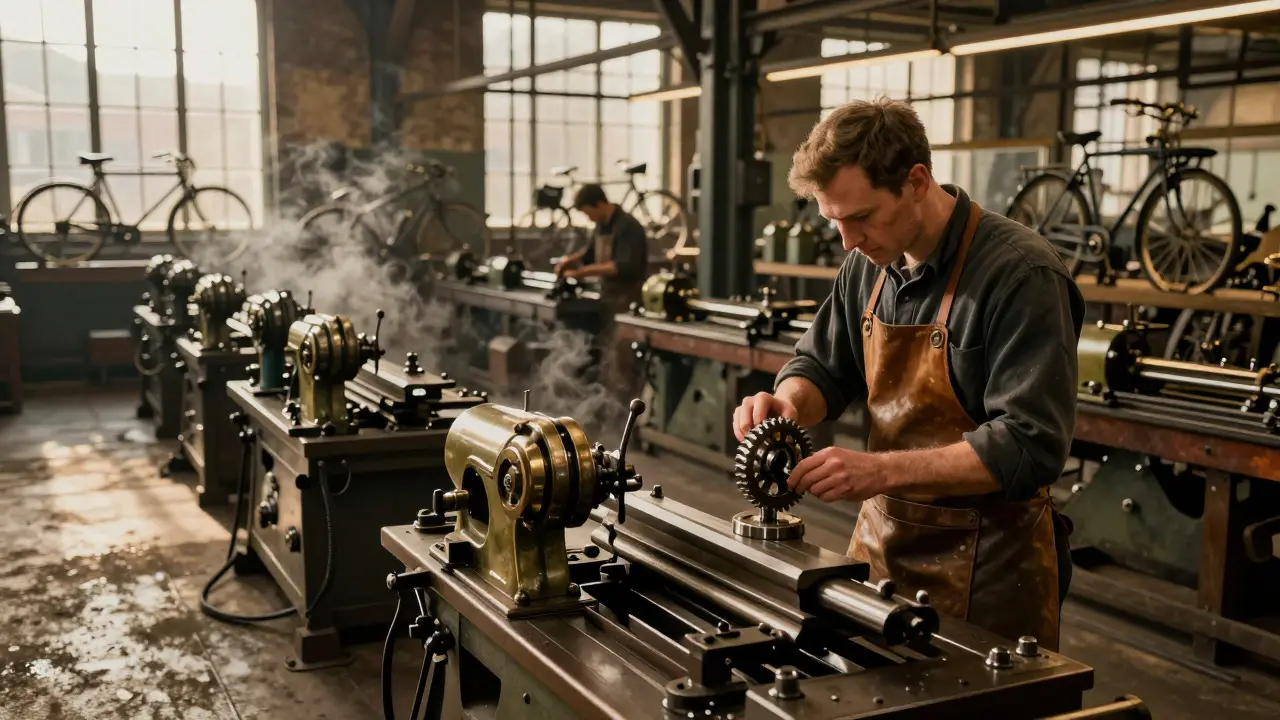
Imagine walking through Coventry in the late 1890s. You don't see a single finished car rolling down the street. Instead, you smell machine oil and hear the rhythmic clanging of lathes. This wasn't an accident. It was a deliberate ecosystem forming around one specific skill: precision engineering. While France and Germany were building whole cars from scratch, Coventry was quietly becoming the world's most critical hub for the parts that make those cars work. The story isn't just about who built the first British car; it's about why a city known for bicycles and clocks became the beating heart of the global automotive supply chain.
The Bicycle Boom as the Foundation
To understand the car, you have to look at the bike. In the 1880s and 1890s, Coventry was the capital of the bicycle industry. Companies like Humber and Singer were churning out thousands of machines. But here is the key detail: bicycles are complex mechanical devices. They require gears, chains, bearings, and precise metalworking. The factories in Coventry didn't just assemble bikes; they mastered the art of making small, durable, and accurate metal components. When the automobile emerged in the 1890s, it was essentially a bicycle with an engine. The skills required to build a reliable car transmission were already sitting on the factory floors of Coventry. This pre-existing infrastructure meant that when car manufacturers started looking for suppliers, they didn't need to train new workers or buy new machines. They just needed to ask their existing bicycle partners to tweak their processes slightly.
The Clockmaking Connection
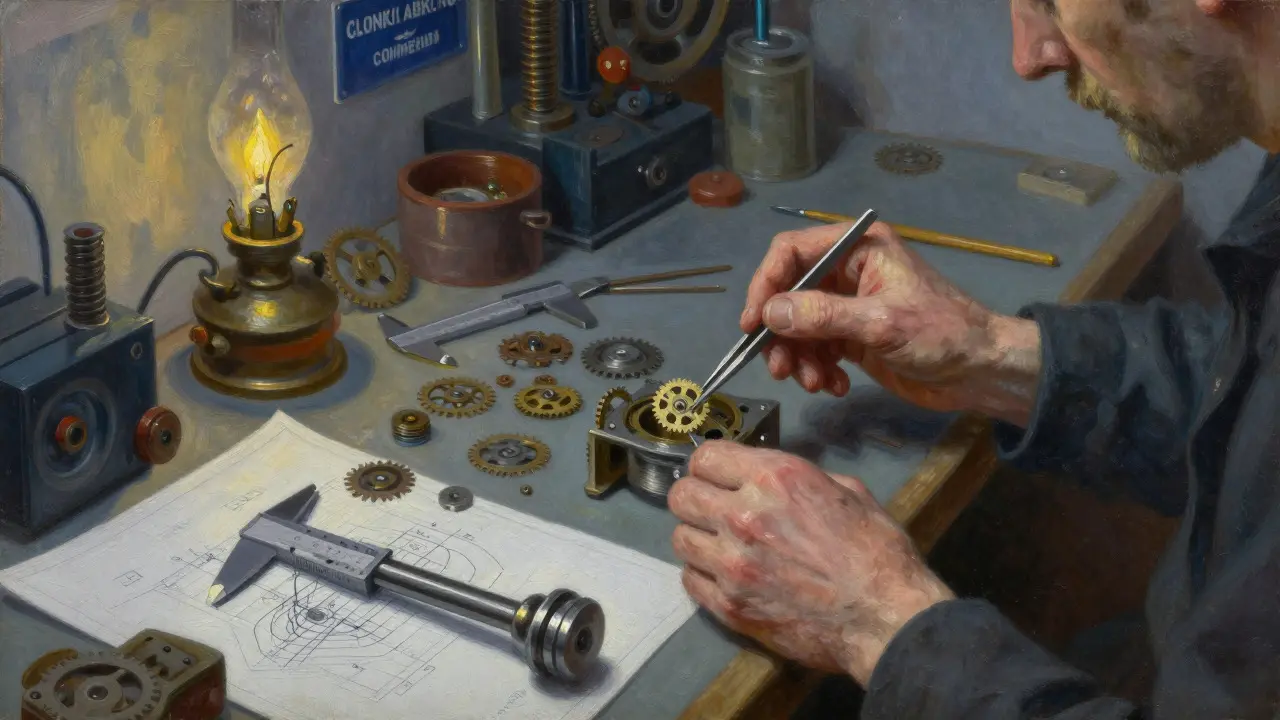
Bicycles weren't the only factor. Coventry had a deep history in clockmaking dating back centuries. Watchmakers and clockmakers developed techniques for creating tiny, intricate gears and springs. This culture of "fine mechanics" permeated the local workforce. A machinist in Coventry in 1895 understood tolerances in a way that a worker in a heavy steel mill might not. Cars, particularly the early high-performance models, demanded this level of precision. If a gear tooth was off by a fraction of a millimeter, the engine could seize. The local talent pool, shaped by decades of horology, provided exactly the kind of skilled labor that early automotive pioneers needed. This combination of bicycle-scale production and clock-level precision created a unique competitive advantage that other cities struggled to replicate quickly.
Key Players and Early Suppliers
Several companies capitalized on this environment. Singer & Co. is often cited as a pivotal figure. Originally a sewing machine maker, Singer entered the cycle trade and then moved into automobiles. Their ability to mass-produce standardized parts gave them a massive edge. Then there was Humber Ltd., which transitioned smoothly from cycles to cars, leveraging its existing supply network. But the real stars were the smaller, specialized suppliers. Companies like Rudge-Whitworth (famous for wheels) and various bearing manufacturers clustered within a few miles of each other. This proximity reduced shipping costs and communication delays. If a car maker in Coventry needed a new type of axle, they could walk to a supplier three streets away, discuss the spec over tea, and have a prototype ready in days, not weeks. This speed was crucial in the fast-moving market of the 1890s.
Why Coventry Beat Other Cities
You might wonder why London or Birmingham didn't take the lead. London was too focused on luxury and commerce, lacking the dense manufacturing base. Birmingham was strong in general engineering but lacked the specific concentration of light vehicle components. Coventry hit the sweet spot. It had the rail links to move goods, the educated workforce from its educational institutions, and the cultural mindset of innovation. Furthermore, the city's social fabric encouraged entrepreneurship. It wasn't unusual for a foreman to leave a large firm and start his own workshop next door. This dynamic churn kept the cluster innovative. As soon as a new technology appeared, such as internal combustion engines replacing steam, Coventry firms adapted because they were used to rapid product changes in the cycle industry. Steam cars were bulky and slow to adapt; gasoline cars required lighter, more complex parts, which was right up Coventry's alley.
The Impact on the Global Industry
By the turn of the century, Coventry wasn't just serving the British market. It was exporting components to Europe and even North America. The reputation of "Coventry Made" became synonymous with quality. This export success reinforced the local economy, allowing for further investment in better machinery and training. It created a virtuous cycle: better products attracted more customers, which funded more R&D, which led to even better products. This model of clustering, where related firms agglomerate to share resources and knowledge, is now a standard concept in economic geography. But in the 1890s, it was happening organically in Coventry. The city proved that you don't need to be the biggest manufacturer to dominate an industry; you just need to control the essential inputs.
| City | Primary Industry | Automotive Advantage | Limitation |
|---|---|---|---|
| Coventry | Bicycles & Clocks | Precision parts, skilled labor, rapid prototyping | Smaller scale than heavy industry hubs |
| Birmingham | General Engineering | Strong metalworking, castings | Less focus on fine mechanical assembly |
| London | Luxury Goods & Finance | Capital access, wealthy clientele | Lack of manufacturing infrastructure |

Lessons for Modern Manufacturing
The story of 1890s Coventry offers practical lessons for today's tech and manufacturing sectors. First, leverage existing adjacent industries. If you are entering a new field, look for places where similar skills already exist. Second, prioritize proximity. Digital tools help, but physical closeness still facilitates the kind of tacit knowledge transfer that emails miss. Third, invest in specialized skills rather than general ones. The clockmakers' precision was a niche skill that became a superpower in a different context. Finally, maintain a culture of agility. The cycle industry changed fast, and so did Coventry. Companies that stayed rigid were left behind. Those that embraced change thrived. This historical example reminds us that industrial dominance is rarely about having the best single idea; it's about having the best system for executing ideas efficiently.
Frequently Asked Questions
Why did Coventry become a center for car parts instead of whole cars?
Coventry's strength lay in precision component manufacturing inherited from the bicycle and clock industries. While some firms did build complete cars, the city's primary value was in supplying high-quality gears, axles, and transmissions to manufacturers across the UK and abroad. This specialization allowed for greater efficiency and faster innovation in parts development.
What role did the bicycle industry play in the rise of the automotive sector?
The bicycle industry provided the foundational skills and infrastructure. Bicycles required complex mechanical systems similar to early cars. The factories, trained workers, and supply chains established for bicycles were easily repurposed for automobile production, giving Coventry a significant head start over regions without this prior experience.
How did clockmaking influence automotive engineering in Coventry?
Clockmaking instilled a culture of extreme precision and attention to detail. The techniques used to create tiny gears and springs in clocks translated directly to the needs of early internal combustion engines, which required tight tolerances to function reliably. This heritage ensured that Coventry's machinists were among the most skilled in the world for fine mechanical work.
Which companies were most influential in the 1890s Coventry automotive cluster?
Key players included Singer & Co., Humber Ltd., and Rudge-Whitworth. These firms leveraged their existing expertise in cycles and sewing machines to enter the automotive space. Additionally, numerous smaller specialist suppliers of bearings, axles, and transmissions played a critical role in supporting the larger manufacturers.
Did Coventry compete successfully with German and French auto centers?
Yes, Coventry competed effectively by focusing on quality components and rapid innovation. While France and Germany produced many complete vehicles, Coventry dominated the supply chain for critical parts. This allowed British and international car makers to rely on Coventry for reliability, giving the city significant influence over the global industry despite not always leading in total vehicle output.