British Sports Car Interiors: Minimalism, Function, and Driver Focus
 Sep, 5 2026
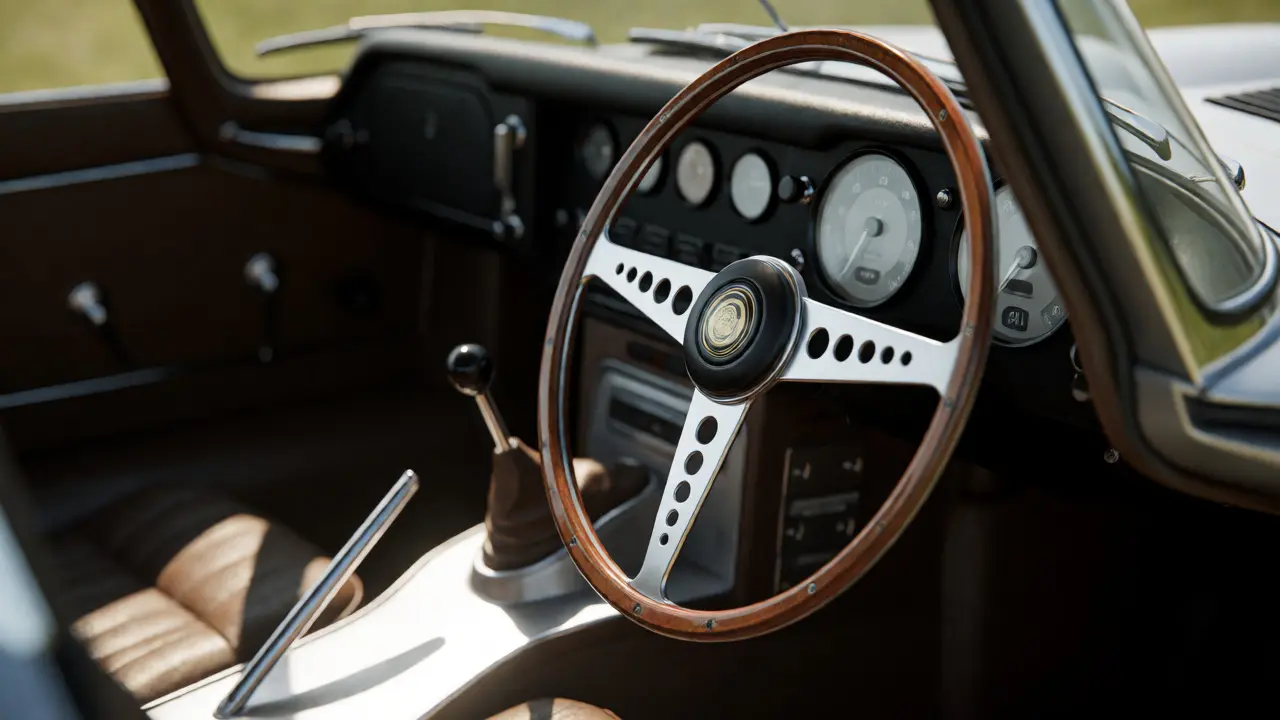
You slide into the cockpit of a Jaguar E-Type, a legendary British sports car known for its sleek lines and minimalist, driver-centric interior design. There’s no touchscreen glowing at you. No voice assistant asking if you want to adjust the climate. Just a steering wheel, three or four gauges, a gear stick, and enough space to shift without hitting your knuckles on the dashboard. It feels raw. It feels intentional.
Why do these old-school British cabins still captivate us? It’s not just nostalgia. It’s because they stripped away everything that didn’t help you drive. In an era where modern cars feel like rolling living rooms, British sports car interiors remind us what a car is actually for: connecting a human to the road through mechanical feedback and focused simplicity.
The Philosophy Behind the Cockpit
Minimalism in British sports cars wasn’t an aesthetic trend; it was an engineering necessity born from post-war constraints and racing heritage. After World War II, materials were scarce, and manufacturers like Lotus, a British sports car manufacturer founded by Colin Chapman, famous for the philosophy "simplify, then add lightness" had to make every gram count. If a part didn’t improve performance or handling, it got cut.
This led to a design ethos where function dictated form. You wouldn’t find sound-deadening foam under the carpets because weight mattered more than silence. You wouldn’t see complex HVAC systems because ducting added mass and complexity. Instead, designers focused on ergonomics-placing controls exactly where your hands naturally fell while driving fast. The result was an environment that demanded attention. You couldn’t zone out. The lack of distraction forced engagement.
Consider the MGB, a popular British sports car produced from 1962 to 1980, known for its simple yet effective interior layout. Its dashboard was a flat panel with basic instruments. No clutter. No buttons for seat heating or navigation. Just speed, RPM, fuel, and temperature. This clarity allowed drivers to process information instantly, a critical advantage when navigating twisty country lanes at high speeds.
Materials That Age With Character
Modern luxury often means hiding wear behind synthetic covers. British sports car interiors did the opposite. They used materials that showed their history. Wood veneers, aluminum trim, leather hides, and wool carpets weren’t chosen for durability alone but for how they interacted with the driver over time.
Take the wood-rimmed steering wheels found in models like the Aston Martin DB5, a grand tourer produced by Aston Martin between 1963 and 1965, celebrated for its elegant craftsmanship and iconic status. Over years of use, the wood developed a patina-a smooth, darkened finish unique to each owner’s grip style. It became personal. Plastic doesn’t do that. It just gets shiny or cracks.
Leather seats, often Connolly or Bridge of Weir brands, required regular care but offered unmatched tactile feedback. You could feel the texture change as seasons shifted. Wool carpets absorbed noise differently than rubber mats, creating a specific acoustic signature inside the cabin. These choices weren’t arbitrary. They created a sensory experience that digital interfaces can’t replicate.
| Material Type | Classic British Example (e.g., 1960s-70s) | Modern Equivalent | Driver Impact |
|---|---|---|---|
| Steering Wheel | Wood rim, thin diameter | Leather-wrapped, heated, thick | Classic offers better tactile feedback and size precision |
| Dashboard Finish | Aluminum or painted metal | Soft-touch plastic or carbon fiber | Classic reflects light subtly; modern reduces glare but lacks character |
| Seating | Thin leather over wire frames | Memory foam with electric adjustment | Classic keeps you connected to chassis movement; modern isolates you |
| Controls | Metal switches, physical knobs | Touchscreens, haptic pads | Classic allows blind operation; modern requires visual confirmation |

Ergonomics Designed for Speed
If you’ve ever tried to operate a touchscreen while cornering, you know the frustration. British sports car designers solved this decades ago by placing controls within thumb’s reach of the steering wheel. This principle, known as the "hands-on-wheel" rule, meant you never took both hands off the rim to adjust volume or turn on lights.
In a Triumph Spitfire, a small two-seater sports car manufactured by Triumph Motor Company from 1962 to 1980, the ignition key was often mounted directly on the steering column or dash cluster, eliminating the need to look down. Gear shifts were short-throw, designed for rapid changes during spirited driving. Pedals were offset slightly to allow heel-and-toe technique, a skill essential for matching engine revs during downshifts.
This focus on driver interaction extended to visibility. Low dashboards ensured clear sightlines over the bonnet. Thin A-pillars minimized blind spots. Even the shape of the instrument binnacles was crafted to reduce reflections from sunlight. Every element served one goal: keeping your eyes on the road and your mind on the drive.

The Evolution Toward Luxury Without Losing Focus
Not all British sports cars stayed spartan. As markets evolved, brands like Jaguar and Aston Martin began blending minimalism with luxury. The key difference? They maintained the driver-centric layout even as they added comfort features.
The Jaguar XJ-S, a grand tourer produced by Jaguar from 1975 to 1996, featuring a luxurious yet sporty interior introduced air conditioning and better sound insulation without cluttering the dash. Controls remained logical and accessible. Seats gained power adjustments but retained firm bolsters for lateral support. This balance proved successful-it appealed to buyers who wanted refinement without sacrificing the visceral connection to the machine.
Contrast this with some modern interpretations where screens dominate the center stack, forcing drivers to navigate menus for basic functions. British heritage designs avoided this trap by prioritizing physical interfaces. Why? Because muscle memory beats menu diving every time.
Why This Matters Today
Today’s drivers face cognitive overload. Notifications, navigation prompts, and adaptive cruise control alerts compete for attention. British sports car interiors offer a counterpoint. They teach restraint. They show that fewer options can lead to greater satisfaction.
Restomod companies are capitalizing on this trend. Builders like Singer Vehicle Design (though Porsche-based) and various British specialists recreate these principles using modern technology hidden behind classic aesthetics. You get Bluetooth audio discreetly integrated, LED lighting replacing bulbs, and improved safety structures-but the visual language remains pure.
For enthusiasts, owning such a car isn’t about status symbols. It’s about reclaiming agency. When you drive a classic British sports car, you’re not being driven by algorithms. You’re making decisions based on feel, sound, and instinct. That autonomy is rare now-and deeply rewarding.
Why do British sports cars have such simple interiors?
Historically, material scarcity after WWII and racing influences drove manufacturers to remove non-essential components. Additionally, focusing on driver engagement meant avoiding distractions, leading to layouts with only necessary controls visible.
Are these interiors uncomfortable compared to modern cars?
They prioritize support over plushness. Seats are firmer to keep you stable during cornering. While less cushioned, many drivers find them more comfortable for active driving because they provide better body positioning and feedback.
How difficult is it to maintain vintage interior materials?
Leather needs conditioning to prevent cracking, and wood requires protection from UV damage. However, these materials are repairable. Scratches can be polished out, unlike plastic which often requires replacement parts.
Can I install modern tech in a classic British sports car?
Yes, many owners retrofit Bluetooth speakers, USB charging ports, and even digital gauge clusters disguised as analog dials. The key is integrating them subtly to preserve the original aesthetic.
Which British brand has the most driver-focused interior?
Lotus is often cited due to Colin Chapman’s lightweight philosophy. However, Jaguar and Aston Martin also excel in balancing luxury with ergonomics, ensuring controls remain intuitive and accessible.