British Leyland's Fall: Design Excellence vs. Production Reality in 1970s UK Cars
 Apr, 20 2026
Key Takeaways
- Visionary design often ignored the limitations of aging factory infrastructure.
- Labor unrest and poor management created a toxic environment for quality control.
- The merge that created British Leyland combined brands but ignored operational synergy.
- A lack of investment in automation left the UK trailing behind Japanese efficiency.
The Dream of the Integrated Giant
In the early 1960s, the British government thought the answer to competition from Germany and the US was scale. They pushed for the creation of British Leyland is a massive automotive conglomerate formed in 1968 through the merger of British Motor Holdings and Leyland Motor Corporation. The idea was simple: combine the luxury of Jaguar, the reliability of Rover, and the mass-market reach of Austin and Morris into one unstoppable force. But you can't just glue different company cultures together and expect a Ferrari to come out the other end.
The result was a corporate monster. Instead of streamlining, they created a labyrinth of bureaucracy. While Jaguar designers were crafting some of the most beautiful silhouettes in automotive history, the people managing the assembly lines were fighting wars over break times. This disconnect meant that a car's aesthetic brilliance was often the only thing it had going for it. If you bought a car in 1973, you weren't just buying a vehicle; you were betting on whether the factory workers had been on strike for the last three weeks.
When Design Outpaces the Tooling
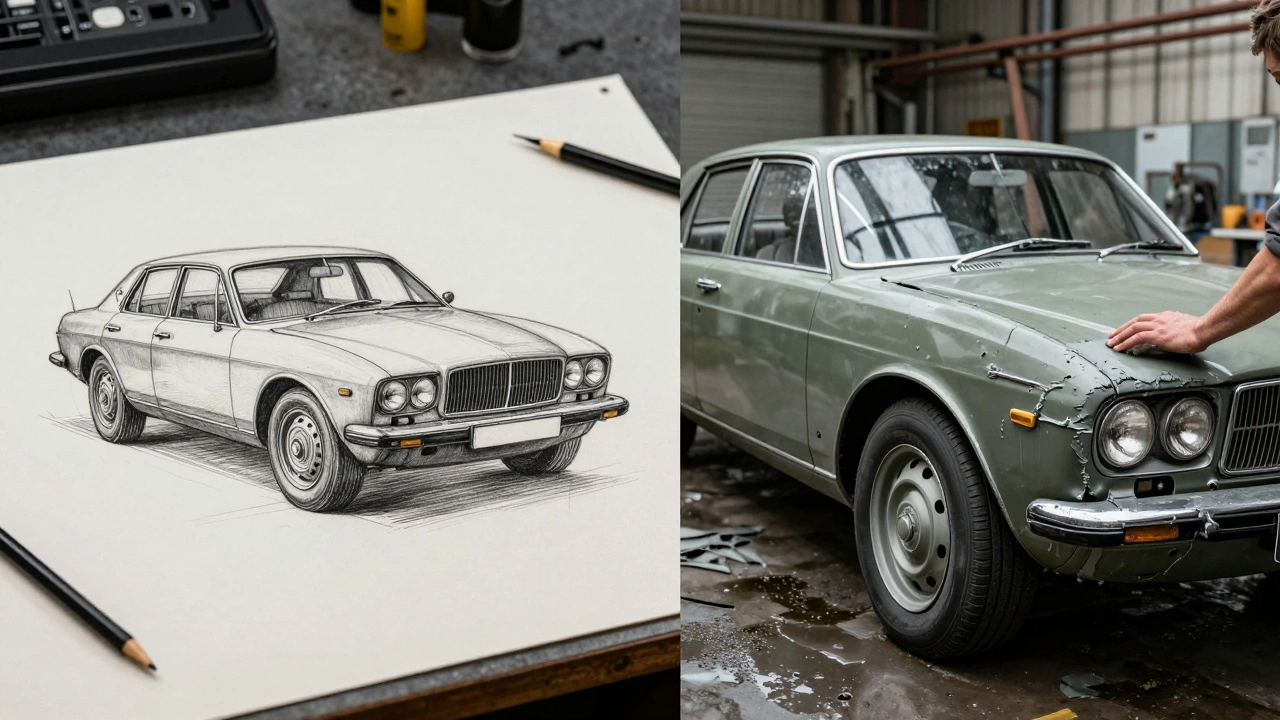
The 1970s saw some truly innovative concepts. Take the Austin Maxi is a pioneering front-wheel-drive family car launched in 1969 that maximized interior space. It was a layout that the rest of the world would eventually copy. It offered a level of versatility that was years ahead of its time. However, the tooling used to make these cars was ancient. Factories were essentially drafty warehouses with machinery that belonged in the Victorian era.
When a designer draws a tight panel gap, they assume the steel will be stamped with precision. But in the BL factories, the presses were worn out. You'd get panels that didn't fit, leading to the infamous "filler's nightmare" where workers used lead or plastic putty to hide gaps that were wide enough to fit a finger through. This is where British Leyland failed most spectacularly: they had 21st-century ideas being executed with 19th-century tools.
| Feature | Designer's Vision | Factory Reality | Impact on Buyer |
|---|---|---|---|
| Body Panels | Sleek, tight-fitting curves | Warped steel, huge gaps | Rapid rust and water leaks |
| Interior Trim | Modern, durable plastics | Poorly glued vinyl, cheap clips | Rattles and peeling dashboards |
| Engine Tuning | Efficient, smooth power delivery | Inconsistent tolerances | Unpredictable fuel economy |
The Human Element and the Shop Floor War
You can't talk about the 70s UK car scene without mentioning the labor strikes. It wasn't just about money; it was about a total breakdown in trust between the "suits" and the "overalls." The management style at the time was colonial-orders came from the top, and the workers were expected to obey without question. In response, the unions used the only leverage they had: stopping the line.
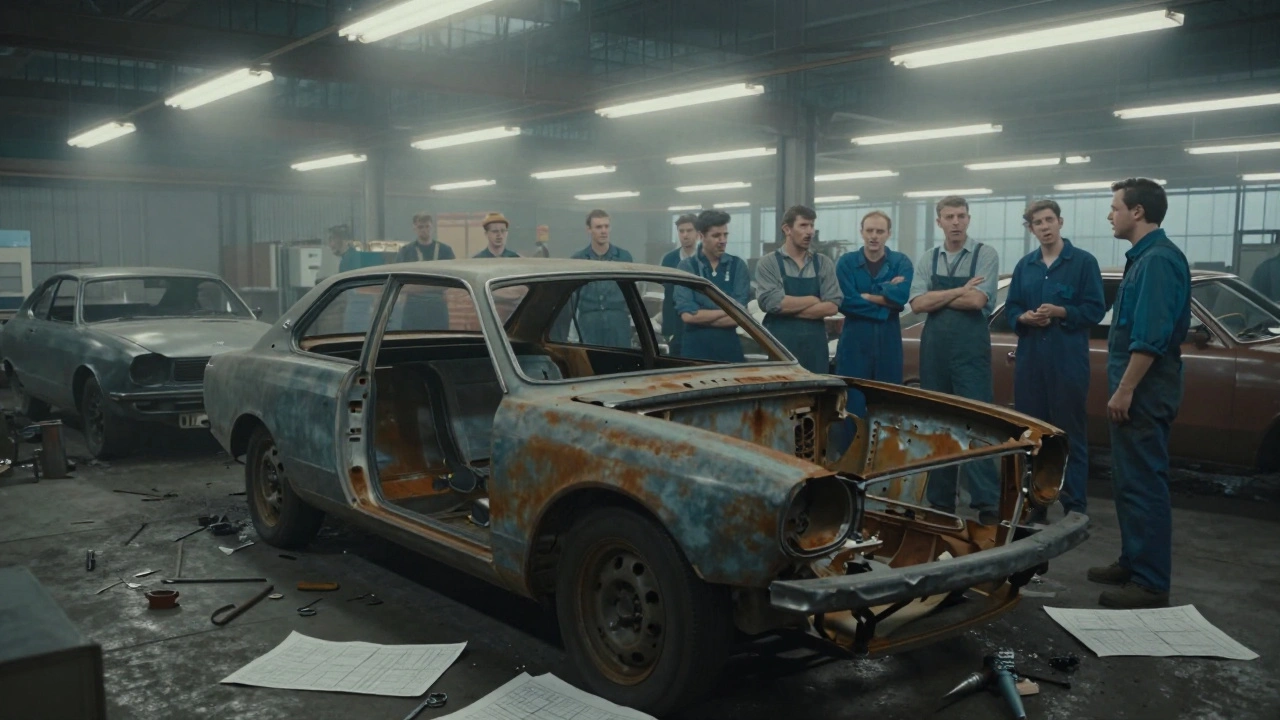
This created a vicious cycle. When production stopped, the company lost money. To save costs, they cut corners on quality control. When the line finally started moving again, the rush to meet quotas meant that cars were rolled out the door with missing bolts or incorrectly wired lights. Imagine being a quality inspector in 1975; you'd point out a flaw, and your supervisor would tell you to ignore it because the shipping deadline was tomorrow. That's how you end up with a reputation for unreliability that takes decades to erase.
The Shadow of the Japanese Invasion
While the UK was fighting internal battles, Toyota is a Japanese automotive giant known for pioneering Lean Manufacturing and Just-In-Time production and Honda were perfecting a different way of doing things. They didn't just build cars; they built systems. They introduced the concept of Kaizen is a Japanese philosophy of continuous improvement involving all employees from the CEO to the assembly line worker.
In the UK, if a worker found a way to make a part fit better, they were often told to stop messing around and just do it the way the manual said. In Japan, that worker was encouraged to suggest a change to the entire process. By the time the UK government stepped in to bail out BL in the mid-70s, the gap in efficiency was an abyss. The British were still using "batch production," where they'd make 10,000 of one part and hope they all fit. The Japanese were using "Just-In-Time," reducing waste and ensuring that every single part was verified before it hit the chassis.
The Allegro: A Case Study in Failure
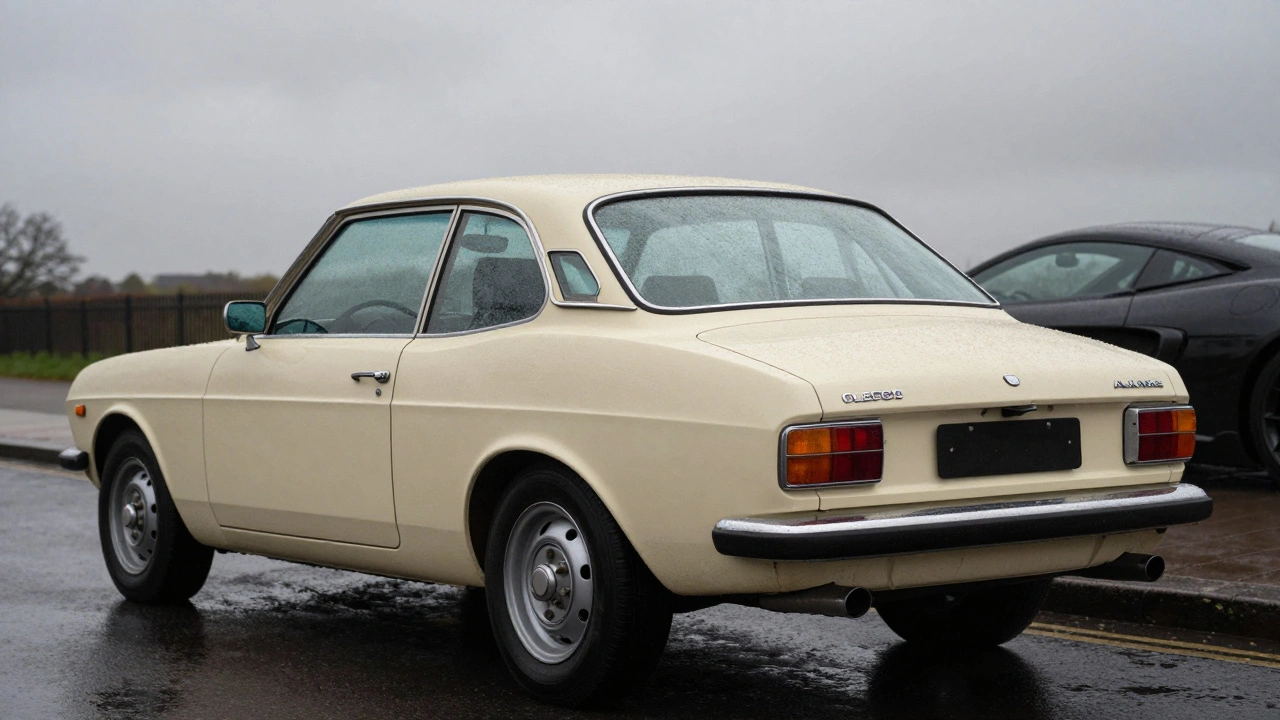
If there is one car that summarizes this entire era, it's the Austin Allegro is a small family car launched in 1973, infamous for its styling and poor reliability. It was supposed to be the car that saved the company. The designers wanted a modern, aerodynamic shape. But due to production constraints and a desperate need to get it to market, they compromised on everything. The most glaring example was the "bulbous" rear window and the weird, convex steering wheel.
The Allegro suffered from a fatal lack of testing. Because the production reality was so chaotic, the car launched with suspension issues and an engine that felt underpowered. It became a punchline in British culture-a symbol of a country that could dream big but couldn't actually deliver a product that worked. It wasn't that the engineers weren't smart; it was that the system they worked in was designed to fail.
The Aftermath and the Lessons Learned
Eventually, the state of the industry became so dire that the UK government had to nationalize the company, turning it into British Leyland Ltd (and later Rover Group). They tried to inject money and new management, but the rot was too deep. The failure of the 70s taught the world a vital lesson: design is worthless without a disciplined production strategy. You can have the best sketch in the world, but if your factory floor is a war zone and your machinery is rusted, you're just selling a dream that turns into a nightmare for the customer.
Today, the UK's high-end automotive sector-think McLaren or Aston Martin-succeeds because they've flipped the script. They focus on low-volume, high-precision engineering where the production reality is tailored to the design, not the other way around. They learned the hard way that trying to be everything to everyone with a broken system is a recipe for disaster.
Why were 1970s British cars so unreliable?
The unreliability was caused by a combination of outdated factory machinery, a lack of investment in quality control, and frequent labor strikes. This led to inconsistent manufacturing where parts often didn't fit correctly, and final inspections were rushed to meet shipping deadlines.
What was the impact of the British Leyland merger?
The merger of British Motor Holdings and Leyland Motor Corporation created a company that was too large to manage effectively. It resulted in massive bureaucratic overlap, conflicting brand identities, and a failure to integrate different production methods, which slowed down innovation.
How did Japanese manufacturers outperform BL?
Japanese companies like Toyota implemented Lean Manufacturing and the Kaizen philosophy of continuous improvement. While BL relied on top-down management and rigid batch production, Japanese firms empowered workers to improve the assembly process, leading to higher quality and lower costs.
Was the Austin Allegro actually a bad design?
The Allegro had some decent ideas regarding interior space and front-wheel-drive efficiency. However, it was crippled by production compromises, poor styling choices (like the 'bubble' back), and a complete lack of rigorous real-world testing before launch.
Did the UK government help or hurt the industry?
While the government provided essential financial bailouts and eventual nationalization to prevent total collapse, the intervention often focused on short-term survival rather than the long-term structural overhaul needed to fix the production culture.
What to do if you're restoring a 70s BL car
If you've inherited a project car from this era, don't start with the paint. Start with the gaps. Because of the production issues mentioned earlier, you'll likely find that the panels aren't square. Use a high-quality welding kit and be prepared to spend more time on the chassis and body alignment than on the engine. Check the wiring looms carefully; many were installed poorly at the factory and can be a fire hazard after 50 years of degradation.
For those looking for parts, look beyond the UK. Because these cars were exported globally, you can often find better-preserved components in markets where the cars were treated as luxury imports rather than daily beaters. Just remember: you aren't just restoring a car; you're correcting the mistakes of a factory worker from 1974.