British Leyland: How UK Government Policy Killed a Car Giant
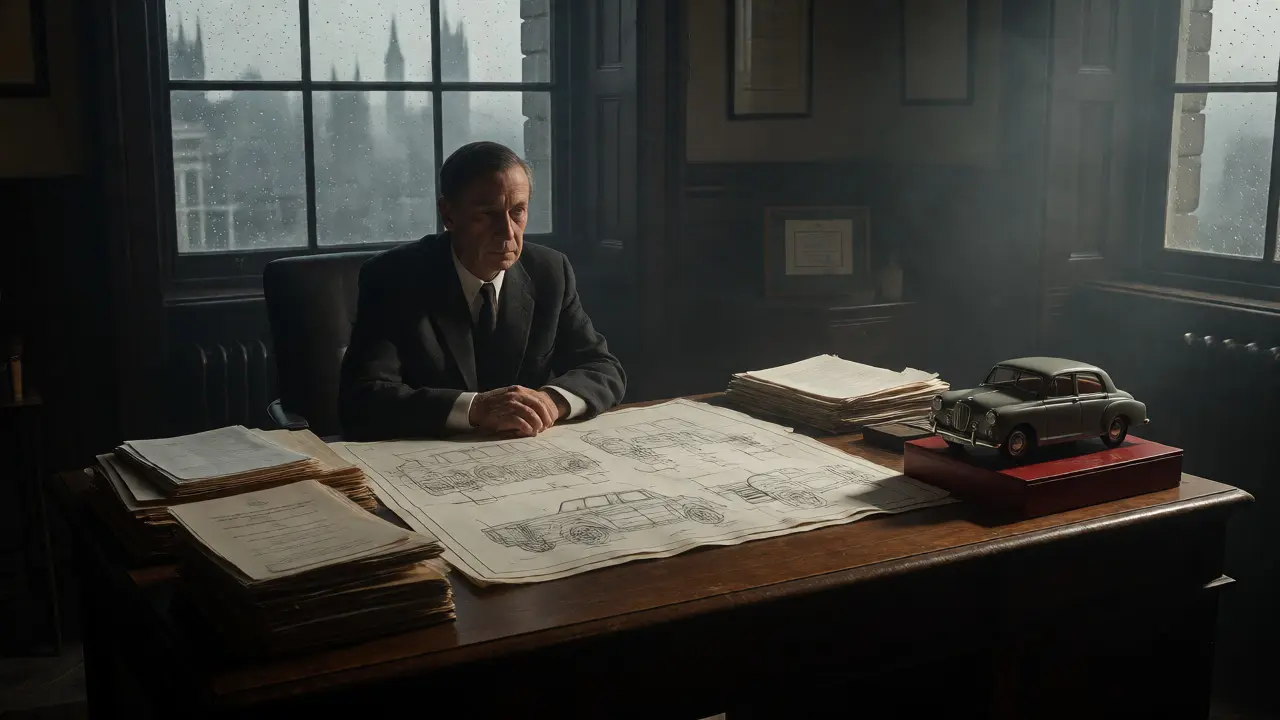 Nov, 1 2026
You know that feeling when you buy a product that just should work, but it doesn't? For millions of Brits in the 1970s, that wasn't a one-off bad purchase; it was a national mood. At the center of this frustration sat British Leyland, a state-owned conglomerate formed in 1968 to consolidate Britain's struggling motor industry. It was meant to be the champion of British engineering, a counterweight to Japanese efficiency and German precision. Instead, it became a cautionary tale about what happens when politics drives more than the steering wheel.
We often look back at the collapse of British Leyland (BL) as a story of lazy workers or outdated factories. But if you peel back the layers, you'll find that the real culprit was a tangled web of government policy. The UK government didn't just watch BL fail; they actively shaped its fate through inconsistent funding, misguided interventions, and a refusal to let market forces do their job. If you've ever wondered why Jaguar Land Rover is now Indian-owned while Ford and Vauxhall left the UK entirely, you have to understand the political machinery that dismantled the homegrown giant.
The Marriage of Convenience: Why BL Was Born
To understand the failure, you have to look at how the company started. In 1968, the Labour government pushed for the merger of Leyland Motor Corporation, a successful truck and bus manufacturer led by Donald Stokes, with British Motor Holdings (BMH), a collection of iconic but financially troubled brands like Austin, Morris, and Jaguar.
The logic seemed sound on paper. Leyland had cash and efficient management practices. BMH had the brand heritage and passenger car expertise. Together, they could compete globally. But here’s the catch: the merger was driven by political necessity, not commercial synergy. The government wanted a "national champion" to protect jobs and maintain prestige. They ignored the cultural clash between Leyland’s no-nonsense industrial approach and BMH’s aristocratic, artisanal culture.
This mismatch created immediate friction. You can’t force two incompatible corporate DNA strands together and expect them to thrive without strong leadership. And that’s exactly what was missing. The government appointed managers who were good at navigating Whitehall corridors, not factory floors.
The Rise of Michael Edwardes and the Cost of Survival
By the mid-1970s, BL was bleeding money. The oil crisis hit, inflation soared, and sales plummeted. The company was on the brink of bankruptcy. Enter Michael Edwardes, an Australian-born executive brought in by the Labour government in 1977 to rescue the firm. His mandate was clear: keep the lights on and save jobs, regardless of the cost.
Edwardes did stabilize the company, but at a price that haunted BL for decades. He secured massive government loans-billions of pounds in today’s money-to fund new model development. This created a dangerous dynamic: BL didn’t need to make a profit to survive because the taxpayer would always bail it out. When your survival depends on political goodwill rather than customer satisfaction, quality control tends to slip.
Consider the Austin Allegro, a small family car launched in 1973 that became infamous for poor build quality and controversial design choices. Despite being rushed to market due to financial pressure, it suffered from rust issues and reliability complaints. Yet, because BL held such significant sway over employment numbers, politicians hesitated to pull the plug. The result? A cycle of low-quality output funded by public debt.
The Industrial Relations Nightmare
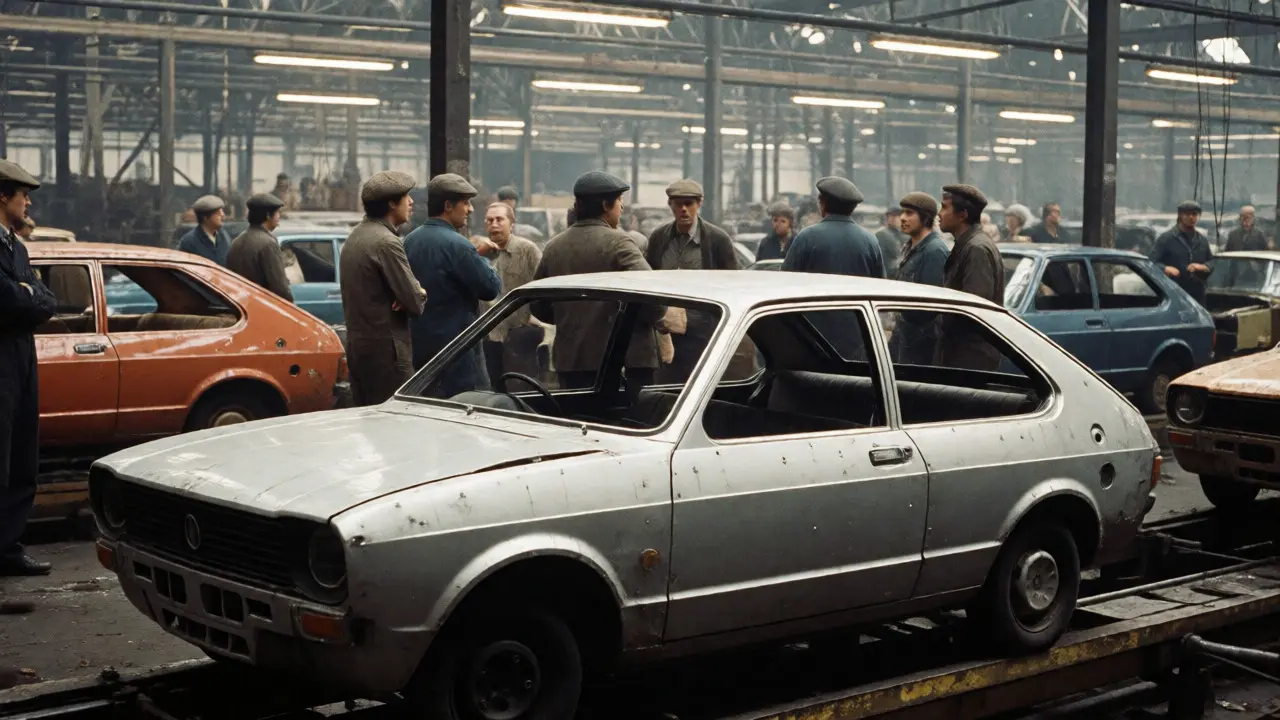
You can’t talk about British Leyland without addressing the elephant in the room: labor relations. The 1970s were defined by strikes, and BL was ground zero. The Trades Union Congress (TUC), the national trade union center in the United Kingdom, wielded immense power, and shop stewards within BL plants often had more influence than middle management.
Government policy played a huge role here. Successive governments, both Labour and Conservative, feared the political fallout of closing factories or breaking unions. So, they opted for appeasement. Instead of investing in modernization that might require workforce restructuring, they pumped money into maintaining the status quo. This stifled innovation. While competitors like Toyota, a Japanese multinational automotive manufacturer known for its lean production system, were perfecting just-in-time manufacturing, BL was stuck arguing over shift patterns and seniority rights.
| Feature | British Leyland | Japanese Competitors (e.g., Toyota) |
|---|---|---|
| Funding Source | Heavy government subsidies and loans | Reinvested profits and bank loans |
| Labor Relations | Adversarial, frequent strikes | Collaborative, lifetime employment models |
| Quality Control | Inspection-based (fix after breakage) | Prevention-based (stop line if defect found) |
| Management Focus | Maintaining employment levels | Efficiency and market share growth |
The table above highlights the structural disadvantages BL faced. It wasn’t just that they made worse cars; it’s that their entire operational model was distorted by political objectives. Every decision was weighed against its impact on votes and union stability, not just profitability.
The Thatcher Era: Tough Love Too Late?
When Margaret Thatcher, the first female Prime Minister of the United Kingdom, serving from 1979 to 1990, came to power in 1979, she promised a break from state intervention. Her government adopted a tougher stance on BL. They demanded cuts, privatization, and an end to endless bailouts. On the surface, this looked like the right move. After all, private sector discipline usually forces companies to improve.
But there was a timing problem. By the time Thatcher applied pressure, BL’s infrastructure was already crumbling. Years of underinvestment in technology and training couldn’t be fixed overnight. The government cut funding for R&D projects that were still in early stages, leaving the company with a gap in its product lineup. Meanwhile, Japanese manufacturers were flooding the UK market with reliable, fuel-efficient cars like the Honda Civic, a compact car series produced by Honda since 1972.
Thatcher’s policies also exacerbated social tensions. Plant closures in places like Longbridge and Cowley led to mass unemployment in those regions. Politically, this was costly. The government tried to balance fiscal responsibility with social stability, resulting in half-measures that satisfied neither side. BL remained in limbo-neither fully supported nor allowed to fail naturally.
The Fragmentation and Final Collapse
In the 1980s, the strategy shifted from saving the whole beast to selling off the best parts. The government spun off profitable divisions. Rover Group, a subsidiary of British Leyland focused on premium saloon cars, was partially privatized. Jaguar, a luxury vehicle manufacturer originally part of BMH, was separated and eventually sold to Ford. The volume car business, which included Austin and Morris, struggled to compete and was eventually merged into Rover Group again before being acquired by BMW in 1994.
This fragmentation was the direct result of government indecision. Instead of forcing a comprehensive restructuring in the late 1970s, policymakers kept patching holes. By the time they decided to sell, the brand equity of many BL marques had been eroded by years of poor reputation. Buyers associated these names with unreliability. Selling them required discounts and concessions that further weakened the parent company’s position.
Look at the legacy of the Mini, a small economy car produced by BMC and later British Leyland from 1959 to 2000. It was a brilliant piece of engineering, yet its final years under BL were marked by stagnation. No major updates were approved because the government feared alienating traditionalists or spending too much capital. That missed opportunity symbolizes the broader failure: innovation stalled because risk-taking was politically unpopular.
What We Learned from the Ruins
The story of British Leyland isn’t just nostalgia for old cars. It offers concrete lessons for any industry where government plays a heavy hand. First, subsidies can mask inefficiencies. When companies don’t face the consequences of failure, they stop trying to improve. Second, cultural integration matters. Merging companies based on spreadsheet synergies ignores human factors. Third, consistency in policy is crucial. Flip-flopping between support and austerity creates uncertainty, which paralyzes long-term investment.
Today, we see echoes of this debate in discussions about green energy transition and EV manufacturing. Governments are again stepping in to subsidize new technologies. Are we making the same mistakes? Will we create our own "British Leylands" in the electric vehicle space-companies propped up by policy rather than merit?
If you drive a modern Jaguar or Land Rover today, remember that these brands survived only because they were carved out of the failing BL structure and handed to foreign owners who treated them as businesses, not political assets. The cars on the road are living monuments to the limits of state-led industrial planning.
Why did the UK government intervene so heavily in British Leyland?
The primary reason was employment preservation. At its peak, British Leyland employed hundreds of thousands of people across the UK. Closing factories would have caused massive unemployment spikes, leading to social unrest and political backlash. Additionally, the government viewed the car industry as strategically important for national prestige and technological capability.
Did Japanese competition cause British Leyland's failure?
While Japanese competition exposed BL's weaknesses, it wasn't the sole cause. BL failed primarily due to internal mismanagement, poor labor relations, and inadequate product development cycles. Japanese manufacturers succeeded because they focused on quality and efficiency, areas where BL lagged significantly despite having similar resources initially.
What happened to the British Leyland brands after the collapse?
The brands were fragmented and sold off. Jaguar and Land Rover went to Ford, then later to Tata Motors. Rover was bought by BMW, then MG Rover Group, and finally SAIC. Mini became owned by BMW. Many other names like Austin and Morris faded away completely. The surviving brands thrived once removed from the bureaucratic constraints of the former state-owned entity.
How did union power affect British Leyland's productivity?
Unions held significant veto power over management decisions, including changes to work practices and staffing levels. Frequent strikes disrupted production schedules, increasing costs and reducing output. Management often avoided implementing necessary reforms to prevent conflict, leading to inefficient processes that persisted for decades.
Could British Leyland have been saved with different policies?
Many historians argue yes, but it would have required earlier and more decisive action. A consistent strategy focusing on quality improvement and selective specialization in the early 1970s, combined with less political interference in daily operations, might have preserved a viable domestic manufacturer. However, the deep-seated cultural and structural issues made recovery difficult regardless of policy.