British Car Exports in the 1950s: How the UK Became the World’s Largest Auto Exporter
 Sep, 6 2026
Imagine a world where American cars are everywhere, but the most coveted vehicles on European streets aren't from Detroit. They're from Coventry and Oxford. In the 1950s, the United Kingdom wasn't just rebuilding after World War II; it was becoming the world's largest automobile exporter, sending more cars abroad than any other nation. This wasn't an accident of geography or a lucky break. It was a perfect storm of industrial capacity, strategic government policy, and a global demand for affordable luxury that only Britain could meet at the time.
Why does this matter now? Because understanding how the UK dominated the 1950s export market explains why British cars have such a cult following today, despite their reputation for rust and electrical gremlins. It reveals a period when British car exports were the engine of the national economy, earning vital dollars needed to buy raw materials and food. If you've ever wondered why there are so many classic MGs in California or Jaguars in Germany, the answer lies in the trade agreements and manufacturing miracles of seven decades ago.
The Postwar Industrial Advantage
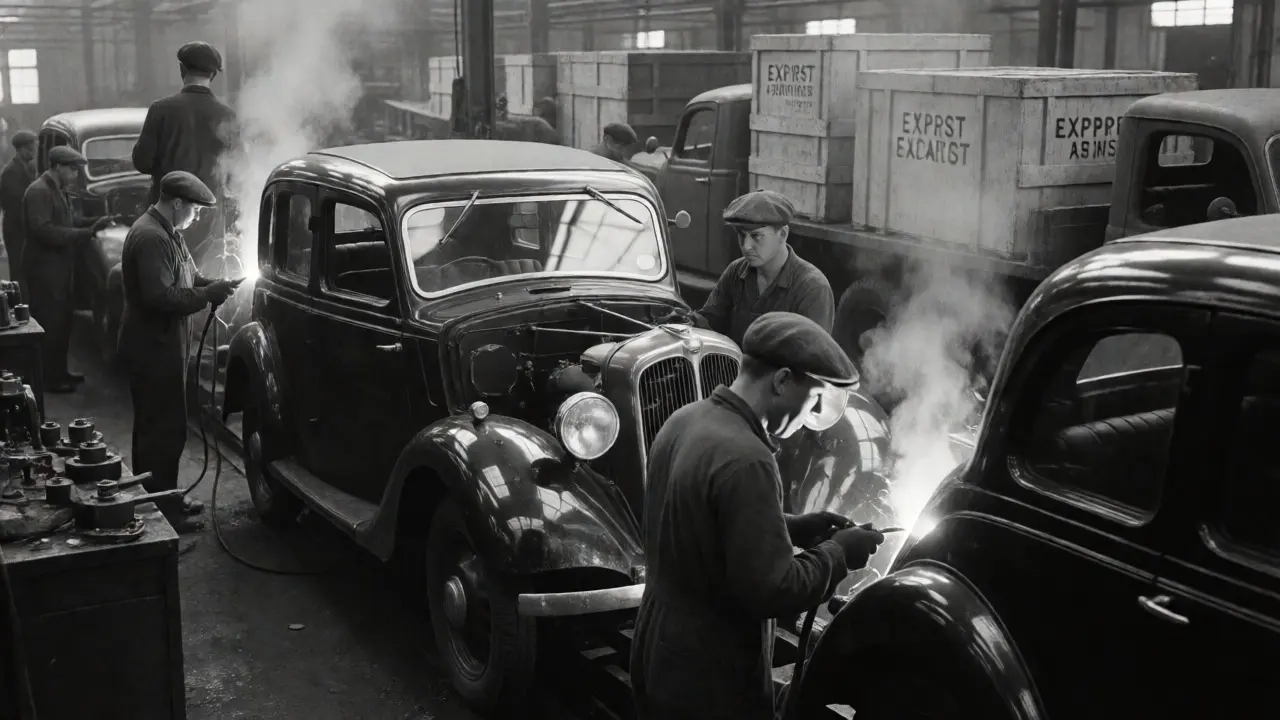
When the war ended in 1945, most European nations had their factories reduced to rubble. Germany's automotive heartland in Stuttgart and Munich was in shambles. Italy's Fiat plants were damaged. But Britain? While London suffered heavy bombing, the major automotive hubs in the Midlands and the South West remained largely intact. The Rootes Group and Standard-Triumph facilities kept running, often producing military vehicles right up until the armistice.
This physical infrastructure gave Britain a head start. By 1948, while German manufacturers were still hand-assembling prototypes in makeshift workshops, British firms were ramping up mass production. The Ministry of Supply played a crucial role here. Instead of letting the free market dictate production, the government allocated scarce steel and aluminum to manufacturers who promised to export. If you wanted to build a car for domestic use, you had to wait. If you built it for export, you got priority access to materials. This policy forced companies like Austin Motor Company to design cars that appealed to foreign buyers, not just local commuters.
The Dollar Gap and Government Policy
Here is the cold economic reality: Britain was broke. The war debt was staggering, and the country desperately needed US dollars to pay for oil, cotton, and wheat. You couldn't buy wheat with pounds sterling if the Americans didn't want your pounds. So, the government created a system where every dollar earned from exporting a car was worth more than a pound earned selling one domestically. Manufacturers were effectively taxed on domestic sales and subsidized on exports.
This led to a peculiar phenomenon. Companies would sometimes sell cars abroad at lower prices than at home just to hit their export quotas. For the buyer in New York or Paris, this meant getting a well-built vehicle at a competitive price. For the British manufacturer, it meant survival. The Export Credits Guarantee Department (ECGD) backed these deals, reducing the risk for banks lending money to foreign dealers. This financial safety net allowed small, independent coachbuilders to compete with giants like General Motors. Without this state-backed support, the fragmented nature of the British industry might have collapsed under the weight of international competition.
Diversity Over Standardization
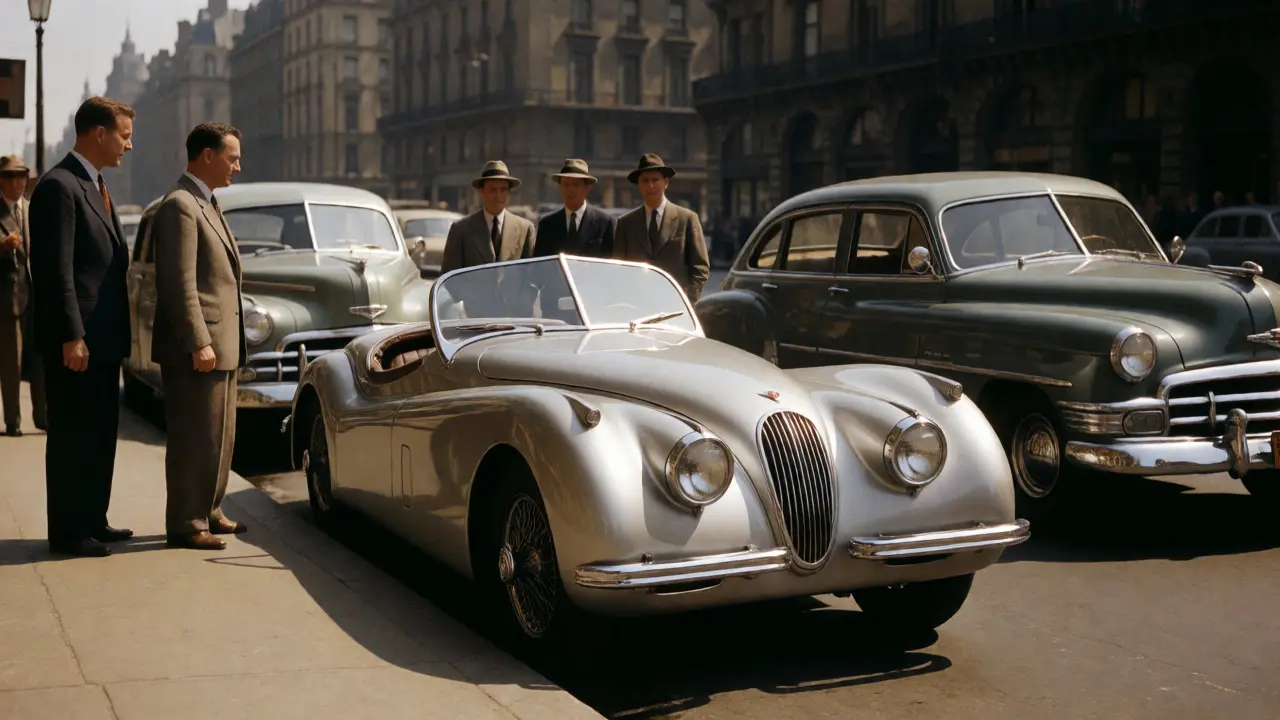
American cars in the 1950s were big, powerful, and standardized. A Ford in Chicago looked like a Ford in Los Angeles. British cars were different. The UK industry was a patchwork of dozens of small manufacturers, each with its own niche. There was Jaguar for speed and elegance, MG for affordable sports fun, Rover for executive comfort, and Singer for quirky engineering.
| Brand | Primary Model | Target Market | Key Selling Point |
|---|---|---|---|
| Jaguar | XK120 / XK140 | USA, Europe | Performance rivaling Ferrari at half the cost |
| Austin | A40 Devon | Commonwealth, Europe | Robust, simple mechanics, low maintenance |
| Morris | Minor Series I-III | Global | Compact size ideal for narrow European streets |
| Triumph | TR3 | USA | Accessible sports car entry point |
| Vauxhall | E-Series | UK, Commonwealth | American styling influence with British build |
This diversity was a strength in export markets. A buyer in rural Australia might need a rugged Austin to handle unpaved roads, while a diplomat in Geneva might prefer the refined Rover P4. The British industry offered a menu of choices that standardized American and emerging Japanese industries couldn't match yet. It wasn't about having the best single car; it was about having the right car for every specific niche.
The Role of Racing and Marketing
You can't talk about 1950s British exports without mentioning Le Mans. When Jaguar won the 24 Hours of Le Mans in 1951, 1953, and 1955, it wasn't just a sporting victory. It was a marketing masterstroke. The C-Type and later the D-Type proved that British engineering could beat the odds against heavier, more powerful Continental rivals.
Newsreels showing a sleek silver Jaguar lapping Montlhéry reached living rooms in Ohio and Ontario. Suddenly, owning a British sports car wasn't just a purchase; it was buying into a legacy of racing pedigree. Other brands followed suit. Aston Martin leveraged its DB series for prestige, while Lotus began building a reputation for lightweight brilliance that would explode in the 1960s. These victories provided tangible proof of quality in an era before internet reviews. If it won in France, it must be good enough for Kansas.

Challenges Behind the Success
It wasn't all champagne and checkered flags. The fragmentation that helped diversity also hurt efficiency. Unlike Volkswagen or Ford, which had massive economies of scale, many British firms were small family businesses. They lacked modern assembly lines. Cars were often hand-finished, which added charm but introduced inconsistency. A customer in Boston might get a Triumph TR3 that ran perfectly, while his neighbor got one with a leaking fuel tank.
Labor relations were another hurdle. Strikes were common in the 1950s, disrupting supply chains. Sometimes, a shipment of 500 cars would sit in Liverpool docks for weeks because of a dispute over shift patterns. Additionally, the focus on export sometimes meant neglecting the domestic customer. Britons at home drove older models while the newest, shiniest versions went to America. This resentment simmered beneath the surface, eventually contributing to the industry's decline as competitors caught up in quality control.
Legacy of the Golden Age
By the late 1950s, the tide was turning. Japan began exporting motorcycles and then small cars. Germany rebuilt its industry with precision engineering. But for a decade, Britain held the crown. The sheer volume of cars shipped-peaking at over 1 million units annually by the end of the decade-established a global dealer network that lasted for generations.
Today, when you see a classic MGB on the road, remember it started as a solution to a balance-of-payments crisis. It was a tool of economic diplomacy. The UK became the world's largest auto exporter not because it had the best technology, but because it had the right product, the right timing, and the desperate need to earn dollars. That combination created a cultural footprint that outlasted the industrial dominance itself.
Which country was the largest car exporter in the 1950s?
The United Kingdom was the world's largest automobile exporter during the 1950s. Driven by postwar industrial capacity and government policies favoring exports to earn US dollars, the UK surpassed traditional leaders like Germany and the emerging US export market in terms of unit volume sent abroad.
Why did the UK government prioritize car exports?
After World War II, Britain faced a severe shortage of US dollars needed to import essential goods like oil and food. The government implemented policies that rewarded manufacturers for exporting cars, as each sale brought in valuable foreign currency, helping to stabilize the national economy and address the balance of payments deficit.
What made British cars popular in the USA during the 1950s?
British cars appealed to American buyers due to their distinctive styling, sporty performance, and smaller size compared to large American sedans. Racing victories by brands like Jaguar and Aston Martin enhanced their prestige, while the availability of diverse models-from economical Austins to luxurious Jaguars-allowed them to capture various market segments.
How did postwar factory conditions help the UK auto industry?
Unlike Germany and Japan, whose automotive factories were heavily bombed and destroyed, many major British production facilities in the Midlands and South remained largely intact. This allowed the UK to resume mass production much faster than its competitors, giving it a significant early advantage in the postwar global market.
Did British car quality suffer due to high export volumes?
Yes, the pressure to meet high export quotas sometimes compromised consistency. Many British manufacturers relied on manual labor and lacked the rigorous automated quality control standards of their American counterparts. This led to variability in build quality, where some cars were excellent while others suffered from issues like rust or electrical faults, affecting long-term reliability perceptions.