British Car Design Evolution: From Coachbuilt Elegance to Modern Minimalism
 Apr, 22 2026
Key Takeaways
- Coachbuilding shifted car design from purely functional to an expression of status and art.
- The transition from flowing, organic curves to the "folded paper" look of the 60s and 70s mirrored global industrial shifts.
- Modern British design balances a heritage of eccentricity with the precision of computer-aided design (CAD).
- The legacy of the "British look" remains rooted in a specific blend of understated elegance and bold proportions.
The Era of the Bespoke Body
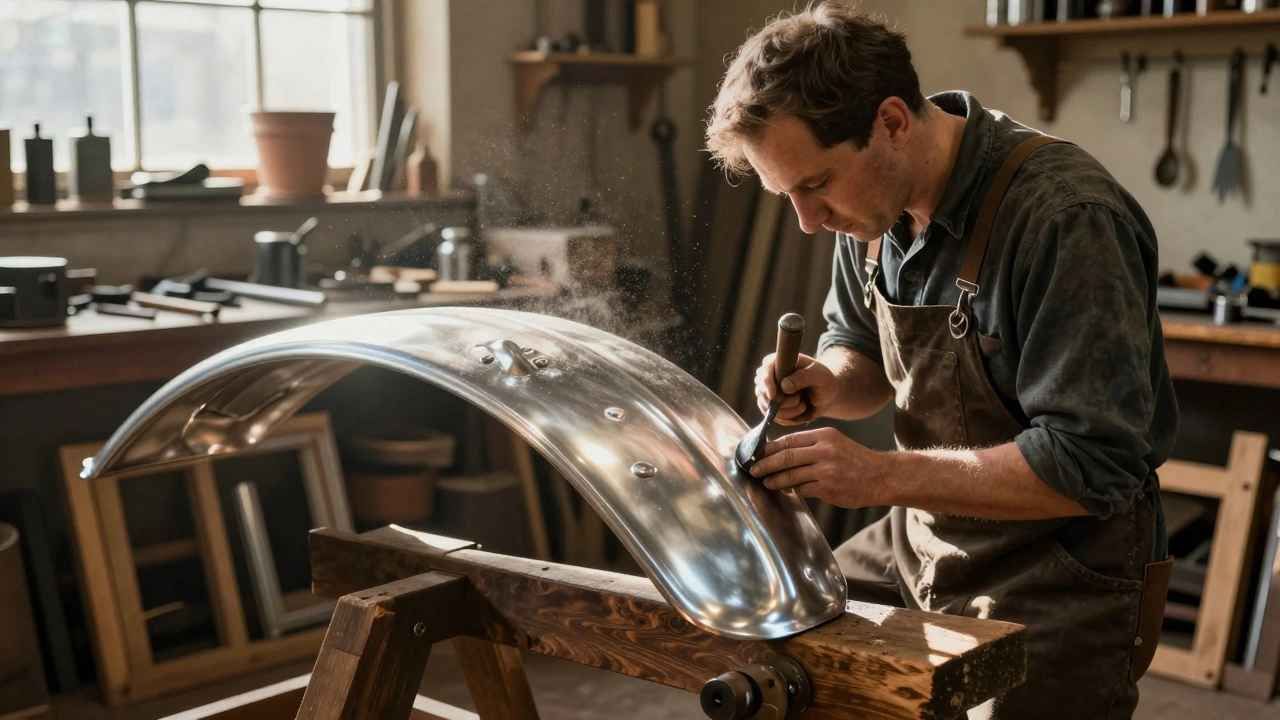
Back in the day, Coachbuilding is the process of designing and constructing a vehicle body on a separate chassis. In Britain, this meant companies like Mulliner and H.J. Mulliner were the real stars. They didn't follow a blueprint; they followed a mood. The look was defined by sweeping fenders, long hoods, and an almost liquid quality to the metalwork.
If you look at a 1930s Bentley, you see a design that prioritizes the "gesture." The curves weren't just for show; they were a result of hammering aluminum sheets by hand over wooden bucks. This created a level of organic flow that modern stamping machines simply can't replicate. It was the era of the "swept-wing" look, where the car looked like it was moving even when parked in a driveway in Mayfair.
The Shift to Monocoque and Mass Production
Everything changed when the industry moved toward the Monocoque chassis-where the body and frame are one single unit. This killed the era of the independent coachbuilder but gave birth to a new kind of British identity. Designers had to stop thinking about "dressing" a chassis and start thinking about the volume of the car itself.
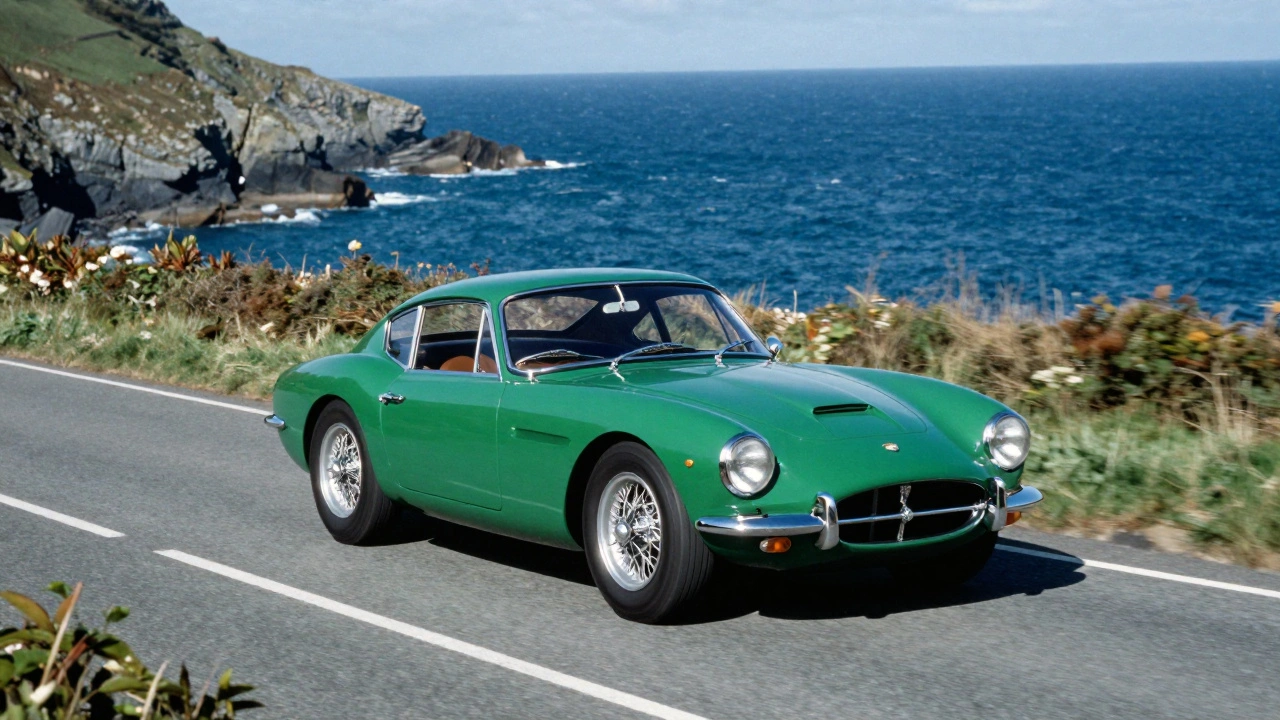
In the 1950s, this manifested in the "bathtub" styling of early sports cars. Think of the Austin-Healey 3000. The lines became tighter, and the focus shifted to aerodynamics. This wasn't just about looking fast; it was about the emerging science of wind resistance. The curves were still there, but they were now purposeful, designed to hug the road rather than float above it.
| Era | Primary Philosophy | Key Material/Method | Defining Characteristic |
|---|---|---|---|
| Coachbuilt (1900-1940s) | Artisanal Elegance | Hand-hammered Aluminum | Sweeping, organic curves |
| Post-War/Golden Age (1950s-60s) | Sporty Dynamism | Steel Monocoque | Tighter radii, lower profiles |
| Modern Era (1990s-Present) | Technical Precision | Carbon Fiber & CAD | Crisp edges, complex surfacing |
The Geometric Revolution of the 60s and 70s
By the mid-1960s, the "curvy" look started to feel dated. Designers began experimenting with sharper angles and flatter planes. This is where we see the influence of Industrial Design crossing over into automotive styling. The goal was "crispness."
Take a look at the Jaguar E-Type. While it still had a long, flowing silhouette, the detailing around the vents and the cockpit became more precise. Later, the move toward "wedge' shapes-influenced by Italian designers but adopted by British firms-completely erased the bulbousness of the previous decades. We went from cars that looked like sculptures to cars that looked like precision instruments.
The Digital Pivot and CAD Influence
Entering the 90s and 2000s, the pencil and drafting board were replaced by Computer-Aided Design (CAD). This allowed British designers to create shapes that were mathematically perfect. The "curves" returned, but they weren't organic anymore-they were parametric.
Modern Aston Martin models are a perfect example of this. They use a design language that references the 1960s (the long hood, the short deck) but execute it with razor-sharp creases and surfaces that transition from concave to convex in a fraction of an inch. It's a "digital heritage" look. They are using software to mimic the spirit of the old coachbuilders while meeting 21st-century safety and aero standards.
Sustainability and the New Aesthetic
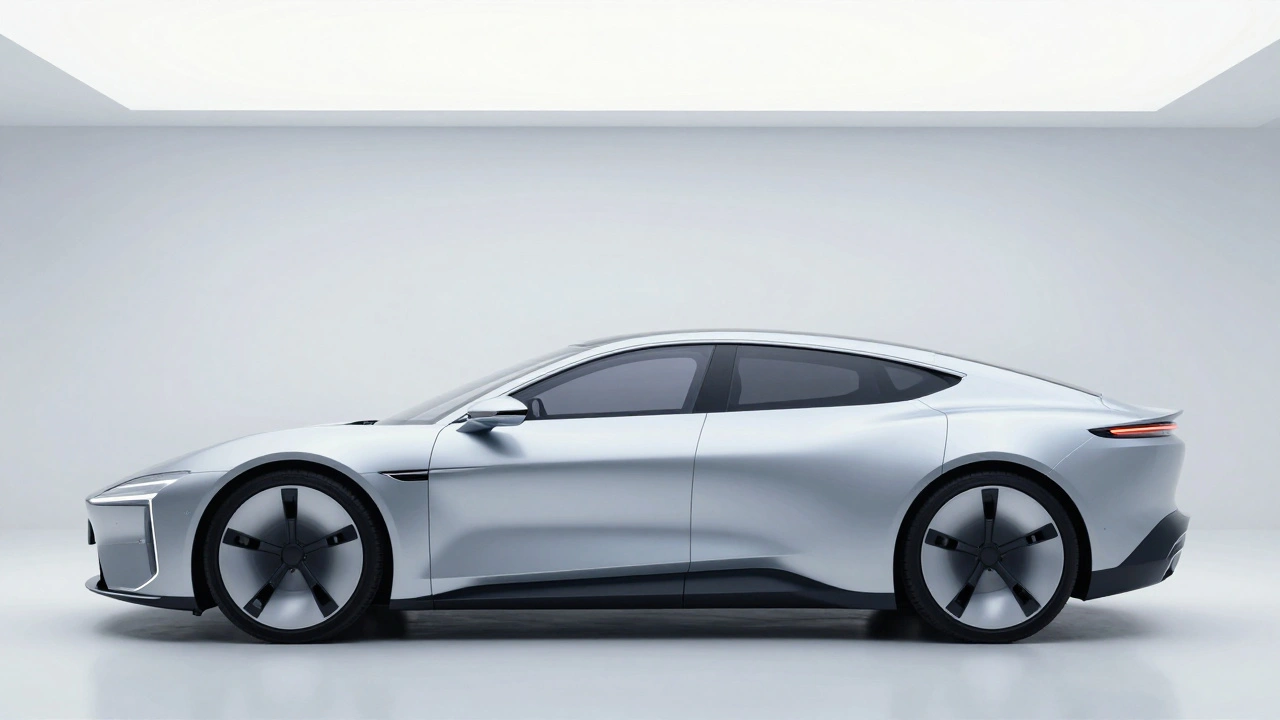
Today, the evolution is driven by Electric Vehicles (EVs). Because electric motors are smaller and don't require a massive radiator at the front, the traditional "long nose" of the British luxury car is being challenged.
We're seeing a move toward "minimalist modernity." The goal now is to reduce visual noise. Instead of adding chrome trim or fake vents, designers are focusing on the purity of the silhouette. The modern British look is less about shouting "look at my wealth" and more about whispering "look at my efficiency." It's a shift from the ornate to the essential.
Avoiding the "Heritage Trap"
One of the biggest pitfalls in British design has been the obsession with the past. When a brand spends too much time trying to look like 1955, they end up creating "retro-futuristic" cars that feel like theme park rides rather than real machines. The most successful modern designs are those that extract the essence of the legacy-like the proportion of a cabin or the slope of a roofline-and apply it to a modern, aggressive chassis.
The trick is in the tension. A car needs to look like it belongs in 2026, but it should feel like it was born from a lineage of craftsmanship. That tension between a sharp, CNC-milled edge and a sweeping, hand-drawn curve is exactly what keeps British design distinct in a world of generic, wind-tunnel-shaped SUVs.
What exactly is coachbuilding in the context of car design?
Coachbuilding refers to the era when car manufacturers sold only the chassis and engine. A separate company, the coachbuilder, would then design and build the bodywork according to the customer's specifications. This allowed for extreme customization and the creation of the sweeping, artistic curves seen in early luxury cars.
Why did British cars move away from curves to sharper lines?
The shift was driven by two main factors: technology and taste. The move to monocoque construction made it easier to stamp flat panels of steel, and the rise of aerodynamic science showed that sharper, more streamlined "wedge" shapes were more efficient at high speeds than the bulbous shapes of the 1930s.
How has CAD changed the way British cars are styled?
CAD (Computer-Aided Design) allows designers to create complex surfaces that are mathematically precise. While old curves were based on the physical limits of a human hammering metal, modern curves are calculated for optimal airflow and structural strength, leading to the "crisp' and lean look of modern luxury vehicles.
Does the coachbuilding tradition still exist today?
Yes, but it has evolved into "Bespoke" departments. Brands like Rolls-Royce and Bentley offer high-end customization where customers can influence the exterior lines and interior materials, effectively acting as a modern version of the old coachbuilding relationship.
How do EVs affect the traditional British design silhouette?
EVs remove the need for a large internal combustion engine and a front radiator. This allows designers to push the wheels further toward the corners and shorten the hood, creating a more "cab-forward" look that challenges the classic long-bonnet proportions associated with British luxury.
Next Steps for Design Enthusiasts
If you want to see this evolution in person, start by visiting a museum with a strong collection of pre-war cars to understand the volume and scale of coachbuilt bodies. Then, compare those to the mid-century sports cars to see the transition to aerodynamics. Finally, look at the latest concepts from British EV startups to see how the- "crisp modernity' is being interpreted without the constraints of a gasoline engine.