British Body Engineering in the 1950s: Semi Monocoque and Chassis Advances
 Aug, 17 2026
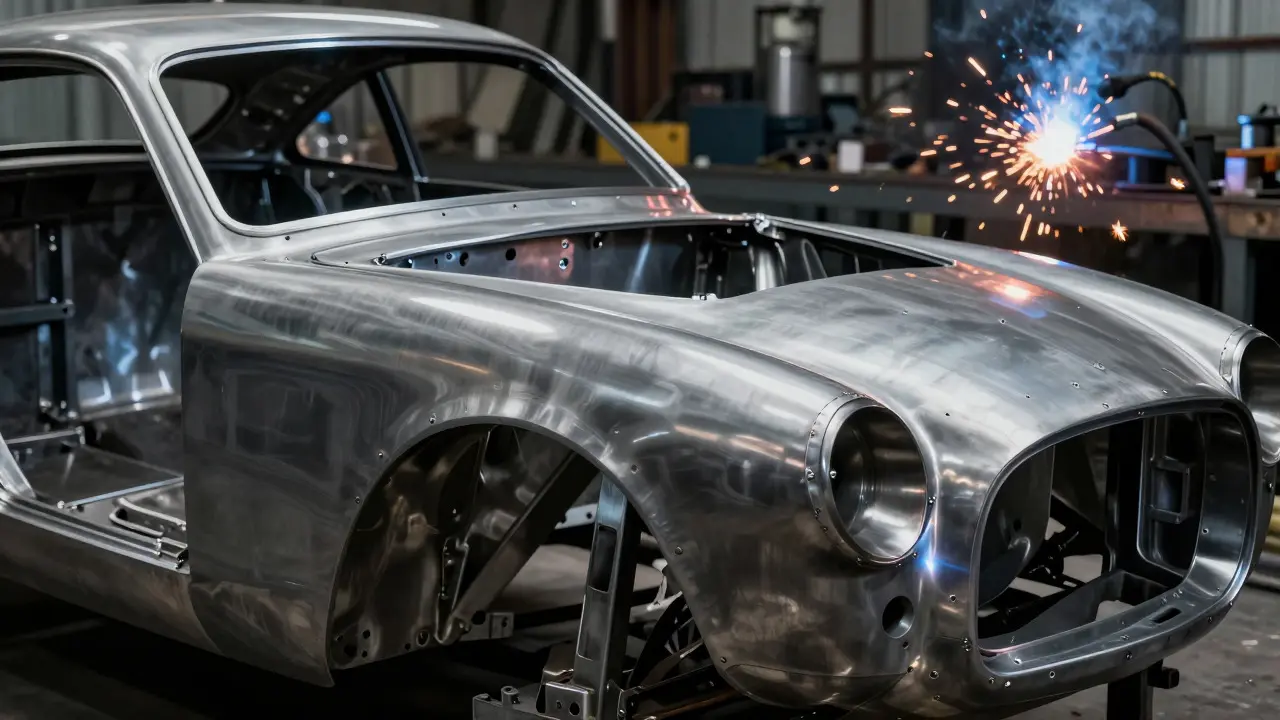
Imagine stepping into a car that feels like it’s floating on air, yet remains rigid enough to handle a sharp corner without creaking. That was the promise of semi-monocoque construction is a hybrid vehicle body structure that combines a self-supporting outer shell with an internal frame for added rigidity. In the 1950s, British engineers didn’t just build cars; they redefined how metal could bear weight while keeping interiors light and luxurious.
The postwar era brought a surge in demand for reliable, comfortable vehicles. Manufacturers faced a tough choice: stick with heavy, separate chassis frames or embrace new structural methods that saved weight and improved handling. The answer lay in blending old-school strength with modern aerodynamics. This article breaks down how this shift happened, why it mattered, and what specific techniques made British cars stand out during this pivotal decade.
Why Semi-Monocoque Changed Everything
Before the 1950s, most cars used a ladder-frame chassis. The body sat on top of this steel backbone. It was simple but heavy. Every extra kilogram meant more fuel consumption and slower acceleration. Semi-monocoque changed the game by letting the body panels themselves carry part of the load.
Think of it like building a house. A traditional frame is like a skeleton you dress up. A semi-monocoque is like a reinforced concrete wall that stands on its own but still has internal beams for support. This approach allowed designers to create smoother, more aerodynamic shapes without sacrificing durability. For drivers, this meant better stability at higher speeds. For engineers, it meant fewer parts to assemble and maintain.
Key Materials and Manufacturing Techniques
You can’t talk about 1950s British engineering without mentioning the materials. Steel remained the king, but how it was treated changed dramatically. Engineers started using high-tensile steel in critical areas like door sills and roof rails. This material offered greater strength-to-weight ratios compared to standard mild steel.
- Spot Welding: Replaced rivets in many areas, creating stronger joints with less weight.
- Hydroforming: Used to shape complex curves in side panels, reducing the need for multiple stamped pieces.
- Aluminum Integration: Some premium models used aluminum hoods and trunk lids to cut front-end weight.
These techniques weren’t just about saving grams. They were about consistency. Mass production required parts that fit together perfectly every time. The precision demanded by semi-monocoque assembly pushed British factories to upgrade their tooling and quality control standards significantly.
Chassis Innovations Beyond the Body
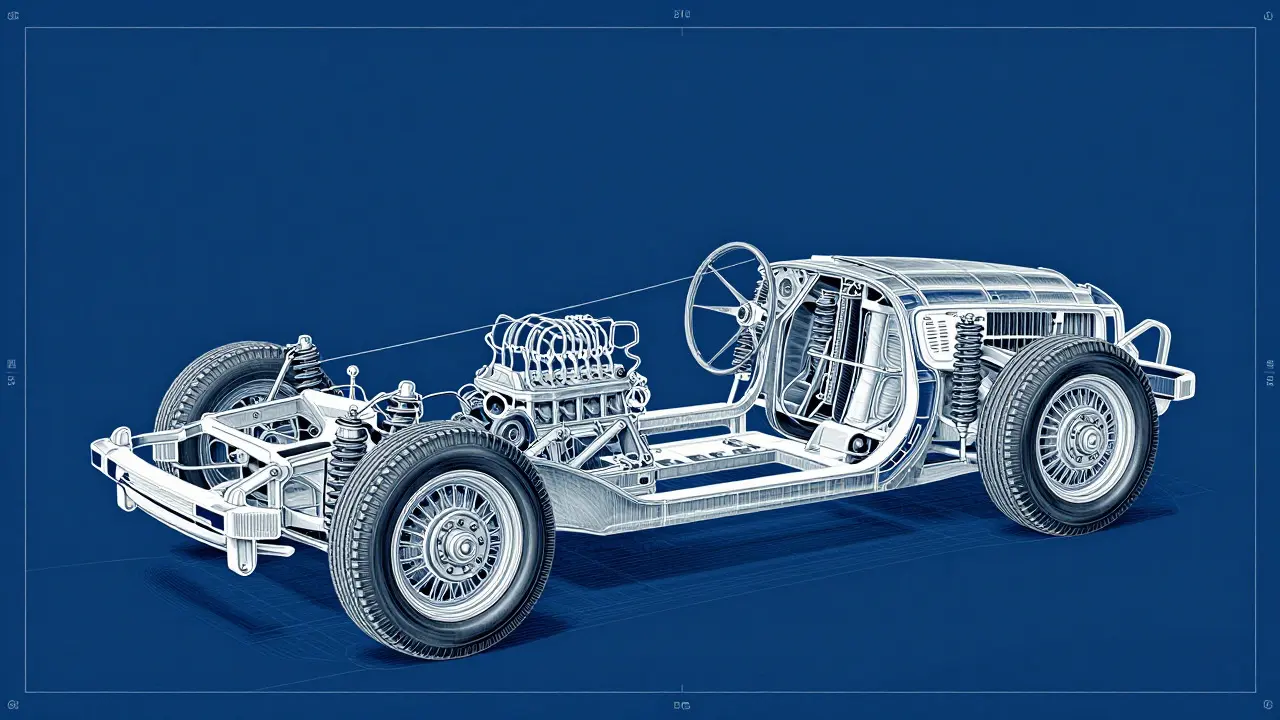
The body isn’t the whole story. The chassis underneath underwent its own revolution. Independent front suspension (IFS) became the norm, replacing the older live axle designs. This change allowed wheels to move independently over bumps, improving tire contact and steering response.
Engineers also refined rear axle designs. Instead of solid axles, some manufacturers experimented with de Dion tubes and early torsion bar setups. These innovations reduced unsprung mass-the weight not supported by the springs. Less unsprung mass means the suspension can react faster to road irregularities. The result? A ride that felt both plush and precise.
| Feature | Ladder Frame | Semi-Monocoque |
|---|---|---|
| Weight | High | Lower |
| Rigidity Source | External Frame | Body Shell + Internal Struts |
| Aerodynamics | Limited by Frame Shape | Smooth, Curved Surfaces Possible |
| Assembly Complexity | Simple Bolting | Precise Spot Welding Required |
| Cost per Unit | Lower Initially | Higher Tooling, Lower Labor Long-Term |
Case Studies: Land Rover and Jaguar
To see these principles in action, look at two iconic brands. Land Rover is a British off-road vehicle manufacturer known for rugged, capable SUVs since the 1940s. While often associated with laddered frames, their 1950s iterations introduced reinforced cross-members and integrated floor pans that acted as stress members. This wasn’t full monocoque, but it borrowed the logic: use the body to help carry loads where possible.
On the other end of the spectrum, Jaguar is a British luxury car maker famous for sports cars and grand tourers. The XK120 and subsequent E-Type prototypes explored extensive use of aluminum and semi-monocoque structures. By integrating the engine bay into the main body shell, they achieved remarkable weight distribution. This balance is crucial for handling. When the front and rear weights are evenly matched, the car turns predictably and brakes effectively.
The Role of Postwar Economic Factors
Engineering choices don’t happen in a vacuum. The 1950s saw Britain recovering from war shortages. Raw materials were tight, and labor costs were rising. Manufacturers needed ways to produce more cars with fewer resources. Semi-monocoque construction fit this bill. It reduced the number of individual components that needed machining and fitting. Fewer parts mean fewer chances for error and faster assembly lines.
Additionally, consumer expectations shifted. People wanted cars that looked modern and drove smoothly. The bulky, boxy shapes of pre-war cars no longer appealed. The sleek lines enabled by semi-monocoque design met this aesthetic demand while delivering performance gains. It was a win-win situation that accelerated adoption across the industry.

Challenges and Limitations
It wasn’t all smooth sailing. Repairing a semi-monocoque body after a collision was trickier than fixing a separate frame. If a panel was dented, it might affect the structural integrity of adjacent sections. Technicians had to be trained in specialized welding and alignment techniques. Insurance companies initially frowned upon the complexity, fearing higher repair costs.
Corrosion was another concern. With fewer exposed fasteners and more sealed cavities, water could trap inside the body. If not properly drained, rust could spread silently. Manufacturers responded by adding drainage holes and using anti-corrosion coatings, but it remained a maintenance point for owners.
Legacy and Modern Implications
The advances of the 1950s laid the groundwork for today’s unibody vehicles. Most modern passenger cars use a variant of semi-monocoque construction. The core idea-integrating the body and chassis for efficiency-has only evolved with better materials and computer-aided design. Understanding this history helps us appreciate why current cars feel so different from those built decades ago.
For enthusiasts and historians, studying this era reveals how practical constraints drive innovation. It wasn’t just about making pretty cars. It was about solving real problems with limited tools. That spirit of resourceful engineering continues to influence automotive design today.
Frequently Asked Questions
What is the main difference between a monocoque and a semi-monocoque?
A true monocoque relies entirely on the body shell for structural support, common in racing cars. A semi-monocoque uses the body shell for primary structure but includes additional internal frames or struts for reinforcement, making it suitable for everyday road cars.
Did all British car makers adopt semi-monocoque in the 1950s?
No. Adoption varied by brand and model. Luxury and sports car manufacturers like Jaguar and Aston Martin embraced it earlier. Utility-focused brands like Land Rover retained ladder frames for off-road durability, though they incorporated some monocoque-like reinforcement techniques.
How did semi-monocoque affect fuel economy in the 1950s?
By reducing overall vehicle weight, semi-monocoque construction lowered fuel consumption. Engines didn’t have to work as hard to move lighter cars, resulting in better miles per gallon compared to heavier ladder-frame equivalents of similar size.
Was aluminum widely used in 1950s British semi-monocoques?
Not widely. Aluminum was expensive and difficult to work with at scale. It was primarily reserved for premium models or specific components like hoods and wings. Steel remained the dominant material due to cost and availability.
Why is understanding 1950s chassis design relevant today?
Modern unibody vehicles are direct descendants of 1950s semi-monocoque experiments. Understanding the foundational principles helps explain current safety ratings, handling characteristics, and manufacturing processes. It provides context for how we got here.