British Automotive Design Legacy: How Issigonis, Chapman, Sayer, Bache, and Callum Shaped Cars
 Sep, 21 2026
You probably know the Mini. You’ve seen the Lotus Elan. Maybe you’ve admired the Jaguar E-Type or driven a modern Aston Martin DB11. But have you ever stopped to think about who actually drew those lines? It wasn’t just "a team." It was specific individuals with distinct philosophies that defined an entire nation’s approach to engineering and aesthetics.
British car design isn’t a monolith. It’s a collection of radical ideas born from post-war scarcity, racing obsession, and pure artistic vision. From the utilitarian genius of Alec Issigonis to the aerodynamic wizardry of Malcolm Sayer, these men didn’t just build cars; they solved problems in ways that changed global standards.
| Designer | Primary Brand | Core Philosophy | Iconic Model |
|---|---|---|---|
| Alec Issigonis | BMC / Mini | Maximum space, minimum footprint | Mini (1959) |
| Colin Chapman | Lotus | Simplify, then add lightness | Elan / Esprit |
| Malcolm Sayer | Jaguar | Aerodynamics as art | E-Type / C-Type |
| Ian Callum | Jaguar / Aston Martin | Modern heritage, emotional proportion | XK8 / DB11 |
| William Towns | Aston Martin | Handcrafted elegance | Lagonda Series II |
The Space-Saving Revolution: Alec Issigonis and the Mini
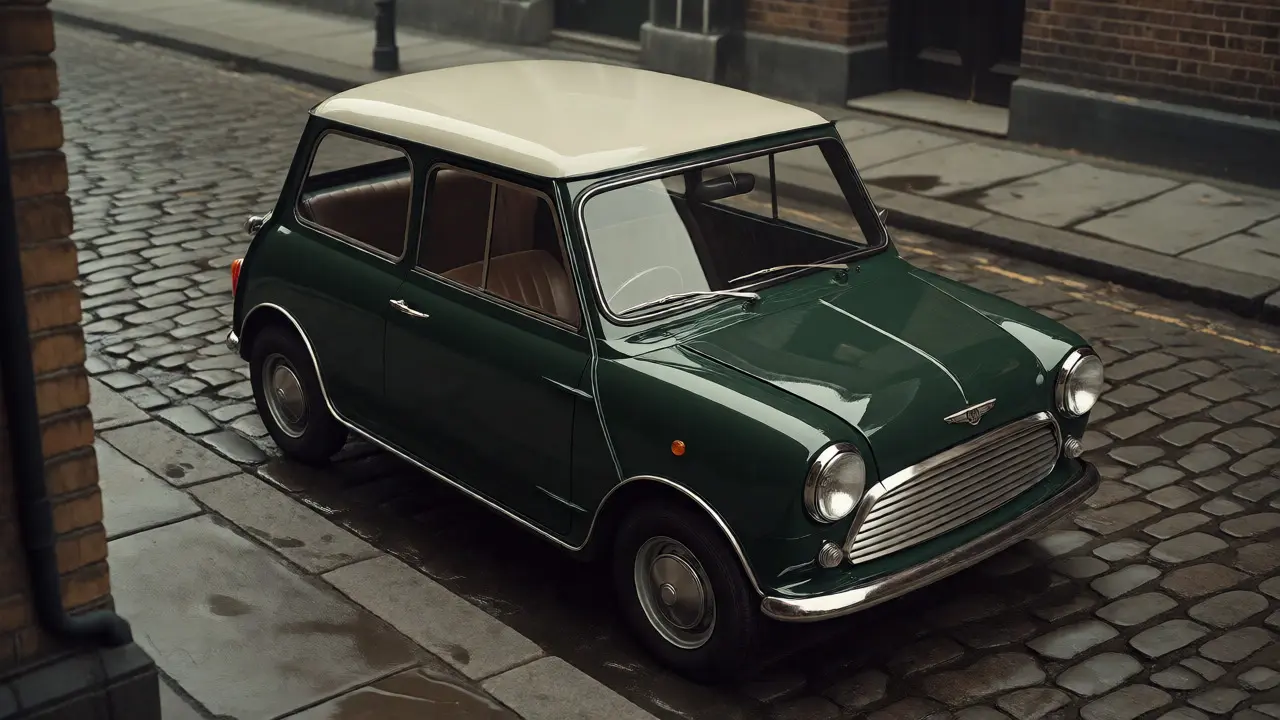
In the late 1950s, Britain was rationing petrol due to the Suez Crisis. The country needed a small car, but not a bad one. Enter Alec Issigonis. He wasn’t a stylist; he was an engineer who hated wasted space. His brief was simple: fit four people into a car no longer than ten feet.
Issigonis broke every rule of conventional layout. Instead of putting the engine under the bonnet and driving the rear wheels, he turned the engine sideways. This transverse front-wheel-drive layout freed up massive amounts of interior room. He also moved the wheels to the extreme corners of the body. The result was the Mini, launched in 1959. It had a tiny 848cc engine, yet it offered more usable cabin volume than cars twice its size.
This wasn’t just clever packaging; it was a paradigm shift. Today, over 70% of new cars sold globally use front-wheel drive. We owe that standardization largely to Issigonis’s refusal to accept traditional layouts as immutable laws. He proved that constraints breed creativity. If you’re designing anything today, ask yourself: are you following tradition because it works, or because you’re afraid to change it?
Lightness Over Luxury: Colin Chapman’s Lotus Philosophy
If Issigonis cared about space, Colin Chapman cared about weight. His famous mantra, "Simplify, then add lightness," sounds like a slogan, but for Chapman, it was a strict engineering discipline. He believed that adding power made a car faster in a straight line, but removing weight made it faster everywhere else-braking, cornering, and accelerating.
Chapman’s designs were often crude by luxury standards. The early Lotuses used fiberglass bodies on tubular steel chassis. They leaked. They rattled. But they were incredibly fast. The Lotus Elan, introduced in 1962, featured a backbone chassis and independent suspension that gave drivers a connection to the road that felt telepathic. It weighed less than 1,600 pounds.
Why does this matter now? Because modern electric vehicles are heavy. Battery packs add thousands of pounds. Car designers today are struggling with the exact problem Chapman solved decades ago. His legacy isn’t just in classic sports cars; it’s in the current push for lightweight materials like carbon fiber and aluminum in EVs. Chapman taught us that mass is the enemy of performance.

Aerodynamics as Art: Malcolm Sayer’s Jaguar Era
While Chapman was stripping cars down, Malcolm Sayer was sculpting them. Sayer was an aeronautical engineer by training, which explains his obsession with airflow. At Jaguar, he didn’t just make cars look good; he made them slip through the air with minimal resistance.
His masterpiece is undoubtedly the Jaguar E-Type. When Enzo Ferrari saw it, he called it "the most beautiful car ever made." That quote gets repeated endlessly, but what did it actually mean? It meant Sayer had achieved a perfect balance between form and function. The long hood wasn’t just for show; it housed a powerful inline-six engine while maintaining a low center of gravity. The curves weren’t decorative; they directed air around the wheels to reduce drag.
Sayer worked with limited computational tools. He used wind tunnels and clay models, relying on intuition honed by years of fluid dynamics study. Compare the E-Type to its predecessor, the XK120, and you see the evolution. The XK120 was elegant but boxy. The E-Type flowed. This transition marked the moment when aerodynamics became a primary driver of automotive styling, not just an afterthought.
Modern Heritage: Ian Callum and the Emotional Turn
Fast forward to the 1990s and 2000s. The industry had become dominated by safety regulations and crash tests. Cars started looking similar-safe, bulky, and forgettable. Ian Callum stepped in to bring emotion back. As Chief Designer at Jaguar and later Aston Martin, he faced a tough challenge: how do you keep a brand’s soul alive while meeting modern pedestrian safety laws?
Callum’s solution was subtle manipulation of proportions. Take the Jaguar XK8. It looks classic, but look closer. The overhangs are short, the nose is long, and the greenhouse (the window area) is set far back. These cues signal "sports car" to our brains instantly. Callum understood that design is about communication. A car needs to tell you how it wants to be driven before you even start the engine.
At Aston Martin, his work on the DB11 showed maturity. He retained the iconic grille and side strakes but smoothed out the surfaces to improve aerodynamics. It’s a lesson in restraint. In an era of aggressive, angry-looking SUVs, Callum’s designs whisper confidence rather than shout it. He proves that heritage doesn’t mean copying old shapes; it means capturing the spirit of past designs in a modern context.

The Common Thread: Problem Solving Through Design
What connects Issigonis, Chapman, Sayer, and Callum? They all viewed design as a tool for solving specific problems. Issigonis solved space. Chapman solved weight. Sayer solved drag. Callum solved identity.
None of them were "stylists" in the superficial sense. They were engineers who understood that shape follows function, but function can be aesthetic too. A beautiful curve can reduce noise. A sleek profile can save fuel. A compact layout can save money.
This holistic approach is rare today. Many modern cars are designed by committees using digital tools that prioritize data over instinct. While data is crucial, it lacks the spark of individual genius. The British legacy teaches us that great design comes from individuals who understand the physics, the history, and the human desire behind the product.
Frequently Asked Questions
Who was Alec Issigonis and why is he important?
Alec Issigonis was a Greek-British designer best known for creating the original Mini. He revolutionized car manufacturing by introducing the transverse front-wheel-drive layout, which maximized interior space in a small footprint. This design principle is now standard in most modern passenger cars.
What did Colin Chapman contribute to car design?
Colin Chapman founded Lotus and championed the philosophy of "simplify, then add lightness." He believed that reducing vehicle weight improved performance more effectively than increasing engine power. His designs influenced the use of lightweight materials and minimalist engineering in high-performance vehicles.
Why is the Jaguar E-Type considered a design masterpiece?
Designed by Malcolm Sayer, the Jaguar E-Type combined advanced aerodynamics with stunning aesthetics. Its flowing lines reduced drag while housing a powerful engine. It is celebrated for proving that functional engineering could produce objectively beautiful forms, influencing generations of sports car design.
How did Ian Callum influence modern British cars?
Ian Callum served as chief designer for Jaguar and Aston Martin. He focused on preserving brand heritage while adapting to modern safety and aerodynamic requirements. His work on models like the Jaguar XK and Aston Martin DB11 demonstrated how to maintain emotional appeal and historical continuity in contemporary automotive design.
Did these designers work alone?
No, they led teams, but their personal visions drove the projects. Issigonis, Chapman, and Sayer were hands-on engineers who sketched and tested prototypes themselves. Modern design is more collaborative, but the influence of these individual leaders remains central to the brands they shaped.