British Automobile Origins 1880-1900: Complete Timeline of Early UK Motor Industry Milestones
 Aug, 17 2026
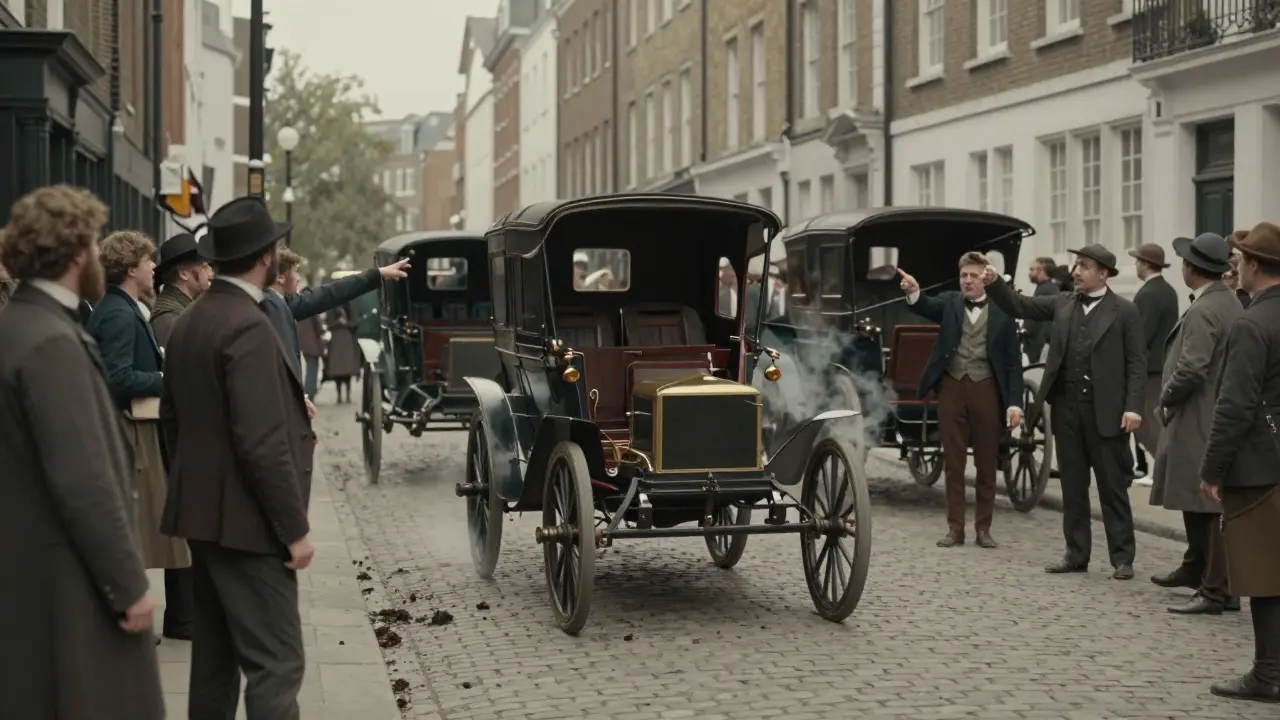
Imagine the year 1896. The streets of London are choked with horse manure, and the clatter of hooves is the loudest sound in the city. Then, a strange, hissing machine rolls past, drawing stares from pedestrians who think it’s either a prank or a new type of steam boiler. This wasn’t science fiction; it was the reality for early adopters of the British automobile a self-propelled vehicle powered by an internal combustion engine, distinct from earlier steam models. Between 1880 and 1900, the UK didn’t just invent the car; it built the regulatory, mechanical, and cultural foundation that would define global motoring for decades.
Most people assume the story of the car starts with Henry Ford or Karl Benz in Germany. While those figures are iconic, the British contribution during this two-decade window was critical. We moved from experimental steam carriages to petrol-powered prototypes, established the first speed limits (which were absurdly low), and created the engineering culture that made brands like Rolls-Royce and Bentley possible later on. If you want to understand why British cars have such a specific character today, you have to look at what happened between 1880 and 1900.
The Pre-Automobile Landscape: Steam and Horsepower
To understand the breakthroughs of the 1890s, we first need to grasp what came before. In 1880, the concept of a "motor car" didn't really exist in the way we know it. Instead, there were steam carriages. These were heavy, dangerous, and required a stoker to keep the fire going. They were expensive toys for the ultra-rich. The dominant force on British roads was still the horse. In fact, the infrastructure of Britain was designed around horses: cobblestones for grip, narrow lanes for turning, and laws that favored equestrian traffic.
The transition period was messy. Engineers were experimenting with various fuels. Gasoline (petrol) was initially used as a lubricant for sewing machines and lamps, not as fuel for engines. The idea of using an internal combustion engine to propel a vehicle seemed inefficient to many. Why burn expensive liquid fuel when you could use coal or wood? It wasn't until the efficiency of the Otto cycle engine improved that the tide began to turn. By the mid-1880s, the stage was set for the first true automobiles to appear on British soil.
Key Milestones: From 1880 to 1895
This period is often overlooked, but it’s where the seeds were sown. Here are the pivotal moments that shifted the needle from curiosity to industry:
- 1884: The Daimler Patent Motor Carriage - While technically German, Gottlieb Daimler’s design influenced British engineers significantly. However, the real British start comes with local adaptations. The first recorded British-built petrol car is often cited as a modified De Dion-Bouton tricycle imported in 1896, but domestic experimentation began earlier with steam hybrids.
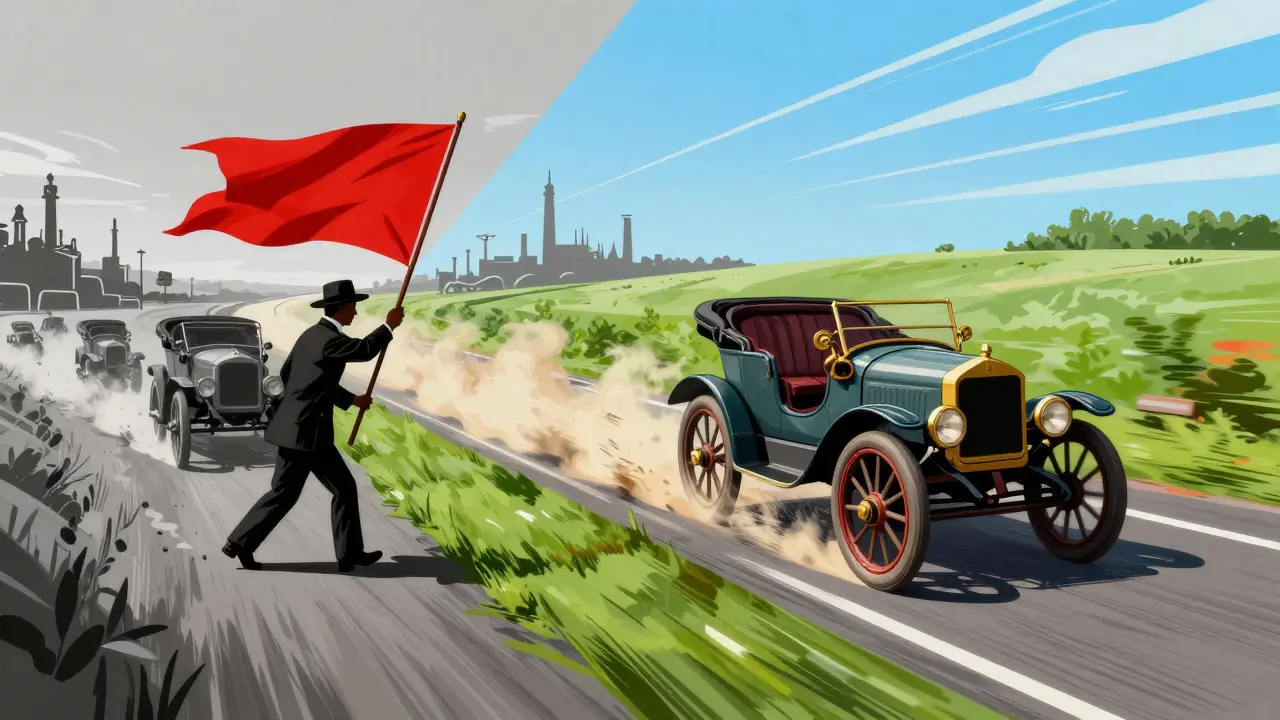
- 1889: The Red Flag Act Repeal Debate Begins - For years, the "Red Man Rule" required a person walking ahead of any motorized vehicle carrying a red flag. This limited speeds to 4 mph (walking pace). Public frustration grew as these rules hindered agricultural and industrial transport.
- 1895: The First Motoring Club Formed - The Automobile Club of Great Britain and Ireland was founded. This wasn't just a social club; it was a lobbying group. Its primary goal was to repeal the restrictive Red Flag Act. Their efforts proved crucial in changing the legal landscape for motor vehicles.
- 1896: The Locomotives on Highways Act - This was the game-changer. On August 16, 1896, the act came into force, removing the red flag requirement and allowing vehicles to travel at their own pace. Within days, hundreds of cars took to the roads. This single legislative act effectively launched the British motor industry.
The Birth of British Manufacturing (1896-1900)
Once the legal barriers were removed, the market exploded. But "exploded" is a strong word. In 1896, there were only a handful of cars on the road. By 1900, that number had grown to several thousand. Who was building them? It wasn't just one giant factory. It was a patchwork of small workshops, bicycle manufacturers, and carriage builders pivoting to new technology.
Siddeley a company that started as a bicycle maker and transitioned to car production in 1904, but whose roots lie in this era is a prime example of this shift. John Walter Christie, another key figure, began experimenting with four-wheel drive in this period, laying groundwork for future off-road capabilities. The diversity of approaches was high. Some builders focused on luxury, creating hand-crafted vehicles for the aristocracy. Others focused on utility, trying to make cars affordable for the middle class, though success was rare due to high material costs.
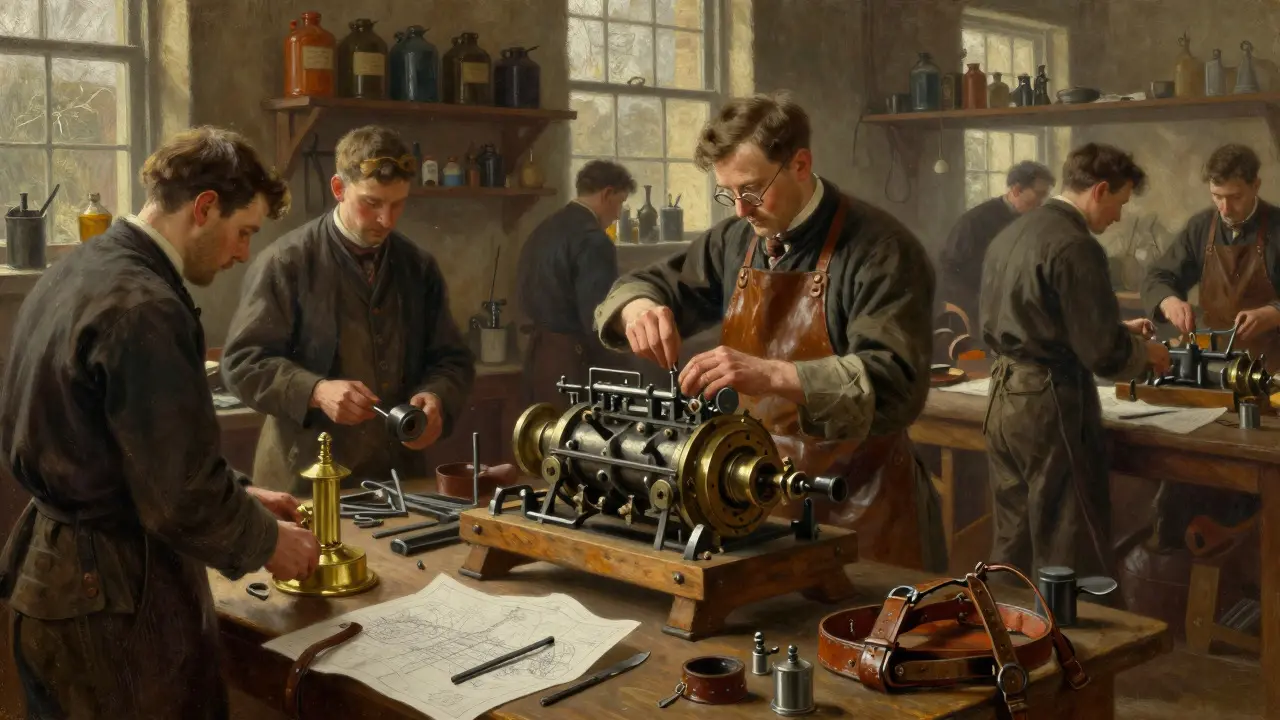
The technical challenges were immense. There were no standardized parts. Every car was essentially a custom build. Engines were unreliable, breaking down frequently. Cooling systems were primitive, leading to overheating on long journeys. Fuel stations didn't exist; drivers often carried gasoline in jerry cans or bought it from chemists. Despite these hurdles, the enthusiasm was undeniable. Racing events became popular, providing a platform for engineers to test and refine their designs under pressure.
Regulatory Framework: How Law Shaped Technology
You can't talk about early British motoring without talking about the law. The Locomotives on Highways Act 1896 the legislation that repealed the Red Flag Act and allowed motor vehicles to move at normal speeds was more than just a speed limit change. It redefined the status of the automobile from a novelty to a legitimate mode of transport. Before 1896, a car was legally considered a "locomotive," subject to strict railway-like regulations. After 1896, it was treated more like a carriage, with fewer restrictions.
This legal shift had immediate economic effects. Insurance companies, initially wary of covering motor vehicles, began offering policies. Roads, previously maintained for horses, now needed repair for heavier, faster vehicles. Local councils started demanding tolls for damage caused by "mechanical conveyances." This tension between innovators and regulators defined the decade. It also led to the creation of driver licensing requirements, which weren't introduced until 1903, meaning anyone could drive a car in 1898 if they owned one. Imagine the chaos!
Comparing the Pioneers: A Look at Key Players
Not all early British manufacturers survived. Many folded within five years. But a few stood out for their innovation and quality. Let's compare three significant entities from this era to see how they differed in approach and legacy.
| Entity | Primary Focus | Key Innovation | Legacy Impact |
|---|---|---|---|
| Daimler (UK Operations) | Luxury & Reliability | Adaptation of German engine tech for UK roads | Set the standard for high-end performance |
| Maxwell | Mass Production (Early Attempts) | Use of interchangeable parts in assembly | Pioneered methods later adopted by Ford |
| Humber | Cycle-Car Hybrid | Lightweight frame suitable for mixed use | Bridged the gap between bicycles and cars |
Notice the difference in strategy. Daimler aimed for the top end, appealing to those who wanted the best. Maxwell tried to lower costs through process improvement, anticipating the mass production model. Humber leveraged existing bicycle infrastructure, making entry-level motoring accessible to a broader demographic. Each approach contributed to the ecosystem. Without Humber's affordable options, there might not have been enough users to demand better roads and fuel infrastructure. Without Daimler's luxury focus, the car might have remained a utilitarian tool rather than a symbol of status.
The Human Element: Drivers and Mechanics
We often focus on the machines, but the people behind the wheel shaped the industry too. In the late 1890s, driving was a skill, not a right. Most drivers were wealthy men, but women began to emerge as prominent figures in motoring clubs and racing. The role of the mechanic was also evolving. Previously, mechanics worked on carriages and wagons. Now, they had to understand electricity, thermodynamics, and complex gear ratios. Training programs were scarce, so knowledge was passed down through apprenticeships and trial-and-error.
There was also a cultural shift. The car represented freedom. For the first time, individuals could travel beyond the reach of trains or horses. This psychological impact cannot be overstated. It changed how people viewed distance, time, and personal space. Towns began to plan for "motoring" visitors. Hotels advertised "carriage stands" that were quickly repurposed for motor cars. The hospitality industry adapted rapidly, recognizing the potential revenue stream from these new travelers.
Challenges and Failures: The Dark Side of Progress
It wasn't all smooth sailing. The early years were marked by failures. Engine knock, transmission breakdowns, and fuel inefficiency were common complaints. Safety was non-existent. There were no seatbelts, no airbags, and no crumple zones. Accidents were frequent, and public opinion was divided. Many saw the car as a danger to pedestrians and livestock. The "Motorist vs. Pedestrian" debate began in this era, a conflict that continues to this day.
Economic instability also played a role. The cost of materials fluctuated wildly. Steel prices rose, affecting production costs. Labor disputes emerged as workers demanded better conditions for handling hazardous chemicals like leaded gasoline (though leaded fuel wasn't widespread yet, the toxicity of early fuels was known). These challenges forced manufacturers to innovate or die. Those who couldn't adapt to changing consumer demands or technological advancements vanished. By 1900, nearly half of the companies that started in the 1890s had ceased operations.
Looking Ahead: Setting the Stage for the 1900s
By the turn of the century, the foundations were laid. The legal framework was established, manufacturing processes were being refined, and public acceptance was growing. The next decade would bring mass production, standardization, and the rise of major brands. But none of that would have been possible without the experiments, failures, and legislative battles of 1880 to 1900. This period transformed the automobile from a curiosity into a viable technology. It created the culture of motoring that defines Britain today. Understanding this timeline helps us appreciate the complexity of innovation. It wasn't a single invention; it was a convergence of engineering, law, economics, and social change.
What was the first car built in Britain?
While there were steam carriages earlier, the first widely recognized petrol-powered car built in Britain is often attributed to the work of local engineers adapting foreign designs in the mid-1890s. The exact "first" is debated, but by 1896, several British-built vehicles were on the road following the Locomotives on Highways Act.
Why was the Red Flag Act repealed in 1896?
The Red Flag Act was repealed because it severely restricted the practicality of motor vehicles, limiting them to walking speed. Advocacy groups like the Automobile Club lobbied for its removal, arguing that it hindered progress and made cars less useful than horses for certain tasks.
How did the 1896 Act affect the growth of the motor industry?
The 1896 Act removed the primary legal barrier to fast motoring. This led to an immediate increase in sales, the formation of motoring clubs, and the development of supporting industries like insurance and fuel distribution. It effectively opened the market for commercial expansion.
Were there any women drivers in the 1890s?
Yes, although less common, women did drive in the 1890s. Some were involved in racing and motoring clubs. Their presence helped challenge gender norms and contributed to the social acceptance of motoring as a leisure activity for both sexes.
What were the main safety concerns in early British cars?
Main concerns included lack of braking power, unstable steering, fire risks from gasoline leaks, and the absence of protective features for occupants. Speeds were increasing faster than safety technologies could catch up, leading to frequent accidents.